
Online Friendships and Safety for Children in Japan

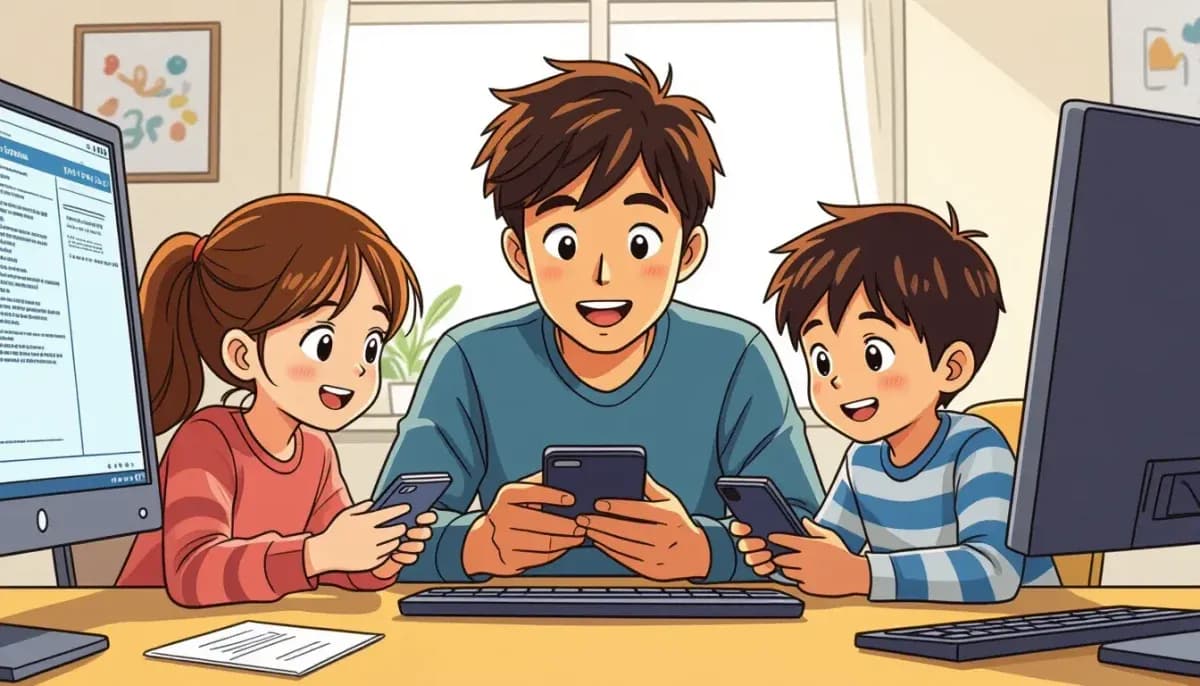
A complete guide to online friendships and internet safety for children in Japan. Learn about Japanese platforms, legal protections, school guidelines, and how to keep your child safe online as a foreign family in Japan.
Online Friendships and Safety for Children in Japan
The internet has transformed childhood in Japan — and around the world. For foreign families raising children in Japan, understanding how Japanese children navigate online friendships, what risks exist, and how to keep your child safe online is essential knowledge. Japan has a unique digital culture, strong legal protections, and specific platforms that dominate youth interactions. This guide covers everything you need to know to help your child build healthy online friendships while staying safe in Japan's digital environment.
How Common Are Online Friendships Among Japanese Children?
Online friendships are increasingly common among Japanese children. A 2025 survey by Nifty Kids of over 1,600 elementary and junior high school students found that over 70% of Japanese children have at least one online friend — a figure that continues to grow year over year.
What is particularly striking is how freely children share personal information with people they meet online. According to the same survey:
- 87.6% shared their age with online friends
- 81.4% shared their gender
- 71.9% shared their birthday
- 44.1% disclosed their general living area
- 38.9% shared their first name
Despite these close-seeming online bonds, nearly 90% of children said they had never met their online friend in person, and most expressed reluctance or even fear about doing so — suggesting that many children have an intuitive sense that online and offline relationships are fundamentally different.
For foreign children in Japan, online friendships can be a lifeline. Making friends in a new country and language is challenging. Online spaces — especially games and fandom communities — often connect children across language barriers and social boundaries more easily than school environments. Understanding this reality helps parents support their children's social lives without dismissing the value of their digital connections.
The Digital Landscape: How Children in Japan Use the Internet
Japan has one of the highest youth internet penetration rates in the world. According to government data:
- 98.7% of Japanese minors aged 10–17 use the internet
- 83.2% use smartphones as their primary device
- Children aged 10–17 average 4 hours 57 minutes online per weekday
- High school students average an extraordinary 6 hours 14 minutes per day — over a quarter of their waking hours
The platforms most popular among Japanese children and teens (ages 10–19) are:
| Platform | Usage Rate (Ages 10–19) |
|---|---|
| LINE | 95.0% |
| YouTube | 94.3% |
| 72.9% | |
| TikTok | 70.0% |
| X (Twitter) | 65.7% |
| Discord | ~35% (gaming communities) |
LINE is by far the dominant communication platform in Japan. Unlike in many Western countries where WhatsApp or iMessage predominate, LINE is used by virtually all Japanese children and adults. For foreign families, this means your child will almost certainly need a LINE account to socialize with Japanese peers. Understanding LINE's features — group chats, sticker sharing, timeline posts — and its privacy settings is a key part of Japan-specific online safety.
For a broader look at how digital life fits into childhood in Japan, see our guide to Digital Life, Screen Time, and Online Safety for Children in Japan.
Online Safety Risks Specific to Japan
While Japan is considered relatively safe in global comparisons — only 24% of Japanese children aged 8–12 are exposed to cyber risks, compared to a global average of around 60% — risks still exist and are growing.
A June 2024 Ministry of Internal Affairs survey found that 46% of children surveyed had experienced difficulties from internet engagement, including:
- Cyberbullying and social exclusion through group chats and comment sections
- Emotional distress from social comparison on image-heavy platforms like Instagram
- Unauthorized sharing of intimate content (increasingly a problem among teenagers)
- Sexual exploitation and grooming by adults pretending to be peers
- Online scams and phishing targeting younger users unfamiliar with financial fraud
Japan sees between 1,665 and 2,082 cases per year of criminal victimization of children via social media, with elementary school cases increasing during and after the pandemic years. While these numbers are low relative to Japan's child population, each case represents a real child who was harmed.
For foreign children, there are additional vulnerabilities: language barriers may make it harder to recognize manipulative language in Japanese, and isolation from the local social network may increase susceptibility to online attention from strangers.
Online bullying (ネットいじめ, netto ijime) often spills over from school social dynamics into LINE group chats. If your child is also experiencing offline bullying, the problem may well have an online dimension. For more on this topic, see our guide on Bullying (Ijime) in Japanese Schools: Prevention and Response.
Japan's Legal Framework for Children's Online Safety
Japan has invested significantly in legislation to protect children online, though gaps remain.
The foundation is the 2008 Act on Establishment of Enhanced Environment for Youth's Safe and Secure Internet Use (青少年インターネット環境整備法), which requires mobile carriers to implement filtering by default for all customers under 18. Parents must actively opt out of filtering — meaning the default setting is protective. This is one of the strongest carrier-level protections in the world.
Key provisions of Japan's child online safety legal framework:
| Law / Policy | Year | What It Does |
|---|---|---|
| Youth Internet Act | 2008 (revised 2018) | Mandatory carrier-level filtering for under-18 SIM cards |
| Penal Code Revision | 2023 | Raised age of sexual consent to 16; added grooming as a criminal offense |
| Act Against Stalking | 2000 (revised 2021) | Covers online stalking and harassment |
| Act for Protecting Children from Sexual Exploitation | 1999 (revised multiple times) | Criminalizes child sexual abuse material, including digital content |
Despite these protections, platforms themselves have no legal obligation to moderate content by age, and reliable age verification remains unsolved in Japan as in most countries. This places significant responsibility on parents, schools, and the children themselves.
The Internet Hotline Center Japan (internethotline.jp) accepts reports of illegal online content involving children. If your child encounters something concerning online, this is one avenue for reporting it.
Practical Online Safety Rules for Your Family in Japan
Japanese schools actively teach children about online safety and issue guidance to parents. Common recommendations from Japanese elementary and junior high schools include:
The school-recommended family rules:
- 9 PM phone curfew — Devices go off or are charged outside the bedroom at 9 PM
- No sharing personal information — Name, address, school, photo, or location
- No photos of others without permission — A deeply emphasized rule in Japanese school culture
- Never agree to meet an online stranger — Regardless of how well you think you know them
- Tell a parent if anything makes you uncomfortable — No shame, no punishment, just communication
For foreign families, we recommend adapting these rules to fit your family culture while preserving the core principles. A written family agreement — which many Japanese families call a sumaho no yakusoku (スマホの約束, smartphone promise) — can be a useful tool across language differences.
Additional recommendations for expat families:
- Use LINE's privacy settings actively. Set your child's account so only friends can message them, disable "Allow friend search by ID," and review their friend list regularly.
- Enable built-in parental controls. iPhones offer Screen Time; Android devices offer Digital Wellbeing and Family Link. Both work in Japanese language environments.
- Know your child's online friends. Ask who they play games with, what communities they're part of, and whether any online friends have tried to contact them outside the platform where they met.
- Watch for warning signs. Secretive behavior, switching screens when parents approach, emotional distress after online sessions, or new "gifts" or gift cards may indicate a problematic relationship.
For more on supporting your child's social development both online and offline, see Making Friends and Developing Social Skills in Japan.
Gaming Culture and Online Friends in Japan
Gaming is one of the primary contexts where Japanese children form online friendships. Popular titles like Minecraft, Roblox, Fortnite, Pokémon Unite, and Among Us all have large Japanese youth playerbases and built-in communication features.
For foreign children, online gaming can be an excellent bridge to Japanese social life. The shared language of games — strategies, character builds, team coordination — transcends the language barrier in ways that classroom conversation sometimes cannot. Many expat families report that their children's Japanese improved significantly through gaming with Japanese peers.
However, gaming platforms introduce their own risks:
- Voice chat with strangers on platforms like Discord exposes children to adult content and potential grooming
- In-game purchases and trading can lead to financial fraud or manipulation
- Addiction and sleep disruption are significant concerns given the average screen time data above
A reasonable approach for most families is to allow gaming with known peers (classmates, family friends) while applying more caution to games that require interaction with random strangers. For younger children (under 10), playing in shared family spaces where parents can hear conversations is advisable.
Supporting Your Foreign Child's Online Social Life
For foreign children in Japan — especially those who struggle with Japanese language or who feel socially isolated at school — online friendships can provide important emotional support. Dismissing or over-restricting these relationships can increase isolation and damage trust.
At the same time, children need guidance to form healthy online relationships. A balanced approach includes:
What to encourage:
- Online friendships within supervised platforms (school gaming clubs, app-based study groups)
- Connections with other international/expat children through community groups
- Maintaining friendships with relatives and friends in the home country via video call
- Participation in fandom and hobby communities with appropriate age-friendly platforms
What to monitor carefully:
- Relationships that move quickly from public platforms to private messaging
- Online friends who ask for photos, personal information, or to meet in person
- Significant age gaps with online friends (surveys show ~40% of children's online friends are 1–3 years older)
- Platforms that are not age-appropriate (most social media platforms require age 13+, but many younger children use them)
For children experiencing mental health challenges connected to their online life — anxiety, depression, or distress from cyberbullying — professional support is available in Japan. See our guide to Mental Health and Emotional Wellbeing for Foreign Children in Japan.
Resources for Parents in Japan
You do not have to navigate children's online safety alone. Several resources are available in Japan:
Government and official resources:
- e-Net Caravans (e-ネットキャラバン) — Free school and community internet safety workshops run by Japan's Ministry of Internal Affairs
- Internet Hotline Center Japan (internethotline.jp) — Report illegal content involving children
- Cybercrime consultation — Available at local police stations (keisatsu) nationwide
Community resources:
- Parent communities at international schools often share Japan-specific online safety advice
- Foreign residents' associations in major cities sometimes run digital safety workshops in English
- For Work in Japan's family life guide includes practical advice on navigating life in Japan with children: Family Life in Japan for Foreigners
English-language guidance:
- Living in Nihon's comprehensive guide for foreign parents covers many aspects of raising children in Japan: Raising Children and Education in Japan
- For students preparing for junior high school transitions — a key moment when online social life intensifies — see Junior High School in Japan: Guide for Foreign Families
- Chuukou Benkyou covers academic resources for middle and high school students: chuukoubenkyou.com
For broader context on Japanese children's academic and social environment, SoraNews24's survey coverage (Survey on Japanese children's online friendships) and Nippon.com's in-depth reporting (Keeping Japanese Children Safe in Cyberspace) provide valuable English-language perspectives.
Key Takeaways
Online friendships are a normal and often positive part of childhood in Japan today. The data shows that most Japanese children have online friends, and for foreign children navigating a new social environment, these connections can be especially meaningful.
The key to safety is not restriction but informed engagement: understanding which platforms your child uses, knowing who they communicate with, establishing clear family rules, and maintaining open communication so your child feels comfortable coming to you when something goes wrong.
Japan's legal framework provides meaningful structural protections — particularly around carrier filtering — that parents in many other countries lack. Combined with the school system's active digital literacy education, most children in Japan receive more online safety guidance than their peers elsewhere.
Your job as a parent is to reinforce those protections at home, stay curious about your child's digital life, and adapt your approach as your child grows older and more independent online.
For more on raising children as a foreign parent in Japan, explore our complete guide series on Digital Life, Screen Time, and Online Safety for Children in Japan and Making Friends and Developing Social Skills in Japan.

Originally from Vietnam, living in Japan for 16+ years. Graduated from Nagoya University, with 11 years of professional experience at Japanese and international companies. Sharing practical information for foreign parents raising children in Japan.
View Profile →Related Articles
Sibling Relationships in Multicultural Families
A practical guide to sibling dynamics in multicultural families in Japan. Learn how to strengthen bonds, navigate cultural differences, and support your children's identity development.
Read more →
Building Social Confidence in Your Child
Practical strategies for foreign parents raising socially confident children in Japan. Covers Japanese parenting philosophy, research-backed techniques, community resources, and expat-specific challenges.
Read more →
Summer Camps and Group Activities for Making Friends
Discover the best summer camps and year-round group activities to help your children make friends in Japan. Practical guide for expat families with activity recommendations by age.
Read more →
Maintaining Friendships After Moving Within Japan
Learn how to maintain friendships after moving within Japan. Essential tips on LINE, communication strategies, rebuilding your social circle, and navigating Japan's unique social culture as an expat.
Read more →
Shy and Introverted Children in Social Japan
How to support shy and introverted children in Japan's conformity-driven social culture. Practical strategies for foreign parents on school, activities, and mental health resources.
Read more →
Managing Friendship Conflicts Across Cultures
Guide for foreigners in Japan on managing cross-cultural friendship conflicts. Learn about uchi-soto, indirect communication, and practical strategies for children and adults.
Read more →