
Managing Friendship Conflicts Across Cultures

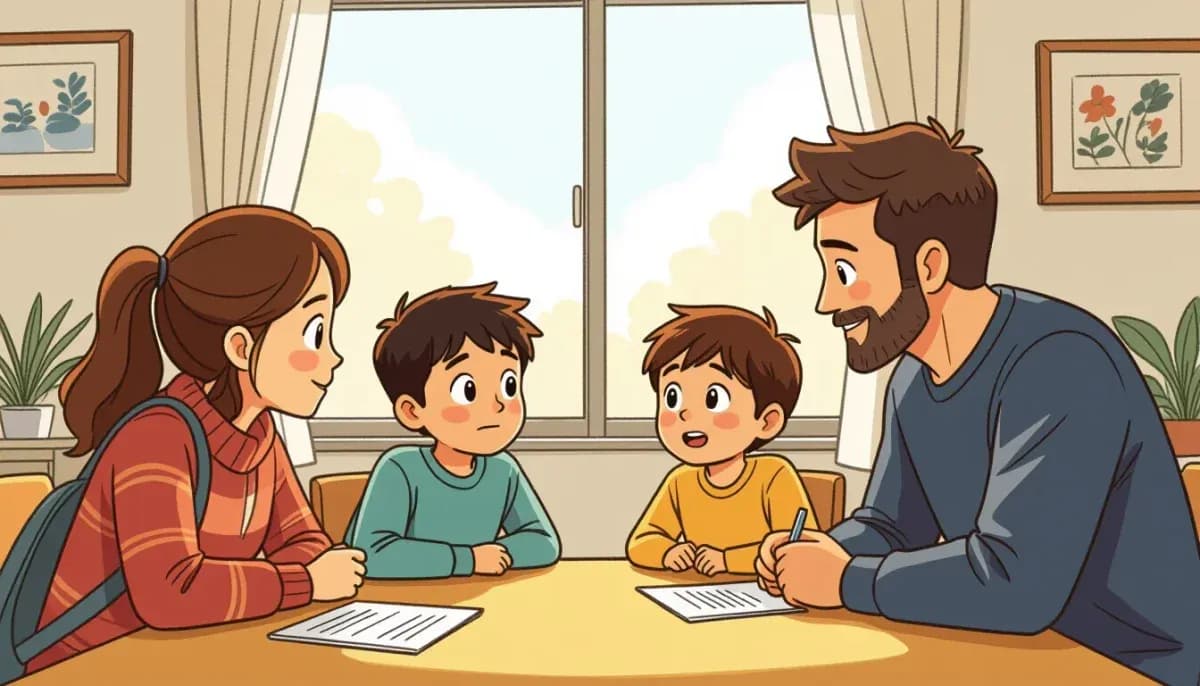
Guide for foreigners in Japan on managing cross-cultural friendship conflicts. Learn about uchi-soto, indirect communication, and practical strategies for children and adults.
Managing Friendship Conflicts Across Cultures: A Guide for Foreigners in Japan
Raising children in Japan as a foreign family comes with countless rewards — but also some genuinely puzzling social challenges. One of the most emotionally charged is navigating friendship conflicts that arise not from personality clashes, but from deep cultural differences. When your child bursts into tears because her Japanese friend "stopped talking to her for no reason," or when your expat colleague gives you the silent treatment after you thought everything was fine, you may be witnessing a cross-cultural misunderstanding rather than a genuine falling-out.
This guide explores how cultural differences shape friendships in Japan, how conflict plays out differently across cultures, and most importantly, what you — and your children — can do to manage and resolve these conflicts with empathy, clarity, and skill.
Understanding the Cultural Root: Uchi, Soto, and Low Relational Mobility
Before you can manage cross-cultural friendship conflicts, you need to understand how friendships are structured in Japan. The most fundamental concept is the uchi-soto (内-外) distinction: uchi refers to one's inner circle — close friends, family, trusted teammates — while soto describes everyone outside that circle, which is most people.
For foreigners arriving in Japan, the default position is firmly in the "soto" category. This is not an insult. It is simply the starting point. Japanese social groups tend to be small, stable, and slow to open. A Hokkaido University study found that Japanese participants were significantly more guarded in self-disclosure than their American counterparts, regardless of how large their social network was. Americans disclosed more openly when surrounded by many friends; Japanese participants maintained the same guarded approach whether their circle was large or small.
This has direct consequences for friendship conflict. When a foreign child feels excluded from a Japanese school group — not invited to weekend plans, overlooked in lunch seating — what often looks like bullying or targeted rejection is in fact the normal operation of the uchi-soto framework. The group is simply not yet open. Knowing this does not eliminate the pain, but it reframes it: the conflict is often not personal, and the resolution path is patience and gentle relationship-building rather than confrontation.
Relational mobility is a related concept. Japan is classified as a "low relational mobility" society, meaning that people have fewer opportunities to form new relationships freely — existing social structures (school class, work team, neighborhood) tend to determine who you interact with, and moving between groups is less natural than in high-mobility societies like the United States. For expat children and adults alike, this creates a frustrating asymmetry: you are looking for new friendships (high-mobility mindset), while your Japanese peers may feel their social needs are already met by their existing uchi group.
How Japanese and Western Conflict Styles Differ
Once you recognize that the social structure differs, the next step is understanding how conflict itself is handled differently.
| Dimension | Japanese Style | Western (Direct) Style |
|---|---|---|
| Communication | Indirect, implicit | Direct, explicit |
| Conflict goal | Preserve harmony (wa) | Resolve disagreement |
| Expression of disagreement | Silence, avoidance, vague language | Open discussion, debate |
| Apology | Frequent, relationship-focused | Less frequent, factual |
| Rejection phrasing | "Sore wa chotto..." (That's a little...) | "No, I can't" |
| Group vs. individual | Group harmony prioritized | Individual rights prioritized |
| Conflict timeline | Long, slow to surface | Faster, more direct escalation |
The Japanese concept of wa (和) — group harmony — is central to understanding conflict avoidance. In Japanese social culture, open disagreement is seen as disrupting harmony and causing shame (恥, haji) for all parties involved. This means conflicts are rarely addressed directly, especially in group settings. Instead, they surface through withdrawal, subtle changes in behavior, or indirect hints that something is wrong.
For a foreign child raised in a culture where "using your words" and "talking it out" are praised, this silence is bewildering and painful. They may not even realize there is a conflict until the friendship has already effectively ended. For parents and educators, recognizing this gap is the first step toward helping children navigate it.
Research involving children in Japan, China, and Korea found that Japanese children as young as three begin developing conflict resolution strategies that emphasize cooperation and compromise over domination. By age five, Japanese children demonstrate the widest repertoire of situation-dependent strategies among East Asian peers — preferring turn-taking and integrating solutions in peer resource conflicts. This is culturally sophisticated behavior, but it is invisible to children (and adults) from cultures expecting explicit verbal negotiation.
Common Cross-Cultural Friendship Conflict Scenarios
Understanding the theory helps, but practical scenarios are where the rubber meets the road. Here are the most common conflict situations expat families encounter:
1. The Silent Treatment
A Japanese friend stops responding to messages, declines plans vaguely, or becomes noticeably cooler in group settings without explanation. This often means something has gone wrong — but the Japanese social code makes explicit confrontation unlikely. The foreign party may have inadvertently crossed a line (being too loud, sharing something privately said, or being too direct in a group setting).
Resolution approach: Do not demand an explanation. Instead, find a low-pressure way to reconnect — a small gesture, a thoughtful message, or simply showing consistent warmth over time. The "talk it out" approach can backfire badly in this context.
2. The English Practice Friendship
A common and frustrating dynamic: a Japanese person befriends a foreigner primarily to practice English. The foreigner builds what feels like a genuine friendship, only to realize later that the relationship was primarily transactional. This is a documented source of cross-cultural friendship breakdown in Japan.
Resolution approach: Introduce Japanese into the relationship early. Show interest in Japanese culture and language. If you genuinely want equal friendship, model it by not always communicating in English. If the person disengages when you switch languages, the dynamic was probably always transactional — and that is useful information.
3. Group Exclusion of Foreign Children at School
Foreign children at Japanese public schools often find it difficult to penetrate existing social groups, even after months in the classroom. This can look like bullying to parents but is frequently the uchi-soto dynamic at work. The child is in the "soto" category and the group simply has not made space yet.
Resolution approach: Encourage one-on-one friendships rather than trying to break into established groups. After-school clubs (bukatsu) and structured activities create natural shared experiences that lower the barriers to uchi inclusion. See our guide on elementary school in Japan for foreign parents for tips on supporting your child's social integration.
4. The Indirect Rejection
You invite a Japanese friend to something and they respond with "sore wa chotto..." ("that's a little difficult...") or "kangaete okimasu" ("I'll think about it"). These are almost always soft rejections, not genuine maybes. Pushing for a direct answer puts the person in an uncomfortable position and can damage the friendship.
Resolution approach: Learn to read indirect language. When you receive a vague, non-committal response, accept it gracefully and move on. Do not follow up repeatedly, as this creates social pressure that Japanese social norms are designed to avoid. Understanding this saves enormous emotional energy.
5. Expat-to-Expat Conflicts in a Small Community
Expat social circles in Japan are often small and insular. In these tight networks, a minor misunderstanding or interpersonal irritation can escalate quickly because there is no easy social escape valve — everyone knows everyone. Gossip spreads fast and reputations form quickly. The isolation of expat life can also make conflicts feel higher-stakes than they would back home, where a friend dispute would not put your entire social world at risk.
Resolution approach: Invest in building connections outside the expat bubble — with Japanese locals, international school families, hobby groups, or online communities. This reduces the pressure on any single relationship. For mental health support for your family, see our resource on mental health and emotional wellbeing for foreign children in Japan.
Practical Tools for Managing Cross-Cultural Friendship Conflicts
For Adults: A Framework for Cross-Cultural Conflict Resolution
- Pause before reacting. What looks like a personal attack or rejection may be a cultural behavior. Give yourself 24-48 hours before responding to anything that feels like a conflict.
- Observe the pattern. Is this something you have noticed across multiple Japanese friendships? If so, it is likely cultural, not personal.
- Choose the right channel. In Japanese contexts, written messages (LINE, email) allow the other person to respond in their own time without the social pressure of face-to-face confrontation. This is often more effective than requesting an in-person talk.
- Apologize generously. Japanese culture values the apology as a relationship repair tool, not an admission of guilt. Apologizing ("I'm sorry if I said something that came across wrong") costs you little but signals your commitment to the friendship.
- Seek cultural guidance. Resources like Living in Nihon and community forums for foreigners in Japan offer practical, experience-based advice on navigating these exact situations.
For deeper context on how workplace and community relationships work in Japan, For Work in Japan has useful resources on professional relationship norms that also apply to social dynamics.
For Children: Age-Appropriate Approaches
| Age Group | What They Experience | How to Help |
|---|---|---|
| Preschool (0–5) | Parallel play norms differ; Japanese toddlers may not initiate sharing | Model sharing, praise cooperative moments |
| Elementary (6–12) | Uchi-soto exclusion most painful; group dynamics intense | Support one-on-one friendships, enroll in clubs |
| Junior high (13–15) | Social hierarchies solidify; indirect communication most intense | Teach indirect communication "translation," validate their experience |
| High school (16–18) | More openness possible; manga/anime/music as bridge topics | Encourage joining activity-based groups |
For guidance on supporting your child through the elementary school years specifically, read our guide to elementary school in Japan for foreign parents. For junior high challenges, see our junior high school guide for foreign families.
Teaching Children Cross-Cultural Conflict Skills
Children can develop powerful cross-cultural competence with the right framing:
- The "different rules" framework: Tell younger children that different countries have different "friendship rules," just like different games have different rules. Japan's rules involve more patience and quietness. This removes the feeling of personal rejection.
- Emotional labeling: Help children name what they are feeling — not "she hates me" but "I feel left out and confused." This emotional precision is the foundation of healthy conflict resolution in any culture.
- Japanese language investment: Even basic Japanese phrases dramatically change how Japanese peers perceive foreign children. A child who tries to speak Japanese, even badly, signals respect and intention. See our guide on teaching Japanese to foreign children for practical approaches.
- Role-play scenarios: Act out common conflict scenarios at home. "What would you do if your friend stopped responding to your messages?" Practice responses that are patient, non-accusatory, and relationship-preserving.
When Conflict Becomes Bullying: Knowing the Difference
Not every exclusion is a cultural misunderstanding. Some situations require intervention. Signs that a conflict has crossed from cultural friction into genuine bullying (いじめ, ijime) include:
- Systematic exclusion from all activities over a prolonged period
- Verbal insults (including in Japanese that your child may not fully understand)
- Physical intimidation or property damage
- Online harassment via LINE or other platforms
- Teachers or staff who minimize or dismiss your child's reports
Japan has a well-documented ijime problem in schools. The Ministry of Education reports hundreds of thousands of bullying cases annually, and foreign children can be particularly vulnerable due to visible difference. If you suspect genuine bullying rather than cultural friction, escalate formally through the school's homeroom teacher (担任, tanin), then the school principal, and if necessary through the education board (教育委員会, kyoiku iinkai). For resources on the education system and how to navigate it, see our complete guide to the Japanese education system for foreign families.
For academic research on cross-cultural conflict resolution, the NCBI/PMC study on conflict strategies in Japanese children provides peer-reviewed findings on how Japanese children approach peer conflicts from early childhood.
For broader cross-cultural conflict management frameworks applicable to adult friendships and workplace relationships, Commisceo Global's guide on managing conflict across cultures is a practical reference.
For expat-specific perspectives on friendship challenges in Japan, This Japanese Life's essay on expat friendships offers candid and research-informed insights.
Students preparing for Japanese middle and high school entrance exams who want to understand the social environment they are entering should check resources at Chuukou Benkyou, which covers academic preparation for the Japanese school system.
Building Conflict-Resilient Cross-Cultural Friendships
The goal is not to eliminate conflict — it is to build friendships that are resilient enough to survive it. Some practices that help:
Invest in shared activities, not just shared time. Japanese friendships tend to deepen through doing things together (bukatsu, cooking, sports) rather than through conversation alone. Find activities you genuinely enjoy that can become shared rituals.
Be patient with slow trust. In a low relational mobility society, trust takes longer but tends to be more durable once given. The friend who takes a year to fully open up may be a more reliable long-term friend than someone who was immediately warm but socially shallow.
Maintain home-culture friendships. Keeping strong ties with friends from your home country (via video call, social media, or visits) reduces the emotional pressure on your Japan-based social circle. It also gives you perspective — a fresh outside view on what is normal cross-cultural friction vs. what genuinely needs to be addressed.
Celebrate small cross-cultural moments. When a Japanese friend breaks with indirect communication and tells you something directly, or when your child gets invited into a Japanese friend's home for the first time, recognize these as significant signals of trust and uchi inclusion. They are earned and meaningful.
Conclusion
Managing friendship conflicts across cultures in Japan requires a fundamental shift in how we understand conflict itself. What looks like rejection may be structure. What looks like indifference may be respect for privacy. What looks like avoidance may be a culturally sophisticated attempt to preserve the relationship.
This does not mean accepting every difficulty as "just culture." Genuine hurt is real regardless of its source, and children especially need support processing social pain. But adding a cultural lens — understanding uchi-soto, wa, indirect communication, and low relational mobility — gives you and your children a powerful toolkit for navigating friendships that cross cultural lines.
The families who thrive socially in Japan tend to be those who combine curiosity about Japanese culture with patience, linguistic effort, and a willingness to let friendships develop at Japan's slower, more deliberate pace. The rewards — deep, stable, cross-cultural friendships — are worth the investment.
For more guidance on raising children in Japan, explore our resources on raising bilingual children in Japan, cultural identity for hafu and mixed-race children, and the complete guide to the Japanese education system.

Originally from Vietnam, living in Japan for 16+ years. Graduated from Nagoya University, with 11 years of professional experience at Japanese and international companies. Sharing practical information for foreign parents raising children in Japan.
View Profile →Related Articles
Sibling Relationships in Multicultural Families
A practical guide to sibling dynamics in multicultural families in Japan. Learn how to strengthen bonds, navigate cultural differences, and support your children's identity development.
Read more →
Building Social Confidence in Your Child
Practical strategies for foreign parents raising socially confident children in Japan. Covers Japanese parenting philosophy, research-backed techniques, community resources, and expat-specific challenges.
Read more →
Summer Camps and Group Activities for Making Friends
Discover the best summer camps and year-round group activities to help your children make friends in Japan. Practical guide for expat families with activity recommendations by age.
Read more →
Online Friendships and Safety for Children in Japan
A complete guide to online friendships and internet safety for children in Japan. Learn about Japanese platforms, legal protections, school guidelines, and how to keep your child safe online as a foreign family in Japan.
Read more →
Maintaining Friendships After Moving Within Japan
Learn how to maintain friendships after moving within Japan. Essential tips on LINE, communication strategies, rebuilding your social circle, and navigating Japan's unique social culture as an expat.
Read more →
Shy and Introverted Children in Social Japan
How to support shy and introverted children in Japan's conformity-driven social culture. Practical strategies for foreign parents on school, activities, and mental health resources.
Read more →