
Friendship Challenges for Non-Japanese Children

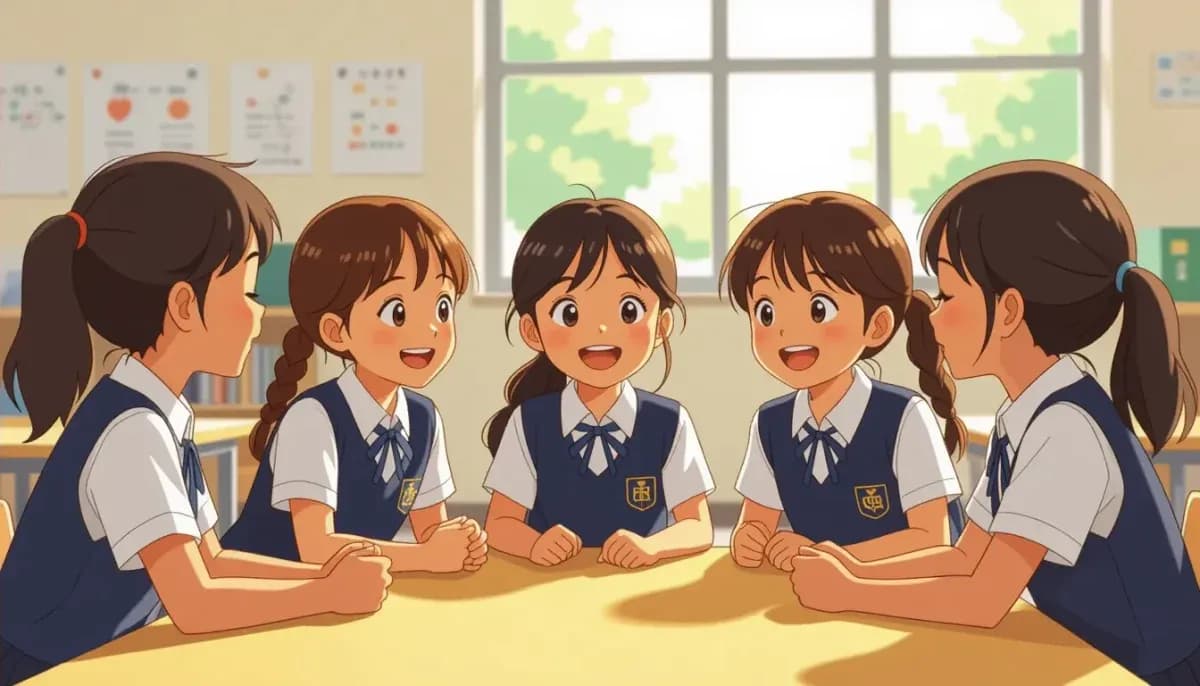
Learn how non-Japanese children can navigate friendship challenges in Japan — from cultural uchi/soto dynamics to language barriers, practical strategies, and real statistics on expat children in Japanese schools.
Friendship Challenges for Non-Japanese Children in Japan
Moving to Japan as a child is an adventure filled with new experiences — but also real social challenges. Making friends in a culture where social rules are unspoken, language barriers are significant, and group identity plays a central role can be tough for non-Japanese children. Understanding these challenges is the first step to helping your child build meaningful connections in Japan.
Japan's foreign resident population has grown dramatically — reaching 3.77 million people as of late 2024, an increase of 358,000 from just the year before, and 1.8 times higher than a decade ago. With 129,000 foreign children now enrolled in Japanese public schools (up 9% year-over-year), the question of how to help non-Japanese kids navigate friendship is more relevant than ever.
The Cultural Framework: Uchi and Soto
To understand why friendship can feel so difficult for foreign children in Japan, it helps to understand a core cultural concept: uchi (内) and soto (外), meaning "inside" and "outside."
Japanese social life is organized around tightly bound groups — a school class, a sports club, a neighborhood association. These groups define who belongs and who doesn't. When you're inside the group (uchi), there's a deep sense of mutual belonging and support. When you're outside (soto), interactions stay polite but superficial.
For non-Japanese children, breaking into these in-groups can feel like running into an invisible wall. Japanese children are not necessarily being unfriendly — they simply haven't yet determined whether a new person "belongs." This is very different from Western social styles where strangers often approach each other directly with openness.
Additionally, Japanese children are taught from an early age to value harmony (wa) and avoid standing out. A foreign child, by definition, looks different, may speak differently, and behaves differently — which can make Japanese peers hesitant or uncertain about how to interact.
Understanding this framework helps parents reframe the challenge: it's not rejection, it's a different cultural approach to building trust that simply takes longer.
Language Barriers and Their Real Impact
Language is often the most immediate and visible hurdle. Even a child who has studied Japanese at home will likely struggle with the speed, vocabulary, and social nuances of playground conversation.
Research paints a concerning picture: a large-scale survey of over 40,000 children in a Japanese city found that elementary school children who speak only a foreign language at home experience anxiety at nearly double the rate of their Japanese-speaking peers (19.2% vs. 9.7%). Children using both languages at home had the lowest rates of normal mental health outcomes — just 56% compared to 72.1% for Japanese-only households.
These statistics don't mean bilingualism is harmful. Rather, they highlight that children navigating two worlds simultaneously face very real pressures, and that schools and families need to provide active support.
Outside major cities like Tokyo and Osaka, English-language support at schools is rare. In approximately 70% of Japanese public schools that have foreign students at all, there are only 4 or fewer such students — meaning your child may be one of very few non-Japanese kids in their entire school. This isolation makes friendship formation even harder.
For parents, supporting Japanese language acquisition is one of the most impactful things you can do. Even basic conversational Japanese enables a child to joke, ask questions, and participate in games — the building blocks of childhood friendship. Check out our guide on Teaching Japanese to Foreign Children: Methods and Resources for practical approaches.
School Type and Social Integration
Where your child goes to school has a huge impact on their social environment and friendship opportunities.
| School Type | Language | Peer Group | Friendship Approach |
|---|---|---|---|
| Japanese Public School | Japanese | Mostly Japanese peers | Immersion; harder initially, but builds deep local friendships over time |
| International School | English (or bilingual) | Mixed nationalities | Easier entry; friendships with other expat families |
| JICA-supported schools | Japanese with support | Mix with Japanese support | Structured integration programs |
| Bilingual private schools | Both | Mixed | Balance of both worlds |
Many expat families choose international schools to give children a socially safer environment. This is a valid choice — but it can also limit the development of Japanese friendships that come naturally through shared school life.
Children who attend Japanese public schools often struggle more at first, but research suggests they develop stronger cross-cultural friendship skills over time. By junior high school, the mental health gap between foreign and Japanese students in public schools tends to narrow, suggesting that peer relationships do become protective as children adapt.
For a detailed comparison of school options, read our guide on International Schools in Japan: The Definitive Guide for Families and Elementary School in Japan: A Complete Guide for Foreign Parents.
Practical Strategies to Help Your Child Make Friends
Knowing the cultural landscape helps — but parents need concrete strategies to help their children break through social barriers.
Join a Club or Activity (Club Katsu / Saakuru)
The single most effective method for building friendships in Japan is joining a structured group with a shared purpose. Hobby circles (saakuru) and school clubs (bukatsu) provide the social "container" that Japanese culture requires for friendship to grow. When your child joins the soccer team, the art club, or the school band, they automatically become part of an in-group — and Japanese children will begin to accept them as "one of us."
Activities with minimal language requirements (sports, music, art, dance) are especially good starting points.
Participate in Cultural Exchange Programs
Structured events that bring Japanese and foreign children together for shared activities can rapidly build connections. A recent cultural exchange event at Camp Zama (February 2025) brought together approximately 25 Japanese children from Sagamihara with American military children for calligraphy, crafts, and games. A sixth-grade American girl who had attended three consecutive exchanges noted that while language barriers existed, they didn't prevent real communication.
These programs work because they provide equal footing — no one is a visitor in "someone else's" territory.
Use Small Social Gestures
Japanese friendship culture values thoughtful small gestures. Omiyage (bringing small gifts or snacks from a trip) is a beloved ritual. Encouraging your child to bring treats to share after a family holiday, to thank classmates who helped them, or to remember their friends' birthdays in small ways signals that they understand and respect Japanese social culture.
Leverage Parent Networks
Many friendships among Japanese children are actually facilitated by their parents' relationships first. Attending parent-teacher association (PTA) meetings, school events, and neighborhood activities helps build adult connections that can naturally create playdates and social opportunities for children.
For more on navigating the broader parenting environment, see Raising Bilingual Children in Japan: Strategies and Tips.
The Kikokushijo Parallel: You Are Not Alone
One surprising source of solidarity for non-Japanese children is the kikokushijo (帰国子女) community — Japanese children who grew up abroad and returned to Japan. Despite being ethnically Japanese, these children often face the same social challenges: they're seen as "different," expected to suppress their international perspective, and sometimes bullied.
The existence of kikokushijo as a recognized group in Japanese society (there are even special university entrance exam categories for them) shows that navigating dual cultural identities in Japan is a known challenge — not an unusual one. Many kikokushijo become natural bridges between foreign children and Japanese peers, precisely because they understand both sides.
If your child is struggling socially, seeking out kikokushijo communities and schools with programs for returnee students can provide both peer support and a more welcoming social environment.
Addressing Bullying and Social Exclusion
Bullying (ijime) is a serious issue in Japanese schools and is sometimes directed at children who are perceived as different. Foreign children may face:
- Comments about their appearance or language
- Being excluded from group activities
- Mimicry of their accent or foreign language
- Subtle social pressure to conform
It's important to know that while Japanese school culture can be quite conformist, outright bullying of foreign students is not universal, and many schools work actively to prevent it.
Warning signs that your child may be experiencing ijime include: sudden reluctance to attend school, changes in mood or appetite, loss of interest in activities they previously enjoyed, or social withdrawal.
If you suspect bullying, document incidents with dates and details, speak directly with the homeroom teacher (tanin sensei), and if needed, escalate to the school principal or local Board of Education. Support organizations like TELL (Tokyo English Lifeline) offer counseling and guidance for foreign families.
For broader discussion of emotional wellbeing, see our article on Mental Health and Emotional Wellbeing for Foreign Children in Japan.
Building Long-Term Resilience and Cross-Cultural Identity
The friendship challenges your child faces in Japan are not simply obstacles — they're opportunities to develop extraordinary cross-cultural skills. Children who successfully navigate relationships in Japan tend to become highly empathetic, socially flexible, and deeply aware of cultural differences.
Studies show that as children progress through their Japanese schooling, many reach a point where their friendships become genuinely close and meaningful. The initial discomfort of being "outside" often transforms into a deep sense of belonging — especially for children who embrace the language and cultural practices around them.
Help your child understand that feeling different is not permanent. It's a phase that many children navigate, and the tools they build — language skills, cultural empathy, patience — will serve them for a lifetime.
For families concerned about cultural identity formation, our article on Cultural Identity for Hafu and Mixed-Race Children in Japan offers deeper insights.
Key Resources for Parents
Navigating friendship challenges is one part of a much broader experience of raising children in Japan. Several excellent resources can help:
- Living in Nihon — guides for daily life, education, and social integration in Japan
- For Work in Japan — practical resources for foreigners building their lives in Japan
- Chuukou Benkyou — support resources for education and school life in Japan
- Japan Handbook - Making Friends in Japan — detailed guide to friendship and socializing as an expat
- Nippon.com - Foreign Children in Japan's Schools — in-depth data on foreign children in the Japanese education system
The journey toward friendship in Japan takes time, patience, and a willingness to meet Japanese culture on its own terms. But for children who persist, the friendships they build are often among the deepest and most enduring of their lives.

Originally from Vietnam, living in Japan for 16+ years. Graduated from Nagoya University, with 11 years of professional experience at Japanese and international companies. Sharing practical information for foreign parents raising children in Japan.
View Profile →Related Articles
Sibling Relationships in Multicultural Families
A practical guide to sibling dynamics in multicultural families in Japan. Learn how to strengthen bonds, navigate cultural differences, and support your children's identity development.
Read more →
Building Social Confidence in Your Child
Practical strategies for foreign parents raising socially confident children in Japan. Covers Japanese parenting philosophy, research-backed techniques, community resources, and expat-specific challenges.
Read more →
Summer Camps and Group Activities for Making Friends
Discover the best summer camps and year-round group activities to help your children make friends in Japan. Practical guide for expat families with activity recommendations by age.
Read more →
Online Friendships and Safety for Children in Japan
A complete guide to online friendships and internet safety for children in Japan. Learn about Japanese platforms, legal protections, school guidelines, and how to keep your child safe online as a foreign family in Japan.
Read more →
Maintaining Friendships After Moving Within Japan
Learn how to maintain friendships after moving within Japan. Essential tips on LINE, communication strategies, rebuilding your social circle, and navigating Japan's unique social culture as an expat.
Read more →
Shy and Introverted Children in Social Japan
How to support shy and introverted children in Japan's conformity-driven social culture. Practical strategies for foreign parents on school, activities, and mental health resources.
Read more →