
Playdates and Socializing Customs in Japan

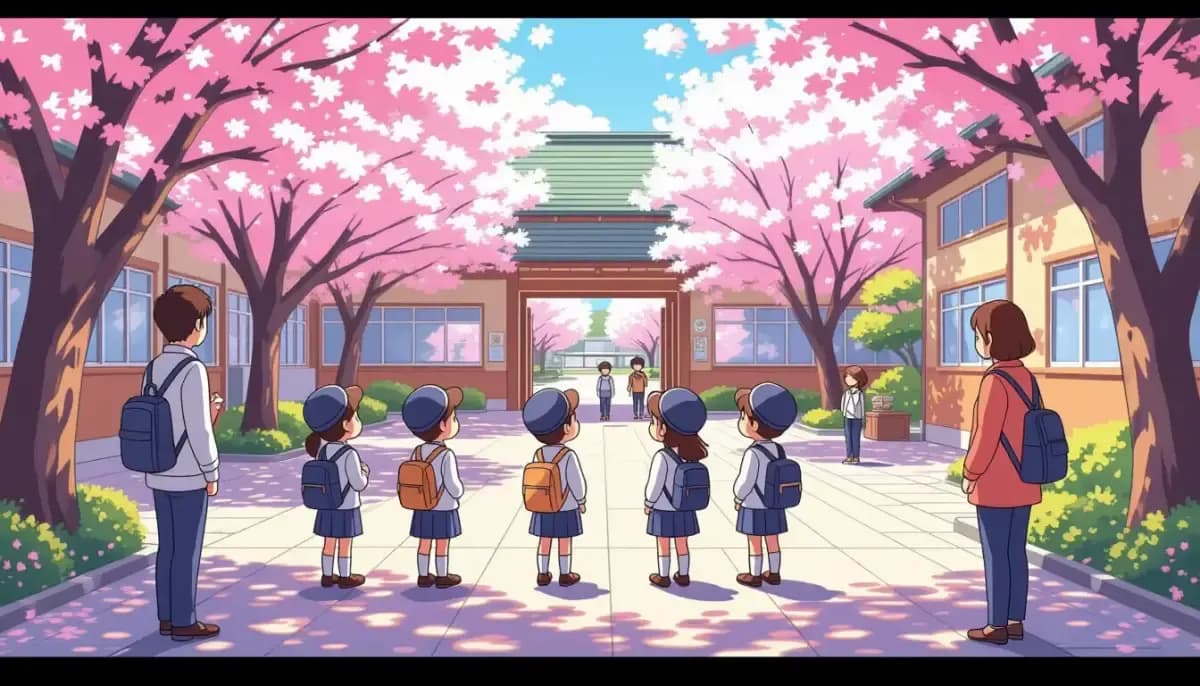
Discover how playdates and socializing work in Japan for expat families. Learn about uchi/soto culture, the renrakucho, PTA participation, and practical tips to help your children build friendships at Japanese schools.
Playdates and Socializing Customs in Japan: A Guide for Expat Parents
Moving to Japan with children brings an entirely new set of social dynamics to navigate. From school gate conversations to after-school activities, the way Japanese families approach playdates and socializing differs significantly from Western norms. Understanding these cultural customs can help your children build genuine friendships and help you — as a parent — connect with your community.
This guide breaks down how children socialize in Japan, what expat parents can realistically expect, and practical strategies to help your family integrate socially — without the cultural missteps.
How Japanese Children Socialize: The Uchi/Soto Framework
To understand playdates in Japan, you first need to understand a foundational concept of Japanese social life: uchi (内) and soto (外), meaning "inside" and "outside."
Japanese society organizes relationships along this axis. People within your uchi group — your school class, your sports club, your neighborhood association — are treated with warmth, openness, and loyalty. People in the soto world are treated with polite distance. This isn't unfriendliness; it's a structured approach to trust.
For children, this means friendships almost always develop inside structured groups, not through chance encounters or parent-arranged playdates. Your child's school class, after-school club (部活動, bukatsu), or sports team is where their social world begins and deepens.
The practical takeaway for expat parents: getting your child into a structured group activity is the single most important step you can take for their social integration. A club sport, a dance class, a community swimming school — any recurring group activity with the same peers creates the uchi context in which Japanese friendships organically grow.
For more on how Japan's school structure shapes these social groups, see our guide to elementary school in Japan.
Are Playdates Normal in Japan? What to Expect
Here is something that surprises many Western parents arriving in Japan: formal one-on-one playdates at someone's home are not a standard part of Japanese parenting culture.
In the United States, United Kingdom, Australia, and much of Western Europe, parents routinely schedule playdates weeks in advance, coordinate pickup and drop-off, and host other children for afternoon visits. In Japan, this model is largely absent.
Instead, children's social interaction after school happens through:
- Club activities and extracurricular classes (swimming, piano, calligraphy, English conversation)
- Outdoor play in the neighborhood — though this has declined sharply in recent decades
- School events such as sports days (運動会, undokai), cultural festivals, and class parties
- Informal gathering after school on school grounds before going home
Research data illustrates just how much outdoor play has dropped: a 2022 study found that only 21.3% of Japanese boys and 11.4% of girls aged 8–12 reported playing outside after school — significantly lower than Western peer nations. This means neighborhood spontaneous play, which was once the primary socialization mode in Japan, is now less common even for Japanese children.
Home-based playdates do happen, particularly in urban expat communities and among families with international school connections, but it is not the default expectation for Japanese families. If you invite a Japanese parent for a playdate, they may be pleasantly surprised — and receptive — but do not interpret the absence of reciprocal invitations as rejection.
For context on how the school calendar shapes social opportunities throughout the year, see our overview of the Japanese education system for foreign families.
The Renrakucho: Your Social Lifeline at Preschool and Kindergarten
One institution that surprises many expat parents is the renrakucho (連絡帳) — the daily contact book exchanged between parents and teachers at hoikuen (nursery school) and yochien (kindergarten).
Every day, you write brief notes about your child's sleep, meals, mood, and temperature. The teacher responds with observations about your child's day — what they ate, who they played with, a small moment that stood out. This daily written exchange is culturally central to early childhood education in Japan.
For expat parents, the renrakucho is more than paperwork. It is:
- A daily relationship-building tool with your child's teacher
- A window into who your child is spending time with at school
- An opportunity to flag concerns, ask for help, or signal your engagement as a parent
- A way to begin building trust within the school community, even if your Japanese is limited
Even a simple renrakucho entry written with the help of Google Translate signals effort. Teachers appreciate parents who try. The renrakucho builds goodwill over weeks and months, which in turn shapes how your child is supported socially within the classroom.
For everything you need to know about navigating early childhood care, see our full guide to daycare and hoikuen in Japan for foreign parents and kindergarten in Japan.
PTA Participation and School Events: The Parent Social Network
In Japan, PTA (Parent-Teacher Association) membership is not optional in spirit, even if technically voluntary on paper. The PTA is the backbone of the school parent community and participation — even at a basic level — is the primary way parents build social connections with other school families.
For expat parents, PTA meetings and school events serve a dual purpose:
- They signal to Japanese parents that you are invested in the school community
- They create repeated contact with the same group of parents over time — the conditions for uchi relationships to develop
Key school events where social bonds form include:
| Event | Japanese Name | Typical Timing | Social Opportunity |
|---|---|---|---|
| Sports Day | 運動会 (undokai) | September/October | Meet parents of your child's class |
| Cultural Festival | 文化祭 (bunkasai) | November | Collaborative project with other parents |
| Parents' Day | 参観日 (sankanbi) | Multiple times/year | Observe class together with other parents |
| Parent-Teacher Conference | 個人面談 (kojin mendan) | End of term | Build relationship with teachers |
| Class Party | お楽しみ会 (otanoshimi-kai) | End of term | Informal socializing |
| Graduation Ceremony | 卒業式 (sotsugyoshiki) | March | Emotional shared experience |
You do not need to be fluent in Japanese to participate. Showing up, bowing appropriately, and making genuine effort to follow along goes a long way. Many expat parents find that a Japanese parent will quietly help translate or guide them once they've been seen at a few events.
The LINE app is Japan's primary messaging platform for parent groups. Once added to the school class LINE group, you have a direct channel to reach other parents for informal questions, scheduling, and community information.
For strategies on supporting your child's language development — which directly affects their social integration — see our guide to teaching Japanese to foreign children.
Language as the Social Gateway: What It Means in Practice
Language is the single biggest factor in your child's social integration in Japan.
This is not simply about whether your child can order food or give directions. It is about whether they can participate in the fluid, fast, slang-filled conversation that happens at lunch, recess, and after school — the social glue of childhood friendship.
Research consistently identifies Japanese language proficiency as the primary determinant of how well foreign children integrate socially at Japanese schools. Children who struggle with Japanese tend to be sidelined in group activities, miss social cues, and find it harder to move from the soto group to the uchi inner circle.
What this means practically:
- Invest early in Japanese language support. Private tutoring, Japanese conversation classes, and enrollment in Japanese-medium preschools all accelerate acquisition.
- Do not over-rely on international school environments if social integration with Japanese peers is a priority. International schools offer comfort and English, but limit natural language exposure.
- Monitor for social isolation. Children who are struggling socially often show signs at home — withdrawal, reluctance to attend school, or frustration. Address language barriers proactively rather than waiting.
- Celebrate small wins. Your child making one Japanese friend, joining one group activity, or reading the class noticeboard without help — these are significant milestones worth acknowledging.
For bilingual families or parents raising children across two languages, see our dedicated guide to raising bilingual children in Japan.
Practical Strategies for Expat Parents: Building Social Connections
Here is a consolidated set of strategies that expat parents in Japan have found effective for helping their children — and themselves — build meaningful social connections:
For children:
- Enroll in a local structured activity (swimming, martial arts, music) where they will be with the same peers regularly
- Encourage participation in after-school clubs (bukatsu) as soon as the child's school offers them
- Use school events as friendship anchors — follow up on connections made at sports day or the cultural festival
- Accept that friendship development in Japan takes longer and happens more slowly than in Western countries — this is normal, not a failure
For parents:
- Attend PTA meetings even if your Japanese is basic — presence matters
- Get added to the class LINE group and participate lightly with emoji reactions and simple responses
- Schedule any planned social activities (barbecues, park meetups) with 2–3 weeks' notice — spontaneous invitations are less comfortable for many Japanese parents
- Join expat parent Facebook groups or community organizations for English-language social support
- Volunteer for school event committees — it is the fastest way to meet Japanese parents in a natural, task-focused context
Finding expat community:
- International school parent networks
- Tokyo, Osaka, Kyoto, and Nagoya all have active expat family meetup groups
- International children's centers (国際子ども交流) in larger cities
- Embassy community events for your home country
Japan Handbook's guide to making friends in Japan offers detailed advice on the adult social landscape, which parallels many of the dynamics your children will encounter.
Cultural Differences at a Glance: Japan vs. Western Playdates
| Aspect | Japan | Typical Western Countries |
|---|---|---|
| Playdate format | Rare home-based; mostly group/club activities | Common one-on-one home visits |
| Scheduling | Structured, planned well in advance | Spontaneous or short notice common |
| Social framework | Group-based (uchi/soto), club-centric | More individually arranged |
| Parent involvement | PTA and school events central | Varies; more parent-to-parent scheduling |
| Communication tool | LINE app, renrakucho (contact book) | WhatsApp, text, email |
| Outside play rate | 11–21% after school (2022) | Higher in most comparable nations |
| Language barrier impact | High — proficiency is key to integration | Lower — many expats find English-friendly environments |
Supporting Your Child's Emotional Wellbeing Through Social Adjustment
Social adjustment in Japan takes time — sometimes significantly longer than parents expect. It is common for foreign children, especially those who arrive mid-childhood, to feel isolated during the first year.
Understanding the cultural context helps: your child is not being rejected; they are on the outside of the uchi group, waiting for the structured pathway — a club, a class, a shared project — that will bring them inside. This process is slower in Japan than in many Western countries, but the friendships that form through it tend to be deep and lasting.
Signs that your child may need additional support:
- Persistent reluctance to attend school or activities
- Complaints of having "no friends" beyond the first three months
- Withdrawal from activities they previously enjoyed
- Anxiety about language performance or fitting in
If these signs appear, consider connecting with your child's homeroom teacher via the renrakucho, and explore resources through your local city office for foreign resident family support.
For deeper guidance on supporting your child's psychological adjustment to life in Japan, see our guide to mental health and emotional wellbeing for foreign children in Japan.
Additional Resources for Expat Families
As you navigate the social landscape of raising children in Japan, these resources offer practical support:
- Living in Nihon: Raising Children and Education in Japan for Foreigners — comprehensive guide to the education and parenting landscape
- For Work in Japan: Family Life in Japan Complete Guide — broad overview of family life for foreigners
- Chuukou Benkyou: Returnee and Foreign Student Exam Guide — guidance for families navigating Japanese academic entry systems
- Psychology Today: Observing Children at Play in Japan — research-backed observations on Japanese children's play culture
- Daycare and Kindergarten in Japan for Expat Families — Japan Handbook's guide to early childhood options
Understanding playdates and socializing customs in Japan is not about abandoning what your family knows — it is about learning the additional cultural vocabulary that makes connection possible here. The uchi/soto framework, the renrakucho, the PTA, the club system: these are the actual pathways through which friendships form in Japan. Navigate them with patience, presence, and a willingness to try in Japanese, and your family will find its community.

Originally from Vietnam, living in Japan for 16+ years. Graduated from Nagoya University, with 11 years of professional experience at Japanese and international companies. Sharing practical information for foreign parents raising children in Japan.
View Profile →Related Articles
Sibling Relationships in Multicultural Families
A practical guide to sibling dynamics in multicultural families in Japan. Learn how to strengthen bonds, navigate cultural differences, and support your children's identity development.
Read more →
Building Social Confidence in Your Child
Practical strategies for foreign parents raising socially confident children in Japan. Covers Japanese parenting philosophy, research-backed techniques, community resources, and expat-specific challenges.
Read more →
Summer Camps and Group Activities for Making Friends
Discover the best summer camps and year-round group activities to help your children make friends in Japan. Practical guide for expat families with activity recommendations by age.
Read more →
Online Friendships and Safety for Children in Japan
A complete guide to online friendships and internet safety for children in Japan. Learn about Japanese platforms, legal protections, school guidelines, and how to keep your child safe online as a foreign family in Japan.
Read more →
Maintaining Friendships After Moving Within Japan
Learn how to maintain friendships after moving within Japan. Essential tips on LINE, communication strategies, rebuilding your social circle, and navigating Japan's unique social culture as an expat.
Read more →
Shy and Introverted Children in Social Japan
How to support shy and introverted children in Japan's conformity-driven social culture. Practical strategies for foreign parents on school, activities, and mental health resources.
Read more →