
Social Skills Development in Japanese Culture

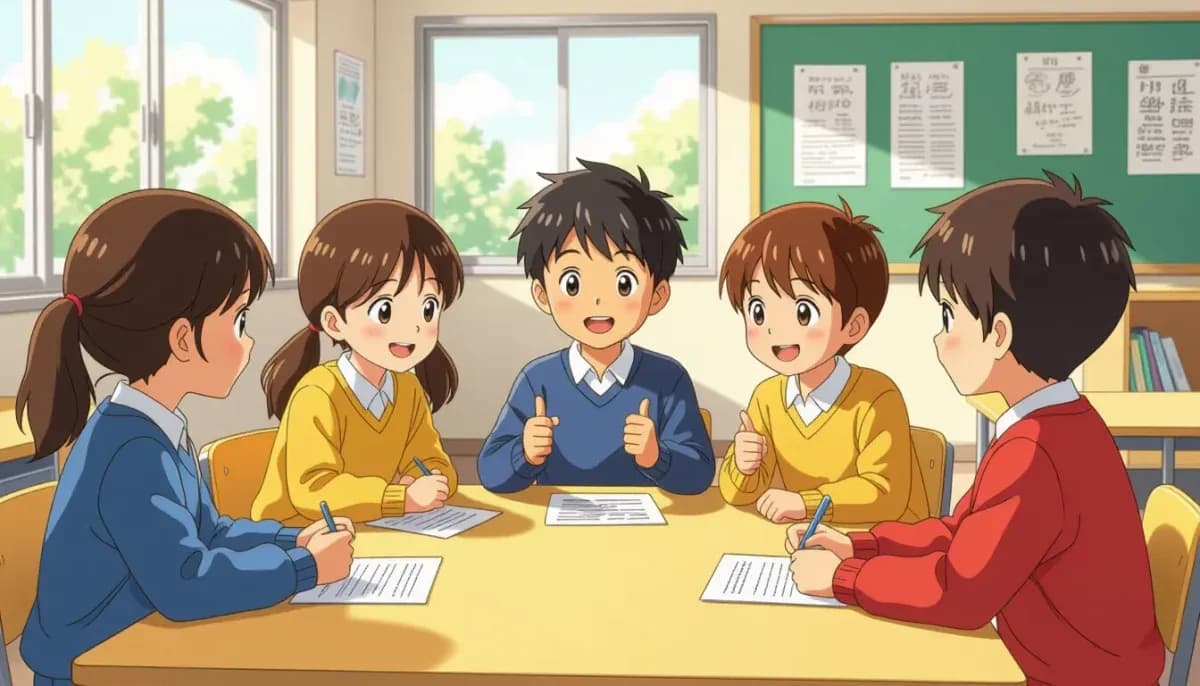
Discover how Japan builds social skills in children through school routines, moral education, and cultural values like kuuki wo yomu. A practical guide for foreign parents in Japan.
Social Skills Development in Japanese Culture: A Guide for Foreign Parents
Raising children in Japan as a foreigner means navigating one of the world's most distinct social landscapes. Japanese culture places enormous emphasis on group harmony, reading unspoken cues, and understanding one's role within a community — skills that children begin developing from their very first years of life. For expat families, understanding how Japan builds social competence in children is key to helping your kids thrive, whether they attend a Japanese public school or an international school.
This guide explores the core social skills valued in Japanese culture, how schools and families cultivate them, what the research says about child development in Japan, and practical strategies for foreign children to integrate and succeed socially.
Core Social Values That Shape Japanese Children's Development
Japanese social culture is built around a distinct set of values that differ significantly from many Western frameworks. Understanding these is the first step for any expat parent.
Kuuki wo yomu (空気を読む) — literally "reading the air" — is perhaps the most important social skill in Japan. It refers to the ability to perceive the unspoken mood or expectation in a social situation and respond appropriately, without being told what to do. Children who can't read the atmosphere are called KY (kuuki yomenai — can't read the air) — a social label that carries real consequences in school settings.
Wa (和) — harmony — is the cornerstone value. Group cohesion is prioritized over individual expression. Children learn early that disrupting the group dynamic is socially costly, and that compromise and patience are virtues, not weaknesses.
Honne and tatemae (本音と建前) — the distinction between one's true feelings (honne) and public presentation (tatemae) — also shapes how children communicate. Expressing direct disagreement can be seen as aggressive; indirect communication is a learnable, valued skill.
Meiwaku (迷惑) — causing inconvenience to others — is strongly avoided from toddlerhood. Parents and teachers consistently reinforce the idea that one's behavior affects others, building a foundation for community-minded behavior.
For foreign children accustomed to more direct or individualistic social norms, these values can be both surprising and difficult to internalize. However, they are also highly teachable — and a remarkable number of expat children adapt within their first year.
How Japanese Schools Build Social Skills
Japanese schools are unlike schools in most other countries. Social and emotional learning is not a separate add-on — it is woven into the daily fabric of school life through structures that have existed for generations.
Dotoku (道徳) — moral education — is a weekly class covering themes like empathy, honesty, respect, perseverance, and responsibility. Lessons use real-life scenarios and encourage reflection rather than rote answers. Since 2018, Dotoku has been a formal graded subject in elementary and junior high school, reflecting the national priority placed on character development.
Souji (掃除) — daily classroom and school cleaning — is a cornerstone of social skill building in Japan. Students clean their own classrooms, hallways, and even toilets. This practice builds respect for shared spaces, teaches cooperation, and reinforces the idea that every member of the community contributes.
Han (班) — small group systems — organize students into tight-knit groups of 4–6 that rotate responsibility for classroom duties, lunch service, and collaborative projects. Learning to function effectively within a small group, resolve minor conflicts, and support weaker members are daily exercises.
Undokai (運動会) — sports days — and other school events involve months of collaborative rehearsal and performance. These events are explicitly designed to build teamwork, perseverance, and collective achievement. Individual awards are rare; group success is celebrated.
Homeroom time (LHR/SHR) — short homeroom periods at the start and end of each day — create ritual consistency and give teachers daily touchpoints to address social dynamics within the class.
A meta-analysis of 85 social-emotional learning (SEL) intervention studies in Japanese schools found that while school programs have a positive effect, family and community involvement is essential for deeper, lasting change. Schools set the stage — but parents play the lead role.
Research on Social Skill Development in Japanese Children
The science of Japanese child development offers some important insights for expat parents trying to understand what is happening in their children's social world.
A longitudinal study of 1,055 Japanese children ages 2–5 found that 66.2% followed a moderate cooperation development trajectory, with the sharpest growth occurring between ages 2 and 3. Girls consistently outscored boys across all three key social skill dimensions: cooperation, self-control, and assertion. This suggests that the early preschool years are a critical window for social skill formation — meaning that enrolling children in hoikuen or yochien early pays developmental dividends beyond just language acquisition.
A cross-cultural study comparing 931 Japanese and 1,130 Chinese children found that only 22.5% of Japanese children under age 3 attend nurseries, compared to 4% in China. Japanese children who did attend nursery showed steeper cooperation development curves, suggesting early group care accelerates prosocial development. The study also confirmed that spanking is negatively associated with self-control in both cultures.
The Fun FRIENDS program — a 10-week cognitive-behavioral SEL intervention tested with Japanese preschoolers — produced statistically significant gains in both self-control (p = 0.044) and cooperation among 4–5 year olds. This confirms that structured, intentional social skill training works within Japanese cultural contexts.
Despite Japan's strong social culture, the statistics reveal significant challenges:
- In 2021, Japan recorded 240,000 truant students — the highest figure ever
- Bullying reports surged 8-fold between 2010 and 2021 (from 77,630 to 615,351 cases)
- 30% of grades 5–12 students experience moderate to severe depression or anxiety
These numbers underscore the importance of proactive social skill support — and they apply to foreign children, who face additional adjustment pressures. For more on supporting your child's mental health during this transition, see our guide on mental health and emotional wellbeing for foreign children in Japan.
Social Skills Milestones in the Japanese Context
The following table gives a practical overview of social skill benchmarks at each school stage, along with what Japanese schools emphasize and what expat parents can do to support development.
| School Stage | Age | Japanese Social Emphasis | Key Milestones | Expat Parent Tip |
|---|---|---|---|---|
| Hoikuen / Yochien | 0–6 | Group play, following routines, respecting others' belongings | Taking turns, group cleanup, apologizing sincerely | Attend hoikuen events; reinforce groupwork at home |
| Elementary (小学校) | 6–12 | Han group roles, Dotoku ethics, Souji discipline | Reading social cues, non-verbal communication, collective responsibility | Discuss Dotoku topics at home; normalize the value of cleaning together |
| Junior High (中学校) | 12–15 | Club activities (bukatsu), senpai/kohai dynamics, exam stress | Managing hierarchy, group loyalty, conflict avoidance | Help kids navigate senpai relationships; watch for social withdrawal |
| High School (高校) | 15–18 | Identity within peer group, social independence, entrance exam pressure | Asserting needs within group norms, balancing individuality and conformity | Encourage expression of opinion while respecting group norms |
For more detail on each stage, see our guides to elementary school in Japan, junior high school in Japan, and high school in Japan.
How Foreign Children Adapt: Realistic Expectations
Expat parents frequently worry about their children being ostracized or left behind socially. The reality is more nuanced — and generally more encouraging than the fears suggest.
Language and social integration tend to track together. Research from expat education specialists confirms that most children achieve conversational Japanese fluency within 6 months of immersion. Social integration typically follows language acquisition closely. The first 3–6 months are the hardest; by the end of the first year, most children have a peer group.
Japanese children are, by and large, welcoming. The same cultural norms that can seem rigid from the outside — group responsibility, taking care of each other — mean that classmates often actively help foreign children integrate. Many expat parents report that their child's classmates went out of their way to include them in groups and explain routines.
The adjustment curve is real but manageable. Foreign children need explicit coaching in the social norms that Japanese children have absorbed implicitly since infancy. This is not a failure of the child — it is simply a learning curve. Parents can accelerate this by:
- Talking about kuuki wo yomu at home using concrete examples ("What do you think your teacher was feeling when...?")
- Role-playing Japanese social scenarios — bowing correctly, apologizing with full effort (seiken), responding when a teacher calls on you
- Connecting with other expat families who have navigated the same adjustment. The Living in Nihon guide to raising children in Japan is an excellent starting point for understanding the education system your child is entering.
- Not over-correcting Western behaviors that are simply different, not wrong. Assertiveness and directness are not bad — they simply need to be expressed at appropriate moments.
The For Work in Japan guide to family life in Japan also provides helpful context on community integration strategies that help the whole family, not just children, build meaningful social connections.
Bilingual Children and Social Identity
For families raising bilingual or multilingual children in Japan, social skill development has an additional layer: navigating multiple cultural identities and social norms simultaneously.
Children who grow up speaking Japanese at school and a heritage language at home often develop a sophisticated social code-switching ability — the capacity to modulate communication style based on context. This is an asset, not a burden, though it can feel overwhelming in early years.
Research on hafu (half-Japanese) and returnee (kikokushijo) children shows that identity flexibility — the ability to hold multiple cultural identities without feeling forced to choose — correlates strongly with positive social outcomes. Our guide on cultural identity for hafu and mixed-race children in Japan covers this in detail.
Key strategies for bilingual families:
- Validate both social worlds. Avoid messaging that suggests Japanese social rules are "weird" or that your home culture is inherently superior. Both skill sets are valuable.
- Enroll early in group settings. Whether hoikuen, yochien, or international school, early group learning environments build the social foundation faster than home-only settings.
- Use the returnee exam pathway as leverage. The Chuukou Benkyou guide to returnee and foreign student exam options is a useful resource for families considering Japanese high school or university pathways that recognize bilingual experience.
- Maintain heritage language connections. Children who maintain strong heritage language skills tend to have stronger overall communication abilities. See our guide on heritage language maintenance for children in Japan.
Practical Resources and Support
Building social skills is not a solo mission. Here are the key resources available to expat families in Japan:
- Municipal international exchange associations (国際交流協会) in most cities offer multilingual support, social events, and peer connection opportunities for foreign families.
- Public school support teachers (日本語指導員) are available in most districts for children who need Japanese language and cultural adjustment support.
- PTA participation, while daunting for language reasons, is one of the fastest ways for parents and children alike to build local social networks. Many PTAs welcome foreign parents and will pair them with a bilingual buddy parent.
- Juku (塾) and sports clubs (bukatsu / extracurricular clubs) are excellent social integration tools, especially for older children entering junior high. Shared achievement and shared effort accelerate friendship formation in ways that classroom hours alone cannot.
For practical logistics on navigating the Japanese education system as a foreign family, Expats Guide Japan's overview of Japanese schools and the Japan Handbook guide to daycare and kindergarten options are both well-maintained, accurate resources.
Final Thoughts
Japan's approach to social skill development is deeply intentional, culturally embedded, and highly effective — but it assumes a child who has grown up absorbing its norms from birth. Foreign children come with different social toolkits, and that is entirely fine. The task for expat parents is not to replace their child's existing social competencies, but to add the Japanese layer on top of them.
The children who thrive most in Japanese social environments are not the ones who arrive speaking perfect Japanese or who perfectly mimic every cultural norm. They are the ones who arrive with curiosity, warmth, and a willingness to try — and who have parents paying close attention and offering support at each stage.
Japan will meet your child where they are. The social culture that can seem impenetrable from the outside is, at its core, built around care for the group — and your child is part of that group.
For more on raising children in Japan as a foreign family, explore our complete Japanese education system guide and our overview of raising bilingual children in Japan.

Originally from Vietnam, living in Japan for 16+ years. Graduated from Nagoya University, with 11 years of professional experience at Japanese and international companies. Sharing practical information for foreign parents raising children in Japan.
View Profile →Related Articles
Sibling Relationships in Multicultural Families
A practical guide to sibling dynamics in multicultural families in Japan. Learn how to strengthen bonds, navigate cultural differences, and support your children's identity development.
Read more →
Building Social Confidence in Your Child
Practical strategies for foreign parents raising socially confident children in Japan. Covers Japanese parenting philosophy, research-backed techniques, community resources, and expat-specific challenges.
Read more →
Summer Camps and Group Activities for Making Friends
Discover the best summer camps and year-round group activities to help your children make friends in Japan. Practical guide for expat families with activity recommendations by age.
Read more →
Online Friendships and Safety for Children in Japan
A complete guide to online friendships and internet safety for children in Japan. Learn about Japanese platforms, legal protections, school guidelines, and how to keep your child safe online as a foreign family in Japan.
Read more →
Maintaining Friendships After Moving Within Japan
Learn how to maintain friendships after moving within Japan. Essential tips on LINE, communication strategies, rebuilding your social circle, and navigating Japan's unique social culture as an expat.
Read more →
Shy and Introverted Children in Social Japan
How to support shy and introverted children in Japan's conformity-driven social culture. Practical strategies for foreign parents on school, activities, and mental health resources.
Read more →