
Social Rules and Etiquette Japanese Children Follow

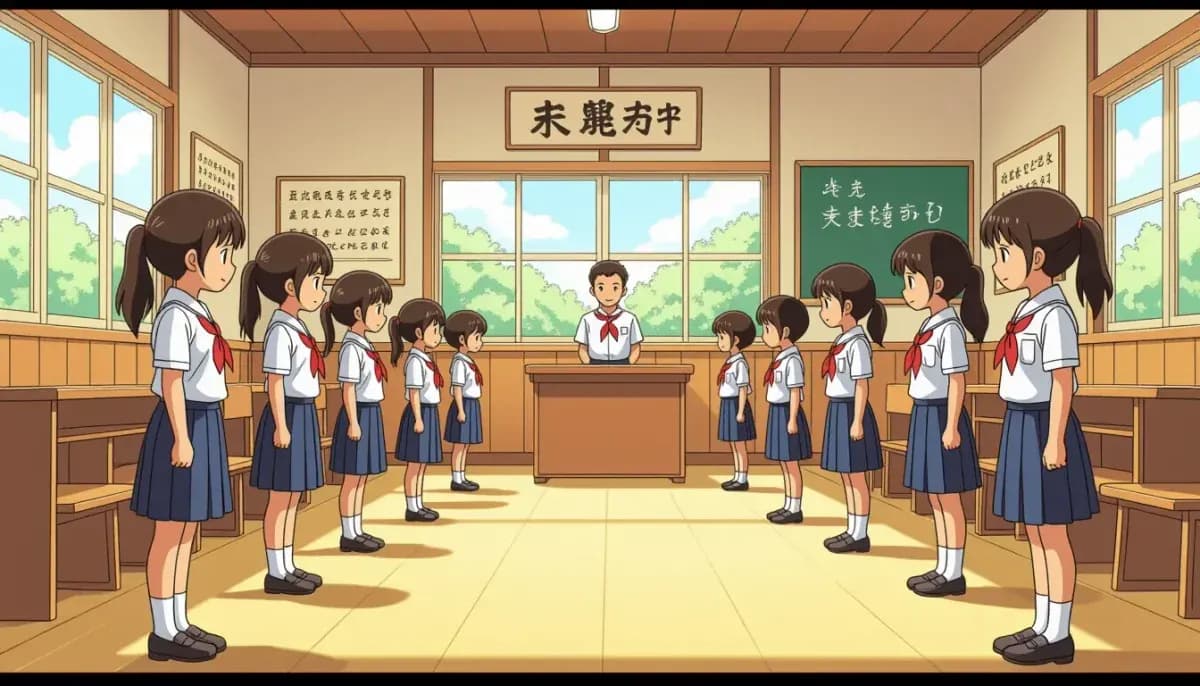
Discover the key social rules and etiquette Japanese children follow — from school cleaning routines and lunch customs to public behavior and home rules. Essential reading for expat families in Japan.
Social Rules and Etiquette Japanese Children Follow
If you've ever watched Japanese children on a train, in a restaurant, or walking home from school, you've probably noticed something remarkable: they seem exceptionally well-behaved. But this isn't magic — it's the result of a carefully structured system of social rules and etiquette that Japanese children learn from a very young age. For foreign families raising children in Japan, understanding these unspoken rules can make a huge difference in how smoothly your child integrates into Japanese society.
This guide breaks down the key social rules and etiquette Japanese children are expected to follow, from classroom behavior to public conduct, and explains what that means for expat kids navigating life in Japan.
Why Social Rules Matter So Much in Japan
Japan is a society built on the concept of wa (和) — harmony. From preschool onward, children are taught that maintaining group harmony takes priority over individual expression. This isn't about suppressing personality; it's about understanding that one's behavior affects everyone around them.
The cultural concept of Kejime (けじめ) is central to this. Children are taught to correctly "read the context" and switch their behavior accordingly — quiet and focused during lessons, free and playful during recess, respectful and reserved in public. This situational awareness is considered one of the most important social skills a Japanese child can develop.
Another foundational principle is personal responsibility. Japanese children are expected not just to follow rules, but to internalize why those rules exist — for the benefit of the community. This mindset is deliberately cultivated through everyday school routines and family practices.
For expat families, understanding this cultural framework is essential. If you're navigating the Japanese education system or helping your child adapt to their first day of elementary school, knowing these cultural norms will help you set realistic expectations and prepare your child effectively.
Etiquette at School: Routines That Teach Respect
Japanese schools are designed to teach social values, not just academic content. Many school routines that seem unusual to foreigners are actually intentional lessons in community responsibility.
O-soji: Student-Led Cleaning
Perhaps the most striking school custom for newcomers is O-soji (お掃除) — the daily cleaning period. Japanese public schools have no janitors. Students clean their own classrooms, hallways, restrooms, and even school grounds every day. Children bring cleaning cloths from home and take turns assigned to different areas.
This isn't punishment — it's a deliberate practice to teach children to respect shared spaces. The message is clear: you made the mess, you clean it up. This responsibility extends outside school; Japanese children are generally very careful not to litter in public spaces.
Kyushoku: Lunch as a Community Activity
In Japanese public elementary and junior high schools, lunch isn't just about eating. Students put on white coats and hats, serve food to their classmates, and eat together in the classroom. Meals are prepared by school nutritionists and are highly balanced.
This Kyushoku (給食) system teaches children to care for others, work as a team, and appreciate food. Wasting food is strongly discouraged, and children are encouraged (though not forced) to finish their meals.
Uwabaki: Indoor Shoe Culture
Students change from street shoes into uwabaki (上履き) — soft indoor school shoes — upon entering the building. This keeps the school clean and is also a powerful lesson in spatial respect: outside dirt stays outside. Children learn very early that different spaces have different rules.
This extends to public spaces too — stepping on train seats with shoes is considered extremely rude, and children are corrected immediately if they try.
| School Etiquette Rule | Purpose | Age Introduced |
|---|---|---|
| O-soji (daily cleaning) | Respect for shared spaces | Elementary (Grade 1) |
| Kyushoku (communal lunch) | Community care, teamwork | Elementary (Grade 1) |
| Uwabaki (indoor shoes) | Spatial respect, cleanliness | Kindergarten/Elementary |
| Morning greetings (aisatsu) | Respect for teachers/peers | Preschool |
| Quiet hallway walking | Consideration for others | Elementary |
| Raising hand before speaking | Order, respect for turn-taking | Preschool |
For more details on navigating Japanese school customs, see the Japanese school system grade structure guide and what to expect on the first day of elementary school.
Public Behavior: The Unspoken Rules
Japan's public spaces — trains, restaurants, parks, and shopping areas — operate on a set of understood social rules that children are expected to learn and follow.
Quiet in Public Transport
This is one of the most visible etiquette norms. Children are expected to keep their voices low on trains and buses. Running in train stations is frowned upon. Eating on local trains (not shinkansen) is generally avoided. Phones should be on silent mode and calls kept to a minimum.
Parents who allow children to be loud or disruptive in public spaces receive visible social disapproval from other passengers. Japanese parents typically begin correcting this behavior from toddlerhood, often using quiet, calm redirection rather than loud scolding (which itself would draw negative attention).
No Littering — Ever
Japanese children are taught from a young age never to litter. In a country with very few public trash cans, children learn to carry their trash home with them. School cleaning routines reinforce this — if you're responsible for cleaning up, you think twice before making a mess.
This norm is so deeply ingrained that many children feel genuine discomfort when they see others littering. It's a powerful example of how school routines shape real-world behavior.
Greetings and Bowing
Aisatsu (挨拶) — proper greetings — are taken seriously in Japan. Children are expected to greet teachers, neighbors, and family members with appropriate phrases and a bow. The depth of the bow varies with context: a small nod for peers, a deeper bow for teachers and elders.
Children practice these greetings at school every day. A child who does not greet neighbors or teachers properly may be seen as having poor upbringing. For expat children, learning basic Japanese greetings is one of the most impactful steps toward social integration.
Home Rules: How Families Reinforce Etiquette
Social rules aren't just enforced at school — Japanese homes have their own structure that reinforces the same values.
Removing Shoes at the Entrance
The genkan (玄関) — the entryway — is where street shoes are removed before entering a home. This is non-negotiable in virtually every Japanese household. Children learn this almost before they can walk. The genkan is a physical and symbolic threshold between the outside world and the private home.
Expat families who adopt this custom often find it helps their children transition smoothly into Japanese social settings, as the habit becomes second nature.
Meal Etiquette
Japanese children are taught specific meal etiquette that differs from many Western norms. Before eating, children say itadakimasu (いただきます) — an expression of gratitude for the food. After finishing, they say gochisousama deshita (ごちそうさまでした).
Specific table rules include: not sticking chopsticks upright in rice (associated with funerals), not passing food chopstick-to-chopstick, eating what is served without complaining, and finishing the meal. Wasting food is considered disrespectful.
Independence and Responsibility from an Early Age
One of the most striking aspects of Japanese childhood is the expectation of independence. Elementary-age children walk to school in neighborhood groups (todan) without parents — including 6-year-olds navigating public transportation in major cities like Tokyo. This is enabled by Japan's extraordinary public safety record and a culture of collective neighborhood responsibility.
Children carry their own belongings, manage their school schedules, and are expected to handle minor problems independently. This builds confidence and reinforces that social responsibility includes being reliable and self-sufficient.
School Rules That Surprise Foreigners
Beyond the daily routines, Japanese schools have specific rules that can catch expat families off guard. These rules are part of the social etiquette framework — they signal belonging, conformity, and respect for community standards.
- No accessories: Earrings, necklaces, bracelets, and nail polish are typically prohibited in public schools.
- Natural hair requirements: Many schools prohibit dyed or chemically treated hair. Some high schools have gone so far as to require students to submit "natural hair certificates" — photos from childhood proving their hair is naturally black. This has sparked significant public debate in recent years.
- Uniform standards: Uniforms must be worn correctly at all times, including during the commute. Wearing the uniform improperly in public is seen as a reflection on the school.
- No personal electronics during school hours: Smartphones are typically collected at the start of the school day.
These rules can be particularly challenging for children from mixed-heritage (hafu) backgrounds. If your child has naturally wavy, brown, or light hair, it's worth discussing this proactively with school administration. For more on this, see Understanding Hafu Identity in Modern Japan.
Challenges for Expat Children — and How to Help
Adapting to Japan's social rules can be genuinely difficult for children who grew up in more expressive, individualistic cultures. The expectation to stay quiet, conform to group norms, and suppress individual reactions can feel stifling at first.
Research shows that expat children often experience stress during this adjustment period. See our guide on Signs of Stress and Anxiety in Expat Children for warning signs to watch for and how to respond supportively.
Practical Tips for Expat Parents
Start with the basics: Teach your child basic Japanese greetings, the importance of removing shoes, and the expectation of quiet public behavior before school starts.
Frame rules positively: Instead of "you can't be loud on the train," explain "in Japan, we keep our voices low so everyone can have a peaceful ride." This gives children the why, not just the rule.
Don't expect instant compliance: Adjustment takes time. Japanese children have been learning these rules since birth. Your child is catching up — that takes patience from both of you.
Use school as a learning environment: Japanese schools are actually excellent environments for teaching social rules naturally. Your child will learn O-soji, Kyushoku customs, and greeting culture through daily experience.
Connect with other expat families: Communities of foreign parents who have navigated the same journey can be invaluable. Groups at Living in Nihon and expat forums share real-world advice about raising children in Japan.
For more practical guidance on the transition into the Japanese school system, the For Work in Japan community and Chuukou Benkyou offer resources covering education and daily life in Japan.
The Bigger Picture: What These Rules Actually Teach
It's easy to view Japan's etiquette rules as restrictive, but there's a deeper purpose. These social norms teach children:
- Empathy: Consider how your behavior affects those around you
- Responsibility: You are accountable for your space, your belongings, and your actions
- Resilience: Follow through even when it's inconvenient
- Community values: The group's wellbeing is as important as your own
These are values that translate across cultures. Many expat parents who initially felt the rules were too rigid come to appreciate how their children develop a genuine consideration for others — a trait that serves them well no matter where they live.
For additional insights on Japanese school customs and how to navigate them, the Japan Living Guide's school customs article offers detailed guidance specifically for expat families, and Tsunagu Japan's guide to Japanese parenting rules covers many of the unwritten norms that you won't find in official school handbooks.
Conclusion
The social rules and etiquette Japanese children follow are more than just a list of dos and don'ts — they are the practical expression of Japan's deepest cultural values. Harmony, responsibility, respect for others, and community awareness are not abstract concepts in Japan; they are daily practices embedded in school routines, family habits, and public norms.
For expat children, adapting to these rules takes time and patience — but it also offers an extraordinary opportunity. Children who learn to navigate Japan's social framework gain not just cultural competence, but a genuine appreciation for how thoughtful behavior makes society work better for everyone.
If you're raising bilingual children in Japan, you might also benefit from reading about the benefits of raising bilingual children in Japan and the best methods for teaching children Japanese — two skills that go hand-in-hand with social integration.

Originally from Vietnam, living in Japan for 16+ years. Graduated from Nagoya University, with 11 years of professional experience at Japanese and international companies. Sharing practical information for foreign parents raising children in Japan.
View Profile →Related Articles
Sibling Relationships in Multicultural Families
A practical guide to sibling dynamics in multicultural families in Japan. Learn how to strengthen bonds, navigate cultural differences, and support your children's identity development.
Read more →
Building Social Confidence in Your Child
Practical strategies for foreign parents raising socially confident children in Japan. Covers Japanese parenting philosophy, research-backed techniques, community resources, and expat-specific challenges.
Read more →
Summer Camps and Group Activities for Making Friends
Discover the best summer camps and year-round group activities to help your children make friends in Japan. Practical guide for expat families with activity recommendations by age.
Read more →
Online Friendships and Safety for Children in Japan
A complete guide to online friendships and internet safety for children in Japan. Learn about Japanese platforms, legal protections, school guidelines, and how to keep your child safe online as a foreign family in Japan.
Read more →
Maintaining Friendships After Moving Within Japan
Learn how to maintain friendships after moving within Japan. Essential tips on LINE, communication strategies, rebuilding your social circle, and navigating Japan's unique social culture as an expat.
Read more →
Shy and Introverted Children in Social Japan
How to support shy and introverted children in Japan's conformity-driven social culture. Practical strategies for foreign parents on school, activities, and mental health resources.
Read more →