
Japanese Summer Festivals (Matsuri) with Kids

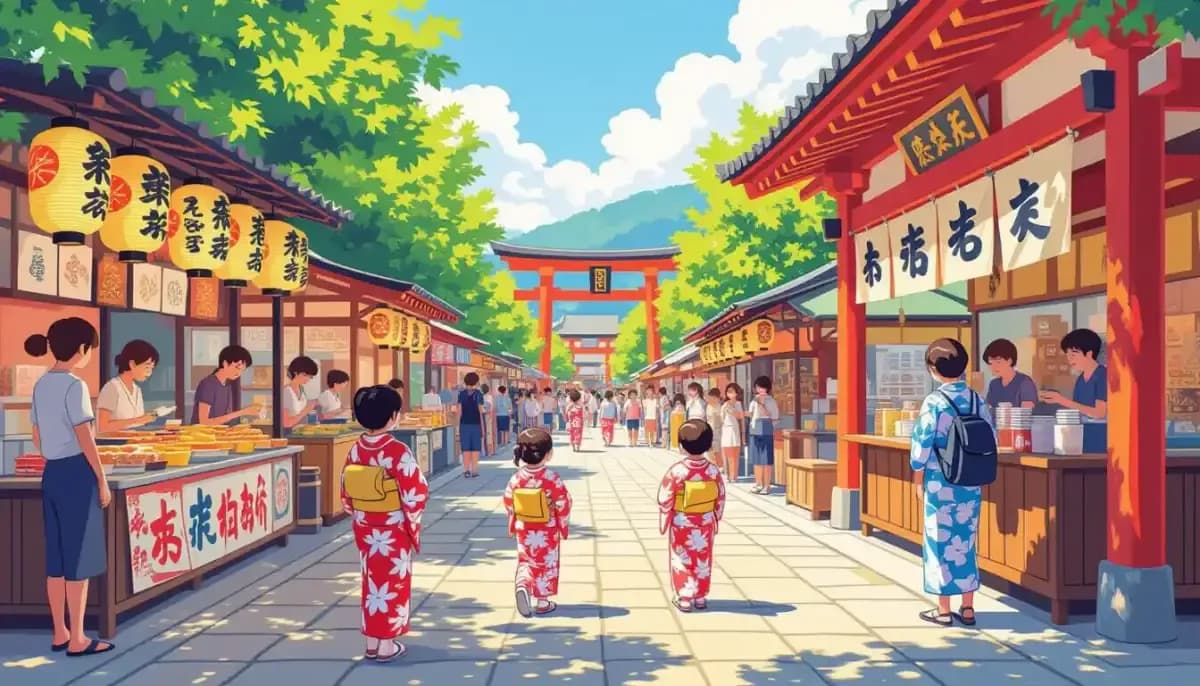
Complete guide to Japanese summer festivals (matsuri) for foreign families with children. Top festivals, kid-friendly activities, yukata tips, heat safety, and how to participate respectfully.
Japanese Summer Festivals (Matsuri) with Kids: A Complete Family Guide
Summer in Japan is a season of magic, color, and community — and nowhere is this more alive than at the country's beloved matsuri (祭り). For foreign families raising children in Japan, attending a summer festival is one of the most memorable cultural experiences you can offer your kids. From the dazzling illuminated floats of the Aomori Nebuta Festival to the gentle swaying lanterns of Obon, Japan's matsuri calendar is packed with opportunities for families to connect with Japanese tradition in a hands-on, joyful way.
This guide covers everything foreign parents need to know: which summer festivals are best for children, how to prepare, what to wear, what to eat, safety tips for the heat, and how to participate respectfully as an expat family.
What Is a Matsuri? Understanding Japanese Festivals for Kids
A matsuri is a traditional Japanese festival, usually organized by a local Shinto shrine or Buddhist temple. Japan holds approximately 300,000 festivals annually, of which about 1,200 are major cultural events — generating an estimated 530 billion yen in economic activity each year. As of 2024, 33 Japanese festivals are recognized as UNESCO Intangible Cultural Heritage.
The core of most matsuri is religious: Shinto rites originally held to honor the gods (kami) for good harvests and to ward off disease and calamity. The central tradition involves carrying the kami through the neighborhood in a mikoshi (portable shrine) — the only time each year that the deity leaves the shrine. Floats called dashi, yatai, or danjiri are decorated with silk tapestries and carry live drum-and-flute performers as they parade through the streets.
For children, though, a matsuri is simply incredible fun: stalls selling sweet kakigori shaved ice, the thrill of goldfish scooping, drumbeats you can feel in your chest, and thousands of people in colorful yukatas moving together in festive dances. It is a living classroom of Japanese culture that no textbook can replicate.
For a broader look at Japanese cultural celebrations throughout the year, see our guide to Japanese Holidays, Festivals, and Seasonal Events for Families.
Top Japanese Summer Festivals Ideal for Families
Not every matsuri is equally accessible for young children, especially foreign families new to Japanese festival culture. Here are the top summer festivals that combine spectacle, child-friendly activities, and cultural depth.
Gion Festival (Gion Matsuri), Kyoto — July
Japan's most famous festival, the Gion Festival runs the entire month of July and draws approximately 1.8 million visitors. The main events are the Yamaboko Junko float parades on July 17 (Sakimatsuri) and July 24 (Atomatsuri). Enormous multi-story floats covered in elaborate tapestries — some dating back hundreds of years — are pulled through central Kyoto by teams of men in traditional costume.
On the evenings before the main parades (the Yoiyama evenings, July 14–16), the streets of Gion become a massive open-air festival with vendors, lanterns, and the floats on display up close. Children can walk alongside the floats and enjoy the atmospheric lantern light. The floats themselves are UNESCO World Heritage elements.
Aomori Nebuta Festival (Nebuta Matsuri), Aomori — August 2–7
The Nebuta Festival attracts 2.5 million visitors to the small city of Aomori in early August. Its hallmark is breathtaking: giant illuminated warrior figures made of paper and wire — some reaching 5 meters tall and 9 meters wide — parade through the streets at night. Each float takes skilled artisans an entire year to construct.
What makes Nebuta especially magical for families is that ordinary people can join the parade as Haneto dancers, wearing the festival's distinctive costume (bells, straw hat, and yellow pants) and dancing the simple, exuberant Haneto dance alongside the floats. Costumes can be rented in the city. Children absolutely love this — jumping and shouting "Rassera! Rassera!" with thousands of others under the glowing floats.
Tanabata (Star Festival) — July 7 and August 6–8
Tanabata is celebrated for over 400 years and is one of the most child-friendly festivals in Japan. Based on the legend of two star-crossed lovers (the stars Vega and Altair), Tanabata invites families to write wishes on tanzaku (colorful paper strips) and tie them to bamboo branches. For children, writing down their wishes — for good grades, new friendships, or a pet — is deeply meaningful.
The largest Tanabata festival is in Sendai (Miyagi), August 6–8, where handmade bamboo decorations stretching for meters line the covered shopping arcades, paired with a grand fireworks show over the Hirose River. Other major celebrations include Hiratsuka (Kanagawa), Anjō (Aichi), and Asagaya (Tokyo), where enormous papier-mâché characters decorate the shotengai.
Tenjin Festival (Tenjin Matsuri), Osaka — July 24–25
One of Japan's three greatest festivals, the Tenjin Festival centers on Osaka Tenmangu Shrine and culminates in a spectacular boat procession on the Okawa River on July 25. Over 1.3 million people attend each year. The river ceremony — with 100 illuminated boats carrying musicians and dancers — is a uniquely beautiful spectacle for children to see from the riverbanks. Fireworks (hanabi) light up the sky above the river at night.
Obon and Bon Odori Dances — Mid-August
The Obon period (mid-August, though dates vary by region) is when Japanese families welcome back the spirits of their ancestors. While Obon itself is a solemn occasion, the Bon Odori (Bon dance) is anything but — it's a joyful circle dance performed in parks and shrine courtyards across the country, and anyone can join in, regardless of skill level.
Bon Odori is the perfect matsuri activity for young children and foreign families. The dances are simple and repetitive. Locals genuinely welcome newcomers to join the circle. You'll dance to traditional songs like "Tanko Bushi" (the coal-mining dance) while wearing yukata and holding paper fans. Check your local neighborhood association (chokai) for Bon Odori events near you — these smaller community events are often more relaxed and welcoming than the large commercial festivals.
Kochi Yosakoi Festival — August 9–12
The Yosakoi Festival in Kochi City features over 10,000 dancers from across Japan competing in dynamic, energetic dance performances using naruko (wooden hand clappers). Watching the performances — with competing teams in elaborate costumes — is thrilling for children who love music and movement. A more accessible version, the Yosakoi Soran Festival, is held in Sapporo in June and is also family-friendly.
Kid-Friendly Festival Activities (Yatai Stalls)
The yatai (屋台) food and game stalls are often the highlight of a matsuri for young children. Here is a quick reference guide:
| Activity | Japanese Name | What It Is | Kid Appeal |
|---|---|---|---|
| Goldfish scooping | Kingyo-sukui (金魚すくい) | Scoop goldfish with a fragile paper net | Very high — beloved tradition |
| Yo-yo balloon fishing | Yo-yo tsuri (ヨーヨー釣り) | Fish water balloons with a hook | Very high — tactile and colorful |
| Super ball scooping | Suupaa booru sukui | Scoop rubber balls from a water tub | High — similar to goldfish scooping |
| Ring toss | Wanage (輪投げ) | Toss rings onto prizes | High |
| Shaved ice | Kakigori (かき氷) | Flavored ice with syrups (melon, strawberry, uji matcha) | Very high in summer heat |
| Ramune | ラムネ | Marble-sealed soda in unique glass bottles | High — novel and fizzy |
| Takoyaki | たこ焼き | Octopus balls in batter | Medium — check for octopus allergy |
| Chocolate banana | Choco banana (チョコバナナ) | Banana on stick dipped in chocolate | Very high |
| Cotton candy | Wata ame (わたあめ) | Hand-spun cotton candy | Very high |
| Yakitori | 焼き鳥 | Grilled chicken skewers | Medium |
For more on food and nutrition choices for your children in Japan, see our guide to Nutrition, School Lunches, and Feeding Children in Japan.
What to Wear: Yukata and Kids' Jinbei
Wearing traditional Japanese summer clothing is one of the most delightful parts of attending a matsuri. The options for children are:
Yukata (浴衣): A lightweight cotton kimono worn with a fabric belt (obi). Available in children's sizes at department stores (depato), AEON malls, and festival stalls. Prices range from ¥3,000 to ¥15,000 for a complete set. Girls' yukatas come in floral and seasonal patterns; boys' in navy and indigo geometric designs.
Jinbei (甚平): A short-sleeved jacket and shorts set in cotton or linen. Much more comfortable than a yukata for very young children and in extreme heat. Widely available at ¥1,500–¥5,000. Many Japanese families dress young boys in jinbei for summer festivals.
Footwear note: Geta (木下駄 — wooden sandals) complete the traditional look but are difficult for children to walk in for long distances. Many parents opt for tabi socks with modern sandals or simply comfortable sneakers. No one will judge — comfort matters more at summer festivals.
You can often rent yukatas near major festival venues. Look for rental stalls near train stations in cities like Kyoto, Asakusa (Tokyo), and Kamakura.
Heat Safety and Practical Tips for Families
Japanese summer heat is not to be underestimated. The combination of temperatures above 35°C and extreme humidity (90%+ in many regions) makes heatstroke (necchusho) a real risk, especially for young children who dehydrate faster than adults.
Before you go:
- Check the festival schedule and crowd peak times — late afternoon/evening is usually cooler and less crowded than midday
- Apply sunscreen (SPF50) to all exposed skin
- Pack portable uchiwa (flat paper fans) or electric handheld fans — sold at ¥100 shops
- Wear light, breathable fabrics; avoid synthetic fibers
During the festival:
- Carry reusable water bottles and refill at festival water stations or convenience stores
- Purchase ion drinks (Pocari Sweat, Aquarius) at vending machines — these replace electrolytes more effectively than water alone
- Take frequent shade breaks; Japanese department stores and shopping malls near festival routes are air-conditioned
- Recognize heat exhaustion symptoms in children: pale skin, excessive sweating, weakness, nausea
After fireworks:
- Train stations near major fireworks (hanabi) events become extremely congested after the show ends
- Plan to wait 30–60 minutes near the venue, or walk to a station 1–2 stops away
- Consider booking a taxi or pre-arranging a car for families with strollers or very young children
For comprehensive guidance on keeping your children healthy in Japan, see our article on Healthcare and Medical Care for Children in Japan.
How to Participate Respectfully as a Foreign Family
Matsuri are sacred community events, not tourist performances. As a foreign family, you are genuinely welcomed at virtually all summer festivals — but a few cultural norms help ensure a positive experience for everyone:
Photography: It is generally fine to photograph festival floats, food stalls, and the general crowd. However, always ask permission before photographing individuals (especially in formal or religious processions) and avoid photographing inside shrine buildings. Watch for posted signs.
Mikoshi etiquette: If you are watching a mikoshi procession, do not touch the portable shrine. The kami is considered to be inside. Standing respectfully and stepping aside as the procession passes is appreciated.
Trash: Japan has very few public trash cans. Bring a small plastic bag for your own waste and carry it home — this is standard practice at Japanese festivals.
Joining bon odori: Always join from the outer edge of the circle and follow the movements of those around you. Mistakes are expected and forgiven — the key is to participate with genuine enthusiasm. Festival organizers and nearby Japanese families will often smile and gesture to help you follow along.
Children's behavior: Japanese festival crowds are generally tolerant of young children's noise and energy. That said, keeping children from running through formal processions or climbing on floats or shrine equipment is important.
For more on navigating Japanese cultural norms with your family, see Understanding Japanese Parenting Culture as a Foreign Parent.
Making Matsuri Part of Your Family's Yearly Rhythm
One of the richest gifts you can give your children growing up in Japan is a sense of seasonal rhythm — the feeling that summer means festivals, that Obon means ancestor lanterns, that the sound of taiko drums means it's matsuri time. Foreign families who actively participate in local neighborhood matsuri often report that it dramatically accelerates their children's sense of belonging in Japan.
Look for small, local matsuri organized by your neighborhood's shrine or town association. These community-level events — often with just a few dozen stalls and a modest Bon Odori circle — are more intimate and welcoming than the massive tourist festivals, and they're where your children will actually make Japanese friends and memories that last a lifetime.
For ideas on building your family's broader social connections in Japan, see Making Friends and Developing Social Skills in Japan and Community and Support Networks for Foreign Families in Japan.
For planning wider adventures around Japan in summer, our Family Travel in Japan: Destinations and Tips for Kids guide has seasonal itinerary ideas.
Further Resources
- Living in Nihon — Japanese Seasons, Traditions & Events Complete Guide: A comprehensive resource covering seasonal Japanese cultural events for expat families, including summer matsuri.
- For Work in Japan — Living in Japan Guide: Practical guidance for foreigners navigating life and culture in Japan.
- Chuukou Benkyou — Japanese Culture Resources: Resources for understanding Japanese life and learning.
- Japan Travel (JNTO) — Japanese Summer Festivals: The Japan National Tourism Organization's official guide to summer festivals.
- Japan Guide — Japanese Festivals (Matsuri): Detailed festival calendar and etiquette guide.
- Expat's Guide to Japan — Tanabata Matsuri: A focused guide to participating in Tanabata as a foreigner.
- Tiny Tot in Tokyo — Summer Festivals with Kids: Practical tips from a family blog specifically focused on Tokyo with young children.

Originally from Vietnam, living in Japan for 16+ years. Graduated from Nagoya University, with 11 years of professional experience at Japanese and international companies. Sharing practical information for foreign parents raising children in Japan.
View Profile →Related Articles
Cherry Blossom Season (Hanami) with Children
Complete guide to enjoying cherry blossom season (hanami) with children in Japan. Best family parks, safety tips, what to bring, cultural etiquette, and activities for kids during sakura season.
Read more →
Seasonal Crafts and Activities to Do with Your Children
Discover the best seasonal crafts and activities to do with your children in Japan — from spring koinobori and Tanabata wishes to autumn moon viewing and Setsubun bean throwing. A complete guide for expat families.
Read more →
School Events Calendar: What to Expect Throughout the Year
A complete guide to the Japanese school events calendar for foreign parents. Learn about Sports Day, Cultural Festival, graduation ceremonies, and all major school events throughout the year.
Read more →
Christmas Celebrations in Japan with Children
Complete guide to celebrating Christmas in Japan with kids: KFC traditions, stunning illuminations, gift shopping, at-home crafts, and practical tips for foreign families living in Japan.
Read more →
Halloween in Japan: How Families Celebrate
Discover how families celebrate Halloween in Japan: theme park events, shopping mall trick-or-treat routes, school parties, and the best family-friendly Halloween events across the country.
Read more →
Obon Festival Explained for Foreign Families
A complete guide to Obon festival for foreign families in Japan: dates, traditions, Bon Odori, Toro Nagashi, and how your family can participate respectfully and joyfully.
Read more →