Nutrition, School Lunches, and Feeding Children in Japan: The Complete Guide for Foreign Parents
If you're raising children in Japan, one of the first things you'll notice is how seriously the country takes feeding its kids. Japan's school lunch program — known as kyushoku (給食) — is widely regarded as one of the best in the world. But navigating mealtimes, school food culture, and Japanese nutritional expectations as a foreign parent can be challenging. This comprehensive guide explains everything you need to know about nutrition, kyushoku, and feeding children in Japan.
What Is Kyushoku? Japan's Famous School Lunch System
Kyushoku is far more than just a meal at school. It's a carefully designed nutritional and educational program that has been part of Japanese public school life since 1954. Japan's first school lunch was actually served much earlier, in 1889 in Tsuruoka City, Yamagata, when Buddhist priests at a temple school provided rice balls, grilled fish, and pickles to children from poor families.
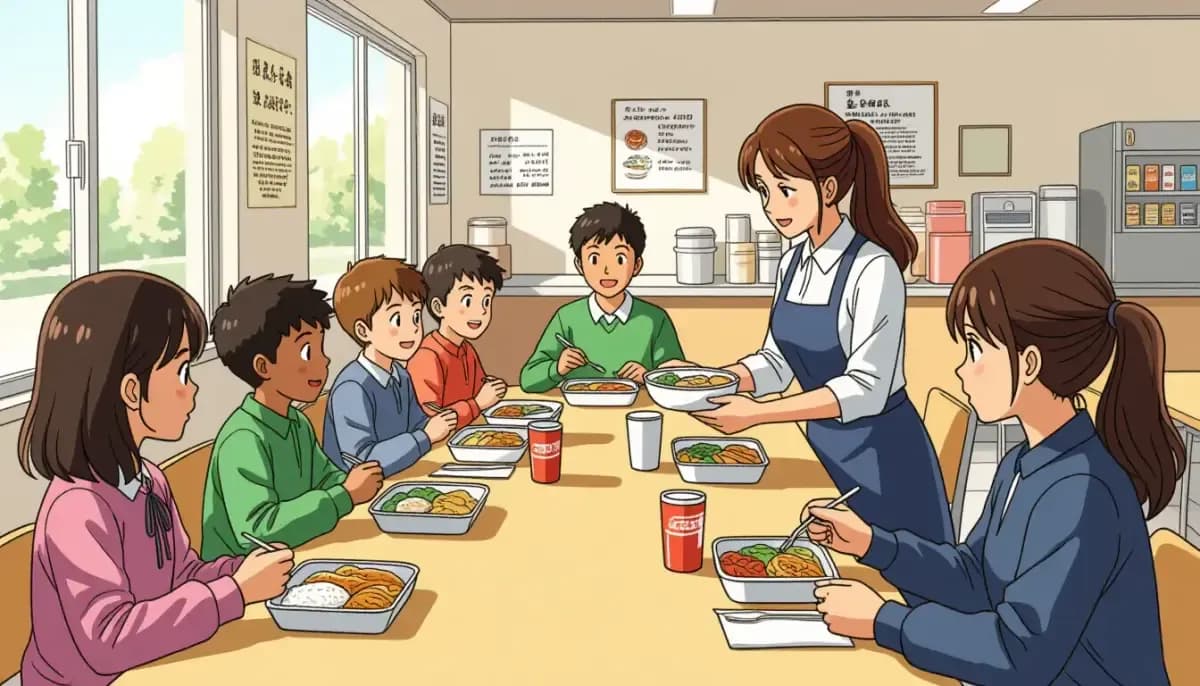
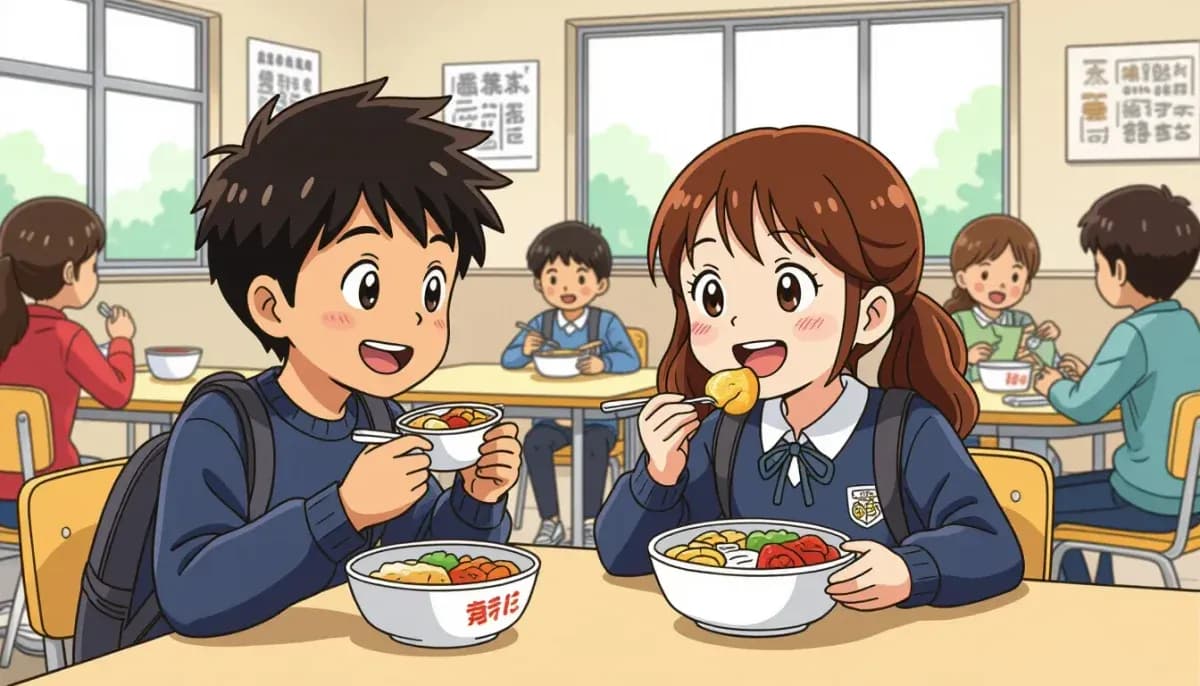
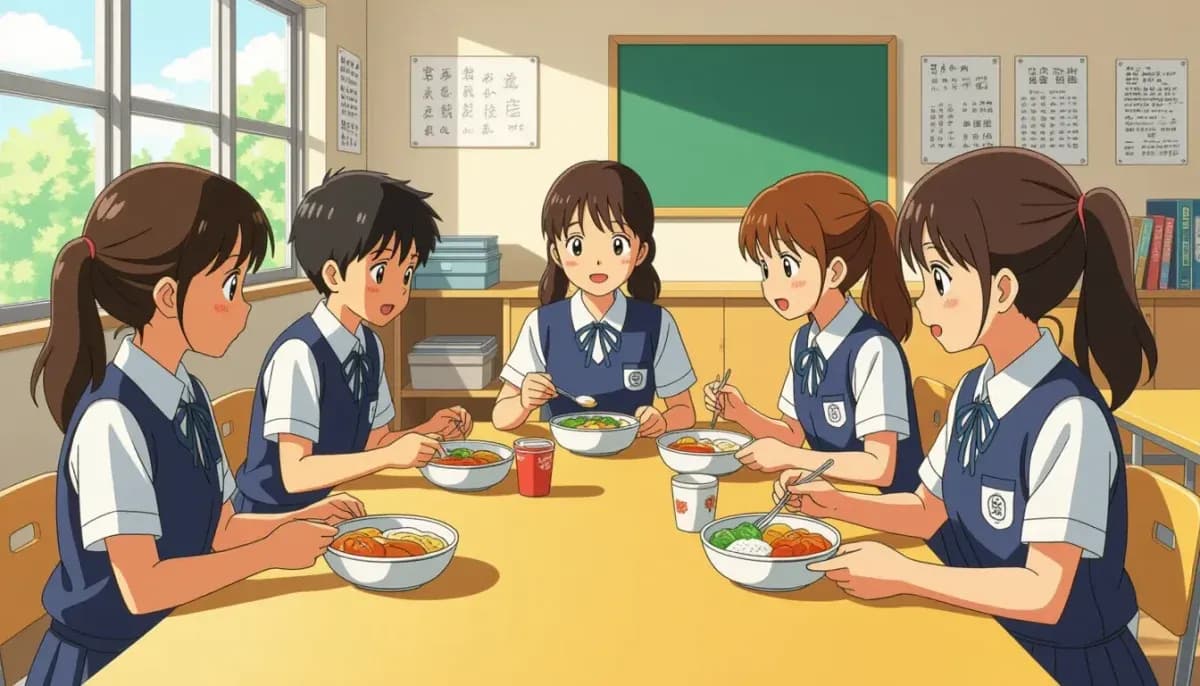
Today, 99.7% of public elementary schools and 98.2% of public junior high schools provide kyushoku — serving over 10 million students every single day. Unlike many countries where school lunch is optional or varies by class, in Japan essentially every student eats the same meal, together, in their classroom.
Key features of the kyushoku system:
- Universal and mandatory — all students eat together; home-packed bento are generally not permitted (except for documented medical reasons)
- Nutritionally designed — licensed nutrition teachers (eiyo kyoyu) create menus based on national standards
- Educational — eating together is considered part of school curriculum under the Shokuiku (food education) framework
- Locally sourced — as of 2021, 56% of school food purchases came from local producers
For a broader look at how Japan's education system works for foreign families, see our Complete Guide to the Japanese Education System.
How Kyushoku Works: The Daily Lunch Ritual
The kyushoku experience is as much about ritual and responsibility as it is about food. Here's what a typical school lunch day looks like:
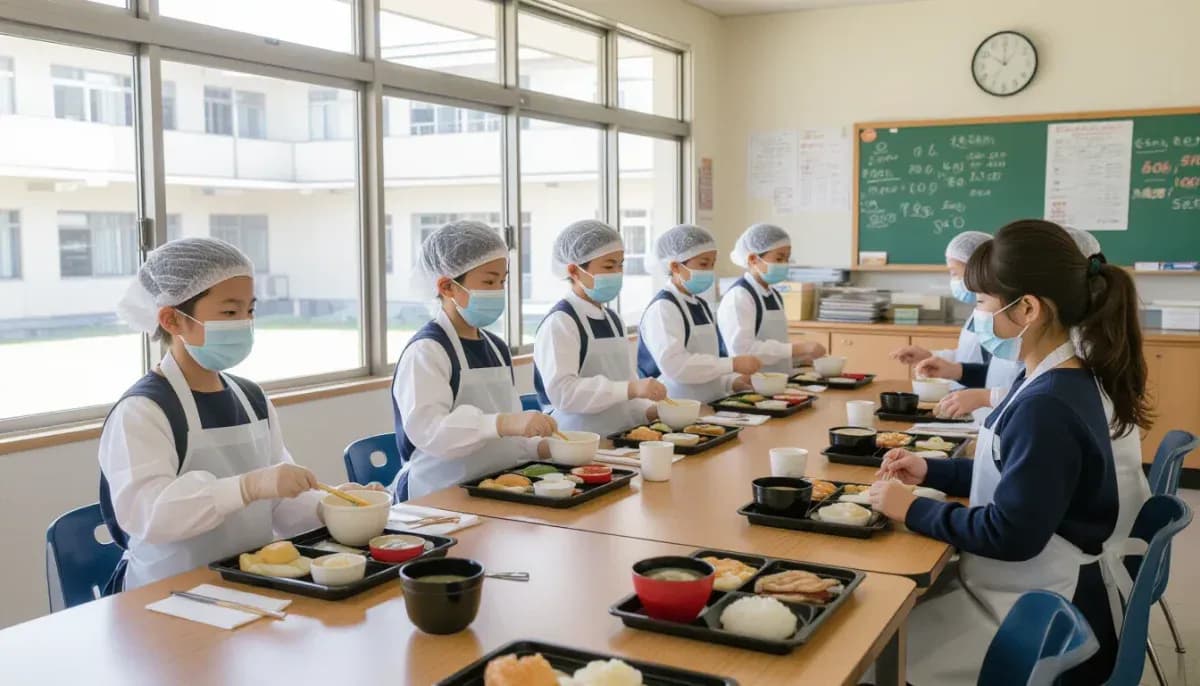
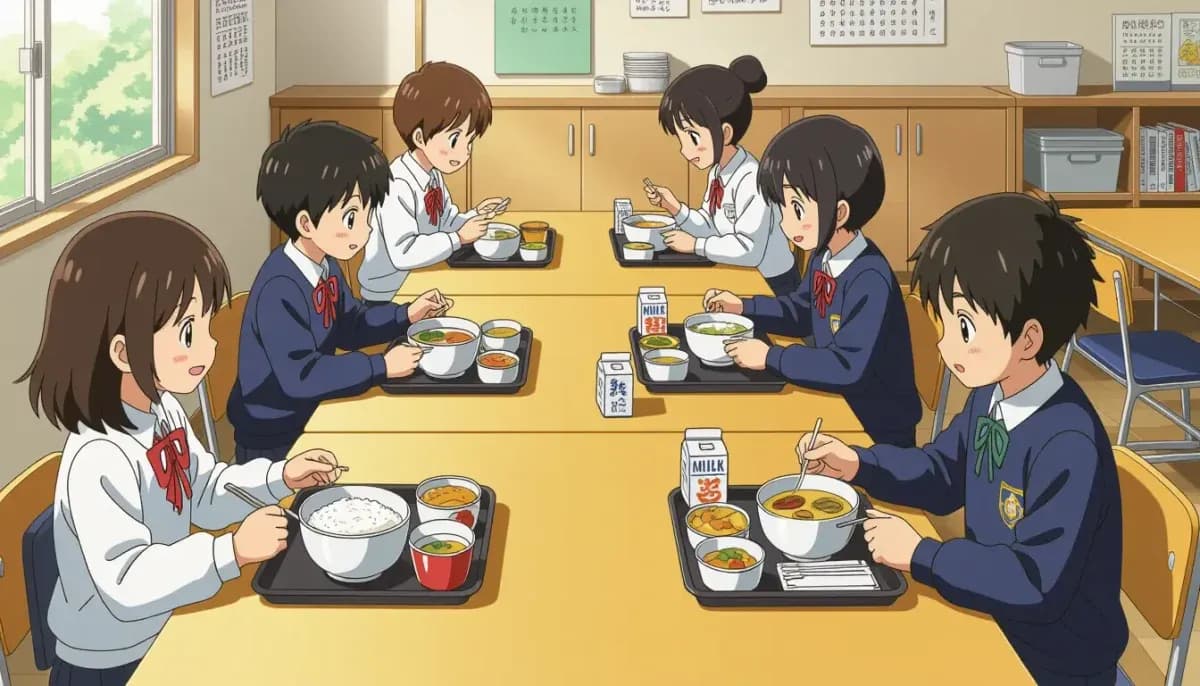
Each class has rotating kyushoku-toban (lunch duty students) who put on white aprons, surgical caps, and face masks before fetching the day's food from the school kitchen. They serve their classmates from large shared bowls and pots, practicing portion control and responsibility.
Before eating, the class recites "Itadakimasu" (a respectful acknowledgment before meals) together. After finishing, they say "Gochisousama deshita". This cultural ritual teaches children gratitude for food and the effort behind it.
What children need to bring:
- Reusable chopsticks and a spoon (in a carrying case)
- A cloth placemat or napkin
- A small cup (for water or tea in some schools)
- A toothbrush (many schools have teeth-brushing time after lunch)
After eating, students clean up their own dishes, wipe down tables, and return everything to the kitchen. The cleanup is part of the lesson — nobody is exempt.
One important note for foreign families: COVID-era silent eating (mokushoku) rules remain in place at many schools. Children are expected to eat quietly and finish their meals, rooted in the Japanese philosophy of mottainai (waste nothing).
Kyushoku Nutrition Standards: What Your Child Will Actually Eat
Japan takes the nutritional quality of school lunches very seriously. Each meal is designed by a licensed nutrition professional (eiyo kyoyu) and must meet national standards updated in April 2021.
| Nutritional Element | Elementary School Target | Junior High Target |
|---|
| Calories per meal | 600–650 kcal | 820–870 kcal |
| Protein (% of calories) | 13–20% | 13–20% |
| Fat (% of calories) | 20–30% | 20–30% |
| Sodium limit | Under 2g | Under 2g |
| Daily calcium coverage | ~33% of daily need | ~33% of daily need |
| Vitamin coverage | ~33% of daily need | ~33% of daily need |
A typical kyushoku menu might include:
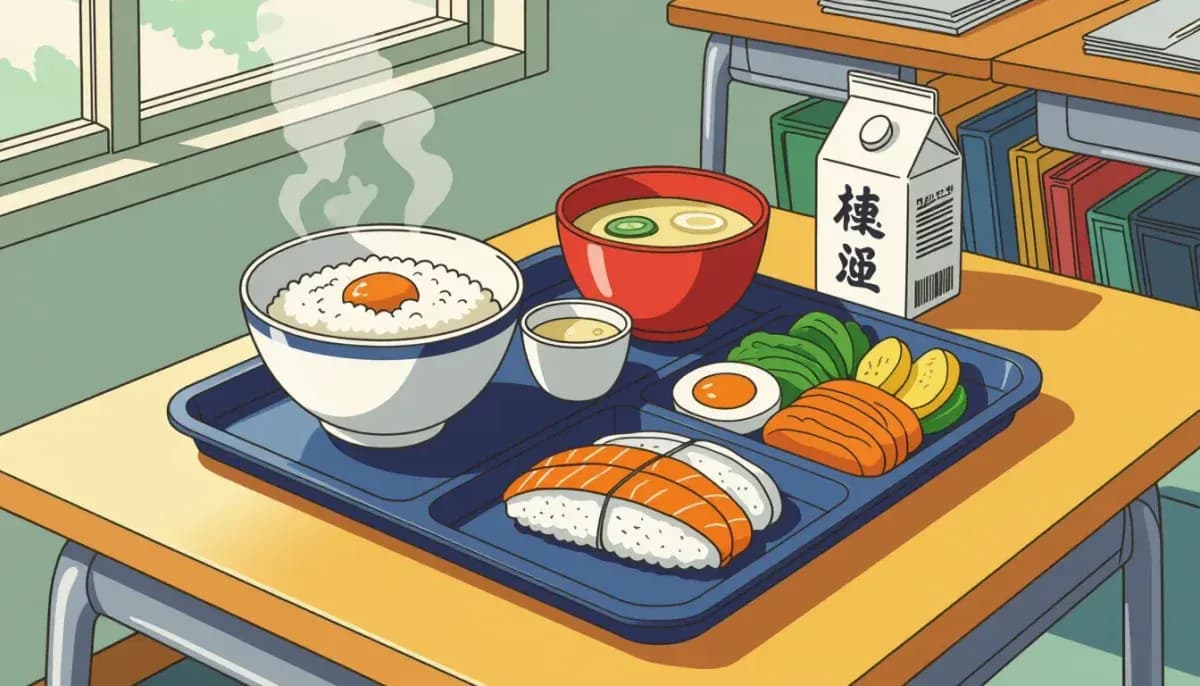
- Steamed white rice (or occasionally bread or noodles)
- Miso soup with tofu and wakame seaweed
- A protein dish (grilled fish, braised chicken, or tofu)
- A vegetable side dish (simmered or pickled)
- A small carton of milk (nearly always included)
- Occasional fruit or simple dessert
Notably, rice wasn't always the norm. Until 1976, school lunches were dominated by bread and noodles — a legacy of post-WWII American wheat donations. Rice was later reintroduced as Japan reclaimed its culinary identity.
How Much Does Kyushoku Cost? Fees and Free Lunch Trends
School lunch is not entirely free in Japan, though that is changing rapidly.
Current pricing (2025):
- Elementary school: approximately ¥4,700/month (~¥300 per meal)
- Junior high school: approximately ¥5,367/month
Parents pay only for ingredients; the government covers labor, kitchen staff, and facility costs. This keeps pricing reasonable, but it is still a recurring monthly expense.
The free lunch movement: As of 2025, roughly 30% of Japanese cities have eliminated kyushoku fees entirely. The national government has announced plans to roll out free elementary school lunches nationwide starting in 2026. This is a significant policy shift driven by concerns about child poverty and declining birth rates.
If your child has food allergies, the school will prepare an alternative meal with doctor documentation submitted at enrollment. Allergies must be registered formally — the process is described in detail in our guide to Elementary School in Japan for Foreign Parents.
For guidance on managing the financial side of raising children in Japan, see our article on Financial Planning for Expat Families in Japan.
Shokuiku: Food Education as a National Priority
One thing that makes Japan's approach unique is shokuiku (食育) — food and nutrition education embedded into the national school curriculum. When the Basic Act on Shokuiku was passed in 2005, Japan formally recognized food education as essential to children's development, not just a nice-to-have.
What shokuiku teaches children:
- Where food comes from (farm visits, local producer connections)
- How to appreciate seasonal and regional ingredients
- Table manners and gratitude (Itadakimasu culture)
- Basic nutritional knowledge (foods are sometimes categorized by nutritional role on classroom displays)
- Responsibility through serving and cleaning up
More than 6,000 licensed eiyo kyoyu (diet and nutrition teachers) now work in Japanese schools, managing not just menus but also parent education programs and community outreach. This professionalization sets Japan apart from most countries.
The results are measurable: Japan's childhood obesity rate is just 14.42% — significantly lower than most developed nations — and stunting affects only 7.1% of children under 5, well below the regional Asian average of 21.8%.
For more information about keeping children healthy in Japan, see our guide to Healthcare and Medical Care for Children in Japan.
Challenges for Foreign Children: Adjusting to Japanese School Lunches
While kyushoku is nutritionally excellent, it can be challenging for foreign children who didn't grow up eating Japanese food. Here's what to expect and how to help:
Common adjustment challenges:
- Fish-heavy menus — Whole fish, dried fish, and fish-based broths are frequent. Children unfamiliar with fish may initially struggle, especially with bones.
- Fermented and pickled foods — Miso soup, natto (fermented soybeans), tsukemono (pickled vegetables) have strong flavors foreign kids may find unfamiliar.
- The "finish your plate" expectation — While teachers rarely force children, there is gentle cultural pressure to finish meals. This can cause anxiety for picky eaters.
- Silent eating rules — Many schools still maintain mokushoku (silent eating) policies. Social children who are used to chatting at lunch may find this isolating.
- Chopsticks — If your child isn't comfortable with chopsticks, practice at home before school starts.
Tips for foreign parents:
- Practice Japanese foods at home before school starts — introduce miso soup, rice, and simple fish dishes gradually
- Speak to your child's teacher or kyushoku teacher early about concerns — Japanese teachers are generally very accommodating
- Request a copy of the monthly kyushoku menu (献立表, kondatehyo) — most schools provide these and some have English versions in international areas
- If your child has a genuine allergy, submit medical documentation as early as possible (before enrollment if possible)
- Reassure your child that it's okay to leave food they truly can't eat — while waste is discouraged, no reasonable teacher will force a foreign child
For advice on helping children adapt to Japanese culture more broadly, our guide on Mental Health and Emotional Wellbeing for Foreign Children in Japan has practical strategies.
Feeding Children at Home: Nutrition Beyond School
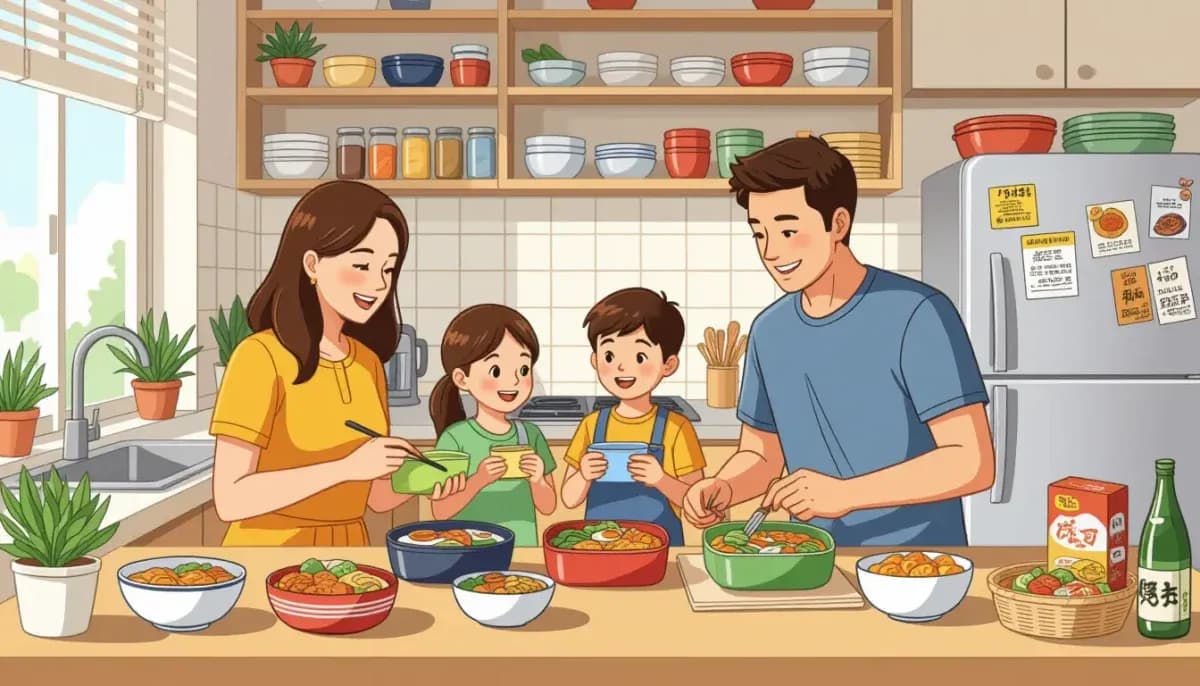
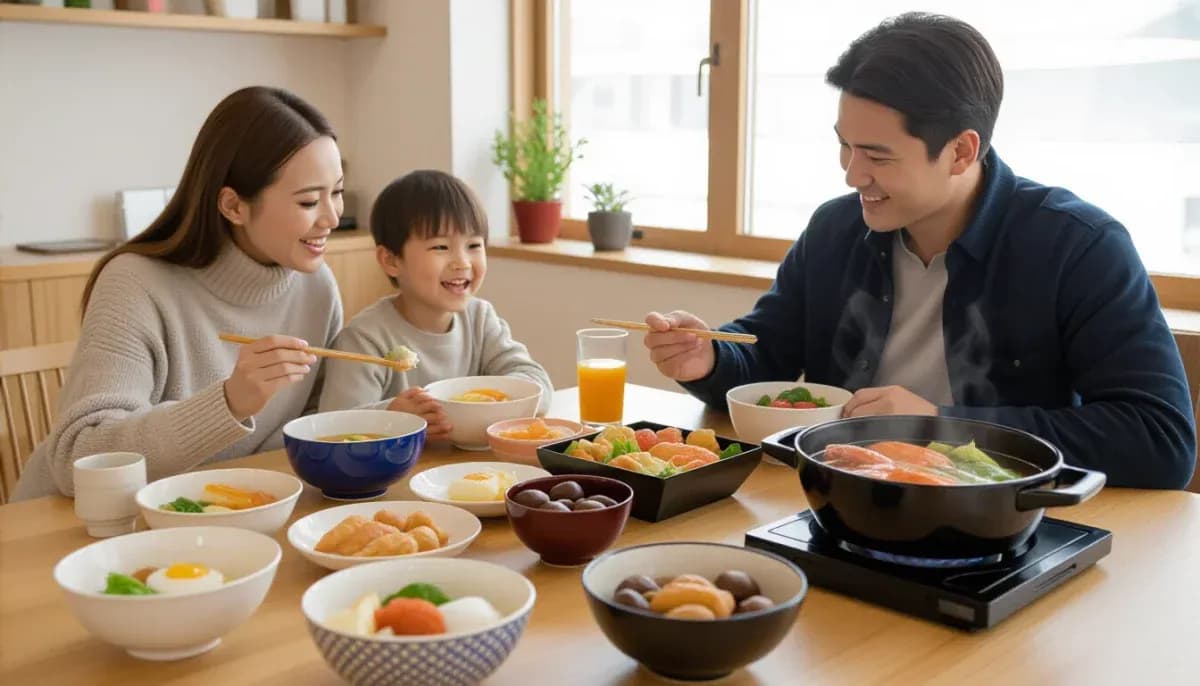
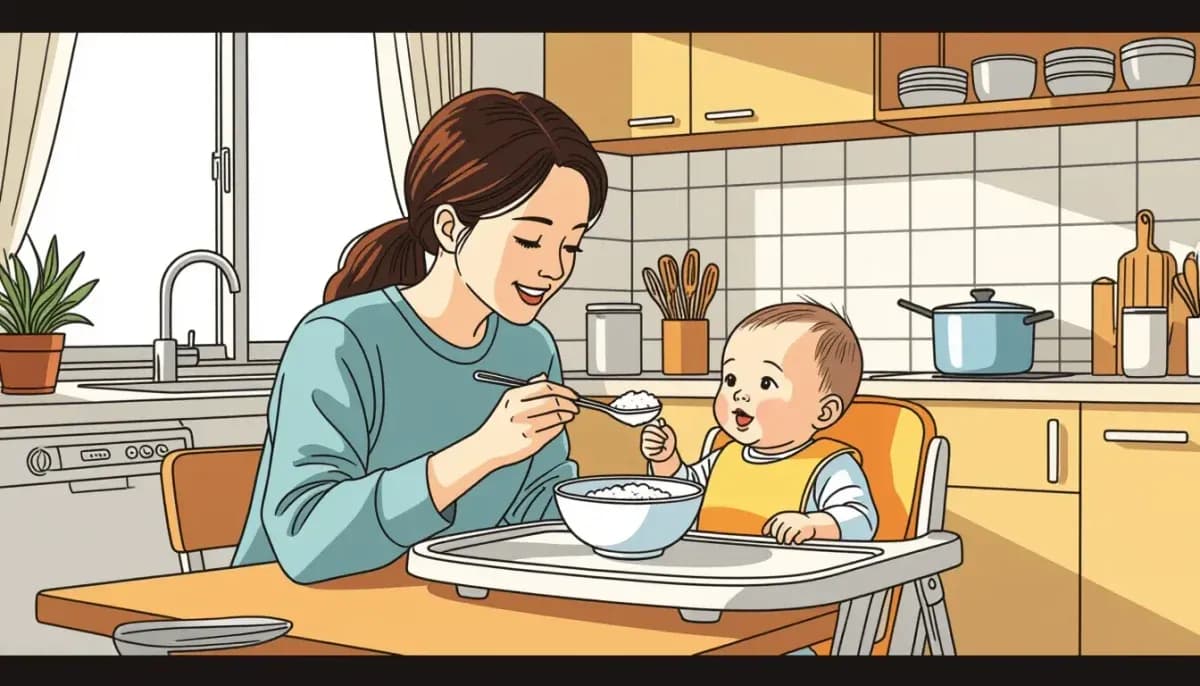
Kyushoku covers weekday lunches during school terms, but parents are responsible for all other meals. Japanese food culture at home tends to emphasize balance, variety, and seasonal ingredients — but expat families don't need to cook Japanese food exclusively to raise healthy children in Japan.
Home nutrition tips for foreign parents:
- Breakfast — Japanese breakfasts often include rice, miso soup, and a protein (egg, fish, or tofu). Western-style breakfasts (toast, cereal, eggs) are perfectly fine. Focus on including protein and not skipping it entirely.
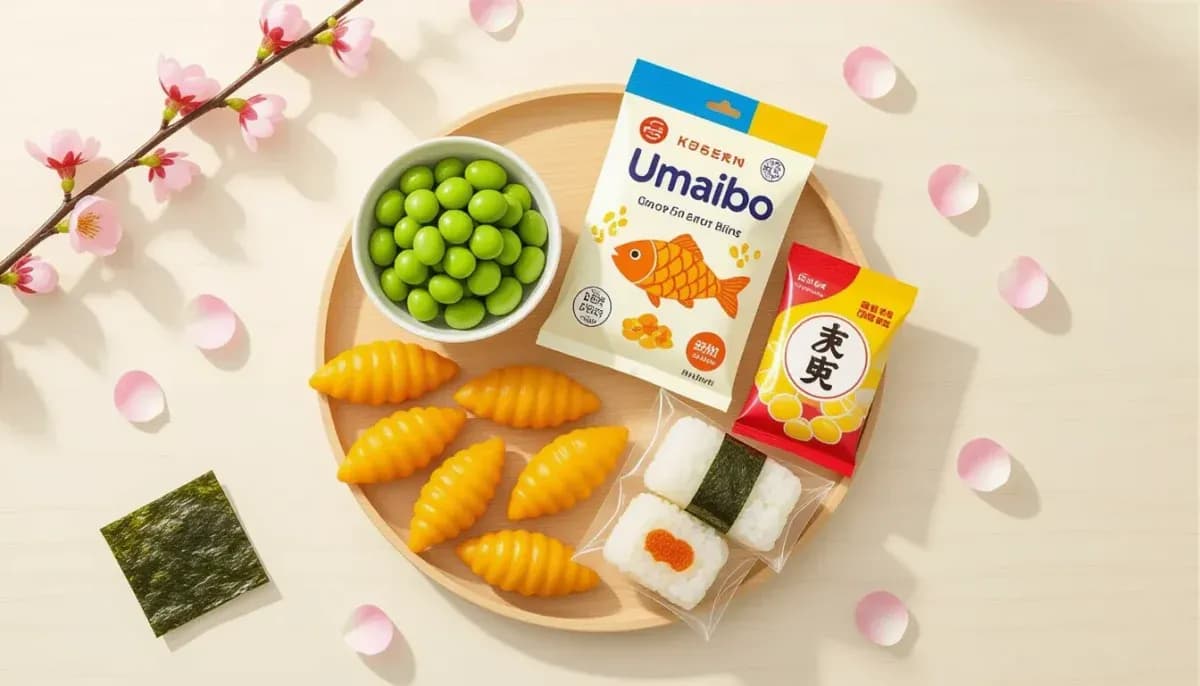
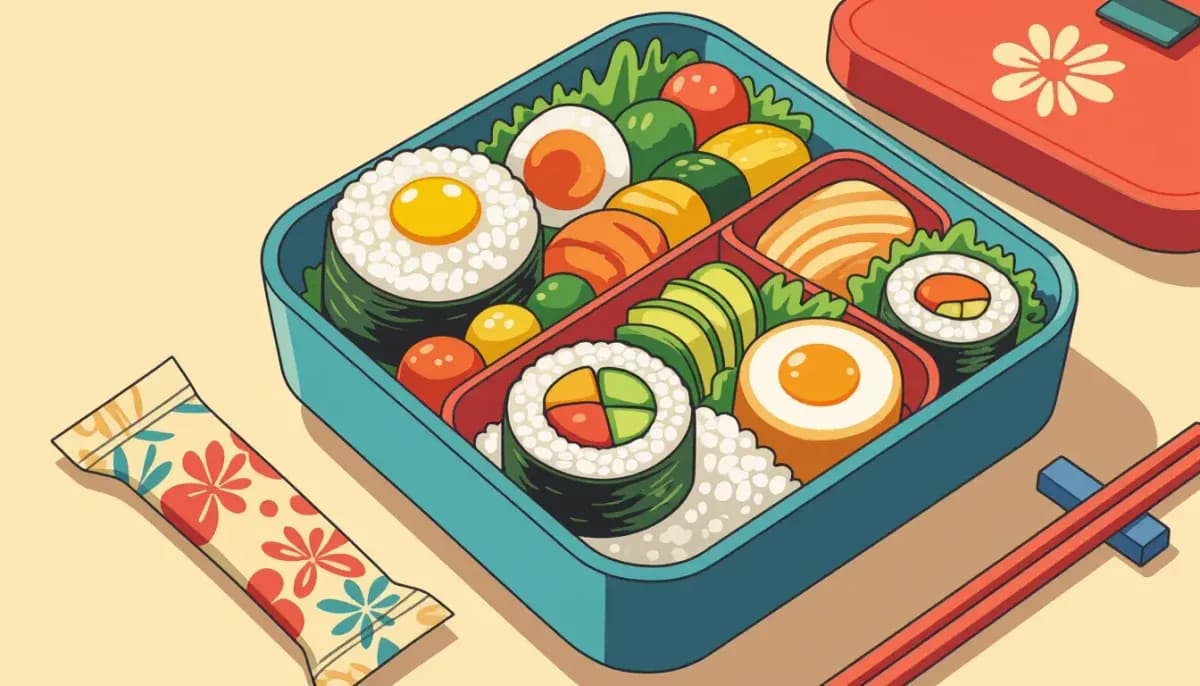
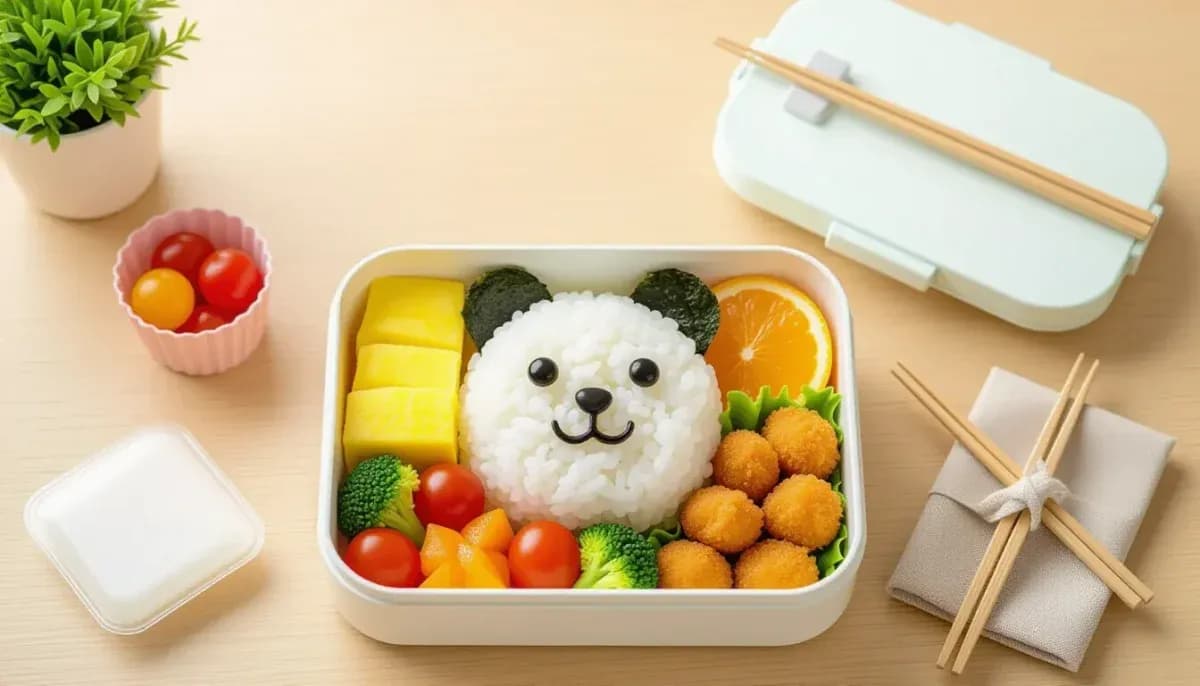
- Bento for special occasions — For field trips (ensoku), school sports days (undokai), and other events where home-packed lunches are expected, colorful bento are the norm. They don't need to be elaborate — a simple onigiri (rice ball), some vegetables, and a protein is entirely appropriate.
- Snacks (oyatsu) — Japanese snack culture for children tends toward lighter options: small rice crackers, yogurt, fruit, sweet potato. Heavy sugary snacks are less common than in some Western cultures.
- Fruit and vegetable gaps — Research from 2001–2019 shows that Japanese adolescents are consuming less fish and fruit than previous generations despite excellent school lunches. At home, try to include fruit daily (target 200g/day per Japanese health guidelines) and maintain fish in the diet even if children resist.
For information about caring for babies and toddlers at home in Japan, see our guides to Baby and Infant Care in Japan and Toddler Parenting in Japan.
Helpful Resources for Foreign Parents
Understanding the nutritional culture your children are being raised in makes a big difference. Here are some excellent resources:
For more tips on expat family life, Living in Nihon and For Work in Japan are valuable resources covering daily life logistics. If you have school-age children studying Japanese, Chuukou Benkyou provides study resources for middle and high school students navigating the Japanese curriculum.
What Foreign Parents Should Know: Key Takeaways
Japan's kyushoku system is one of the most impressive school nutrition programs in the world — highly professional, culturally meaningful, and genuinely effective at supporting child health. For foreign families, adjusting to it takes some preparation, but the benefits for your children are real.
Summary of key points:
- Kyushoku is mandatory and universal at almost all public schools
- Meals are nutritionally designed by licensed professionals and meet rigorous national standards
- The program is affordable (and becoming free in many areas by 2026)
- Food education (shokuiku) is embedded in the curriculum — not just food, but values
- Foreign children may need time to adjust to fish-heavy, Japanese-style menus
- Home nutrition should complement school lunches with fruit, breakfast protein, and continued fish exposure
- Japan's child health outcomes — low obesity, low stunting — reflect decades of investment in this program
Understanding how kyushoku fits into your child's daily life in Japan helps you be a more informed and supportive parent. Lean into the program, communicate with teachers, and give your children time to adapt. Most foreign kids not only adjust — they come to love it.