
Helping Picky Eaters Try Japanese Food

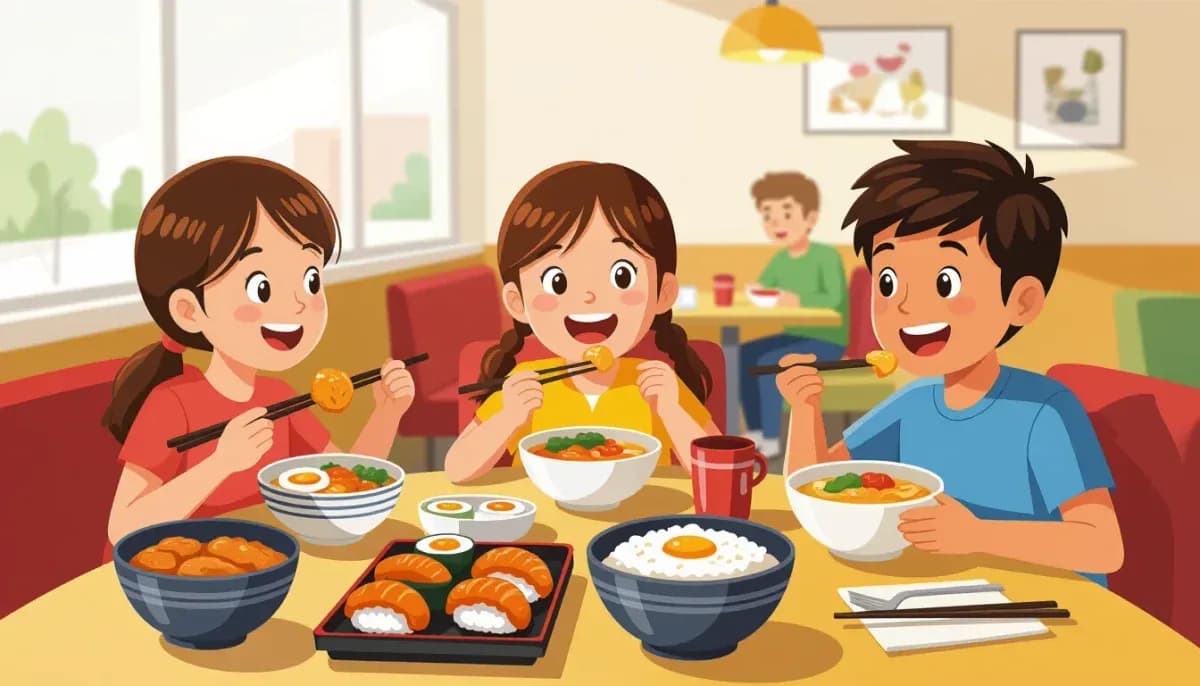
Practical guide for expat families helping picky eaters try Japanese food. Gateway foods, family-friendly restaurants, konbini tips, and strategies that actually work in Japan.
Helping Picky Eaters Try Japanese Food: A Practical Guide for Expat Families
Moving to Japan with a picky eater can feel daunting. When your child subsists on plain pasta and refuses anything unfamiliar, the prospect of navigating Japanese menus — full of fish, fermented foods, and unfamiliar textures — can seem overwhelming. But here's the good news: Japan is actually one of the best places in the world to gently expand a picky eater's palate, and thousands of expat families have successfully made the transition.
This guide walks you through proven strategies, gateway foods, family-friendly restaurants, and the surprising ways Japan's food culture naturally helps children overcome picky eating habits.
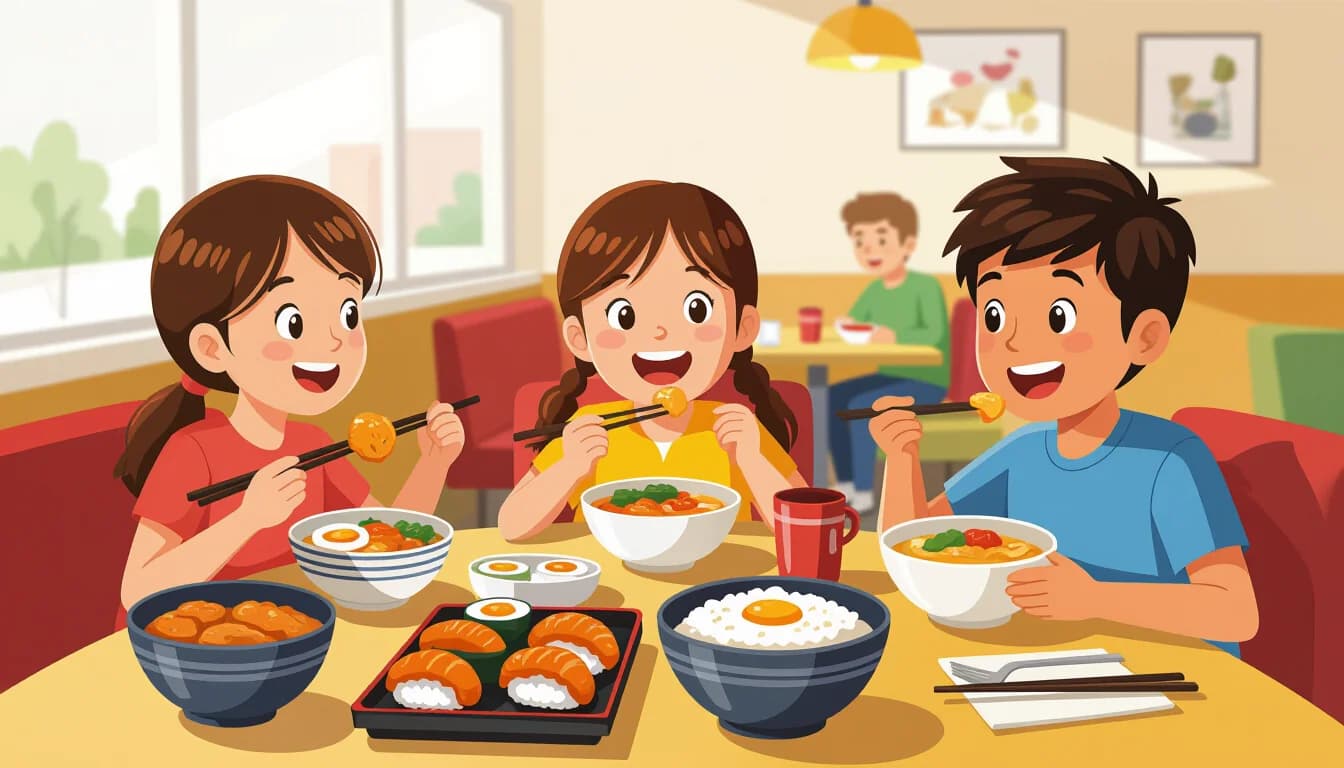
Why Japan Is Actually Great for Picky Eaters
Counterintuitively, Japan may be the easiest country in which to raise a previously picky eater. Research published by Gavin Publishers found that Japanese preschool teachers, managers, and dietitians at eight hoikuen and yochien in Tokyo and Chiba reported virtually no problems with picky eating — a stark contrast to North America, where up to 50% of children under 24 months are classified as picky eaters.
Why? Several features of Japanese food culture work in your favor:
- Structured mealtimes: Japanese schools and daycares serve snacks only once per day (in the afternoon), ensuring children arrive genuinely hungry.
- Group eating: Children eat together at school, and peer modeling — watching classmates enjoy a dish — organically encourages reluctant eaters to try new things.
- Shokuiku philosophy: Japan's 2005 Basic Law on Shokuiku (食育, "food education") enshrines shared family mealtimes as a national value, emphasizing variety, gratitude, and the social dimension of eating.
- Beautiful presentation: Japanese food is famous for its appearance. Small portions served on colorful, attractive plates reduce overwhelm and make unfamiliar foods feel less threatening.
The researchers concluded that high picky eating rates in Western countries "may be a culture-bound syndrome" — not an inevitable developmental stage, but one heavily shaped by cultural environment. Living in Japan gives your child daily exposure to a food culture that naturally supports adventurous eating.
For more on how Japanese schools approach food education, see our guide to Elementary School in Japan: A Complete Guide for Foreign Parents and Daycare and Hoikuen in Japan.
Gateway Foods: The Best Japanese Foods to Start With
Not all Japanese food is intimidating. Many dishes share textures and flavors that picky eaters already accept — they just happen to be Japanese. Start with these proven gateway foods before tackling more adventurous options.
| Food | Why Picky Eaters Accept It | Where to Find It |
|---|---|---|
| Karaage (唐揚げ) | Fried chicken — familiar concept, excellent flavor | Convenience stores, family restaurants, izakayas |
| Tonkatsu (とんかつ) | Breaded pork cutlet — similar to schnitzel or nuggets | Tonkatsu chains (Saboten, Wako), family restaurants |
| Gyoza (餃子) | Pan-fried dumplings — familiar dumpling format | Ramen shops, gyoza chains, convenience stores |
| Japanese curry (カレーライス) | Mild, sweet curry over rice — vegetables hidden in familiar flavors | Coco Ichibanya, family restaurants, school lunch |
| Udon (うどん) | Thick, soft wheat noodles — closest to Western pasta | Udon chains (Marugame, Hanamaru), everywhere |
| Oyakodon (親子丼) | Chicken and egg over rice — simple, mild, comforting | Yoshinoya, family restaurants, convenience stores |
| Tamago sushi (玉子寿司) | Sweet egg on rice — often a child's first sushi | All sushi restaurants |
| Yakisoba (焼きそば) | Stir-fried noodles with pork and vegetables | Festival stalls, convenience stores, family restaurants |
| Edamame | Salted green soybeans — easy finger food | Izakayas, supermarkets, convenience stores |
| Anpan (あんぱん) | Sweet bread with red bean filling — soft, sweet texture | Any bakery or convenience store |
Pro tip: Japanese curry is perhaps the single most reliable gateway food. Chains like Coco Ichibanya (CoCo壱番屋) offer kids' menus, fully adjustable spice levels (from zero heat), customizable toppings, and the ability to make portions as small as you need. Many picky eaters who reject "Japanese food" at home happily eat CoCo curry on the first try.
Family-Friendly Restaurants That Work for Picky Eaters
Choosing the right type of restaurant dramatically reduces mealtime stress. Here are the formats that work best for families with picky eaters in Japan.
Kaitenzushi (Conveyor Belt Sushi)
Sushi trains are a picky eater's paradise. Modern chains like UOBEI use tablet ordering, meaning your child can tap their order — chicken, fries, dessert, edamame — without any pressure to eat sushi. The food arrives quickly via the belt (keeping impatient children engaged), and the price-per-plate format means you only pay for what you actually eat. Most plates are ¥100–¥250. Watching colorful plates roll past the table also sparks curiosity that sometimes leads to trying new things.
Family Restaurants (ファミレス)
Japanese family restaurant chains — Gusto, Saizeriya, Royal Host, and Jonathan's — are designed for families and serve enormous menus that include pizza, pasta, hamburgers, and fried chicken alongside Japanese options. They're inexpensive, have kids' menus, and staff are accustomed to serving children. Saizeriya in particular is extremely budget-friendly and offers enough Western-style items to keep even the most resistant eaters happy while parents enjoy Japanese food.
Ramen Shops
Ramen broth is mild, noodles are familiar, and the toppings can be customized. Most shops allow you to add or remove toppings, and a basic shoyu (soy sauce) or shio (salt) ramen with noodles and a soft-boiled egg is something many previously pasta-only children accept. The visual theater of ramen — the colors, the steam, the customization — also helps.
Okonomiyaki Restaurants
Okonomiyaki (Japanese savory pancake) cooked at the table is interactive and engaging for children. You control the ingredients, and the base is essentially a pancake-textured food. The table-cooking experience also shifts the dynamic: children who cook their own food are significantly more likely to eat it.
For comprehensive guidance on adjusting to life in Japan with children, Living in Nihon offers extensive resources on family life as an expat.
The Convenience Store Safety Net
Japan's convenience stores (konbini) — 7-Eleven, Lawson, and FamilyMart — are legendary among expat parents of picky eaters. They're open 24 hours, stocked fresh daily, and offer a surprisingly broad range of hot prepared foods that children tend to love:
- Lawson: Karaage-kun (small fried chicken pieces, multiple flavors)
- FamilyMart: FamiChiki (seasoned fried chicken)
- 7-Eleven: Gold Hamburg steak (demi-glace sauce), fried chicken, hot sandwiches
- All chains: Japanese curry with rice (microwaveable packs), udon cups, onigiri (rice balls with mild fillings like salmon or tuna)
Konbini are your safety net on days when restaurants don't work out, when you're traveling, or when your child needs something familiar during the adjustment period. Keep in mind that Japanese-style onigiri — a rice triangle wrapped in seaweed — is one of the most reliably accepted foods even among children who refuse seaweed in other contexts, possibly because the rice-to-seaweed ratio is high and the seaweed is crisp.
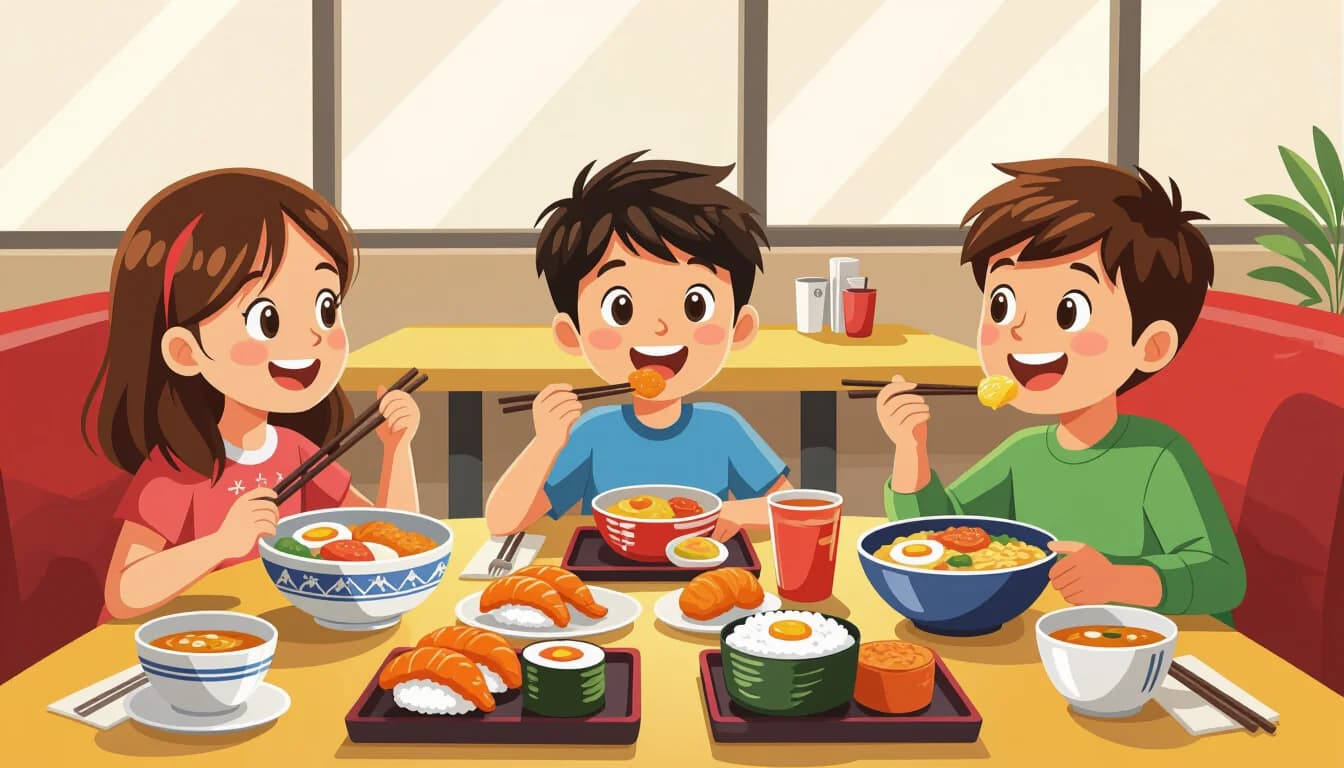
Practical Strategies for Expanding Your Child's Palate
Beyond choosing the right restaurants and foods, these approaches help picky eaters gradually expand what they'll eat.
The "No Pressure" Rule
Japanese daycare and school research consistently shows that forcing children to eat creates negative food associations that worsen picky eating long-term. Japan's approach emphasizes autonomy: children are expected to try everything on their plate, but the emphasis is on trying, not finishing. At home, mirror this approach — offer a small portion of a new food alongside familiar foods, but don't make eating it mandatory.
Involve Children in Food Preparation
Japanese food culture heavily emphasizes involving children in cooking and food preparation from a young age. Hands-on involvement — rolling gyoza, dipping tempura batter, shaping onigiri — dramatically increases the likelihood that children will eat what they helped make. Many cooking classes in Japan cater to families with children specifically for this reason.
Use the "Exposure Only" Approach
Research on food neophobia (fear of new foods) shows that 10–15 exposures to a new food may be needed before a child accepts it — but those exposures don't have to involve eating. Simply having a food on the plate, or watching a family member eat it enthusiastically, counts. When visiting Japan's food halls (depachika) in department basements, let your child see and smell a wide variety of foods without any pressure to eat them.
Leverage Japan's School Lunch System
If your child attends a Japanese public school, the kyushoku (給食) school lunch system is a powerful ally. Japan's school lunch program covers 94% of public schools, with fresh-cooked daily meals that are nutritionally balanced and carefully designed for children. Critically, home-packed lunches are prohibited unless there is a medical reason — every child eats the same meal.
This means your picky eater will be eating foods they'd refuse at home, in a group setting with peers who eat enthusiastically. Multiple expat parents report that children who refused certain foods at home began eating them willingly after being served them repeatedly at school. For more on Japanese school life, see our Elementary School in Japan guide.
For additional strategies on supporting your child's development in Japan, For Work in Japan offers helpful guidance on family life and cultural adaptation for expat families.
What to Expect at Different Age Stages
The approach that works depends significantly on your child's age.
Toddlers (1–3 years): This is actually the easiest age to transition. Toddlers in the sensory exploration phase can be introduced to Japanese textures and flavors before strong food preferences solidify. Focus on soft-textured foods (soft udon, steamed vegetables, mild miso soup) and use the konbini as your base. See our Toddler Parenting in Japan guide for age-specific tips.
Preschool age (3–6 years): If your child attends hoikuen or yochien, the structured mealtimes and peer modeling will do significant work for you. Reinforce at home what they're trying at school. Don't contradict the school's approach with a separate "safe" menu at home.
Elementary school age (6–12 years): Kyushoku is your greatest asset. Supplement with family restaurant outings that include one "try it" item alongside safe choices. This age group often responds well to incentive-based systems — trying a new food earns a reward that's unrelated to food (a sticker, a privilege, extra screen time).
Teenagers: A longitudinal study of 1,389 Japanese families found that eating dinner alone at least once weekly in junior high school predicted elevated picky eating in high school. Prioritize shared family mealtimes and involve teenagers in cooking and meal planning to maintain variety. For more on supporting teens in Japan, see our Junior High School in Japan guide.
Common Mistakes Expat Parents Make
Maintaining a parallel "safe" menu at home: If your child knows familiar Western food is always available as a fallback, there's no gentle pressure to try Japanese food. Reduce (don't eliminate) Western food options at home gradually.
Avoiding Japanese restaurants entirely: The more you eat at Japanese restaurants as a family, the more normal Japanese food becomes. Even if your child only eats edamame and ice cream at a ramen shop, the exposure and normalization are happening.
Giving up too quickly: Food acceptance takes time. Research suggests 10–15 exposures before a food is accepted — that means failing 10 times is part of the process, not evidence that it won't work.
Comparing with Japanese children: Japanese children have been eating Japanese food their whole lives. Your child is in a genuine transition. Give the process 6–12 months before evaluating whether Japan is "working" for your picky eater.
For research-based parenting strategies in the Japanese cultural context, Chuukou Benkyou offers perspectives on child development and education that can help you support your child's overall adjustment to life in Japan.
Resources and Further Reading
- The Tokyo Chapter — Japan for Fussy Eaters — comprehensive restaurant guide for expat families
- Japan Today — Kid-Friendly Japanese Food — food-by-food breakdown
- Japan Today — Daycare Picky Eating Strategies — tips from Japanese dietitians
- E-Housing — Japan's School Lunch Program — kyushoku statistics and expat tips
Frequently Asked Questions
My child has sensory processing issues — will Japan be harder? Japan's food culture is generally accommodating of children with sensory needs, partly because presentation, texture variety, and mild flavors are all central to Japanese cuisine. That said, some textures (natto, konnyaku, certain seaweed preparations) are intense. Focus on the many mild, familiar textures available and consult with your pediatrician about school lunch accommodations if needed.
Can my child get a special school lunch at a Japanese public school? Medical exemptions to the standard kyushoku menu do exist, but the bar is relatively high and documentation is required. Speak with the school's nutrition teacher (栄養教諭, eiyou kyouyu) before your child's first day to discuss any dietary restrictions.
How long until my picky eater starts eating Japanese food? Most expat parents report significant improvement within 3–6 months of consistent exposure, especially once school lunch begins. Full acceptance of a diverse Japanese diet typically takes 1–2 years. Be patient — the cultural environment is genuinely working in your favor.
Moving to Japan with a picky eater is a challenge that most families navigate successfully. The combination of Japan's food culture, structured school mealtimes, and the sheer quality and variety of Japanese food creates conditions that naturally support expanded eating. Start with the gateway foods, find your family's go-to restaurants, lean on the konbini safety net, and trust the process.

Originally from Vietnam, living in Japan for 16+ years. Graduated from Nagoya University, with 11 years of professional experience at Japanese and international companies. Sharing practical information for foreign parents raising children in Japan.
View Profile →Related Articles
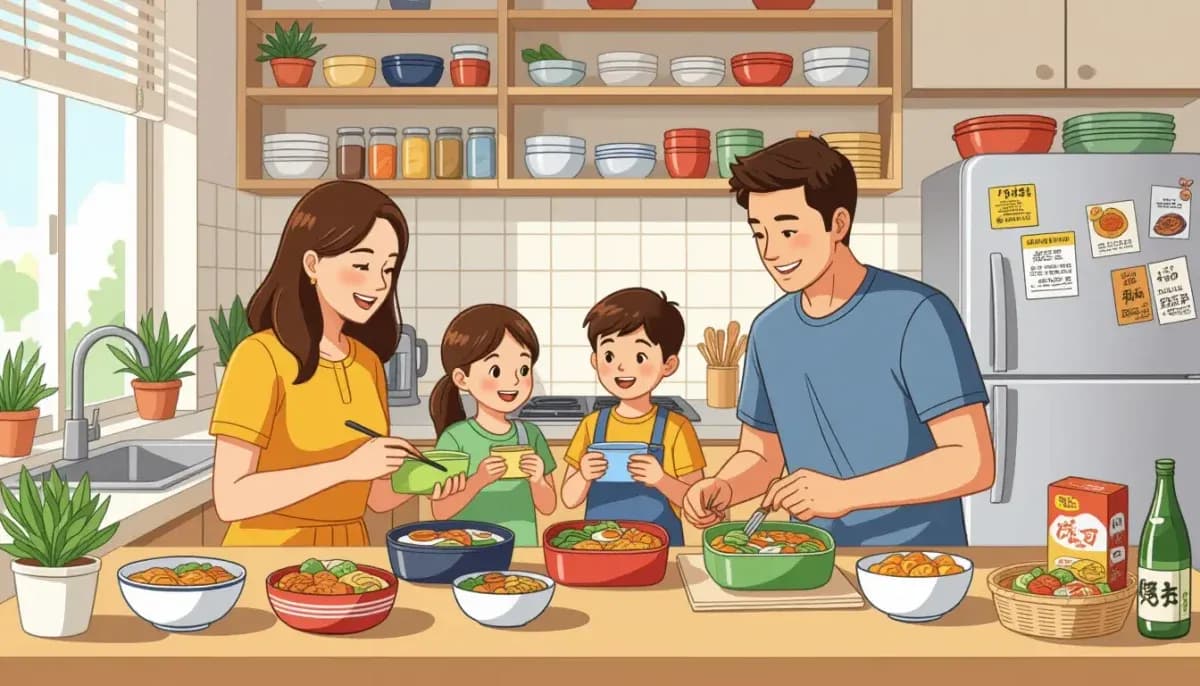
Meal Prep Tips for Busy Expat Families in Japan
Discover practical meal prep strategies for expat families in Japan. Learn tsukurioki techniques, bento box tips, Japanese grocery shopping, food storage, and weekly prep schedules to simplify weeknight cooking.
Read more →
Nutrition Standards and Guidelines in Japanese Schools
Learn about Japan's school lunch (kyushoku) nutrition standards, what your child eats daily, allergy accommodations, costs, and the shokuiku food education system — a complete guide for foreign families.
Read more →
Halal, Kosher, and Vegetarian Options in Japanese Schools
Complete guide to halal, kosher, vegetarian, and vegan options in Japanese schools. Learn how to navigate Japan's kyushoku system, negotiate dietary accommodations, and find Islamic schools — practical advice for foreign parents in Japan.
Read more →
Seasonal Japanese Foods for Family Meals
Discover Japan's seasonal foods (shun) for every family meal across spring, summer, autumn, and winter. Practical tips for foreign families shopping and cooking seasonally in Japan.
Read more →
Cooking Japanese Food with Your Children: Fun Recipes
Discover fun Japanese recipes to cook with your children, from onigiri to gyoza and mochi. Learn about shokuiku, bento boxes, and tips to make cooking a family tradition in Japan.
Read more →
Japanese Snacks and Sweets for Children: What's Safe and Healthy
A complete guide to Japanese snacks and sweets for children. Discover what's safe, healthy, and age-appropriate — from oyatsu culture to konbini picks and traditional wagashi — for expat families in Japan.
Read more →