
Nutrition Standards and Guidelines in Japanese Schools

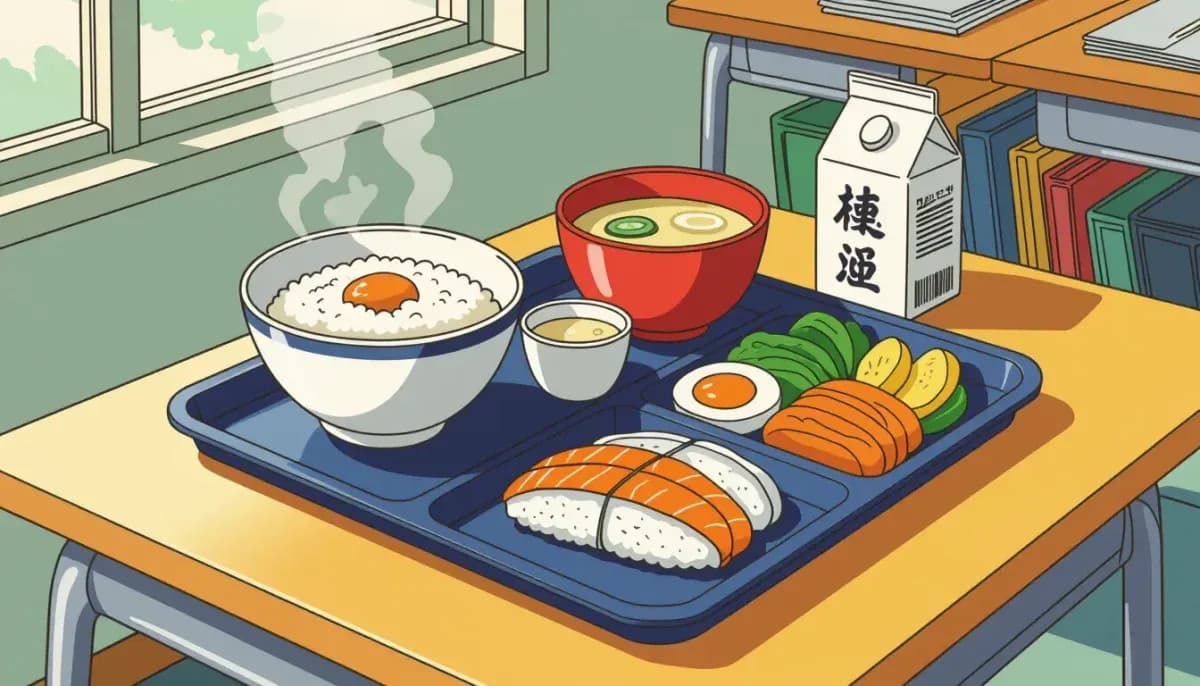
Learn about Japan's school lunch (kyushoku) nutrition standards, what your child eats daily, allergy accommodations, costs, and the shokuiku food education system — a complete guide for foreign families.
Nutrition Standards and Guidelines in Japanese Schools: A Complete Guide for Foreign Families
If your child attends a Japanese public school, they will almost certainly be eating kyushoku — the famous Japanese school lunch program. More than just a meal, kyushoku is a carefully engineered nutritional system governed by national guidelines and enforced by professional nutritionists. For foreign families navigating life in Japan, understanding these standards helps you know exactly what your child is eating every day — and why the program is widely regarded as one of the healthiest school meal systems in the world.
What Is Kyushoku? An Overview of Japan's School Lunch System
Kyushoku (給食) is the standardized school lunch program mandatory for students in Japan's public elementary and junior high schools. Unlike many countries where school meals are optional or supplementary, kyushoku is a core part of the school day for nearly every public school student in Japan.
The numbers are striking: 99.7% of public elementary schools and 98.2% of public junior high schools participate in the program, serving over 10 million children a hot, nutritionally balanced meal every school day. The program is not an opt-in cafeteria service — it is a required, unified meal experience designed to be as much about education as it is about nutrition.
Key facts about kyushoku for foreign families:
- All students eat the same fixed menu — there is no individual meal choice
- Home-packed lunches (bento) are generally prohibited in public schools
- Meals are eaten in classrooms, not cafeterias
- Students serve each other and clean up as part of the learning experience
- Average monthly cost: approximately ¥4,700 for elementary school (~¥300 per meal)
- Around 30% of Japanese cities now offer free school lunches; nationwide free lunches are planned from 2026
This system has deep roots. Japan's first recorded school lunch dates to 1889 in Tsuruoka City, when a Buddhist temple school served free meals to low-income children. The modern framework was codified in the School Lunch Program Act of 1954, and reinforced by the Basic Act on Shokuiku in 2005, which embedded food and nutrition education as a formal national policy goal.
For more context on how your child's school day works in Japan, see our guide to Elementary School in Japan: A Complete Guide for Foreign Parents.
Japan's Nutritional Standards for School Meals
The nutritional guidelines for kyushoku are set by the Ministry of Education, Culture, Sports, Science and Technology (MEXT), which updates the School Dietary Intake Standards (学校給食摂取基準) every five years based on the latest Dietary Reference Intakes (DRIs) issued by the Ministry of Health, Labour and Welfare. The 2025 DRI update applies to the current round of school meal planning.
The core design principle is simple: each kyushoku meal should provide approximately one-third of a child's daily nutritional needs. This is calibrated by age group and grade level.
Macronutrient Targets
| Nutrient | Standard (per meal) | Notes |
|---|---|---|
| Energy (Calories) | 600–700 kcal | Adjusted by school year/age group |
| Protein | 13–20% of total calories | Varies slightly by age |
| Fat | 20–30% of total calories | Emphasizes unsaturated sources |
| Carbohydrates | 50–65% of total calories | Staple grains: rice or bread |
| Sodium (Salt) | ≤ 2.5g per meal | A consistent area of concern |
| Dietary Fiber | ≥ 4g per meal | Supported by vegetables and seaweed |
Micronutrient Highlights
- Calcium: Each meal must cover at least 33% of the daily calcium requirement. This is a priority nutrient in Japan because dairy consumption is lower outside of school meals. Milk is served with almost every kyushoku.
- Iron: Especially important for junior high school girls, who show higher rates of iron deficiency on non-school days.
- Vitamins A, B, C: Generally well-met by the diverse vegetable and fish components of the meal.
Research published in Public Health Nutrition (studying 910 students across 14 elementary and 13 junior high schools) found that children showed significantly better nutritional intake on school days versus non-school days for over 60% of tracked nutrients. This highlights just how much kyushoku supports children's overall diet quality.
For more on your child's health in Japan, see our guide to Healthcare and Medical Care for Children in Japan.
What's Actually on the Tray? A Typical Kyushoku Menu
Understanding the nutritional standards becomes more concrete when you look at what children actually eat. A typical kyushoku meal follows a consistent structure:
Standard components of a kyushoku tray:
- Staple grain — cooked rice (most common), bread, or noodles
- Main dish — fish, chicken, beef, pork, or tofu-based protein
- Soup — miso soup or another hot broth-based dish
- Side dish — a vegetable, seaweed, or mixed salad
- Milk — provided at almost every meal (typically 200ml)
- Occasional dessert — fruit, dairy, or traditional Japanese sweets
What you will NOT find in kyushoku:
- Frozen or pre-packaged processed foods — all meals are freshly prepared daily
- Vending machine items or snacks
- Excessive added sugars or artificial preservatives
Monthly menus include rotating kokusai ryori (international cuisine) days to introduce students to global food cultures. Schools also incorporate seasonal and locally sourced ingredients — 56% of school food purchases come from local producers, and 89% are domestically sourced overall (2021 data). This supports regional agriculture and reinforces the educational value of understanding where food comes from.
Shokuiku: Food Education as the Bigger Picture
Japan's approach to school nutrition goes far beyond calorie counting. The concept of shokuiku (食育), meaning "food and nutrition education," frames the entire school lunch experience as a "living textbook."
The Basic Act on Shokuiku (2005) made food education a national policy priority, and the Diet and Nutrition Teacher System (2007) created a specialized professional role to lead this education in schools. Today, every school or school cluster has at least one certified nutritionist overseeing menu planning and nutritional compliance — the standard is 1 nutritionist per 550 students.
Through the daily rituals of kyushoku, students learn:
- Nutrition literacy — what nutrients are in their food and why they matter
- Food origins — where ingredients come from, supporting local agriculture
- Gratitude and mindfulness — the Japanese custom of saying itadakimasu before eating and gochisosama after
- Teamwork and responsibility — students rotate through toban (serving duty), preparing and distributing meals
- Hygiene — handwashing, clean-up routines, and basic food safety
The result is measurable. Japan has some of the lowest childhood obesity rates among developed nations, a fact widely attributed in part to the kyushoku system. Food waste rates in school lunches are also remarkably low — averaging just 6.9% — reflecting how engaged children are with what they eat.
For insights on how Japanese culture and school values shape your child's development, see our guide on Cultural Identity for Hafu and Mixed-Race Children in Japan.
What Foreign Families Need to Know About Kyushoku
As a foreign parent, there are several practical considerations that the standard nutritional guidelines don't fully address.
Allergies and Dietary Restrictions
Japan has a formal school allergy accommodation system. If your child has a diagnosed food allergy, you must:
- Submit medical documentation from a Japanese doctor to the school
- Complete the school's allergy response form (taiouhyou)
- Meet with the school nutritionist and homeroom teacher to discuss substitutions or alternatives
- Review the monthly menu together in advance
The seven major allergens covered by Japanese food labeling law (wheat, milk, eggs, peanuts, buckwheat, shrimp, crab) are the most common school accommodations. Severe allergy cases may require individual meal preparation or, in rare cases, permission to bring a bento from home.
Note that religious dietary restrictions (halal, kosher, vegetarian) are not systematically accommodated in the current public school framework. Some families with these needs negotiate individual arrangements directly with the school principal and nutritionist, but outcomes vary significantly by region and school.
Language Barriers and Menus
Monthly kyushoku menus are sent home in Japanese. As a foreign parent, asking the school office for an English translation (or using Google Translate on the document) is completely acceptable. Some international-friendly schools in larger cities already provide translated menus. For broader help navigating public school life as a foreigner, Living in Nihon offers useful guides on school communication and bureaucracy.
Costs and Subsidies
As noted earlier, the average monthly cost is around ¥4,700 for elementary students. This is kept low through government subsidies — the Ministry of Education covers operational costs while families pay only for ingredients. Families on low incomes can apply for the shuugaku enjo seido (就学援助制度) — a tuition and expenses assistance program — which often covers kyushoku fees. Your ward or city office's education department handles these applications.
For more on financial support available to families in Japan, see our guide on Government Benefits and Subsidies for Families in Japan.
Junior High School and Beyond
While elementary school kyushoku participation is nearly universal at 99.7%, the rate drops slightly to 98.2% for junior high schools. A small number of junior highs — especially older public schools in some urban areas — still operate bento days where students bring home lunches. Check with your specific school at enrollment.
High school kyushoku is much less common. Most high schools operate a canteen-style cafeteria or allow students to bring bento. If this transition is relevant to your family, see our guide on High School in Japan: Options and Guidance for Foreign Families.
International Recognition and What Makes Kyushoku Special
Japan's school nutrition program is frequently cited as a global model. For Work in Japan, a resource for expats navigating Japanese institutional life, notes that one of the first things many expat parents notice when their children start Japanese schools is how seriously the country takes daily nutrition.
The School Meals Coalition, an international organization focused on school feeding programs, published a detailed case study of Japan's program, highlighting its combination of nutritional rigor, food education culture, and community sourcing as lessons other nations could learn from.
Key distinctions that make kyushoku exceptional:
- Freshly prepared daily — no frozen or processed bulk ingredients
- Nutritionally calibrated — designed against the national DRI standards updated every 5 years
- Educationally embedded — not just feeding children, but teaching them
- Locally sourced — supporting regional economies and reducing food miles
- Professionally supervised — certified nutritionists overseeing every school cluster
For expat families coming from countries with less robust school food systems, kyushoku is often a genuinely positive surprise. Most foreign parents report that their children quickly adapt to and enjoy the program — and frequently come home more willing to eat vegetables than before.
For broader context on raising children in Japan's school system, see our guide on The Complete Guide to the Japanese Education System for Foreign Families.
Further Resources
- Shokuiku: Japan's Living Textbook Approach to School Meals — Global Child Nutrition Foundation
- Japan's School Lunch Program: Food, Education & Culture — E-Housing Japan
- School Lunches in Japan: Contribution to Healthier Nutrient Intake — peer-reviewed research, PubMed Central
- School Lunches: The Key to Children's Health and Prosperity — Japan.go.jp
- Chuukou Benkyou: Study Resources for Life in Japan — practical resources for families navigating Japanese institutions

Originally from Vietnam, living in Japan for 16+ years. Graduated from Nagoya University, with 11 years of professional experience at Japanese and international companies. Sharing practical information for foreign parents raising children in Japan.
View Profile →Related Articles

Meal Prep Tips for Busy Expat Families in Japan
Discover practical meal prep strategies for expat families in Japan. Learn tsukurioki techniques, bento box tips, Japanese grocery shopping, food storage, and weekly prep schedules to simplify weeknight cooking.
Read more →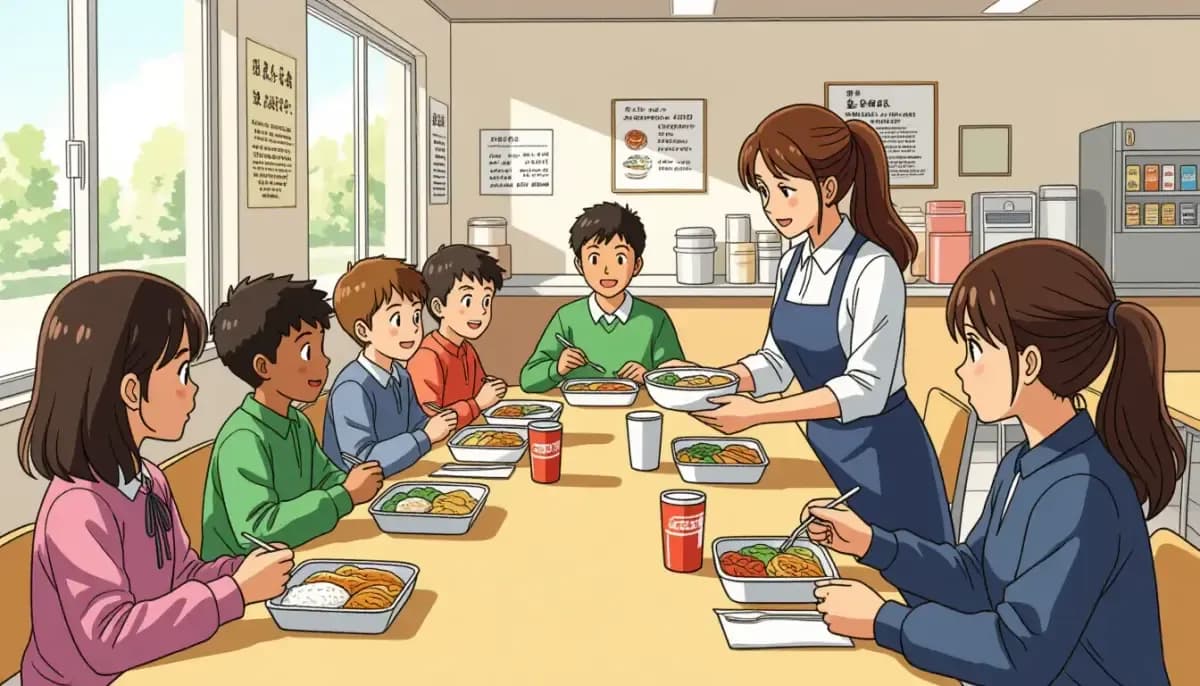
Halal, Kosher, and Vegetarian Options in Japanese Schools
Complete guide to halal, kosher, vegetarian, and vegan options in Japanese schools. Learn how to navigate Japan's kyushoku system, negotiate dietary accommodations, and find Islamic schools — practical advice for foreign parents in Japan.
Read more →
Seasonal Japanese Foods for Family Meals
Discover Japan's seasonal foods (shun) for every family meal across spring, summer, autumn, and winter. Practical tips for foreign families shopping and cooking seasonally in Japan.
Read more →
Cooking Japanese Food with Your Children: Fun Recipes
Discover fun Japanese recipes to cook with your children, from onigiri to gyoza and mochi. Learn about shokuiku, bento boxes, and tips to make cooking a family tradition in Japan.
Read more →
Japanese Snacks and Sweets for Children: What's Safe and Healthy
A complete guide to Japanese snacks and sweets for children. Discover what's safe, healthy, and age-appropriate — from oyatsu culture to konbini picks and traditional wagashi — for expat families in Japan.
Read more →
Helping Picky Eaters Try Japanese Food
Practical guide for expat families helping picky eaters try Japanese food. Gateway foods, family-friendly restaurants, konbini tips, and strategies that actually work in Japan.
Read more →