
Cooking Japanese Food with Your Children: Fun Recipes

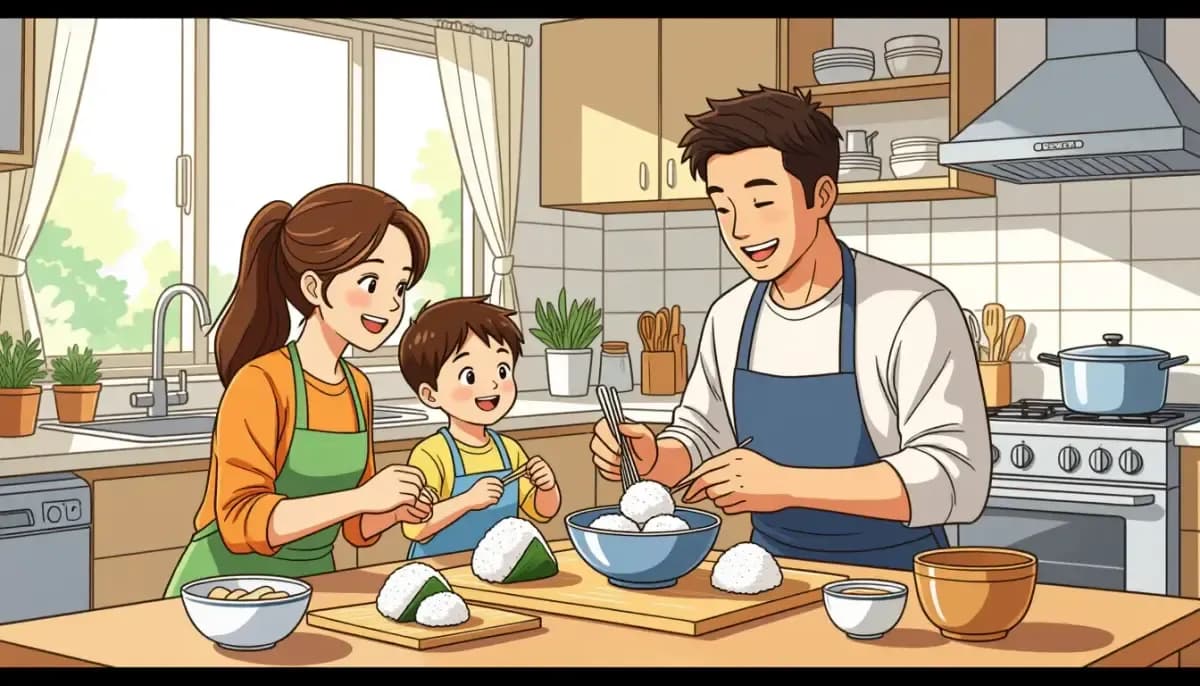
Discover fun Japanese recipes to cook with your children, from onigiri to gyoza and mochi. Learn about shokuiku, bento boxes, and tips to make cooking a family tradition in Japan.
Cooking Japanese Food with Your Children: Fun Recipes
One of the most rewarding experiences for foreign families living in Japan is exploring Japanese cuisine together in the kitchen. Cooking Japanese food with your children is not just about feeding hungry bellies — it is a hands-on journey into Japanese culture, language, and values. From shaping sticky onigiri rice balls to folding gyoza dumplings, these activities bring families closer while building lifelong skills and memories.
Research published in Japanese nutrition journals confirms what many parents already sense: children who cook are healthier, more adventurous eaters, and develop greater confidence in the kitchen. A 2015 national survey found that children aged 2–6 whose parents cooked with them had a food diversity score of 4.04 food groups per day, compared to 3.64 for those who did not cook together — a meaningful difference in nutritional breadth. Even more striking, families who cooked at home regularly had children 2.27 times less likely to be obese compared to low-cooking households. Japan's childhood obesity rate sits at around 5%, far below the 22.7% seen in the United States, and home cooking culture plays a significant role.
Whether you are brand new to Japanese cuisine or a seasoned home cook, the recipes and strategies in this guide will help you make cooking with your children a regular, joyful part of family life in Japan.
Why Cooking Japanese Food Matters: Shokuiku and Washoku
Japanese food culture for children is shaped by two powerful concepts: shokuiku (食育) and washoku (和食).
Shokuiku, which translates roughly as "food education," is a philosophy embedded in Japanese schools and family life. It teaches children not only what to eat, but how food is grown, prepared, and shared. Japan actually passed the Basic Law of Shokuiku in 2005, making food education a national priority. The Wa-Sho program, built on these principles, has reached over 23,000 participants since its 2017 launch, teaching children to count in Japanese while washing vegetables, grow green onions on windowsills, and make their own chopstick rests.
Washoku, the traditional Japanese cuisine recognized by UNESCO as an Intangible Cultural Heritage, emphasizes seasonal ingredients, balanced nutrition, visual presentation, and communal enjoyment. These values translate beautifully into child-friendly cooking: small portions, colorful ingredients, and simple techniques that even young hands can master.
For foreign families, cooking Japanese food with children is also a powerful cultural bridge. When your child learns to make miso soup or shape a bento box, they develop a connection to their host country that no textbook can replicate. It can also help children who may feel caught between cultures — a topic explored in our guide on Cultural Identity for Hafu and Mixed-Race Children in Japan.
Essential Kid-Friendly Japanese Recipes to Start With
The following recipes are specifically suited to children because they involve hands-on techniques, forgiving ingredients, and immediate, satisfying results.
Onigiri (おにぎり) — Rice Balls
Onigiri are the perfect starter recipe. Cooked rice, a simple filling, and your hands — that is all you need. Children love shaping the rice into triangles or balls, and the customizable fillings mean everyone gets what they want.
Kid tasks: Scooping rice, choosing fillings, shaping with wet hands Suggested fillings: Tuna and mayo, pickled plum (umeboshi), seasoned salmon, seaweed Tips for parents: Use plastic wrap to help younger children shape without sticky hands; season the rice lightly with salt
Gyoza (餃子) — Pan-Fried Dumplings
Folding gyoza is a beloved family activity in Japan. The pleating technique looks impressive but children quickly get the hang of it — and even imperfect folds taste delicious.
Kid tasks: Spooning filling, folding and crimping edges, watching the pan (with supervision) Filling basics: Ground pork or chicken, cabbage, garlic, soy sauce, sesame oil Tips for parents: Lay out filling and wrappers assembly-line style; use a lid to steam-fry safely
Tamagoyaki (卵焼き) — Rolled Omelette
Tamagoyaki is Japan's classic rolled egg dish, found in nearly every bento box. It requires a special rectangular pan (tamagoyaki-ki), available at any 100-yen shop or home goods store.
Kid tasks: Cracking and whisking eggs, watching the rolling technique, choosing sweet vs. savory Basic recipe: 3 eggs, 1 tsp soy sauce, 1 tsp mirin or sugar, dash of dashi stock Tips for parents: Let children do the first few rolls themselves — wobbly tamagoyaki still tastes great
Miso Soup (味噌汁)
Making miso soup teaches children the foundational flavors of Japanese cooking: dashi (stock), miso, and seasonal vegetables. It is quick, nutritious, and infinitely variable.
Kid tasks: Measuring miso, stirring gently, choosing add-ins like tofu, wakame, or corn Note: Never boil miso soup after adding the miso paste — this destroys beneficial enzymes Tips for parents: Use instant dashi granules to simplify; let children pick their own toppings
Mochi (餅) — Sticky Rice Cakes
Mochi-making is a festive activity that children find deeply satisfying. The sticky, stretchy texture is endlessly fun to work with, and the end results can be shaped, coated in kinako (roasted soy flour), or wrapped around sweet red bean paste.
Kid tasks: Kneading, shaping, rolling in kinako or toasted sesame Tips for parents: Use pre-made mochiko (rice flour) rather than pounding whole rice for safety; supervise young children closely as mochi is a choking hazard for those under 4
For more on feeding babies and toddlers in Japan, see our guide on Baby and Infant Care in Japan.
Recipe Difficulty Guide for Children by Age
| Recipe | Minimum Age | Difficulty | Key Skill |
|---|---|---|---|
| Onigiri (rice balls) | 3+ | ⭐ Easy | Shaping, filling |
| Miso Soup | 4+ | ⭐ Easy | Measuring, stirring |
| Tamagoyaki | 6+ | ⭐⭐ Medium | Whisking, rolling |
| Gyoza | 6+ | ⭐⭐ Medium | Folding, crimping |
| Curry and Rice | 7+ | ⭐⭐ Medium | Chopping, simmering |
| Sushi Rolls | 8+ | ⭐⭐⭐ Challenging | Rolling mat technique |
| Ramen Noodle Soup | 8+ | ⭐⭐⭐ Challenging | Stock preparation |
| Mochi | 8+ | ⭐⭐ Medium | Kneading, shaping |
Making Bento Boxes: Creativity and Culture in a Box
The bento box (お弁当, obento) is perhaps the most iconic expression of Japanese food culture, and creating one with your child is an art form in itself. Japanese parents — and increasingly children themselves — decorate bento boxes with characters, animals, and scenes made from vegetables, rice, and egg.
Charaben (character bento) are particularly popular: a panda made from rice balls with seaweed features, a Pikachu onigiri, or a flower made from sliced carrots. These bento are common in Japanese elementary school lunch boxes and are a wonderful way for foreign children to connect with their classmates.
Basic bento assembly with children:
- Choose a protein (tamagoyaki, karaage chicken, mini sausages)
- Add a carb (onigiri, rice shaped with a mold, soba noodles)
- Fill gaps with colorful vegetables (blanched broccoli, cherry tomatoes, edamame)
- Add a small treat (fruit, a piece of chocolate, a few crackers)
For ideas on connecting your child's food culture to their school life in Japan, visit Elementary School in Japan: A Complete Guide for Foreign Parents.
You can also find excellent inspiration and practical bento recipes at Savvy Tokyo's kid-friendly Japanese food guide and at Sudachi Recipes' Japanese recipes for kids collection.
Shopping for Japanese Cooking Ingredients with Kids
Taking children grocery shopping at a Japanese supermarket (スーパー) is itself an educational adventure. Japan's supermarkets are organized very differently from Western ones, and the seasonal produce sections change with the time of year in ways that reinforce shokuiku principles.
Ingredients to discover together:
- Miso paste — show children the different colors (white, red, mixed) and explain the fermentation process
- Natto — fermented soybeans that are nutritionally exceptional; children either love or hate the texture
- Seasonal vegetables — renkon (lotus root) in autumn, takenoko (bamboo shoot) in spring, kabocha squash in summer
- Dashi — dried bonito flakes (katsuobushi) and kombu kelp; smell these with your children
- Soy sauce varieties — light vs. dark, tamari, ponzu
100-yen shop finds for kid cooking:
- Tamagoyaki rectangular pan
- Onigiri molds (triangle and round)
- Bento box cutters and shapers
- Small decorating tools for charaben
The Living in Nihon resource offers useful guides for foreigners navigating daily life in Japan, including shopping and food culture. Similarly, For Work in Japan provides support for expat families adjusting to life in Japan.
Connecting Cooking to Language Learning
The Japanese kitchen is a natural language classroom. Every ingredient, utensil, and technique has a Japanese name, and children absorb vocabulary effortlessly when it is tied to physical actions and sensory experiences.
Kitchen vocabulary to practice:
- 切る (kiru) — to cut
- 混ぜる (mazeru) — to mix
- 炒める (itameru) — to stir-fry
- 茹でる (yuderu) — to boil
- 冷やす (hiyasu) — to cool
For families raising bilingual children in Japan, the kitchen provides a low-pressure, high-reward environment for Japanese practice. Our article on Raising Bilingual Children in Japan offers further strategies for weaving Japanese into everyday family life.
For structured recipes with detailed Japanese vocabulary, Im the Chef Too's Japanese recipes for kids is an excellent resource, and you can also explore the broader principles of Japanese food education at Chuukou Benkyou.
Tips for Making Cooking with Children a Sustainable Habit
Research shows that only about 10.4% of Japanese parents with young children (ages 2–6) regularly cook together with their kids — a surprisingly low figure given how central food is to Japanese culture. Many parents cite time pressure and the mess involved. Here are practical strategies to make it work:
Set up for success:
- Keep a dedicated low drawer or cabinet stocked with child-safe utensils
- Use a step stool so even toddlers can participate at counter height
- Lay down a tablecloth or newspaper for easy cleanup during messy steps like gyoza folding
Build a routine:
- Pick one weekend dish that always involves children (Sunday onigiri, for example)
- Let children plan a meal once a week from a short list of options
- Allow older children to manage a recipe section independently
Manage expectations:
- Accept that cooking with children takes longer and is messier than solo cooking
- Focus on the process, not the product — a lopsided gyoza is still a gyoza
- Research confirms that parents who cook with children actually report more perceived leisure time, not less (despite the mess)
Safety basics:
- Always supervise at the stove; assign children stovetop tasks only when developmentally appropriate
- Use kid-safe knives for vegetable chopping from around age 7
- Tie back hair and roll up sleeves; make aprons a fun ritual
For additional guidance on parenting in Japan and navigating daily life as a foreign family, explore Toddler Parenting in Japan: Ages 1 to 3 for early-years specific advice.
Conclusion
Cooking Japanese food with your children is one of the most meaningful ways to deepen your family's connection to Japan. Every onigiri shaped, every gyoza folded, and every bowl of miso soup stirred is an act of cultural participation — a bridge between your home culture and the one you are building together in Japan.
The science backs up what feels intuitively true: children who cook eat better, develop more confidence, and form stronger bonds with their families and food culture. With Japan's rich culinary traditions and the philosophy of shokuiku guiding the way, your kitchen can become one of the most joyful and educational spaces in your home.
Start simple. Start messy. And start together.

Originally from Vietnam, living in Japan for 16+ years. Graduated from Nagoya University, with 11 years of professional experience at Japanese and international companies. Sharing practical information for foreign parents raising children in Japan.
View Profile →Related Articles
Meal Prep Tips for Busy Expat Families in Japan
Discover practical meal prep strategies for expat families in Japan. Learn tsukurioki techniques, bento box tips, Japanese grocery shopping, food storage, and weekly prep schedules to simplify weeknight cooking.
Read more →
Nutrition Standards and Guidelines in Japanese Schools
Learn about Japan's school lunch (kyushoku) nutrition standards, what your child eats daily, allergy accommodations, costs, and the shokuiku food education system — a complete guide for foreign families.
Read more →
Halal, Kosher, and Vegetarian Options in Japanese Schools
Complete guide to halal, kosher, vegetarian, and vegan options in Japanese schools. Learn how to navigate Japan's kyushoku system, negotiate dietary accommodations, and find Islamic schools — practical advice for foreign parents in Japan.
Read more →
Seasonal Japanese Foods for Family Meals
Discover Japan's seasonal foods (shun) for every family meal across spring, summer, autumn, and winter. Practical tips for foreign families shopping and cooking seasonally in Japan.
Read more →
Japanese Snacks and Sweets for Children: What's Safe and Healthy
A complete guide to Japanese snacks and sweets for children. Discover what's safe, healthy, and age-appropriate — from oyatsu culture to konbini picks and traditional wagashi — for expat families in Japan.
Read more →
Helping Picky Eaters Try Japanese Food
Practical guide for expat families helping picky eaters try Japanese food. Gateway foods, family-friendly restaurants, konbini tips, and strategies that actually work in Japan.
Read more →