
Halal, Kosher, and Vegetarian Options in Japanese Schools

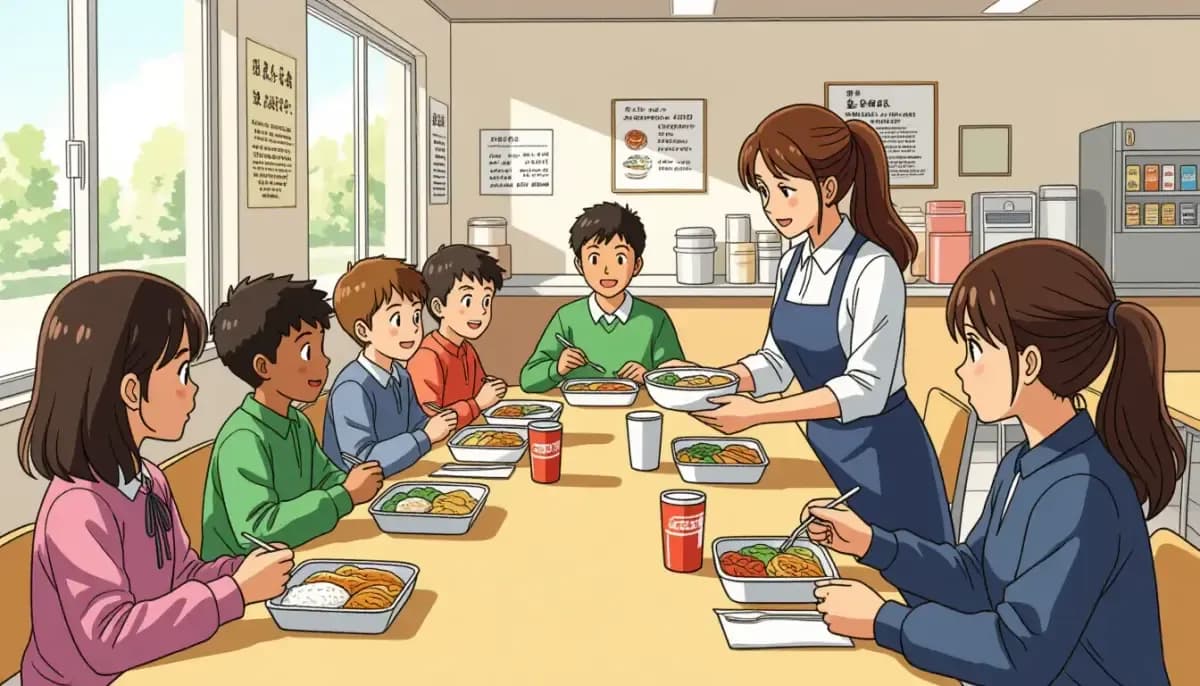
Complete guide to halal, kosher, vegetarian, and vegan options in Japanese schools. Learn how to navigate Japan's kyushoku system, negotiate dietary accommodations, and find Islamic schools — practical advice for foreign parents in Japan.
Halal, Kosher, and Vegetarian Options in Japanese Schools: A Complete Guide for Foreign Families
Navigating Japan's school lunch system with dietary restrictions can feel overwhelming — but thousands of Muslim, kosher-observant, vegetarian, and vegan families do it successfully every year. Whether your child has religious dietary requirements or follows a plant-based lifestyle, understanding how Japan's kyushoku (給食) system works is the first step to finding the right solution for your family.
This guide covers everything you need to know about dietary accommodation in Japanese public schools, including practical strategies, useful Japanese phrases, and the growing network of resources available to foreign families.
Understanding Japan's School Lunch System (Kyushoku)
Japan's school lunch system is one of the most comprehensive in the world. With a coverage rate of 95.2% across 30,092 schools, over 10 million students participate in kyushoku daily. Elementary school coverage is even higher at 98.5%, with junior high at 86.6%.
The system is deeply rooted in the Basic Act on Shokuiku (食育基本法, 2005), which positions food education as "fundamental to intellectual education, moral education, and physical education." This philosophy means that in Japanese public schools, all students are expected to eat the same set menu together in the classroom — and this cultural value is at the heart of why dietary opt-outs are challenging to negotiate.
Average monthly costs for school lunch are approximately:
| School Level | Monthly Cost |
|---|---|
| Elementary School | ~¥4,700 |
| Junior High School | ~¥4,941 |
| International School (varies) | ¥0 – ¥15,000+ |
The key challenge: Home-packed lunches (お弁当, obento) are typically prohibited in public schools unless there is a documented medical or allergy-related need. This creates a direct obstacle for families with religious dietary requirements — but it is not an insurmountable one.
For a broader understanding of how the Japanese school system works, see our Complete Guide to the Japanese Education System for Foreign Families.
Halal Options in Japanese Schools: What You Need to Know
Standard Japanese school lunches routinely contain ingredients incompatible with Islamic dietary law:
- Pork (豚肉): frequently used in soups, stir-fries, and side dishes
- Mirin (みりん): sweet rice wine used extensively in Japanese cooking
- Sake (酒): rice wine used in marinades and sauces
- Shared cooking utensils: cross-contamination risk even if pork is absent from a particular dish
Japan's Halal School Lunch Pilot Program (2024)
A major milestone was reached in 2024 when Japan launched its first halal-certified school lunch program in Sakai and Goka towns in Ibaraki Prefecture. At Sakai Municipal Sakai Elementary School, 23 Muslim students ate school-provided halal lunch for the first time. The lunch center stated: "We want children to enjoy the same lunch together regardless of religion."
In the halal-adapted recipes, pork was replaced with halal-certified beef, and alcohol-based seasonings like mirin were replaced with sugar and soy sauce. The primary barrier to scaling this approach is cost — halal-certified meat and seasonings are significantly more expensive than standard ingredients.
This pilot represents a turning point, but it remains an exception rather than the rule. Most public schools across Japan do not yet offer halal-certified lunches.
Practical Steps for Muslim Families
- Meet with the school principal and homeroom teacher early — ideally before enrollment — to explain your child's dietary requirements
- Request a monthly menu (献立表, kondatehyou) in advance so you can identify problematic days
- Ask about bento exceptions — many schools will permit a home-packed lunch for documented religious dietary needs if you request it formally in writing
- Consider Islamic schools: Japan has a growing number of dedicated Islamic schools (see section below)
Useful Japanese phrases:
- 豚肉、アルコール、みりんは入っていませんか? (Does this contain pork, alcohol, or mirin?)
- イスラム教の食事制限があります。 (We have Islamic dietary restrictions.)
- 豚を使った調理器具と共有しないようにできますか? (Can you avoid sharing cooking utensils used for pork?)
For more on communicating with Japanese schools as a foreign family, see our guide to Elementary School in Japan: A Complete Guide for Foreign Parents.
Kosher Requirements in Japanese Schools
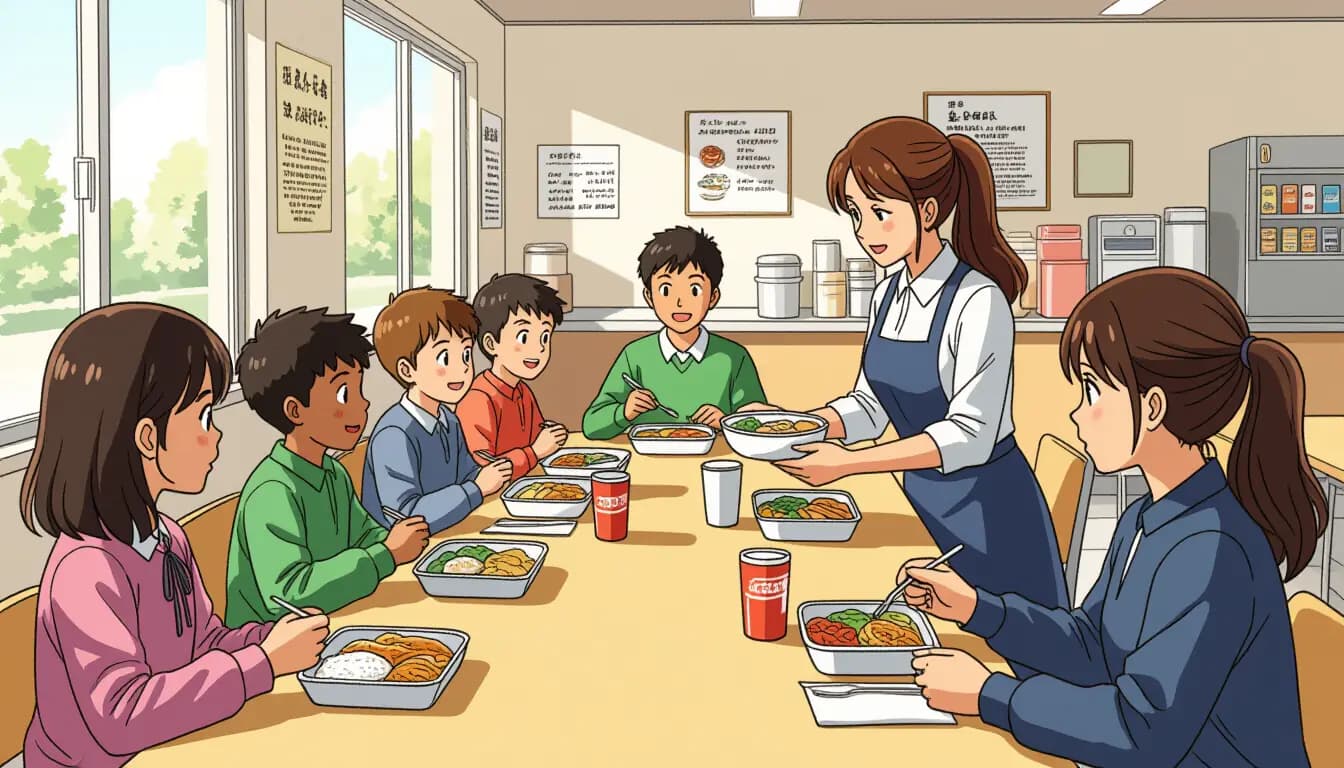
Kosher dietary law (kashrut) is arguably the most complex dietary framework to navigate in Japan's school lunch system. There is no government kosher certification framework in Japan, and to date, no Japanese public school is known to offer kosher-certified meals.
Key challenges for kosher-observant families:
- Meat and dairy separation — Japanese school lunches frequently combine meat and dairy in the same meal
- Pork prohibition — same issue as for Muslim families
- Utensil koshering — school utensils cannot be made kosher for individual students
- Bishul akum — many Orthodox families require Jewish involvement in cooking
Realistic Options for Kosher Families
Option 1: Negotiate a bento arrangement Contact the school principal before enrollment. Explain the religious nature of the dietary requirements. Many schools will accommodate a bento exception for documented religious need — more easily than for simple lifestyle preferences.
Option 2: International or private schools Schools with more flexible cafeteria arrangements or those that permit bento as standard may be a better fit. See our guide to International Schools in Japan.
Option 3: Tokyo's Jewish community resources Tokyo has an established Jewish community with kosher food sources. The Jewish Community of Japan (JCJ) in Hiroo, Tokyo, maintains resources including a synagogue and can connect families with community support networks.
For information on Jewish community resources and networking with other expat families, sites like Living in Nihon provide broader expat life guides for Japan.
Vegetarian and Vegan Options: The Hidden Challenges
Japan might seem vegetarian-friendly at first glance — with abundant tofu, rice, and vegetables — but the reality is more complex. Dashi (出汁, fish stock) is the foundation of Japanese cuisine and appears in dishes that appear entirely vegetable-based:
- Miso soup (most versions contain bonito dashi)
- Ramen broth (even "vegetable" versions often use fish or pork stock)
- Salad dressings and sauces
- Apparently simple vegetable stir-fries (often seasoned with bonito flakes)
- Natto (fermented soybeans — vegan, but not universally liked)
What Kyushoku Vegetarians Face
Japanese school lunches are designed as nutritionally balanced complete meals, typically including fish or meat as the protein component. Fully vegetarian options are not standard, and the concept of veganism is not yet widely embedded in Japanese school food culture.
However, progress is being made. Several nurseries and kindergartens now explicitly accommodate religious and dietary needs:
- Kamitakaido Nursery School (Tokyo) and its 200+ affiliated facilities nationwide state they pay "close attention to those with allergies and religious dietary restrictions"
- Yoshida Kindergarten (Kyoto) offers in-house meals by nutritionists accommodating allergies and religious dietary needs
For vegetarian families, Buddhist shojin ryori (精進料理) — traditional temple cuisine — is entirely plant-based and represents Japan's indigenous vegetarian culinary tradition. Seeking out restaurants that specialize in shojin ryori can help maintain your child's connection to authentic Japanese food culture while adhering to vegetarian principles.
Useful Japanese phrases for vegetarians:
- 肉・魚・だしを使わない料理はありますか? (Do you have dishes without meat, fish, or dashi/fish stock?)
- 動物性だし(かつおだし等)は使っていませんか? (Does this use animal-based stock such as bonito dashi?)
- 完全菜食主義者です。 (I am a strict vegetarian/vegan.)
Islamic Schools and Alternative Educational Settings in Japan
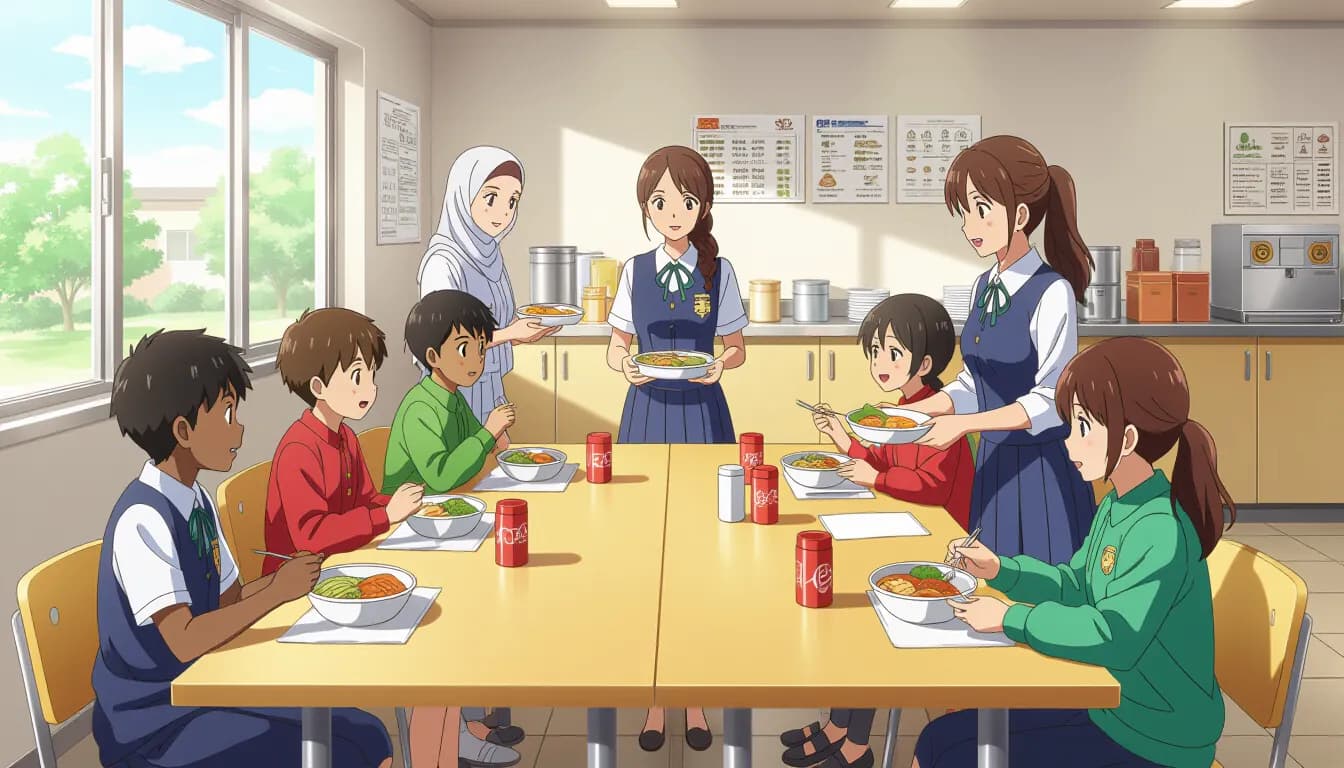
For Muslim families in particular, a growing network of dedicated Islamic schools provides full halal environments for children's education:
| School | Location | Level | Features |
|---|---|---|---|
| YUAI International Islamic School | Tokyo (Shibuya) | K-12 | Est. 2016, full halal curriculum |
| Darul Iman Kasugai Preschool | Aichi | Ages 3-6 | Est. 2013, halal meals, Qur'an/Arabic |
| International Islamia School – Otsuka | Tokyo | Primary | Adjacent to Otsuka Mosque |
| Tokyo Iqra International School | Tokyo (Katsushika) | Kindergarten/Primary | English-medium instruction |
These schools offer integrated Islamic education alongside Japanese academic curriculum, which can help children maintain religious identity while receiving a solid foundation for continuing in the Japanese system. For more on maintaining cultural and religious identity for your children in Japan, see our article on Cultural Identity for Hafu and Mixed-Race Children in Japan.
The Japan Times reported in 2019 that schools are "urged to modify lunches for religious needs as foreign population grows" — and while no government framework yet exists for religious dietary accommodations (unlike the established allergy protocols), the conversation is actively progressing.
For additional context on navigating daily life in Japan with religious or dietary considerations, For Work in Japan covers various aspects of living and working in Japan as a foreigner.
Food Allergy Policy vs. Religious Dietary Needs: An Important Distinction
Understanding where Japan's policy stands — and doesn't stand — helps set realistic expectations:
What IS covered:
- Food allergies: Japan has government-issued guidelines (from MEXT, 2015) for managing allergies in schools. As of 2023, approximately 527,000 students (6.3% of all students) in Japanese public primary and middle schools have documented food allergies. Schools are required to have allergy management plans.
What is NOT covered:
- Religious dietary restrictions: No equivalent government framework exists for halal, kosher, or other religiously-motivated dietary needs. This creates a significant policy gap that families must navigate individually.
This means your success in negotiating dietary accommodations at a Japanese school depends heavily on the individual school principal's attitude, the local board of education's policies, and your own communication with the school.
For information on healthcare and medical documentation that may support allergy-related accommodation requests, see our Healthcare and Medical Care for Children in Japan guide.
Practical Communication Strategies with Japanese Schools
Approaching Japanese school administrators about dietary restrictions requires cultural sensitivity. Here is a framework that has worked for many foreign families:
- Request a meeting before enrollment — don't wait until the first day of school to raise the issue
- Bring written documentation — a letter from a religious authority, doctor, or even a printed explanation of your dietary framework in Japanese can be very helpful
- Frame it as a collaborative problem — Japanese schools respond well to a cooperative attitude rather than demands
- Be specific about what is and isn't acceptable — give teachers a clear written list they can refer to when planning menus
- Follow up regularly — monthly menu review with the class teacher helps prevent surprises
- Connect with other foreign families — parent networks and organizations like the Association for the Welfare of Foreign Children can provide practical guidance
For broader advice on communicating with Japanese schools and navigating the PTA system as a foreign family, our Junior High School in Japan: Guide for Foreign Families article covers school communication strategies in detail.
For additional expat family support resources and community information, Chuukou Benkyou provides educational resources for students navigating the Japanese school system.
Resources and Community Support
- Halal Navi app: Locates halal-certified restaurants and food shops near you in Japan
- HappyCow app: Finds vegan and vegetarian-friendly restaurants
- Japan Halal Association (JHA): Certifies restaurants and food products; searchable database online
- JNTO Muslim Welcome Guide: Lists prayer facilities and dining spots across Japan
- Fooddiversity.today: English-language resource on dietary diversity in Japan, including coverage of religious dietary accommodation in schools
- Japanese expat parent Facebook groups: "Foreign Moms in Japan," "Raising Kids in Japan," and community-specific groups are invaluable peer support networks
- Japan Halal Times: Tracks developments in halal food availability including school programs
For further information on managing your child's overall wellbeing and integration in Japan's school system, the comprehensive Japan Handbook dietary guide offers practical tips for expats managing dietary restrictions across all contexts in Japan.
Conclusion
Japan's school lunch system was designed as a shared cultural experience, and that philosophy creates real challenges for families with halal, kosher, vegetarian, or vegan dietary requirements. However, the landscape is changing: Japan's first halal school lunch pilot launched in 2024, Islamic schools are expanding across major cities, and individual schools increasingly accommodate dietary needs when approached respectfully and proactively.
The key to success is early communication, written documentation, and connecting with the community of families who have navigated this path before you. Your child's dietary needs can be met in Japan — it just requires a bit more planning and advocacy than in countries where diverse dietary accommodation is more established.
For a complete picture of raising foreign children in Japan's education system, explore our full guide on Raising Bilingual Children in Japan: Strategies and Best Practices.

Originally from Vietnam, living in Japan for 16+ years. Graduated from Nagoya University, with 11 years of professional experience at Japanese and international companies. Sharing practical information for foreign parents raising children in Japan.
View Profile →Related Articles

Meal Prep Tips for Busy Expat Families in Japan
Discover practical meal prep strategies for expat families in Japan. Learn tsukurioki techniques, bento box tips, Japanese grocery shopping, food storage, and weekly prep schedules to simplify weeknight cooking.
Read more →
Nutrition Standards and Guidelines in Japanese Schools
Learn about Japan's school lunch (kyushoku) nutrition standards, what your child eats daily, allergy accommodations, costs, and the shokuiku food education system — a complete guide for foreign families.
Read more →
Seasonal Japanese Foods for Family Meals
Discover Japan's seasonal foods (shun) for every family meal across spring, summer, autumn, and winter. Practical tips for foreign families shopping and cooking seasonally in Japan.
Read more →
Cooking Japanese Food with Your Children: Fun Recipes
Discover fun Japanese recipes to cook with your children, from onigiri to gyoza and mochi. Learn about shokuiku, bento boxes, and tips to make cooking a family tradition in Japan.
Read more →
Japanese Snacks and Sweets for Children: What's Safe and Healthy
A complete guide to Japanese snacks and sweets for children. Discover what's safe, healthy, and age-appropriate — from oyatsu culture to konbini picks and traditional wagashi — for expat families in Japan.
Read more →
Helping Picky Eaters Try Japanese Food
Practical guide for expat families helping picky eaters try Japanese food. Gateway foods, family-friendly restaurants, konbini tips, and strategies that actually work in Japan.
Read more →