
Meal Prep Tips for Busy Expat Families in Japan

Discover practical meal prep strategies for expat families in Japan. Learn tsukurioki techniques, bento box tips, Japanese grocery shopping, food storage, and weekly prep schedules to simplify weeknight cooking.
Meal Prep Tips for Busy Expat Families in Japan
Juggling work, school runs, language barriers, and a completely new food culture — life as an expat parent in Japan is exciting, but the daily question of "what's for dinner?" can quickly become exhausting. If you're raising children in Japan while working full-time, smart meal prep isn't just a nice-to-have; it's a lifeline that saves time, reduces stress, and helps your family eat well despite a packed schedule.
Japan actually has a deeply rooted meal-prep culture called tsukurioki (作り置き) — the practice of preparing dishes in advance and storing them in the fridge to mix and match throughout the week. Once you understand this concept and adapt it to your family's needs, weeknight dinners become far more manageable.
This guide covers everything expat families need to know: how to navigate Japanese grocery stores, the best prep strategies, food safety tips, bento box packing, and how to get the whole family involved.
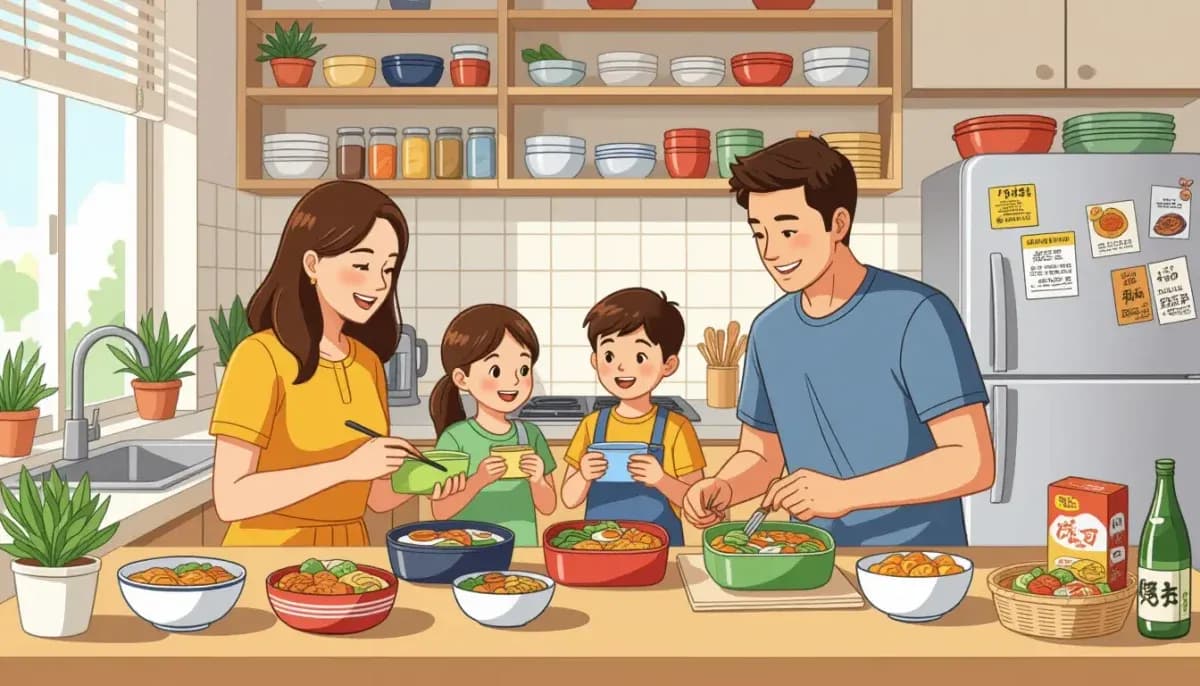
!Expat family meal prepping in a Japanese kitchen with bento boxes
Understanding Tsukurioki: Japan's Meal Prep Philosophy
Unlike Western batch cooking where you make complete meals in bulk, Japanese tsukurioki (作り置き) focuses on preparing individual components — proteins, vegetables, and sauces — that can be combined in different ways each day. Think of it as building blocks rather than pre-made meals.
This system is ideal for expat families because:
- Flexibility: Kids can mix and match based on what they feel like eating
- Freshness: Smaller portions stay fresher longer than large casseroles
- Variety: The same components can become different meals (lunch bento, dinner bowl, or soup topping)
- School lunch compatibility: Many Japanese schools require bento boxes, so prepped components make morning assembly effortless
The key principle is simple: spend 1–2 hours on Sunday (or any free day) cooking several base components, then refrigerate them in individual containers. Each night, you simply reheat and assemble. Bento assembly once everything is prepped takes under 5 minutes.
Navigating Japanese Grocery Stores as an Expat
Shopping efficiently is half the battle of meal prep. Japanese supermarkets can be overwhelming at first, but once you know where to look and what to buy, they're incredibly convenient.
Key Vocabulary for Grocery Shopping
Learning these kanji will transform your shopping experience:
| Japanese | Romaji | Meaning |
|---|---|---|
| 野菜 | Yasai | Vegetables |
| 魚 | Sakana | Fish |
| 肉 | Niku | Meat |
| 無添加 | Mutenka | Additive-free |
| 冷凍 | Reitou | Frozen |
| 国産 | Kokusan | Domestically produced |
| 有機 | Yuuki | Organic |
| 消費期限 | Shouhi kigen | Use-by date |
| 賞味期限 | Shoumi kigen | Best-before date |
Where to Shop for Bulk and Budget Buys
For expat families looking to buy in bulk without breaking the budget:
- Gyomu Super (業務スーパー): A business supermarket open to the public, offering large packs of meat, frozen vegetables, and pantry staples at significantly lower prices than regular supermarkets. Perfect for meal prep staples.
- Hanamasa (ハナマサ): Another wholesale-style supermarket chain in major cities, great for bulk proteins and pantry items.
- Costco: If there's one near you, Costco Japan stocks imported goods and large portions that are ideal for batch cooking.
- Regular supermarkets' discount sections: Most Japanese supermarkets mark down fresh proteins after 5–7 PM. Time your shopping right and you'll save 20–30% on fish and meat.
Don't overlook frozen vegetables — Japanese frozen spinach, broccoli, and edamame are harvested and frozen at peak freshness. They're nutritionally excellent and a huge time-saver for meal prep. For more advice on living efficiently in Japan, check out Living in Nihon's expat guides.
Core Proteins: What to Prep and How Long They Last
Proteins are the backbone of Japanese home cooking and the most important thing to prep in advance. Here's a practical guide to prepping the most common proteins:
Chicken
Seasoned Chicken Thigh: Marinate thighs in salt, sake, and a touch of soy sauce, then pan-fry or bake. Keeps 4–5 days refrigerated. Works in rice bowls, bento boxes, and salads.
Ground Chicken Soboro (鶏そぼろ): Cook ground chicken with soy sauce, mirin, and sugar until crumbly. Keeps up to one week refrigerated. One of the most versatile tsukurioki staples — pile it over rice, add it to bento boxes, or use it in onigiri.
Fish
Salted Salmon (塩鮭): Season salmon fillets with exactly 0.8% salt by weight (e.g., 4g salt for a 500g fillet). Refrigerate for a day before cooking or cook immediately. Cooked salmon keeps 2–3 days refrigerated. A morning staple in Japanese households and easy to pack in bento.
Mackerel (Saba): Canned mackerel (さば水煮) is an inexpensive, nutritious protein that requires zero prep time. Stock up and use directly in stir-fries or on rice.
Pork
Ginger Pork (Shogayaki): A single-pan dish taking just 10 minutes — perfect for Japan's common one-burner kitchen setup. Marinate pork slices in ginger, soy sauce, and mirin; cook in batches and refrigerate. Lasts 3–4 days.
Pork Stir-Fry Base: When prepping sliced pork for stir-fries, drizzle with a little sesame oil before storing to prevent the slices from drying out.
Eggs
Marinated soft-boiled eggs (味付け玉子 / ajitsuke tamago) add protein and flavor to any meal. Use eggs at least 1 week old (easier to peel), boil for 10 minutes, chill in ice water, then marinate in a mix of soy sauce, mirin, and water. Keeps 3–4 days refrigerated. For more practical cooking guides for expats in Japan, For Work in Japan's resources offer helpful lifestyle tips.
Vegetables and Sides: The Building Blocks
Once your proteins are sorted, prepare 3–4 vegetable dishes to round out your meals:
Quick Vegetable Preps
Blanched Spinach (Ohitashi): Blanch spinach for 1 minute, squeeze out water, and dress with soy sauce and dashi. Keeps 3–4 days. Works as a side dish or bento filler.
Kinpira Gobo (Burdock Root Stir-Fry): Julienne burdock root and carrot, stir-fry with soy sauce, mirin, sake, and sesame oil. Keeps 4–5 days and is a classic tsukurioki staple.
Simmered Kabocha (Kabocha no Nimono): Simmer chunks of Japanese pumpkin in dashi, soy sauce, mirin, and sugar. Keeps 3–4 days and kids tend to love the sweet flavor.
Frozen Vegetable Mixes: Keep edamame, broccoli, and spinach in the freezer as emergency bento fillers. Japanese frozen vegetable quality is excellent — no thawing required for bento boxes if placed frozen in the morning (they'll defrost by lunchtime and act as a natural cold pack).
Homemade Sauces That Last
A good sauce in the fridge can transform any meal. Homemade teriyaki sauce (soy sauce + mirin + sugar + garlic + ginger) lasts 3+ months refrigerated and works as a marinade, glaze, or stir-fry sauce. Make a large batch once a month.
!Japanese bento boxes with prepped components including rice, salmon, and vegetables
Bento Box Basics for Expat Parents
If your children attend Japanese public school or yochien (kindergarten), you'll likely need to pack bento boxes regularly. Understanding bento fundamentals will save you enormous stress. For comprehensive guidance on your child's schooling journey, see our guide to elementary school in Japan for foreign parents.
The Classic Bento Ratio
| Component | Portion | Examples |
|---|---|---|
| Carbohydrates | 40% | White rice, onigiri, pasta |
| Protein | 30% | Chicken, fish, egg, tofu |
| Vegetables | 20% | Blanched greens, simmered veggies |
| Extras | 10% | Fruit, small treats, pickles |
Bento Packing Tips
- Let everything cool completely before packing — hot food creates condensation that spoils bento faster.
- Season food slightly more heavily than usual. Food tastes blander at room temperature, so your bento needs a touch more salt and umami.
- Drain sauces before packing. Use dividers (バラン / baran — the little green plastic grass) to keep flavors separate.
- Use silicone cupcake cups to organize small items and absorb excess moisture.
- Pack variety over quantity: Japanese bento culture values visual appeal — small amounts of many dishes beat large portions of one thing.
Morning Assembly Under 5 Minutes
With prepped components in the fridge, bento assembly is simple:
- Scoop rice (kept in a rice cooker on warm overnight, or reheated)
- Add 1–2 proteins from the fridge (reheat if desired or pack cold)
- Fill gaps with vegetable sides from tsukurioki containers
- Add color with frozen edamame or cherry tomatoes
- Finish with fruit in a small container
If you're navigating after-school care arrangements alongside bento duties, our guide to daycare and hoikuen in Japan has practical scheduling tips.
Weekly Meal Prep Schedule for Busy Expat Families
Here's a realistic Sunday prep session outline that takes 90–120 minutes and sets your family up for the week:
| Time | Task | Result |
|---|---|---|
| 0–15 min | Start rice cooker; boil eggs | Rice ready; soft-boiled eggs |
| 15–30 min | Prep and cook chicken soboro | 5-day protein staple |
| 30–45 min | Salt and pan-fry salmon | 2–3 day fish option |
| 45–60 min | Make kinpira gobo | 4–5 day vegetable side |
| 60–75 min | Blanch spinach; make ohitashi | 3–4 day vegetable side |
| 75–90 min | Simmer kabocha | 3–4 day kid-friendly side |
| 90–120 min | Pack everything into containers; label | Fridge ready for the week |
Pro tip: Cook a large batch of rice and store in the fridge (up to 3 days) or freeze individual portions. Japanese rice reheats beautifully in the microwave with a damp paper towel on top.
Food Safety in Japanese Kitchens
Japan's food safety culture is meticulous, and for good reason — the combination of warm, humid summers and small refrigerators means you need to be careful about food storage.
Essential Food Safety Rules
- Cool food quickly: Never leave cooked food at room temperature for more than 2 hours (1 hour in summer). Cool in shallow containers before refrigerating.
- Use alcohol sprays: Japanese cooking-grade alcohol spray (料理用アルコール — found in most supermarkets) can be sprayed on containers before packing to extend freshness by a day or two.
- Separate containers: Store each tsukurioki dish in its own airtight container to prevent cross-contamination and flavor mixing.
- Label with dates: Use masking tape and a marker to label prep date on each container.
- Bento boxes in summer: Pack an ice pack (保冷剤 / horeizai) with your child's bento during warmer months. Many Japanese bento bags have built-in insulation pockets for this purpose.
For detailed information on healthcare and food-related health concerns for children in Japan, see our guide on healthcare and medical care for children in Japan.
Budget-Friendly Meal Prep: Feeding Your Family Well Without Overspending
Expat life in Japan often comes with financial pressures. Smart meal prep can significantly reduce your food budget. For comprehensive financial advice for expat families, read our guide on financial planning for expat families with children in Japan.
Tips for Reducing Your Grocery Bill
- Embrace seasonal produce: Japanese supermarkets heavily discount seasonal vegetables. Buy what's on sale and build your meal prep around it rather than shopping for specific recipes.
- Use dashi wisely: A pot of homemade dashi from kombu and katsuobushi is cheap, quick, and can flavor soups, simmered dishes, and vegetable sides for days. Instant dashi packets (だしパック) are an acceptable shortcut.
- Tofu and natto: Both are inexpensive protein sources that children can grow to love. Tofu scrambles like eggs; natto over rice is a complete, quick meal.
- Eggs are your best friend: Inexpensive, protein-packed, and incredibly versatile in Japanese cooking. Keep a constant stock.
For budget grocery guides and Tokyo-specific shopping tips, Tokyo Cheapo's guide to cheap Japanese recipes is an excellent resource.
Getting Your Children Involved in Meal Prep
Involving children in food preparation builds their confidence, reduces picky eating, and creates positive associations with Japanese food. This is especially valuable for expat children who may initially resist unfamiliar foods.
Age-Appropriate Kitchen Tasks
| Age | Tasks |
|---|---|
| 2–3 years | Washing vegetables, tearing lettuce, stirring cool mixtures |
| 4–6 years | Mixing ingredients, pressing rice into molds, simple measuring |
| 7–10 years | Cracking eggs, using rice cooker, assembling bento boxes |
| 11+ years | Simple pan cooking (tamagoyaki, soboro), chopping soft foods |
Letting children decorate their own bento boxes is a wonderful activity that also ensures they'll eat what's inside. Many Japanese dollar stores (Daiso, Seria) carry adorable bento accessories — vegetable cutters, egg molds, and decorative picks — that make this genuinely fun.
For guidance on cultural adjustment and helping children thrive in Japan, see our article on mental health and emotional wellbeing for foreign children in Japan.
Essential Kitchen Equipment for Meal Prep in Japan
Japanese kitchen equipment is optimized for the small kitchens found in most Japanese apartments. These items will make your meal prep significantly easier:
- Rice cooker (炊飯器): Non-negotiable for Japanese family cooking. The "keep warm" function overnight means morning rice is always ready.
- Tamagoyaki pan: A rectangular pan for making Japanese rolled omelettes — a bento staple. Inexpensive and easy to use.
- Airtight glass containers (保存容器): Glass is ideal for tsukurioki storage as it doesn't absorb odors or stain. Pyrex and Iwaki are widely available in Japan.
- Rice molds (おにぎり型): Makes onigiri in seconds — great for using leftover rice and an easy way for children to participate in prep.
- Mandoline slicer: For quick julienning of burdock root, carrot, and cucumber.
For a full guide to navigating Japanese kitchens and appliances, Chuukou Benkyou's practical guides for Japan provide useful information for families settling into daily life.
Quick Reference: Storage Times for Common Tsukurioki Dishes
| Dish | Storage (Refrigerator) | Notes |
|---|---|---|
| Chicken soboro | Up to 1 week | Also freezes well |
| Salted salmon (cooked) | 2–3 days | Best fresh |
| Seasoned chicken thigh | 4–5 days | Great cold or reheated |
| Kinpira gobo | 4–5 days | Flavor improves with time |
| Ohitashi (spinach) | 3–4 days | Squeeze well before storing |
| Kabocha nimono | 3–4 days | Kids love this one |
| Marinated boiled egg | 3–4 days | Don't over-marinate |
| Tamagoyaki | 2–3 days | Pack at room temp in bento |
| Teriyaki sauce | 3+ months | Make large batches |
| Cooked rice | 3 days (fridge), 1 month (frozen) | Reheat with damp paper towel |
Conclusion: Building Your Expat Family's Meal Prep Routine
Meal prep in Japan becomes second nature once you embrace the tsukurioki philosophy and learn to work with what Japanese supermarkets offer abundantly: fresh fish, seasonal vegetables, excellent rice, and a wealth of flavor-building condiments like miso, soy sauce, and mirin.
Start small: pick two proteins and two vegetable dishes to prep on Sunday. After a few weeks, increase to three or four of each. Before long, you'll spend 90 minutes on Sunday and barely think about weeknight dinners — leaving more time and energy for the truly important parts of expat family life in Japan.
For more resources on making the most of family life in Japan, explore our comprehensive guide to the Japanese education system for foreign families and our overview of government benefits and subsidies for families in Japan to ensure you're accessing all the support available to you.
For more in-depth guides on eating healthy and navigating food culture as an expat in Japan, Refer Japan's eating healthy guide and Just One Cookbook's meal prep resources are excellent starting points.

Originally from Vietnam, living in Japan for 16+ years. Graduated from Nagoya University, with 11 years of professional experience at Japanese and international companies. Sharing practical information for foreign parents raising children in Japan.
View Profile →Related Articles
Nutrition Standards and Guidelines in Japanese Schools
Learn about Japan's school lunch (kyushoku) nutrition standards, what your child eats daily, allergy accommodations, costs, and the shokuiku food education system — a complete guide for foreign families.
Read more →
Halal, Kosher, and Vegetarian Options in Japanese Schools
Complete guide to halal, kosher, vegetarian, and vegan options in Japanese schools. Learn how to navigate Japan's kyushoku system, negotiate dietary accommodations, and find Islamic schools — practical advice for foreign parents in Japan.
Read more →
Seasonal Japanese Foods for Family Meals
Discover Japan's seasonal foods (shun) for every family meal across spring, summer, autumn, and winter. Practical tips for foreign families shopping and cooking seasonally in Japan.
Read more →
Cooking Japanese Food with Your Children: Fun Recipes
Discover fun Japanese recipes to cook with your children, from onigiri to gyoza and mochi. Learn about shokuiku, bento boxes, and tips to make cooking a family tradition in Japan.
Read more →
Japanese Snacks and Sweets for Children: What's Safe and Healthy
A complete guide to Japanese snacks and sweets for children. Discover what's safe, healthy, and age-appropriate — from oyatsu culture to konbini picks and traditional wagashi — for expat families in Japan.
Read more →
Helping Picky Eaters Try Japanese Food
Practical guide for expat families helping picky eaters try Japanese food. Gateway foods, family-friendly restaurants, konbini tips, and strategies that actually work in Japan.
Read more →