
Bento Box Culture: Tips for Foreign Parents in Japan

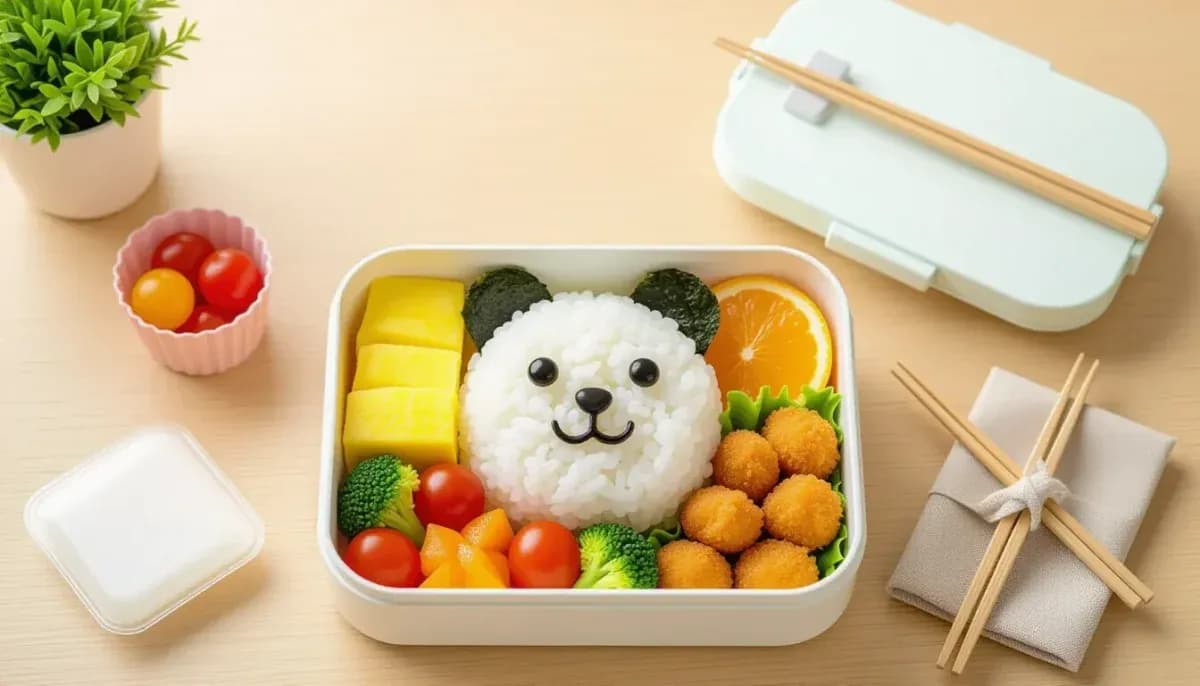
Everything foreign parents need to know about bento box culture in Japan — when your child needs one, what to pack, food safety, dietary restrictions, social rules, and practical tips for making school lunch easier.
Bento Box Culture: Tips for Foreign Parents in Japan
If you are raising children in Japan as a foreign parent, few things will surprise you as much as the cultural significance of the humble bento box. What looks from the outside like a simple packed lunch is, in Japanese society, a deeply meaningful practice that combines nutrition, aesthetics, parental love, and social conformity into a small, compartmentalized container.
This guide explains everything foreign parents need to know about bento box culture in Japan — from when your child actually needs one, to what goes inside, how to handle dietary restrictions, and how to navigate the unspoken social rules that surround school lunch. Whether you are preparing for your child's first day at a Japanese preschool or trying to understand why your junior high schooler suddenly needs elaborate bento every day, this article has you covered.
When Does Your Child Need a Bento in Japan?
The first thing foreign parents are often surprised to learn is that bento boxes are not the norm for all school levels. Japan has a well-developed school lunch system called kyushoku (給食), and understanding which schools use it versus which expect a home-packed bento is essential planning information.
According to data from Japan's Ministry of Education, 99.7% of public elementary schools and 98.2% of public junior high schools offer kyushoku. This means most children in these grades eat a hot, nutritionally balanced school lunch every day for approximately ¥250–¥450 per meal, depending on grade level.
However, there are several situations where bento becomes mandatory or common:
- Preschools and kindergartens (yochien): Most yochien do not have school lunch facilities. Bento is expected every school day.
- Nurseries and daycare (hoikuen/kodomoen): Some provide lunch; others require bento. Check with your specific facility.
- High school students: Formal kyushoku programs end after junior high. High school students either bring bento, buy from the school store, or purchase from a delivery service.
- Field trips (ensoku) and sports days (undoukai): Even at schools with kyushoku, children typically bring a homemade bento on these special days.
- Children with dietary exemptions: Students with documented allergies or dietary restrictions may bring bento daily in place of school lunch.
If your child attends an international school, lunch policies vary widely — check directly with the school administration.
For a broader understanding of how different school levels work in Japan, read our Complete Guide to the Japanese Education System for Foreign Families.
Understanding the Cultural Significance of Bento
To understand why bento boxes matter so much in Japan, you need to understand the cultural weight attached to them. In Japanese society, preparing a bento for your child is not just a practical task — it is a highly visible expression of parental care, particularly maternal love.
Bento culture has deep historical roots. The practice of carrying portable meals dates to the Nara period (710–794 AD), when dried rice was packed by travelers and workers. Compartmentalized lacquerware boxes became popular in the Edo period (1603–1868), and the first commercial station bento (ekiben) was sold at Utsunomiya Station around 1885. After World War II, widespread school lunch programs reduced the need for daily bento in schools, but the practice surged again in the 1980s with the proliferation of microwave ovens and convenience stores.
Today, bento-making is a multi-billion yen industry in Japan, with specialized boxes, silicone food cups, decorative picks, and bento cookbooks everywhere. The phenomenon of kyaraben (キャラ弁 — character bento) features food arranged to resemble anime characters, animals, or popular mascots. These creations are not just about aesthetics; they were originally designed to encourage picky eaters to try vegetables and balanced foods.
The social dimension matters enormously for foreign parents: when your child opens their lunchbox at school, their peers and sometimes teachers will see what is inside. A bento that looks dramatically different from everyone else's can inadvertently make a child stand out in a context where conformity is highly valued. This is not a reason to abandon your family's food culture entirely, but it is worth keeping in mind as you navigate the first few months.
What Goes Inside a Japanese School Bento?
A well-packed Japanese bento is designed around nutritional balance and visual appeal. The traditional rule of thumb is the 3:1:2 ratio — three parts carbohydrate (usually white rice), one part protein, and two parts vegetables or side dishes. Here is a breakdown of typical bento components:
| Category | Common Examples | Notes |
|---|---|---|
| Carbohydrate | White rice, onigiri (rice balls), noodles | Plain white rice is most common |
| Protein | Tamagoyaki (rolled egg), karaage (fried chicken), sausages, fish | Tamagoyaki is a bento staple |
| Vegetables | Broccoli, cherry tomatoes, corn, edamame, cucumber | Colorful presentation is valued |
| Side dishes | Potato salad, pickled plum (umeboshi), kinpira gobo | Small amounts, adds variety |
| Fruit | Orange slices, grapes, strawberries | Placed in a separate section |
Practical tips for packing:
- Room temperature matters: School bento boxes are typically eaten cold, as classrooms do not have microwave access. Make sure everything in the box tastes good at room temperature.
- Food safety in summer: From May to September, Japan's heat and humidity create serious food spoilage risk. Use an insulated bag and an ice pack. Avoid mayonnaise-heavy dishes, raw vegetables without preserving, and anything that spoils quickly.
- Use utensils when packing: Always handle bento food with chopsticks or spoons, not bare hands, to minimize bacterial contamination.
- Keep it simple on weekdays: Aim for 4–5 items maximum. Elaborate kyaraben are a weekend project, not a Monday morning reality for most parents.
- Label everything: Write your child's name on the bento box, bag, chopstick case, and any containers.
For parents navigating kindergarten life in Japan for the first time, our guide to Kindergarten in Japan (Yochien): Everything Foreign Parents Need to Know covers what to expect in detail, including lunch routines.
Handling Dietary Restrictions and Allergies
This is one of the most critical areas for foreign parents to understand. Japan's school lunch system is generally not designed to accommodate individual dietary differences. Whether the restriction is a food allergy, religious dietary law (halal, kosher), vegetarianism, veganism, or cultural preference, the default assumption in most public schools is that all children eat the same lunch.
There are some important realities to be aware of:
Food allergies: Japan's school lunch program does screen for the seven major allergens (wheat, buckwheat, egg, milk, peanuts, shrimp, crab), but full accommodation — such as providing an allergen-free alternative meal — is rare and depends heavily on the school and municipality. For serious allergies, parents typically must:
- Provide a doctor-signed letter (医師の指示書 / ishi no shijisho) detailing the allergy and required restrictions
- Submit this documentation at the time of school enrollment, or as soon as the diagnosis is made
- Agree to an exemption from kyushoku, which usually means sending a bento every day
Religious or cultural restrictions: These are even less commonly accommodated. Muslim families, vegetarian or vegan families, or families with other religious food restrictions should expect to arrange for bento exemptions from the start. Communicate clearly and politely with the homeroom teacher (担任 / tanin) and the school office when enrolling.
Milk: Daily milk is a standard component of kyushoku and is considered near-mandatory. Exceptions require documented medical or cultural justification. If your child cannot consume dairy, raise this with the school office during enrollment.
Requesting the monthly menu: Most schools distribute a monthly lunch menu called a kondate (献立). Foreign parents should ask for this in advance — it allows you to identify problematic days and arrange bento alternatives as needed.
For more comprehensive guidance on healthcare and special needs, see our article on Healthcare and Medical Care for Children in Japan.
Social Rules and Expectations Around Bento
Beyond the practical aspects of packing, bento culture in Japan involves a layer of social norms that foreign parents may find unfamiliar. Understanding these unwritten rules helps prevent unnecessary friction at school.
Mottainai and finishing your food: The Japanese concept of mottainai (もったいない — "what a waste") runs deep in school culture. Children are expected to finish everything in their bento or school lunch. Some teachers actively reinforce this by encouraging — or requiring — students to clean their plates. Pack appropriate portions that your child will actually eat.
Mealtimes are structured: School lunch or bento time is usually a formal, organized activity in Japanese schools. Children set up their eating area, say itadakimasu (いただきます) together before eating, and gochisousama (ごちそうさまでした) when finished. Teaching your child these phrases early helps them fit in quickly.
Don't pack dramatically different food immediately: Introducing Japanese staples alongside familiar foods from your home culture is a more effective long-term strategy than either extreme. Gradually adding rice, tamagoyaki, sausages, and steamed vegetables alongside foods your child knows well helps them adjust without feeling isolated.
Avoid strong-smelling foods: Fermented foods, strong cheeses, or dishes with pungent spices may attract unwanted attention. This is simply a social consideration in an enclosed classroom environment.
The bento box itself matters: Sending a very basic or worn-looking lunchbox may occasionally invite comment. Many families buy a new bento set each school year. Matching lunch sets — box, bag, chopsticks, and fork — are sold everywhere from 100-yen shops to department stores.
For broader advice on helping your child integrate into Japanese culture, our article on Cultural Identity for Hafu and Mixed-Race Children in Japan offers valuable perspectives.
Getting Started: Essential Tools for Bento-Making
If you are new to bento making, the range of equipment available in Japan can be both exciting and overwhelming. Here is a practical starter list:
| Item | Purpose | Where to Buy |
|---|---|---|
| Bento box (2-tier) | Main container; keeps foods separated | Daiso, Seria, Don Quijote, supermarkets |
| Silicone cups | Separate and contain wet or crumbly items | 100-yen shops |
| Ice pack (保冷剤) | Food safety in warm months | Supermarkets, 100-yen shops |
| Insulated bag (保冷バッグ) | Keeps temperature stable in transit | Sports shops, Amazon Japan |
| Bento picks (おにぎりピック) | Decorative toothpick-style food picks | 100-yen shops |
| Rice mold (おにぎり型) | Shapes rice into balls or characters | Kitchen stores, 100-yen shops |
| Nori punch (海苔パンチ) | Cuts seaweed into face shapes for kyaraben | Kitchen stores, Amazon Japan |
| Chopstick set with case | Daily use at school | Supermarkets, 100-yen shops |
Daiso and Seria (Japan's major 100-yen store chains) are excellent first stops — they carry an enormous range of bento accessories at minimal cost. Larger department stores and kitchen specialty shops carry higher-quality boxes that last longer.
Practical Tips for Busy Foreign Parents
Bento preparation can feel overwhelming when you are already adapting to life in Japan. Here are strategies that real expat parents find helpful:
Batch cooking on weekends: Prepare components like tamagoyaki, karaage, kinpira gobo, and blanched vegetables in bulk and refrigerate them. Morning bento assembly becomes much faster when you are just combining pre-made components.
Communicate with the teacher early: At the start of each school year, introduce yourself to the homeroom teacher and mention any dietary restrictions or special considerations. A brief note (手紙 / tegami) or conversation during the first week of school builds goodwill and avoids misunderstandings later.
Ask other parents: Local PTA meetings and parent groups are an invaluable source of school-specific bento norms. What is expected at one yochien may differ from another — ask parents at your specific school.
Use the school's monthly menu: Request the kondate each month. It tells you what is being served on kyushoku days and helps you plan for exemption days or field trip lunches.
Join online communities: Expat parent communities on Facebook, LINE groups, and forums like Savvy Tokyo's community pages are full of parents sharing tips, recipes, and school-specific advice. Savvy Tokyo's guide to school lunches is an excellent starting point.
For additional resources on expat parenting in Japan, Living in Nihon covers life in Japan for foreign residents, while For Work in Japan offers guidance on balancing work and family life as an expat. For parents with children in or approaching middle and high school, Chuukou Benkyou covers the Japanese exam preparation landscape in detail.
Conclusion
Bento box culture in Japan is much more than a daily food task — it is a window into Japanese values around community, aesthetics, care, and belonging. As a foreign parent, you do not need to achieve Instagram-worthy kyaraben creations every morning. What matters most is that your child has safe, nutritious food that they enjoy, and that you understand the social context well enough to avoid unnecessary friction.
Start simple, observe what other families at your school are doing, communicate openly with teachers about any special needs, and gradually incorporate Japanese staples alongside the foods your child already loves. With time, bento-making becomes one of the small daily rituals that connects you more deeply to life in Japan.
For more guidance on raising children in Japan as a foreign family, explore our Complete Guide to Elementary School in Japan for Foreign Parents and our Daycare and Hoikuen Guide.
For more detailed bento packing rules and techniques, JustBento's Top 10 Bento Rules is an authoritative English-language resource. For school lunch experiences from an expat perspective, Real Life Japan's school lunch guide covers practical realities in detail.

Originally from Vietnam, living in Japan for 16+ years. Graduated from Nagoya University, with 11 years of professional experience at Japanese and international companies. Sharing practical information for foreign parents raising children in Japan.
View Profile →Related Articles
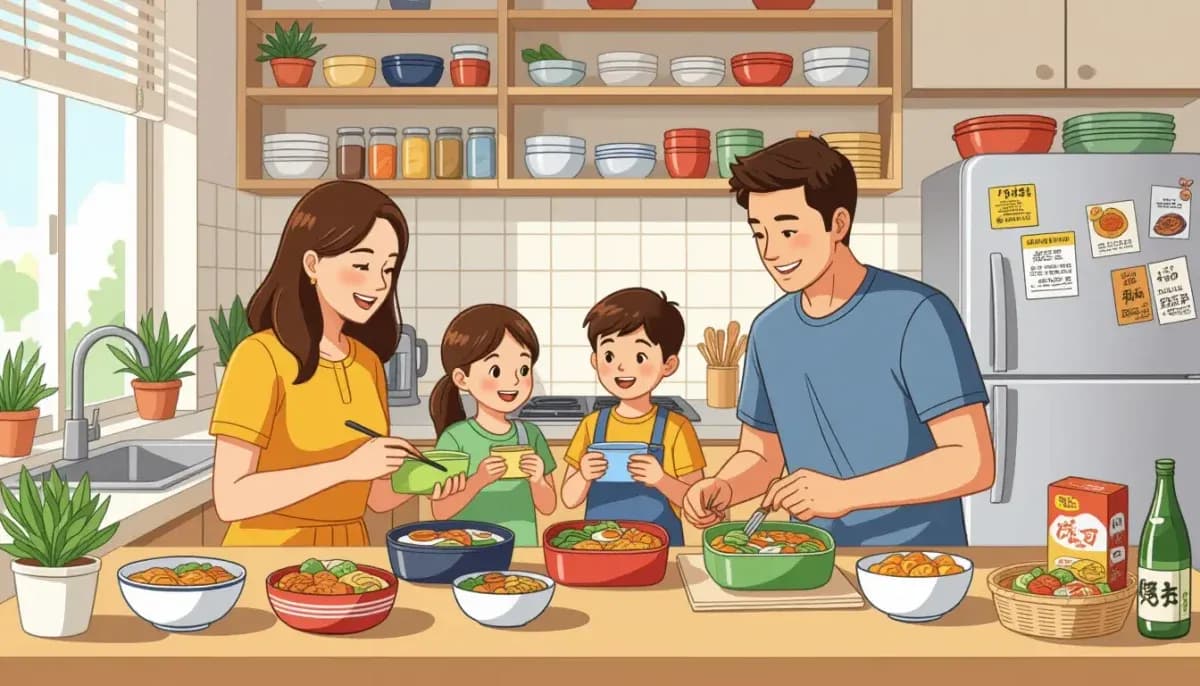
Meal Prep Tips for Busy Expat Families in Japan
Discover practical meal prep strategies for expat families in Japan. Learn tsukurioki techniques, bento box tips, Japanese grocery shopping, food storage, and weekly prep schedules to simplify weeknight cooking.
Read more →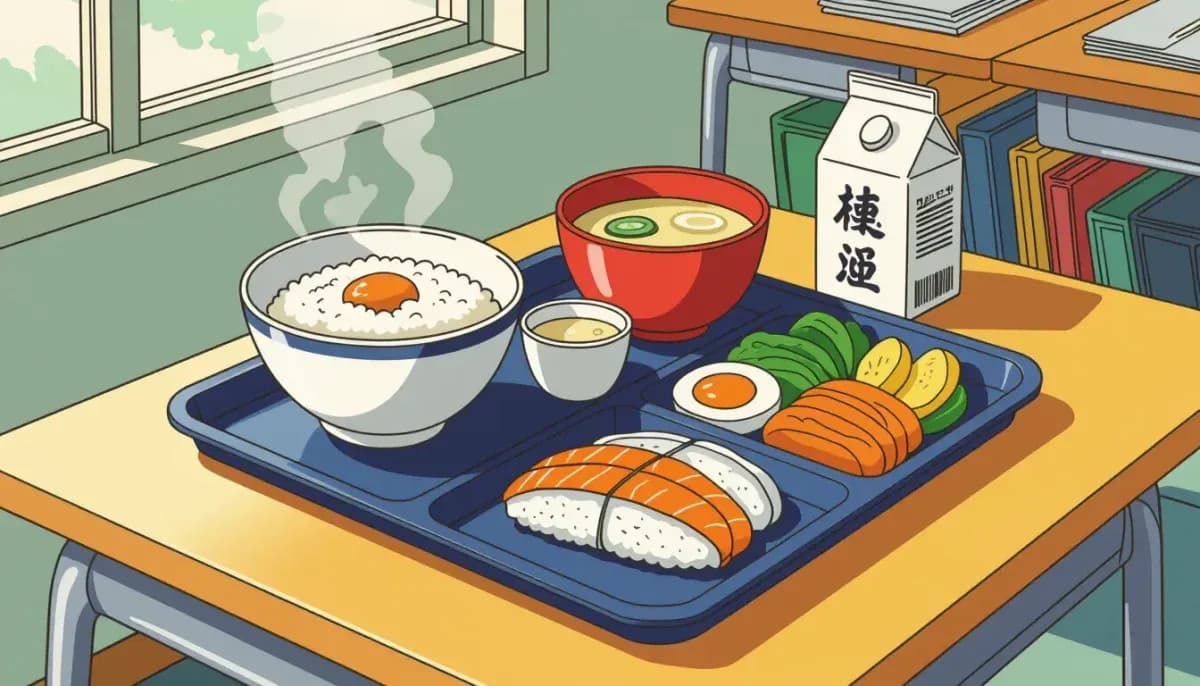
Nutrition Standards and Guidelines in Japanese Schools
Learn about Japan's school lunch (kyushoku) nutrition standards, what your child eats daily, allergy accommodations, costs, and the shokuiku food education system — a complete guide for foreign families.
Read more →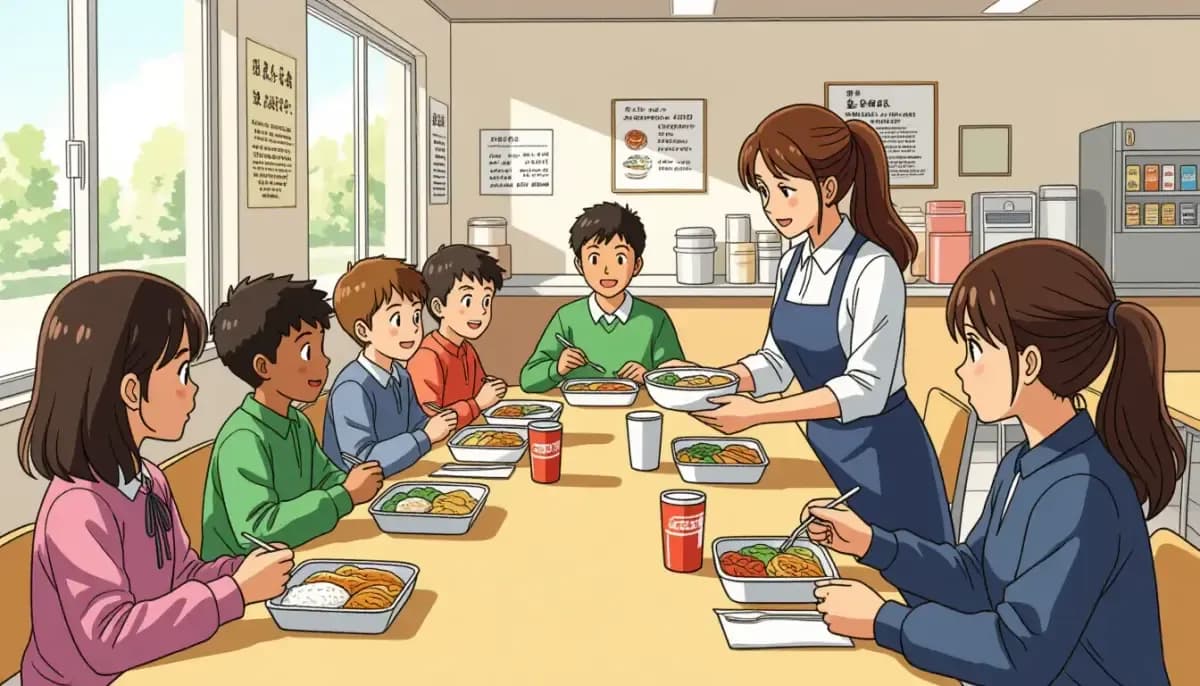
Halal, Kosher, and Vegetarian Options in Japanese Schools
Complete guide to halal, kosher, vegetarian, and vegan options in Japanese schools. Learn how to navigate Japan's kyushoku system, negotiate dietary accommodations, and find Islamic schools — practical advice for foreign parents in Japan.
Read more →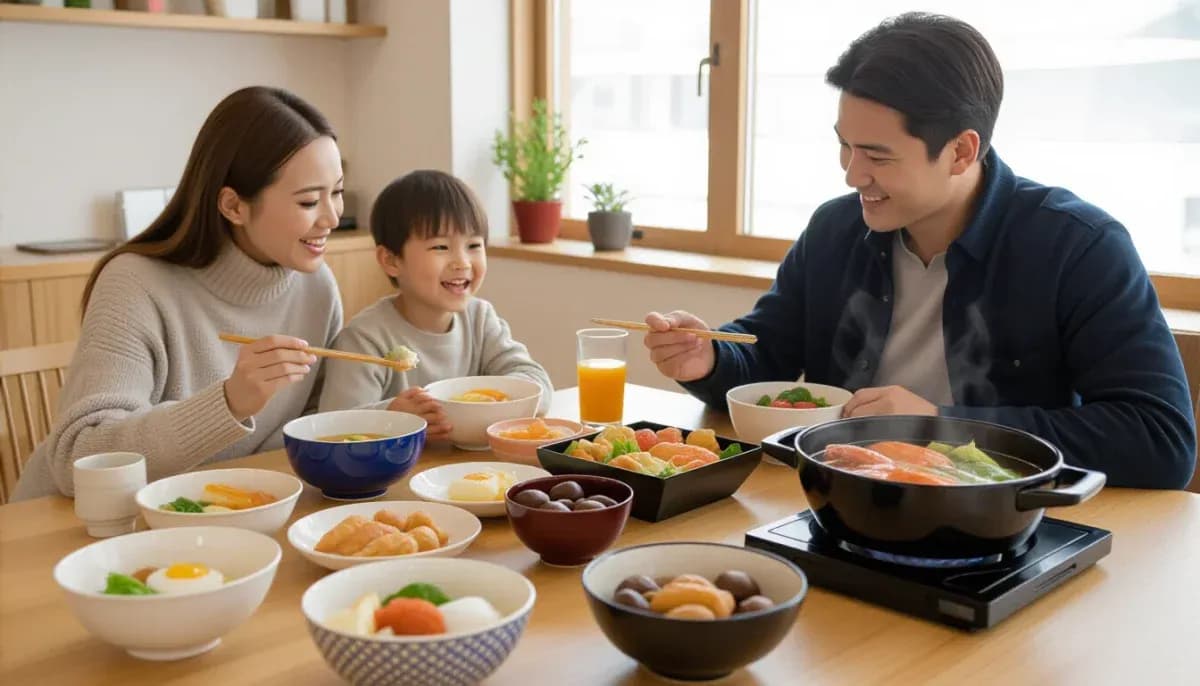
Seasonal Japanese Foods for Family Meals
Discover Japan's seasonal foods (shun) for every family meal across spring, summer, autumn, and winter. Practical tips for foreign families shopping and cooking seasonally in Japan.
Read more →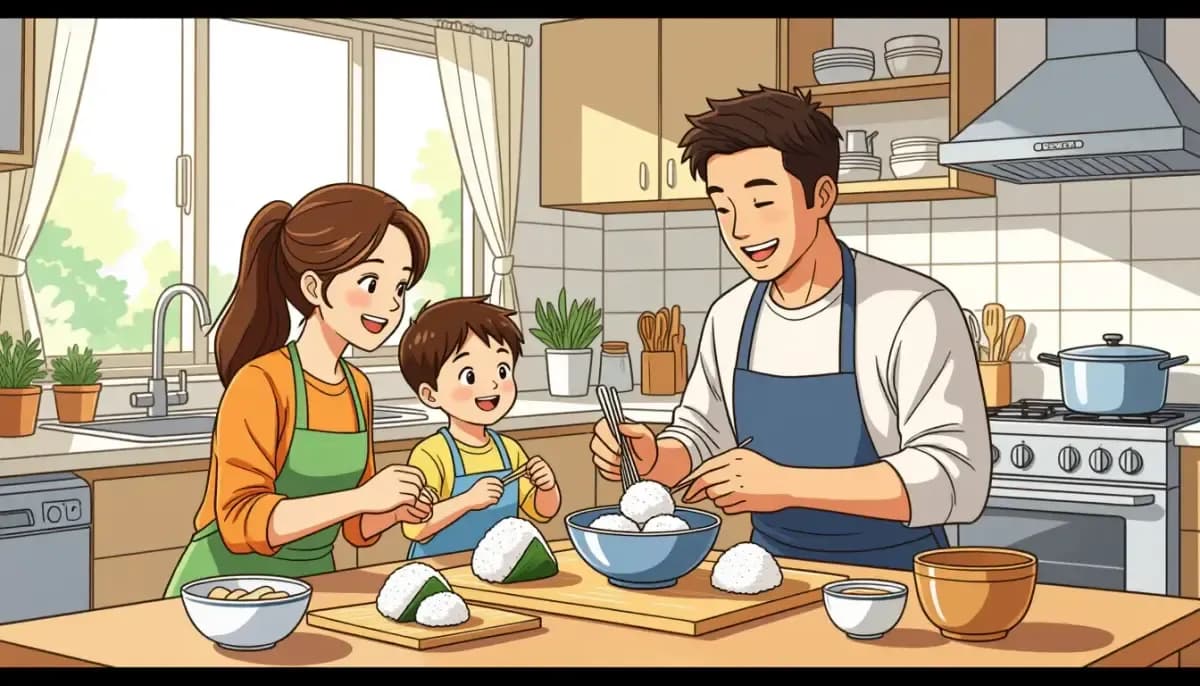
Cooking Japanese Food with Your Children: Fun Recipes
Discover fun Japanese recipes to cook with your children, from onigiri to gyoza and mochi. Learn about shokuiku, bento boxes, and tips to make cooking a family tradition in Japan.
Read more →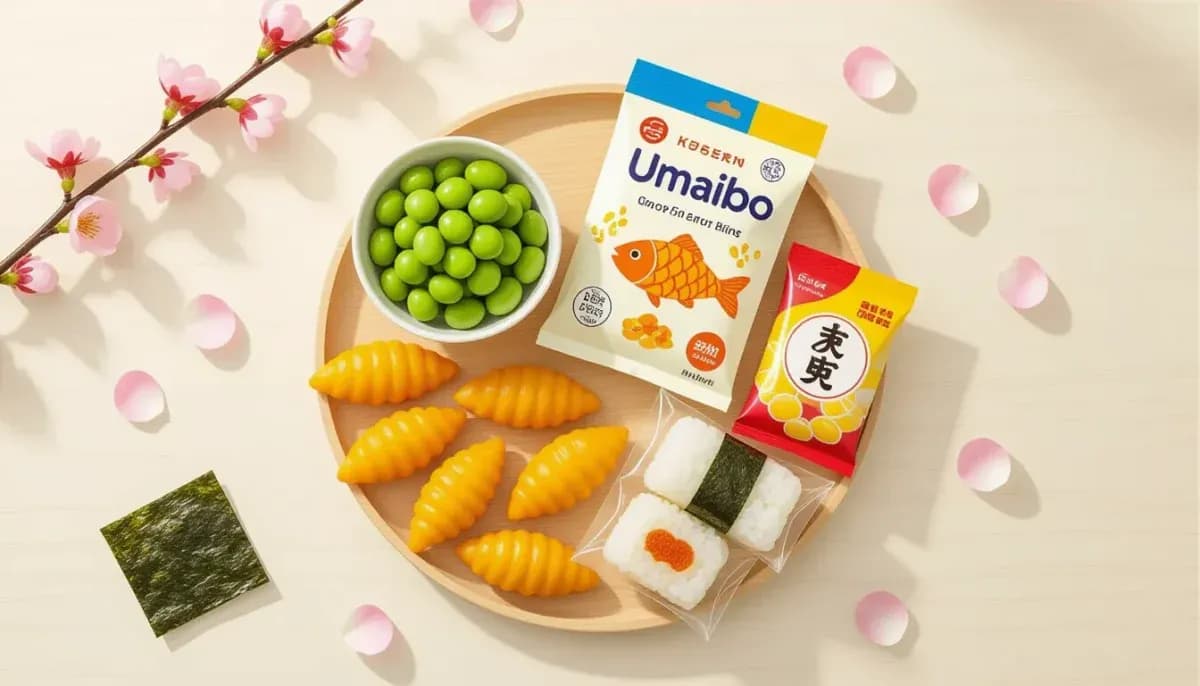
Japanese Snacks and Sweets for Children: What's Safe and Healthy
A complete guide to Japanese snacks and sweets for children. Discover what's safe, healthy, and age-appropriate — from oyatsu culture to konbini picks and traditional wagashi — for expat families in Japan.
Read more →