
Japanese School Lunch (Kyushoku) System Explained

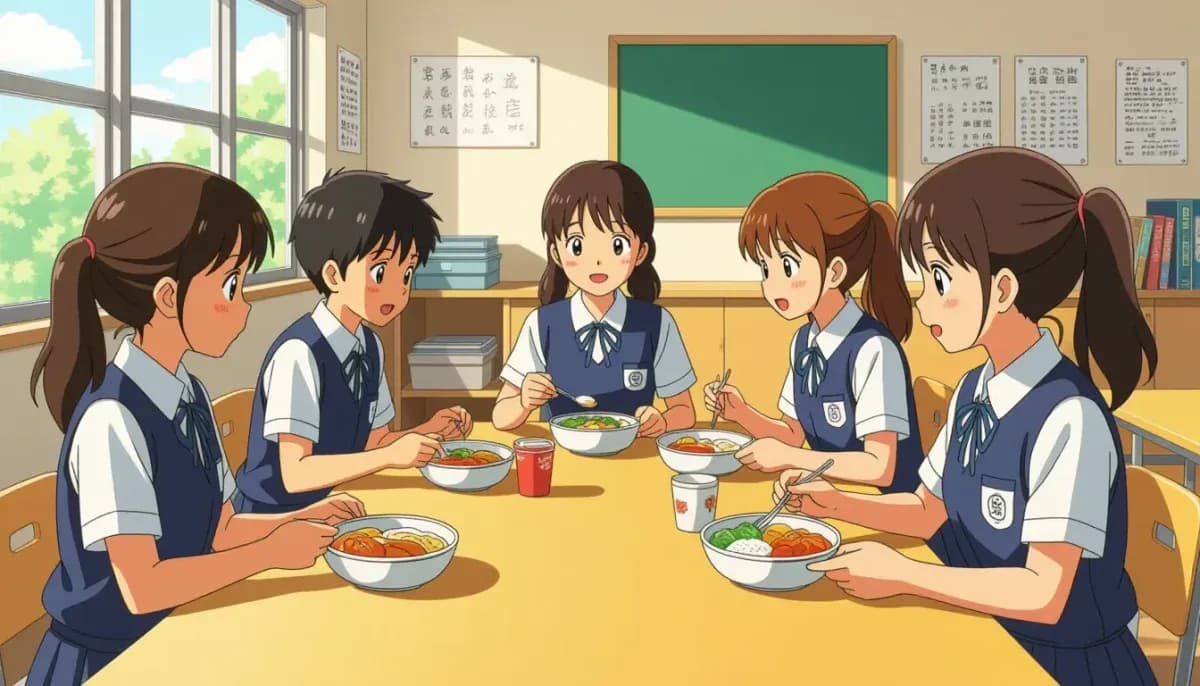
Everything foreign and expat parents need to know about the Japanese school lunch (kyushoku) system: how it works, costs, food allergies, cultural expectations, and tips for helping your child adjust.
Japanese School Lunch (Kyushoku) System Explained
If you have ever seen photos of Japanese students in white aprons carefully serving their classmates, you have glimpsed one of the most distinctive features of Japanese education: the kyushoku (給食) system. For foreign families raising children in Japan, understanding how school lunch works is essential for a smooth transition into the Japanese school environment. This guide covers everything you need to know — from how meals are served and what they cost, to practical tips for expat parents navigating food allergies and cultural expectations.
What Is Kyushoku? A Brief Overview
Kyushoku literally means "school meals" and refers to the hot, nutritionally balanced lunch served to students in Japanese public elementary and junior high schools. Unlike many countries where children buy food from a cafeteria or bring a packed lunch from home, Japan's system is deeply integrated into the school day itself.
The program is governed by the School Lunch Law (学校給食法), and participation is near-universal: roughly 99.2% of public elementary schools and 87.9% of junior high schools provide kyushoku. That means more than 10 million students receive a hot, balanced lunch at school every single day.
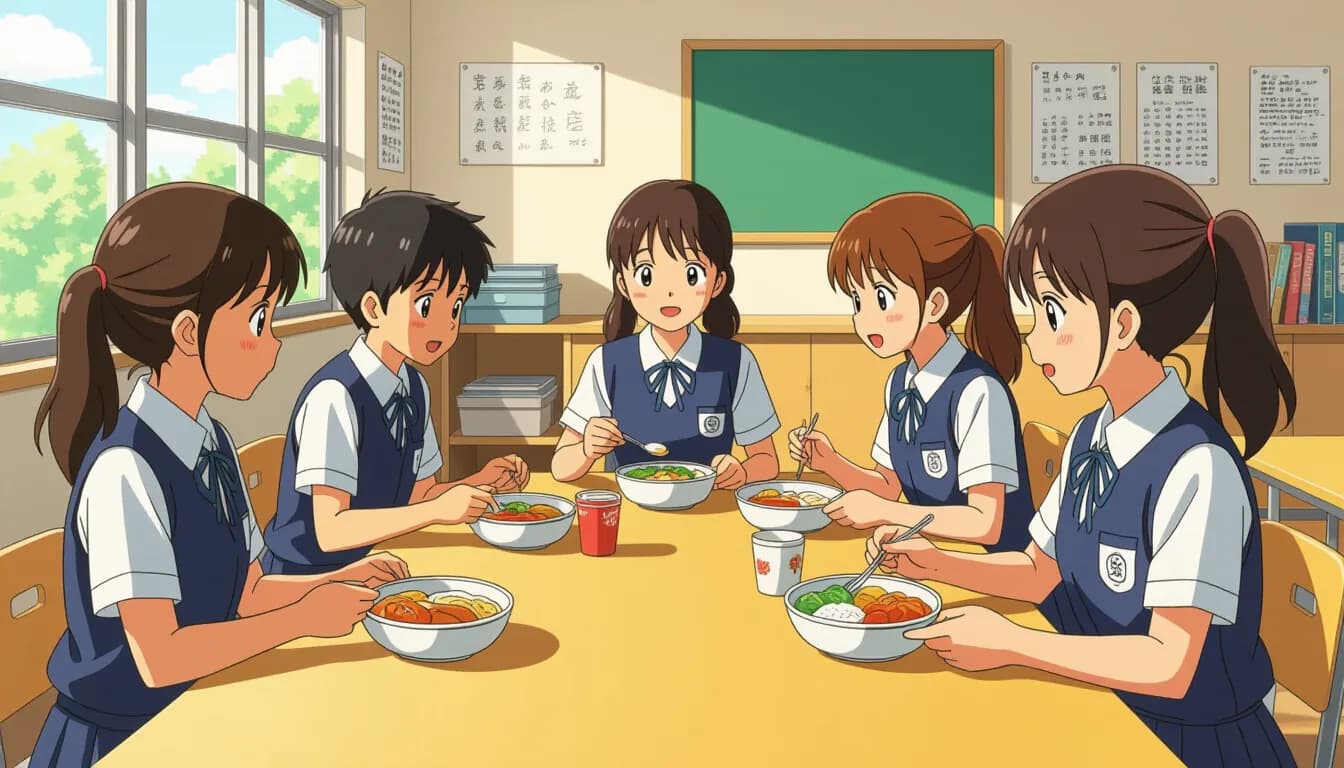
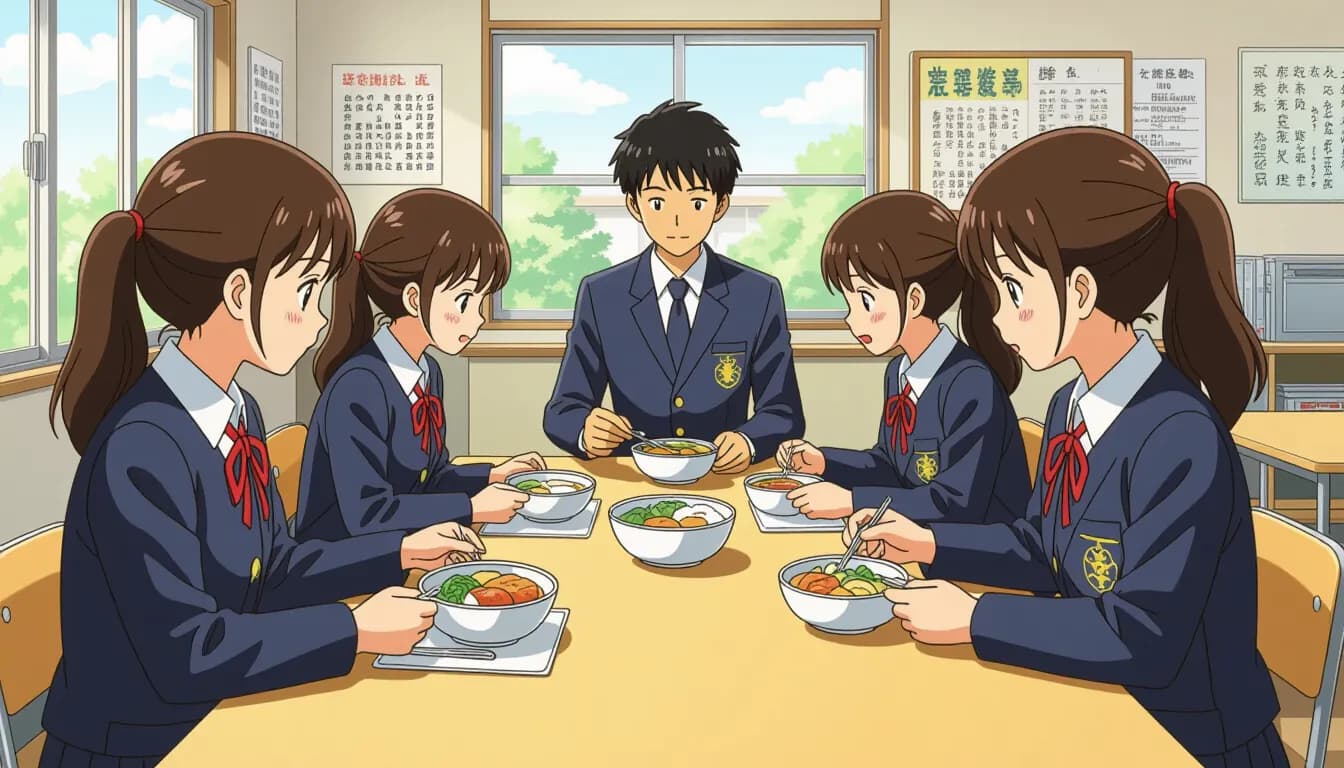
What makes kyushoku truly unique is not just the food — it is the entire ritual around it. Students do not eat in a cafeteria. They eat in their own classroom, and a rotating team of students (the kyushoku toban, or lunch duty students) is responsible for collecting, distributing, and serving the meal to their classmates. This system transforms lunchtime from a break into an educational activity.
How the Kyushoku System Works
The Kyushoku Toban (Lunch Duty)
Each day, a small group of students — typically four to six — takes on lunch duty. They put on white aprons (hakui), caps, and sometimes masks, then wheel a cart of food from the school kitchen to the classroom. They serve portions to each classmate and teacher.
Before eating begins, the entire class says "Itadakimasu" (いただきます) — an expression of gratitude for the food. After eating, students say "Gochisousama deshita" (ごちそうさまでした) to signal the meal is over. The duty students then collect dishes and return everything to the kitchen.
Teachers eat the same meal as their students, sitting at the front of the class. This reinforces a sense of equality and community around food.
Classroom Eating Culture
Because eating happens in the classroom, lunchtime is also social time. Students move their desks to face each other in small groups. Conversations flow, friendships deepen, and the shared experience of eating together builds classroom cohesion in ways that a crowded cafeteria cannot replicate.
One important cultural norm: students are expected to finish all their food (a philosophy tied to mottainai, or "nothing wasted"). Japan's school lunch food waste rate is approximately 7%, compared to around 30% in the United States. For children from other cultures, this expectation can feel unfamiliar — we will discuss how to handle this in the expat tips section below.
What Does a Typical Kyushoku Meal Look Like?
A standard kyushoku tray includes:
- A staple carbohydrate: rice, bread, or noodles (udon, ramen, or spaghetti on rotation)
- A protein dish: fish, meat (chicken, pork, beef), tofu, or eggs
- A vegetable side dish: stir-fried vegetables, salad, or pickles
- A soup: most commonly miso soup, but also cream-based or clear soups
- Milk: a 200ml carton of cow's milk is served with every meal, every day
Menus rotate monthly and are carefully planned by a licensed registered dietitian (eiyo kyoshi, 栄養教諭) assigned to the school. Each meal is designed to provide approximately one-third of a child's daily nutritional needs, typically around 600–700 calories. Nutrient guidelines specify that protein should account for 13–20% of calories and fat 20–30%.
Japan also prioritizes local sourcing: on average, 89% of kyushoku ingredients are domestically sourced, and around 56% come from local producers. Schools often feature regional specialties and seasonal produce, giving children a direct connection to Japanese food culture.
| Meal Component | Example Dishes |
|---|---|
| Staple | Steamed rice, bread roll, udon noodles, yakisoba |
| Protein | Grilled mackerel, chicken karaage, tofu steak, rolled egg |
| Vegetable | Kinpira gobo, edamame salad, braised pumpkin |
| Soup | Miso soup, tonjiru, cream of corn soup |
| Milk | 200ml cow's milk (served daily) |
| Special | Seasonal fruit, jelly, or regional celebration dishes |
How Much Does Kyushoku Cost?
One of the most frequently asked questions from foreign parents is about cost. Here is the breakdown:
- Elementary school: approximately ¥4,343–¥4,700 per month (roughly ¥230–¥310 per meal)
- Junior high school: approximately ¥4,941–¥5,367 per month
Parents pay only for the food ingredients. The Japanese government subsidizes cooking facilities, equipment, staffing, and related overhead. This makes kyushoku significantly more affordable than comparable meal programs in other countries.
Free School Lunches Are Expanding
Japan has been rapidly expanding free school lunch programs. As of recent data:
- 547 cities (30.5% of municipalities) now offer completely free kyushoku — a sevenfold increase since 2017
- Tokyo's 23 special wards have all moved to fully free school lunches
- A nationwide free school lunch system is planned for rollout in 2026
This is an important financial relief for families, particularly expats on single incomes. For the latest status in your specific municipality, check with your local city office or the school directly.
For more context on financial support available to families in Japan, see our guide on Government Benefits and Subsidies for Families in Japan.
Kyushoku as Education: The Shokuiku Philosophy
In Japan, school lunch is not just a meal — it is a curriculum subject. The Basic Law on Shokuiku (食育基本法), enacted in June 2005, formally established food education as a core part of child development. The Diet and Nutrition Teacher System, introduced in 2007, created a certified specialist role in schools specifically to teach food literacy.
Through kyushoku, students learn:
- Responsibility: The toban system teaches students to take care of their community
- Gratitude: The itadakimasu ritual cultivates awareness of where food comes from
- Nutrition: Monthly menus come with educational notes about ingredients and their health benefits
- Cultural heritage: Regional and seasonal dishes connect children to Japanese food traditions
- Waste reduction: The mottainai philosophy discourages leaving food uneaten
This educational dimension helps explain why kyushoku is so widely respected — and why bento (home-packed lunches) are generally not permitted on kyushoku days at most public schools.
For broader context on how the Japanese education system shapes children's development, read our Complete Guide to the Japanese Education System for Foreign Families.
Practical Tips for Foreign Parents and Expat Families
Navigating kyushoku as a foreign family comes with some unique challenges. Here is what experienced expat parents recommend:
1. Report Food Allergies Immediately
Japan's schools do take food allergies seriously, but the process requires documentation. You will typically need:
- A doctor's written letter (指示書) detailing the allergy and severity
- A meeting with the school nurse (養護教諭) and homeroom teacher
- Annual renewal in many cases
Schools can modify meals for documented allergies, but the flexibility varies by school and municipality. Be proactive, clear, and bring documentation from both a Japanese doctor and your home country doctor if applicable.
For a broader overview of navigating the healthcare system, see our guide to Healthcare and Medical Care for Children in Japan.
2. Prepare the Required Lunch Kit
Most schools require students to bring a personal kyushoku set each day:
- Chopsticks (with case)
- A placemat (ランチョンマット, roughly 30cm x 40cm)
- A cup or small cup
- A toothbrush and small cup for tooth-brushing after lunch
These items need to be laundered or washed regularly. Check your child's school handbook for exact specifications — some schools are particular about sizes and materials.
3. Familiarize Your Child with Japanese Foods at Home
The monthly menu is sent home in advance (sometimes digitally via the school app). Use it to introduce unfamiliar dishes before your child encounters them at school. Even a simple exposure — "We are having udon for dinner tonight, just like what you will have at school on Thursday" — can reduce anxiety around new foods.
Foods that commonly surprise foreign children include:
- Natto (fermented soybeans): strong smell, sticky texture
- Whole fish with bones: children are taught to carefully remove bones
- Hijiki (seaweed) dishes: rich umami flavor, dark appearance
- Milk with every meal: including alongside rice or savory dishes
4. Understand the Plate-Clearing Expectation
The mottainai expectation (finish your food) can be stressful for children with small appetites, sensory sensitivities, or ADHD medication that suppresses hunger. Teachers vary in how strictly they enforce this.
If your child regularly struggles to finish meals, speak with the homeroom teacher directly. A doctor's note explaining a medical reason (such as appetite suppression from ADHD medication) usually resolves the issue diplomatically. Most teachers are understanding once they have documentation.
5. Be Ready for Cultural Differences in the Classroom
For children transitioning from countries where lunch means freedom and socialization in a cafeteria, classroom eating can feel formal. Reassure your child that it becomes comfortable quickly — the toban role, in particular, often becomes something children actively look forward to.
For tips on helping your child adjust to Japanese school culture more broadly, see our guide to Elementary School in Japan for Foreign Parents.
Kyushoku vs. Bento: What If My Child's School Does Not Offer Kyushoku?
Some private schools, some international schools, and occasionally some rural public schools do not provide kyushoku, requiring students to bring a bento. If your child's school falls into this category:
- Bento preparation can be time-consuming — budget 20–30 minutes each morning
- Japanese bento culture has high standards for presentation, nutrition, and variety
- Many convenience stores (konbini) sell pre-packed bento if mornings are rushed
- School events (field trips, sports days) often require bento even at kyushoku schools
If you are weighing school options for your child, the presence or absence of kyushoku is worth factoring in. For more on school types available to foreign families, see our guide to International Schools in Japan.
Kyushoku Around the World: Japan's Model Is Catching Attention
Japan's school lunch system has attracted global attention as a model for public health and food education. According to research:
- Japanese school lunches are associated with lower obesity rates among children
- The program achieves high nutritional standards at relatively low per-meal cost
- The food waste rate (~7%) is dramatically lower than comparable programs internationally
- Academic studies (including research published in PLOS ONE and PMC) link school lunch quality to better health outcomes
Organizations like the School Meals Coalition have cited Japan's kyushoku system as a benchmark for school nutrition programs worldwide. For detailed statistics and policy analysis, the Japan National Tourism Organization's education page provides an authoritative overview.
Additional Resources for Expat Parents
Understanding kyushoku is one part of navigating your child's experience in the Japanese school system. For more guidance on raising children in Japan as a foreign family:
- Living in Nihon has an excellent guide for foreign families raising children and navigating education in Japan — highly recommended reading for new expat parents
- For Work in Japan covers related topics for working parents, including visa status and employment considerations at forworkinjapan.com
- Chuukou Benkyou provides in-depth resources for families preparing for Japanese middle school entrance exams at chuukoubenkyou.com — relevant as your child progresses through the system
- Savvy Tokyo offers practical expat parent advice in their article on helping your kids adjust to Japan's school lunches
- Jobs in Japan provides an excellent cultural deep-dive: Kyushoku: Unpacking the lessons of Japanese school lunch
Summary: What Every Foreign Parent Should Know About Kyushoku
Japan's school lunch system is genuinely world-class — nutritionally balanced, culturally rich, and intentionally educational. For foreign families, it can initially feel unfamiliar, particularly around expectations to finish food and the lack of a cafeteria setting. But most expat children adapt quickly, and many come to look forward to kyushoku as one of the most enjoyable parts of their school day.
Key takeaways:
- Kyushoku is served in the classroom, not a cafeteria; students take turns serving each other
- Costs are ¥4,000–¥5,400/month; free programs are expanding rapidly
- Report food allergies immediately with a doctor's letter
- Prepare the required lunch kit (chopsticks, placemat, cup, toothbrush)
- Use the monthly menu to introduce Japanese foods at home before school
- The mottainai expectation (finish your food) can be addressed with teacher communication and documentation if needed
For more on supporting your child through the Japanese school system, explore our related guides on raising bilingual children in Japan and mental health and emotional wellbeing for foreign children in Japan.

Originally from Vietnam, living in Japan for 16+ years. Graduated from Nagoya University, with 11 years of professional experience at Japanese and international companies. Sharing practical information for foreign parents raising children in Japan.
View Profile →Related Articles
Meal Prep Tips for Busy Expat Families in Japan
Discover practical meal prep strategies for expat families in Japan. Learn tsukurioki techniques, bento box tips, Japanese grocery shopping, food storage, and weekly prep schedules to simplify weeknight cooking.
Read more →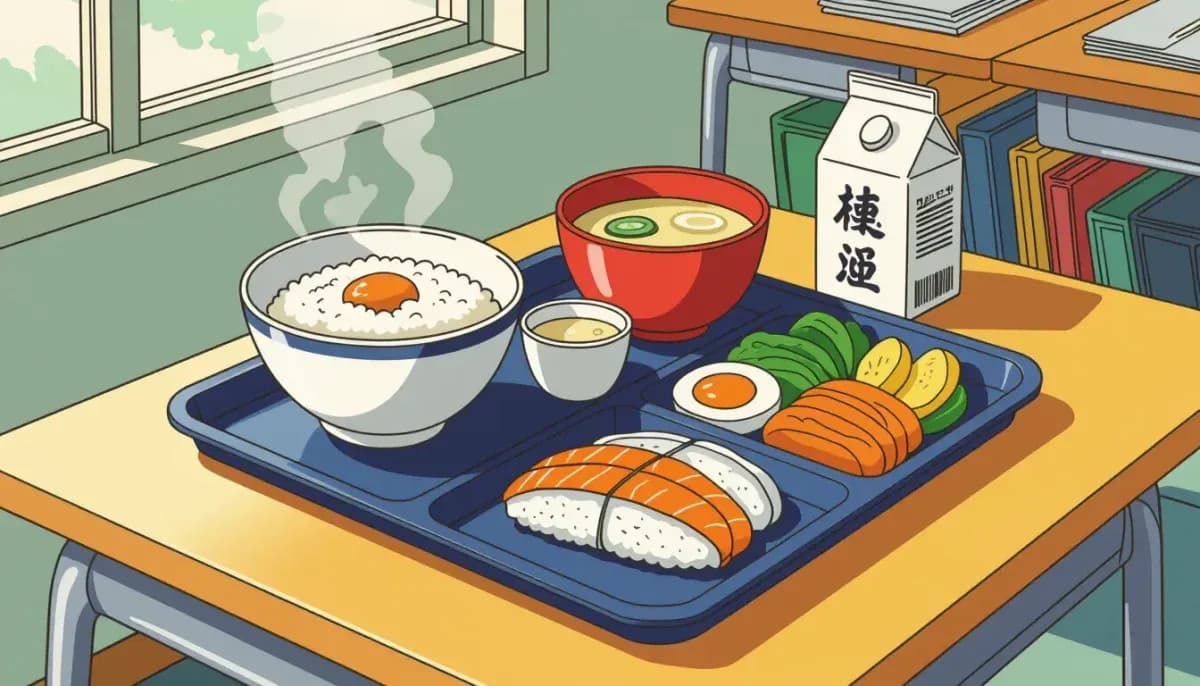
Nutrition Standards and Guidelines in Japanese Schools
Learn about Japan's school lunch (kyushoku) nutrition standards, what your child eats daily, allergy accommodations, costs, and the shokuiku food education system — a complete guide for foreign families.
Read more →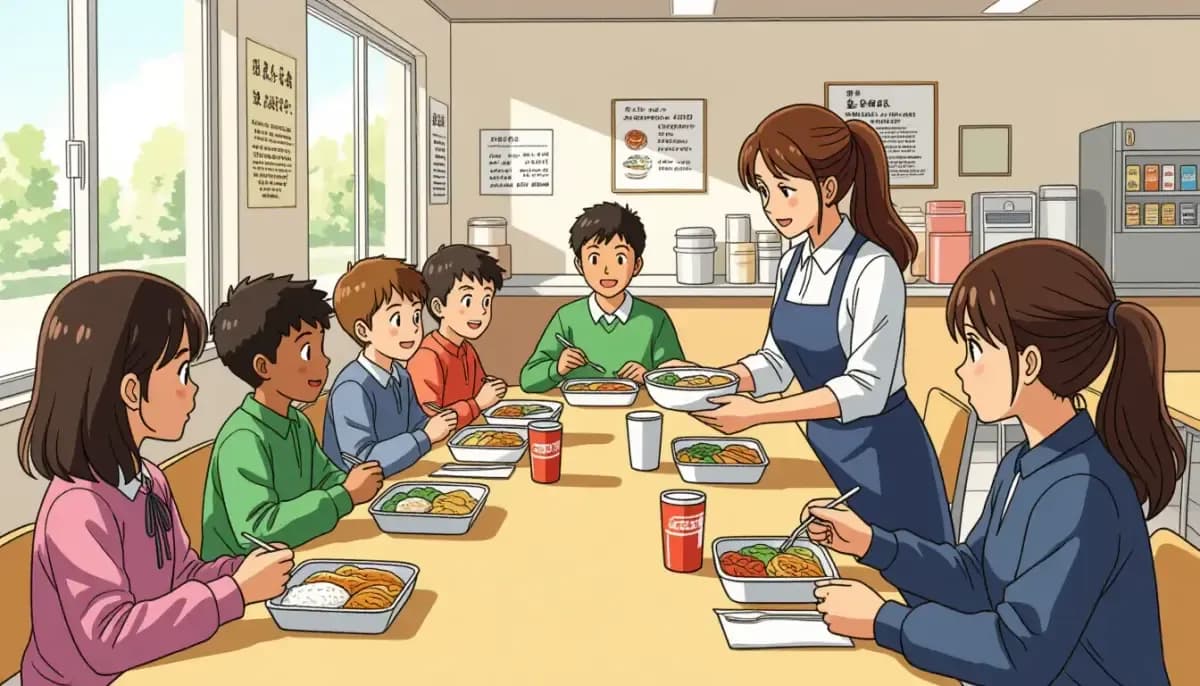
Halal, Kosher, and Vegetarian Options in Japanese Schools
Complete guide to halal, kosher, vegetarian, and vegan options in Japanese schools. Learn how to navigate Japan's kyushoku system, negotiate dietary accommodations, and find Islamic schools — practical advice for foreign parents in Japan.
Read more →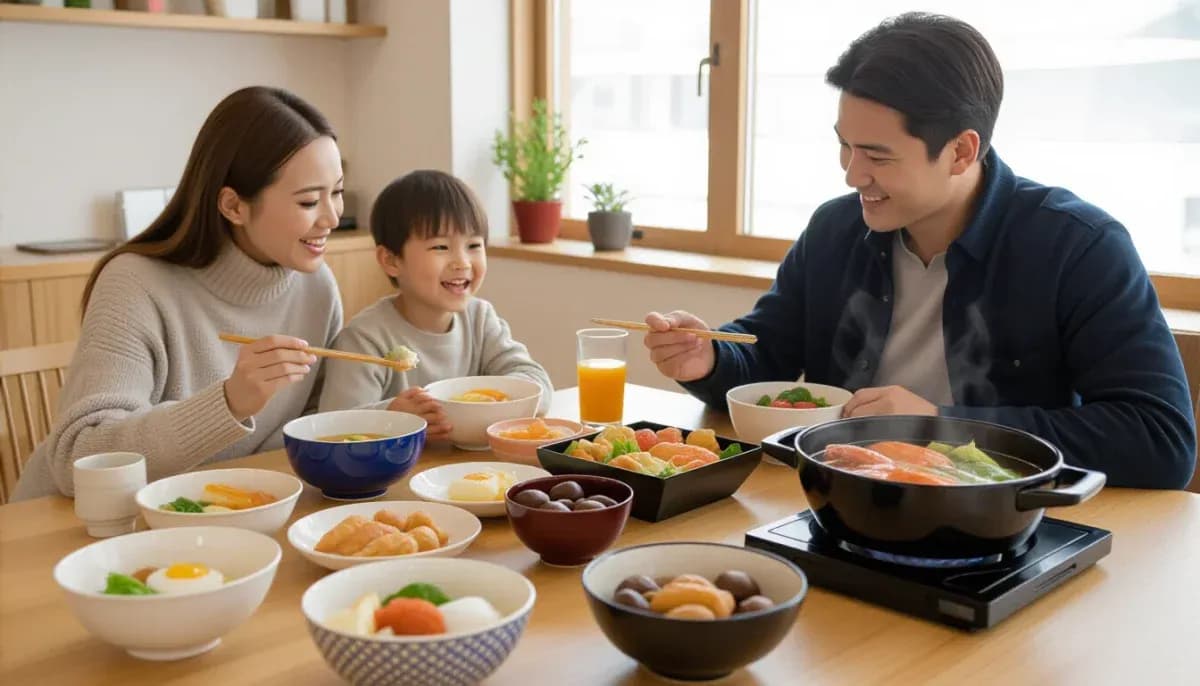
Seasonal Japanese Foods for Family Meals
Discover Japan's seasonal foods (shun) for every family meal across spring, summer, autumn, and winter. Practical tips for foreign families shopping and cooking seasonally in Japan.
Read more →
Cooking Japanese Food with Your Children: Fun Recipes
Discover fun Japanese recipes to cook with your children, from onigiri to gyoza and mochi. Learn about shokuiku, bento boxes, and tips to make cooking a family tradition in Japan.
Read more →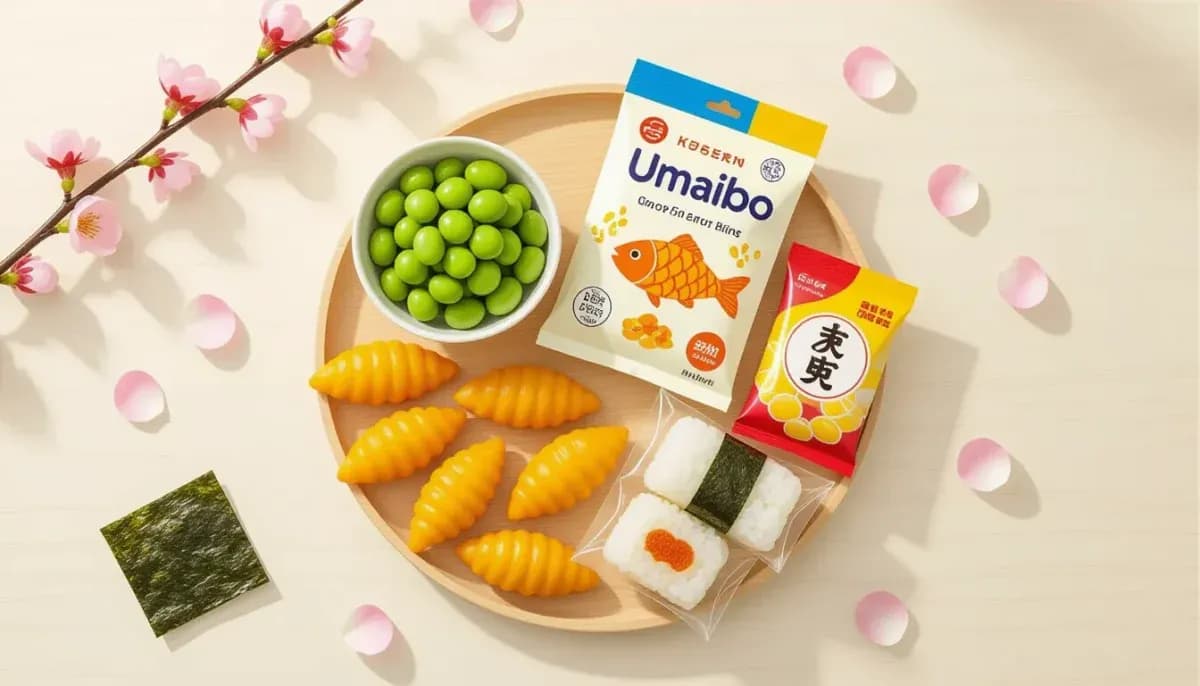
Japanese Snacks and Sweets for Children: What's Safe and Healthy
A complete guide to Japanese snacks and sweets for children. Discover what's safe, healthy, and age-appropriate — from oyatsu culture to konbini picks and traditional wagashi — for expat families in Japan.
Read more →