
Family Budgeting in Japan: A Practical Guide

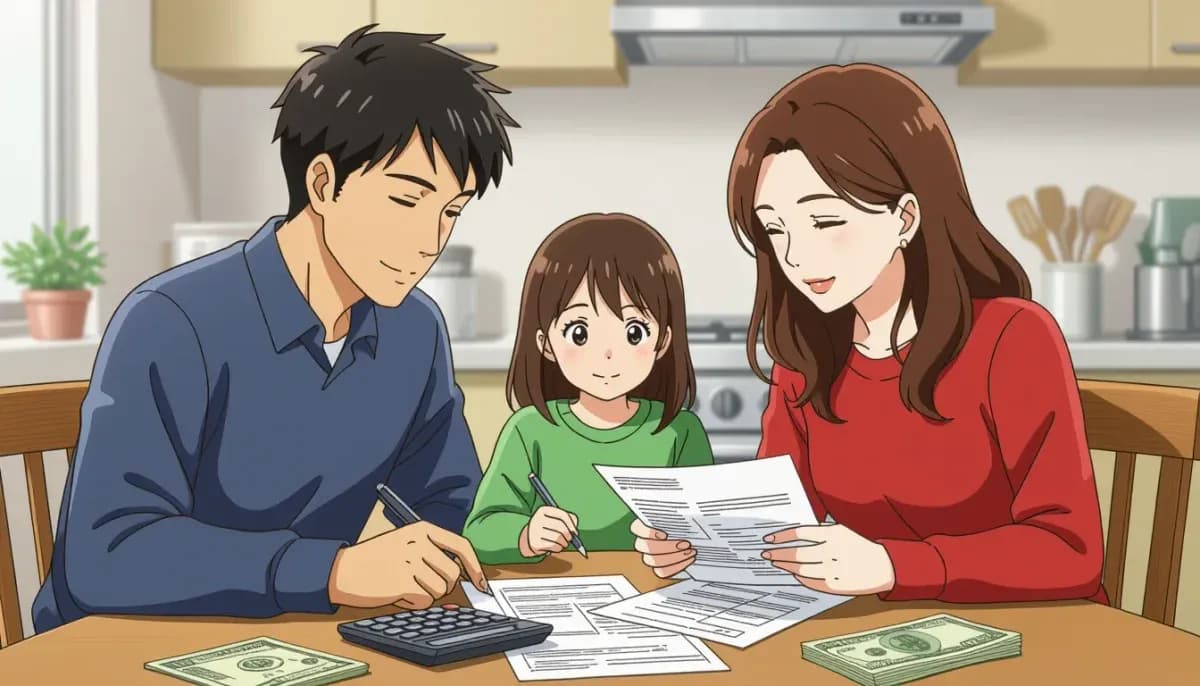
A complete practical guide to family budgeting in Japan: monthly costs, child subsidies, education expenses, NISA savings, and tax tips for foreign families living in Japan.
Family Budgeting in Japan: A Practical Guide
Managing a family budget in Japan can feel overwhelming at first, especially for foreigners navigating an unfamiliar system of costs, taxes, and social benefits. The good news is that Japan offers a surprisingly robust network of subsidies, tax incentives, and public services that can significantly reduce the financial burden for families — if you know where to look. This guide breaks down everything you need to build a practical, sustainable budget for your family in Japan.
Understanding Your True Take-Home Pay
Before you budget, you need to know what you actually take home. Japan's payroll deductions are substantial and often catch newcomers off guard.
A typical salaried worker in Japan loses around 20–25% of gross income to mandatory deductions:
- Social insurance (shakai hoken): ~15% — covers health insurance, pension, nursing care, and unemployment
- Income tax (shotokuzei): ~5–10% depending on income level
- Residential tax (juminzei): ~10% — billed the year after you earn the income
In practice, a gross monthly salary of ¥300,000 nets approximately ¥220,000–¥240,000. Note that residential tax is not withheld in your first year working in Japan, then hits all at once — plan for this.
For foreign workers, average monthly wages are around ¥248,400 compared to ¥318,300 for Japanese workers on average. This income gap makes careful budgeting especially important for expat families.
For a comprehensive breakdown of how salary and deductions work in Japan, see the Housing & Living Infrastructure Guide at For Work in Japan.
Key Monthly Expenses for a Family of Four
Japan's Statistics Bureau Household Survey (2024) puts the average non-housing monthly expenditure for a family of four at ¥326,278. Here is how that breaks down across categories:
| Expense Category | Monthly Cost (Family of 4) | Notes |
|---|---|---|
| Food | ¥96,328 | Largest single category; scales with children's ages |
| Transportation & Communication | ¥51,087 | Includes commuting, mobile phones |
| Education & Recreation | ¥33,980 | Rises steeply during exam years |
| Clothing & Footwear | ¥12,000–¥18,000 | Kids grow fast — budget accordingly |
| Utilities (electricity, gas, water) | ¥15,000–¥25,000 | Higher in winter/summer |
| Medical & Health | ¥10,000–¥15,000 | Low thanks to national health insurance |
| Other (household goods, personal care) | ¥40,000–¥60,000 | Varies by lifestyle |
| Total (excluding rent/mortgage) | ~¥280,000–¥340,000 | Tokyo higher; regional areas lower |
Housing is the other major variable. A 3LDK apartment in suburban Tokyo runs ¥150,000–¥250,000/month in rent. Be aware of high move-in costs: a ¥70,000/month apartment typically requires ¥280,000–¥420,000 upfront in deposits, key money, and broker fees.
Child-Related Benefits You Should Be Claiming
Japan has significantly expanded its support for families in recent years. Many foreigners miss out on these benefits simply because they are not aware they qualify.
Child Allowance (Jidou Teate) — Revised October 2024:
- Income limits have been eliminated — all families are now eligible
- ¥10,000–¥30,000 per child per month, extended through the end of high school
- Apply at your local ward or city office after registering residency
Education Subsidies:
- Preschool (ages 3–5): Free or subsidized up to ¥25,700/month for licensed yochien and hoikuen
- Daycare (ages 0–2) in Tokyo: Free for first child at licensed facilities as of 2025
- High school tuition: Free nationwide as of April 2025 (income limits abolished)
- Public elementary and junior high: Effectively free for foreign children enrolled in Japanese public schools
If you are weighing public versus international schooling options, the cost difference is dramatic. Public elementary school costs approximately ¥336,000/year in total; private schools cost around ¥1,828,000/year; and international schools can run ¥1,500,000–¥3,500,000/year. Read our complete guide to international schools in Japan for a full comparison.
For families with young children, see our detailed breakdown of the daycare and hoikuen application process in Japan.
Planning for Education Costs Long-Term
Education is one of the biggest long-term financial commitments a family makes in Japan. The total cost of raising one child from birth through the end of university averages ¥9.69 million on a public pathway and up to ¥18.3 million on a fully private pathway.
From birth to the end of high school alone, the cumulative cost is approximately ¥25.7 million, according to a 2024 survey.
Key milestones to budget for:
- Elementary school years (ages 6–12): Relatively low direct costs if public, but juku (cram school) attendance begins for many families around grade 4–5
- Middle school entrance exam prep: If your child pursues a private junior high, total cram school and exam fees can reach ¥3–5 million per child over three years. Monthly cram school fees alone reach ¥42,000–¥63,000 in the final year. An annual household income of at least ¥6 million is widely cited as the minimum feasibility threshold for this pathway
- University savings: To accumulate ¥10 million over 15 years, you need to set aside approximately ¥56,000/month — a number that underscores the importance of starting early
For families thinking about the middle school track, the chuukoubenkyou.com complete guide to exam costs and budgeting is an invaluable resource for understanding what you are committing to financially.
Tax-Advantaged Savings: NISA and iDeCo
Japan offers two powerful tax-advantaged investment accounts that every family should understand:
NISA (New NISA, launched 2024):
- Tax-free investment gains on up to ¥3,600,000 per year (combined growth and accumulation accounts)
- No time limit on the tax-free status — hold investments indefinitely
- Available to foreign residents with a My Number card
- Ideal for education funds and long-term wealth building
iDeCo (Individual Defined Contribution Pension):
- Contributions are fully tax-deductible
- Available to most workers under age 65 in Japan
- Monthly contribution limits vary by employment type (¥12,000–¥68,000/month)
- Funds are locked until age 60, making it best for retirement savings rather than near-term education expenses
For families, a common strategy is to use NISA for education savings (accessible at any time) and iDeCo for retirement. Even contributing the minimum to iDeCo reduces your taxable income meaningfully each month.
For a broader look at financial life events in Japan — from home purchase to university — see this comprehensive financial planning guide from Living in Nihon.
Building Your Monthly Budget Framework
Here is a practical framework for a family of four in the Tokyo area with a combined net income of ¥500,000/month:
| Category | Recommended Allocation | Example Amount |
|---|---|---|
| Housing (rent/mortgage) | 25–30% | ¥125,000–¥150,000 |
| Food & Groceries | 15–20% | ¥75,000–¥100,000 |
| Transportation | 8–10% | ¥40,000–¥50,000 |
| Utilities & Phone | 5–7% | ¥25,000–¥35,000 |
| Education & Lessons | 5–10% | ¥25,000–¥50,000 |
| Medical & Insurance | 3–5% | ¥15,000–¥25,000 |
| Clothing & Household | 4–6% | ¥20,000–¥30,000 |
| Savings & Investments | 15–20% | ¥75,000–¥100,000 |
| Emergency Fund | 3–5% | ¥15,000–¥25,000 |
| Discretionary / Fun | 5–8% | ¥25,000–¥40,000 |
The single most impactful lever in a Japan family budget is housing location. Moving from central Tokyo to a suburban area or a regional city like Fukuoka or Nagoya can reduce rent by 30–50% with minimal impact on quality of life.
For families trying to understand the full cost picture of living in Tokyo specifically, this 2024 family cost-of-living guide from Arealty offers city-specific data based on official household survey figures.
Language and Schooling: Hidden Budget Considerations
One budget item that catches many expat families off guard is the cost of language support and supplementary education.
If your children attend Japanese public schools, you will likely need to budget for:
- Japanese tutoring or language classes: ¥20,000–¥50,000/month per child, especially in the early years
- Heritage language maintenance: Weekend school fees for English, Chinese, Korean, or other heritage languages typically run ¥5,000–¥20,000/month
- Translation services for school documents: Occasional cost at ward offices or private agencies
Raising bilingual children in Japan comes with real costs, but also significant long-term advantages. Our article on raising bilingual children in Japan explores both the financial and developmental dimensions.
If your children are younger and you are navigating the childcare system, understanding hoikuen vs. yochien differences is also essential for making cost-effective decisions about early education.
Final Tips for Family Budget Success in Japan
- Set up automatic transfers to your NISA and savings accounts on payday — pay yourself first
- Track your juminzei payment schedule — residential tax arrives in June and can be paid in four installments or as a lump sum
- Apply for all benefits at your ward office — child allowance, medical subsidy cards for children (iryouhi joseisei), and free health checkups all require local registration
- Use a family budget app like Zaim or Money Forward, which are widely used in Japan and support yen-based budgeting with bank sync
- Review your budget annually — children's costs change significantly at each school transition, and Japan's subsidy landscape keeps evolving
Japan rewards families who engage with its systems. The combination of low-cost public education, expanding child allowances, and tax-advantaged investment accounts makes it genuinely possible to raise children here without financial strain — but only if you actively claim what you are entitled to.
For the most current official figures on household income and expenditure in Japan, see the Japan Statistics Bureau Family Income and Expenditure Survey.

Originally from Vietnam, living in Japan for 16+ years. Graduated from Nagoya University, with 11 years of professional experience at Japanese and international companies. Sharing practical information for foreign parents raising children in Japan.
View Profile →Related Articles

Financial Impact of Choosing International Schooling
Discover the real financial impact of international schooling in Japan. Compare tuition tiers from JPY 1.2M to 10M+, one-time fees, employer allowances, government subsidies, and long-term planning strategies for expat families.
Read more →
College Fund Planning for Children in Japan
Learn how to plan a college fund for your children in Japan. Compare education savings options including gakushihoken, NISA, and government subsidies. Costs, strategies, and tips for foreign families.
Read more →
Childcare Costs and Affordability in Different Regions of Japan
A complete guide to childcare costs across Japan's regions — Tokyo, Osaka, rural areas — including subsidies, free preschool, and tips for expat families to save money.
Read more →
Managing Finances Across Two Countries as a Family
A complete guide for expat families in Japan on managing money across two countries: dual taxes, cross-border banking, international transfers, budgeting, and investments.
Read more →
Cost Comparison: Urban vs Rural Family Life in Japan
Compare the real costs of urban vs rural family life in Japan. From rent and transportation to education and food — find out which lifestyle suits your family's budget and needs.
Read more →
Estate Planning for International Families in Japan
Complete guide to estate planning for expat families in Japan: inheritance tax rates, will writing requirements, the 2024 gift tax reform, cross-border strategies, and what to do now to protect your children and spouse.
Read more →