
Indian, Korean, and Other Ethnic Schools in Japan

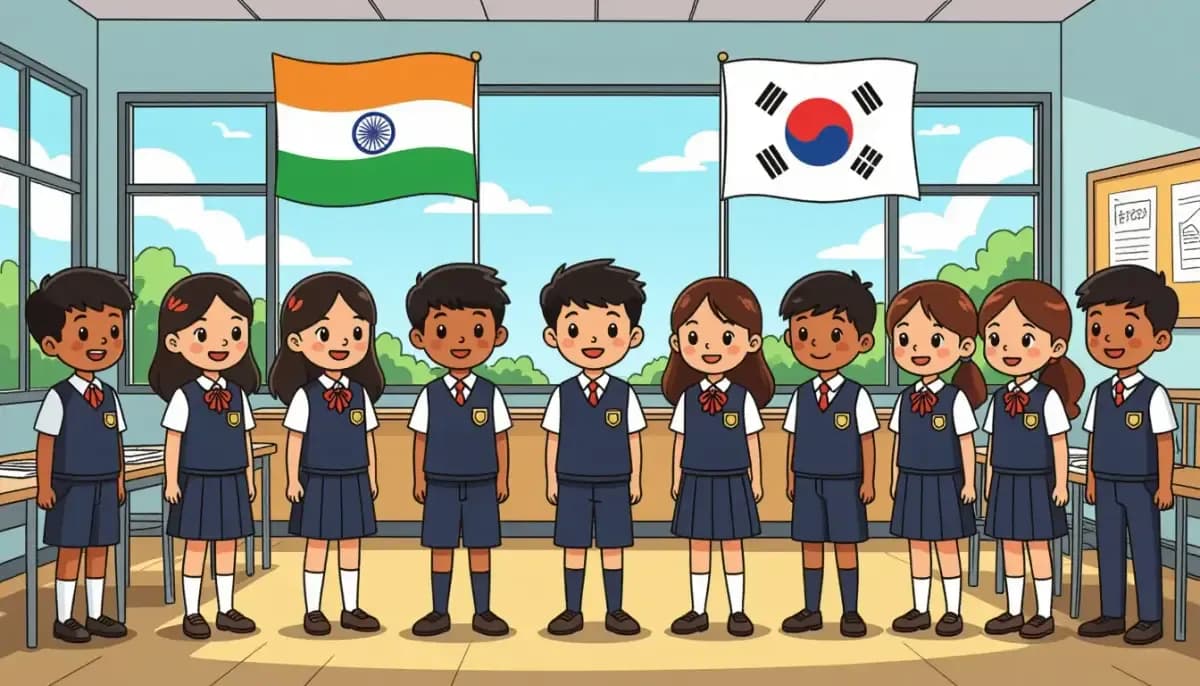
Comprehensive guide to Indian, Korean, Chinese, Brazilian and other ethnic schools in Japan. Learn about IISJ, Chosen gakko, Brazilian schools, legal status, tuition, and how to choose the right school for your family.
Indian, Korean, and Other Ethnic Schools in Japan: A Complete Guide for Expat Families
Japan is home to one of the world's most diverse populations of ethnic schools, reflecting the country's complex migration history and growing international community. From long-established Korean schools rooted in post-war history to newly founded Indian institutions serving the tech-industry boom, ethnic and community schools offer an important educational alternative for many foreign families. This guide covers what you need to know about Indian schools, Korean schools, Chinese schools, Brazilian schools, and other ethnic educational institutions in Japan.
Overview: Ethnic Schools in Japan
Approximately 200 ethnic schools operate across Japan, serving students from Korean, Brazilian, Chinese, Indian, Nepali, and many other communities. These schools have very different histories, structures, and legal statuses — but they share a common mission of preserving cultural identity and language while educating children living in Japan.
One critical distinction to understand: almost none of these schools hold gakkō (officially recognized school) status under Japan's School Education Act. Most are classified as kakushū gakkō (miscellaneous schools) — a catch-all category that includes everything from cooking academies to driving schools. A small number hold kakutei gakkō (authorized school) status. This legal classification has major practical implications: graduates may not receive automatic university entrance eligibility in Japan, and students are generally excluded from government subsidies and welfare provisions available to students in accredited schools.
Despite these challenges, ethnic schools continue to thrive because they offer something the mainstream Japanese school system often cannot: instruction in a child's native language, connection to their cultural heritage, and a community of families facing similar challenges. For families who plan to return to their home country, maintaining educational continuity is essential.
| Type | Approximate Number | Main Communities | Legal Status |
|---|---|---|---|
| Korean ethnic schools (Chōsen gakkō) | ~50 schools | Zainichi Korean (North Korean-affiliated) | Kakushū gakkō |
| South Korean schools (Kankoku gakkō) | ~5 schools | Korean expatriates | Kakushū gakkō |
| Chinese schools | ~10 schools | Overseas Chinese, newcomer Chinese | Varies |
| Brazilian schools | ~80+ schools | Nikkei Brazilian | Kakushū gakkō |
| Indian schools | ~10+ schools | Indian expatriates | Varies; IISJ has gakko hojin status |
| Other ethnic schools | Varies | Nepali, Filipino, Vietnamese, etc. | Usually kakushū gakkō |
For a broader overview of all international schooling options in Japan, see our Complete Guide to International Schools in Japan.
Korean Schools in Japan: A Divided Landscape
Korean schools in Japan reflect the country's divided political history. There are two entirely separate school systems: one affiliated with North Korea, and one supported by South Korea.
Chōsen Gakkō: North Korean-Affiliated Schools
The Chōsen gakkō (朝鮮学校) network is the older and larger of the two Korean school systems. It was established after World War II to serve the large population of Zainichi Koreans — ethnic Koreans who had come to Japan during the colonial period and stayed after the war. Today, these schools are operated under the umbrella of Chongryon (the General Association of Korean Residents in Japan), which has historical and ideological ties to North Korea.
At their peak in the late 1940s and 1950s, Chōsen gakkō enrolled over 60,000 students. Enrollment has declined dramatically since:
- 1980: 31,200 students
- 1993: 17,600 students
- 2009: 8,323 students
- 2019: 5,223 students
- 2023: Fewer than 802 high school students remaining
The number of schools has followed a similar trajectory — from over 100 schools in the 1970s to fewer than 50 operational schools today. Three Chōsen gakkō in Osaka closed in 2023 alone due to lack of financial support.
Despite their shrinking numbers, Chōsen gakkō maintain a full curriculum from kindergarten through high school, plus Korea University — the only ethnic minority university in Japan. Instruction is conducted in Korean, with Japanese taught as a second language. The curriculum covers Korean language, history, geography, science, mathematics, and arts.
One significant controversy: Chōsen gakkō are excluded from Japan's High School Tuition Exemption Program — a subsidy available to students at virtually all other high schools in Japan. This exclusion, based on the schools' perceived ties to North Korea, has been criticized by human rights organizations and affects up to 1,500 students annually. Annual tuition at a Chōsen gakkō high school is approximately 320,000 yen, compared to 117,000 yen for public high schools.
For more on navigating Japan's legal and educational frameworks as a foreign family, see our guide to International School Tuition and Fees in Japan.
South Korean Schools: Kankoku Gakkō
South Korean-affiliated schools, known as Kankoku gakkō (韓国学校), operate under the umbrella of Mindan (the Korean Residents Union in Japan) and receive support from the South Korean government. There are only a handful of such schools, located in Tokyo, Osaka, Ibaraki, Kyoto, and Ishioka.
The most prominent is the Tokyo Korean School (東京韓国学校), located in Wakamatsu-cho, Shinjuku-ku, Tokyo. Unlike Chōsen gakkō, instruction at South Korean schools is largely conducted in Japanese, with Korean language and history taught as subjects. These schools serve both Korean expatriates and Korean-Japanese residents. They account for less than 1% of total Korean ethnic school students in Japan — most Koreans still attend Japanese public schools.
Indian Schools in Japan: A Growing Sector
The Indian school sector in Japan is one of the fastest-growing segments of ethnic education, driven by a significant increase in Indian tech workers, business professionals, and their families relocating to Japan. Indian schools typically follow Indian national curricula (CBSE) or the International Baccalaureate (IB), making it easy for students to continue their education if the family returns to India or moves to another country.
India International School in Japan (IISJ)
Founded in 2004, the India International School in Japan (IISJ) is the oldest and largest Indian school in Japan, with approximately 1,500 students across two campuses in Tokyo (Ojima, Koto-ku) and Yokohama.
IISJ holds CBSE accreditation (2010), IB authorization (2015), and achieved gakko hojin status (2016) — making it one of the few ethnic schools with full Japanese legal recognition. In 2019, MEXT designated it as an international school. The school offers K-12 education, with IB Diploma options in Grades 11–12. Annual fees range from approximately 610,000 to 1,220,000 yen depending on grade level.
Global Indian International School (GIIS) Tokyo
The Global Indian International School (GIIS) Tokyo campus opened in 2006 with around 60 students and has grown to over 1,300 students — many of whom are Japanese students seeking an English-medium, internationally recognized education. Located in the Nishi Kasai / Higashi Kasai area of Tokyo, GIIS offers both CBSE (Indian) and Cambridge International curricula with a strong emphasis on STEM. GIIS is part of a global network of 19 campuses across 7 countries.
Sai Sishya International School (SSIS)
Sai Sishya International School was founded in March 2017 in Edogawa Ward, Tokyo. Starting with just 3 kindergarten students, it has grown to over 90 students, approximately 90% of whom are Indian nationals. SSIS became an authorized IB World School in June 2020, offering the IB Primary Years Programme (PYP) for children aged 2 years 8 months through Grade 6.
Other Indian Schools
| School | Location | Curriculum | Notes |
|---|---|---|---|
| India International School in Japan (IISJ) | Tokyo, Yokohama | CBSE + IB | Oldest/largest; 1,500+ students |
| GIIS Tokyo | Nishi Kasai, Tokyo | CBSE + Cambridge | 1,300+ students; Japanese students welcome |
| Sai Sishya International School | Edogawa, Tokyo | IB PYP | 90+ students; 2017 founding |
| UIA International School of Tokyo | Kiba, Tokyo | Indian curriculum | Character development focus |
| Kohana International School | Kawasaki | — | Highly regarded locally |
| Kawasaki International School | Kawasaki | Cambridge + IB + CBSE | Operating since 2009 |
For detailed rankings and reviews of schools in the Tokyo area, see Top International Schools in Tokyo.
The Japan Times reported in 2023 that Indian and Nepali schools represent a growing segment of international education in Japan, offering significantly lower tuition than legacy Western-expat international schools. These schools are particularly attractive to middle-income Asian expat families planning long-term stays.
For a complete listing of Indian schools in Tokyo, the All Japan Association of Indians (AJAI) maintains a directory of Indian educational institutions.
Chinese Schools in Japan: Overseas Chinese Communities
Chinese schools in Japan serve two distinct communities: the long-established kakyō (overseas Chinese) community, and a newer wave of mainland Chinese migrants. This distinction is reflected in the schools' curricula and affiliations.
Yokohama Overseas Chinese School (YOCS) is one of the oldest foreign schools in Japan, with roots going back to the Datong School founded in 1898 at the instigation of Sun Yat-sen. After splitting in 1952 due to Taiwan-mainland tensions, the YOCS has operated as a Taiwan-oriented (Republic of China curriculum) school in Naka-ku, Yokohama, serving elementary through senior high school students.
Tokyo Chinese School, established in 1929, now follows Taiwan's education system and serves students aged 7–18.
Yokohama Yamate Chinese School serves kindergarten through Grade 9 and follows a mainland China curriculum — one of only two such schools in Japan.
Growing demand from newer Chinese migrants has led some schools to introduce entrance exams to manage enrollment.
Brazilian Schools in Japan: The Nikkei Community
Brazil-Japan migration runs deep. Hundreds of thousands of Nikkei Brazilians (Brazilians of Japanese descent) came to Japan as foreign workers starting in the late 1980s, creating the country's largest South American community. Brazilian schools grew rapidly to serve their children.
- 1995: Only 5 Brazilian schools existed in Japan
- 2008: Peak of approximately 100 Brazilian schools
- 2009: More than 80 Brazilian schools, with 53 officially approved by the Brazilian government
Brazilian schools are concentrated in areas with heavy Nikkei populations, particularly Aichi, Shizuoka, and Gunma prefectures. Instruction is conducted in Portuguese. Of approximately 33,000 Brazilians in Japan aged 5–14, about one-third attend Brazilian schools. The rest attend Japanese public schools or other institutions.
Brazilian schools face ongoing challenges, including financial instability, lack of official recognition, and limited government support. According to Wikipedia's overview of Brazilian schools in Japan, many schools have struggled to maintain consistent operations.
Challenges Facing Ethnic Schools and Their Students
A 2021 in-depth report by Nippon.com on immigrant education in Japan highlighted several systemic challenges:
- ~20,000 compulsory-education-age foreign children (nearly 1 in 5) may not be receiving formal schooling — a rate comparable to some developing countries
- Foreign residents have no legal obligation to enroll children in school under Japanese law, unlike Japanese nationals
- Students at unrecognized ethnic schools lack access to periodic health checkups and welfare services at public expense
- High school dropout rates for students needing Japanese language support are 5% — five times the national average
- 5.1% of foreign students are enrolled in special education classes, compared to 3.6% nationally
These statistics underscore the importance of early planning and understanding your options as a foreign family in Japan. For advice on navigating the school system, visit Living in Nihon for practical guides for expats.
Choosing the Right Ethnic School for Your Family
When evaluating ethnic schools in Japan, consider the following factors:
Curriculum continuity: If you plan to return to your home country or move elsewhere, curriculum alignment is critical. Indian families typically prefer CBSE or IB; Korean families may prefer Korean-medium schools; Chinese families may choose between Taiwan and mainland curricula.
Legal recognition: Schools with gakko hojin status or MEXT recognition provide greater certainty about diploma recognition, access to health services, and eligibility for certain subsidies. Ask each school about its legal status explicitly.
Language support: Consider whether the school provides adequate Japanese language instruction. Strong Japanese skills will benefit your child regardless of which school system they're in.
University access: Students graduating from unrecognized schools may need to pass additional exams (like the Japanese University Entrance Qualification Exam) to apply to Japanese universities. If your child may attend university in Japan, plan accordingly.
Community fit: Beyond academics, ethnic schools provide a community of families navigating similar challenges. The social support can be invaluable for children and parents alike.
For more information on comparing international school options, see our International School vs Japanese School guide and our article on British vs American vs IB Curricula.
For expats researching work and family life in Japan, For Work in Japan offers resources on relocation, employment, and family support.
For academic resources and supplementary education options for children in Japan, Chuukou Benkyou provides guides to Japanese study programs.
Conclusion
Japan's ethnic school landscape is rich, diverse, and often misunderstood. Whether you're an Indian family seeking a CBSE or IB education, a Korean family weighing cultural identity against practical concerns, or a Brazilian family wanting your child to maintain their Portuguese language and connections — there are options available. The key is understanding the legal and practical implications of each choice, and connecting with the relevant community for up-to-date guidance.
With approximately 200 ethnic schools serving communities from across Asia and beyond, Japan's foreign families have more options than ever — even as these schools face ongoing systemic challenges in gaining full recognition. By doing your research early, you can find the school environment that best matches your family's values, plans, and your child's educational needs.
For more guidance on the full range of international schooling options in Japan, explore our Complete Guide to International Schools in Japan or learn about Financial Aid and Scholarships for International Schools in Japan.

Originally from Vietnam, living in Japan for 16+ years. Graduated from Nagoya University, with 11 years of professional experience at Japanese and international companies. Sharing practical information for foreign parents raising children in Japan.
View Profile →Related Articles
International School vs Japanese School: Pros and Cons
Compare international schools and Japanese public schools in Japan. Detailed cost breakdown, language considerations, and practical advice for expat families choosing the right school.
Read more →
Japanese Language Classes at International Schools
Complete guide to Japanese language programs at international schools in Japan. Learn about JSL, bilingual education, top schools, JLPT prep, and how to support your child's Japanese learning.
Read more →
Extracurricular Activities at International Schools in Japan
Discover sports, arts, robotics, MUN, and community service programs at international schools in Japan. A complete guide for expat families choosing the right activities for their children.
Read more →
International School Admission Process in Japan
Step-by-step guide to international school admission in Japan for expat families. Covers requirements, costs, timelines, and how to navigate the application process successfully.
Read more →
Online and Hybrid International School Options in Japan
Discover the best online and hybrid international school options in Japan for expat families. Compare costs, accreditation, and flexible programs from ¥300,000/year — a fraction of traditional international school fees.
Read more →
Transitioning from International to Japanese School
Everything foreign families need to know about switching from international to Japanese school: enrollment steps, language support, cultural differences, high school entrance exam tips, and cost comparison.
Read more →