
Transitioning from International to Japanese School

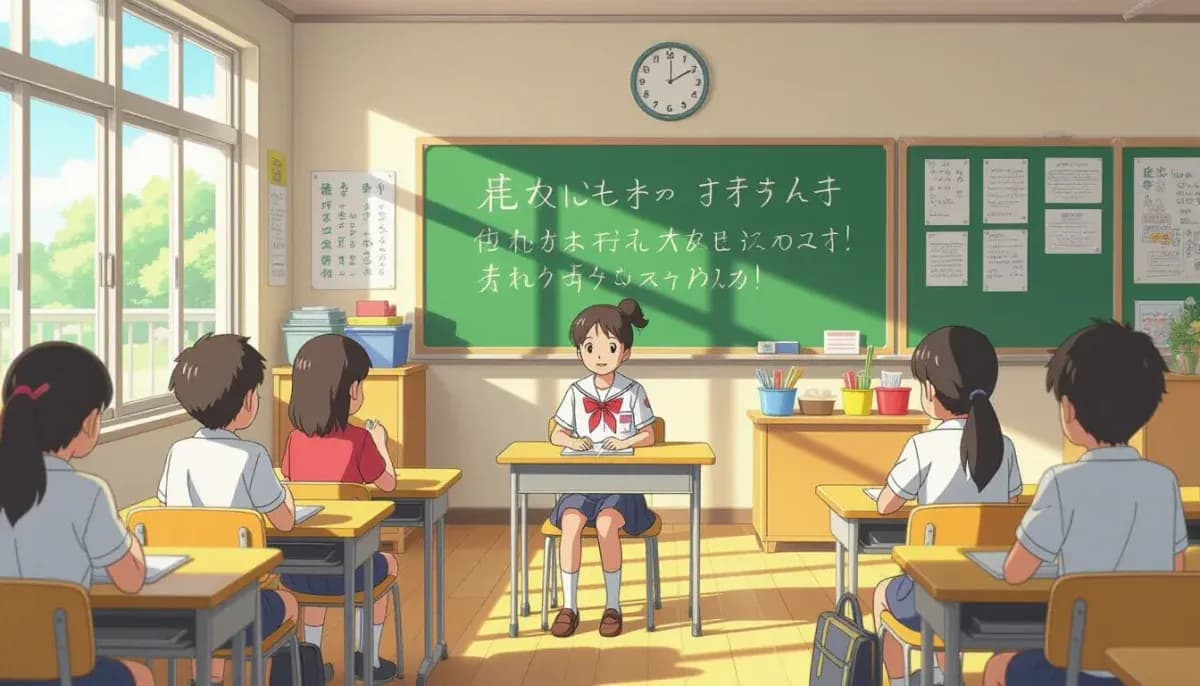
Everything foreign families need to know about switching from international to Japanese school: enrollment steps, language support, cultural differences, high school entrance exam tips, and cost comparison.
Transitioning from International to Japanese School: A Complete Guide for Foreign Families
Making the switch from an international school to a Japanese school is one of the most significant decisions a foreign family can make while living in Japan. Whether driven by cost, a desire for deeper cultural integration, long-term residency plans, or simply proximity, thousands of families make this transition every year. In 2023 alone, 114,853 foreign students were enrolled in Japanese public schools — a 23.3% increase from the previous year — showing that more and more families are choosing the local school route.
This guide walks you through everything you need to know: from understanding what to expect culturally and academically, to the practical steps of enrollment, language support options, and how to help your child thrive in their new environment.
Why Families Switch from International to Japanese Schools
The reasons families choose to transfer their children are varied, but a few stand out consistently.
Cost is the most common driver. International schools in Japan typically charge ¥2–3 million per year in tuition alone — and that's before extracurriculars, uniforms, and application fees. Japanese public schools, by contrast, are completely free for elementary and junior high students, including foreign children. Monthly costs are limited to school lunch (approximately ¥4,000–¥12,000 depending on the area), modest PTA contributions, and materials fees.
| School Type | Approximate Annual Cost |
|---|---|
| International School | ¥2,000,000 – ¥3,000,000+ |
| Japanese Private School | ¥300,000 – ¥600,000+ |
| Japanese Public School (Elementary/JHS) | Free (tuition) + ¥50,000–¥150,000 misc |
Long-term integration is another major factor. Families planning to stay in Japan for five or more years often decide that full immersion in the Japanese system gives their child the social and linguistic tools they'll need as adults — particularly for those who may eventually pursue Japanese university education.
Geographic access also plays a role. Outside major cities, international school options are limited, and commuting long distances for school every day is unsustainable. In many communities, the local public school is simply the most practical choice.
For more context on choosing between education options, see our guide to International Schools in Japan and the Japanese Education System overview.
What to Expect: Key Differences Between International and Japanese Schools
Before making the transition, it's important to understand how fundamentally different Japanese schools are from most international schools — not just linguistically, but culturally and structurally.
Academic Calendar and Structure
Japan uses an April-to-March school year, divided into three terms. If your child is coming from a September-start system (common in the UK, US, Australia, and many international schools), this means either a mid-year entry or a waiting period. Japan uses a 6-3-3-4 education structure: six years of elementary (小学校), three years of junior high (中学校), three years of high school (高校), and four years of university.
Language of Instruction
Everything in a Japanese public school — lessons, announcements, club activities, parent-teacher communication — is conducted in Japanese. This is both the biggest challenge and the biggest opportunity. Research shows that children placed in full immersion typically acquire conversational Japanese within about six months, though academic-level proficiency takes closer to two to three years. Patience and consistent support are essential during the early period.
Cultural Expectations
Japanese school culture will feel quite different from international schools:
- Soji (掃除): Students clean their own classrooms, hallways, and school facilities every day. There are no professional cleaners. This is considered an important part of character-building.
- Uniforms: Most junior high and high schools require uniforms. Elementary schools may not, but dress standards are often conservative.
- Bukatsu (部活動): After-school club activities (sports clubs, cultural clubs, music, etc.) are a major part of student life, often running until 6 PM or later.
- Lunch (給食): School lunch is eaten in the classroom, served by rotating student groups. Children bring their own chopstick cases and handkerchiefs.
- Moral Education (道徳): This is a formal, graded subject in Japanese schools. Students discuss ethical scenarios, community values, and social responsibility.
For more on raising children who adapt well to Japanese cultural norms, see our article on Cultural Identity for Hafu and Mixed-Race Children in Japan.
How to Enroll Your Child in a Japanese Public School
The enrollment process for foreign children is straightforward but involves several steps.
Step 1: Ensure your residency status is in order. A valid long-term visa (spouse visa, dependent visa, permanent resident, etc.) is required. Children on tourist or short-stay visas are not eligible to enroll in Japanese public schools. Make sure your residence card (在留カード) is current and reflects your current address.
Step 2: Register your address at the municipal office (市区町村役場). If you haven't already, register your home address with your local ward, city, or town office. This is the foundation of everything — school district assignment, insurance enrollment, and child allowance all flow from this registration.
Step 3: Contact the local Board of Education (教育委員会). After address registration, visit or contact your local Board of Education. They will assign your child to the appropriate school based on your residential district. Bring your residence card, your child's health records if available, and any school records from the previous school.
Step 4: Visit the assigned school. The school will conduct an intake interview, assess your child's Japanese level, and explain support services available. Many schools have a designated international student coordinator (国際教室担当) who manages Japanese language support.
Step 5: Handle the paperwork. You'll need to fill out enrollment forms, provide proof of immunization, and in some cases submit a transfer certificate (転学証明書) from the previous school.
For detailed visa and residency information relevant to this process, see our guide on Visa and Legal Issues for Foreign Families.
Japanese Language Support Available at Public Schools
One of the biggest concerns for parents is how their child will manage without Japanese — and the good news is that Japanese public schools are legally required to provide support.
Nihongo Pullout Classes (取り出し日本語指導): Many schools offer dedicated Japanese language instruction in small groups, pulled out from regular class time. The content ranges from basic communication to academic language development. Availability and quality vary by school — urban areas like Tokyo, Osaka, Kanagawa, and Saitama are significantly better resourced than rural areas.
In-Class Support (入り込み指導): In some schools, a Japanese language support teacher joins the child's regular classroom to assist with comprehension and participation during lessons.
Mother-Tongue Support (母語支援): Some municipal boards of education employ multilingual support staff — typically for Chinese, Portuguese, Spanish, Filipino, Vietnamese, and Korean speakers. Check with your local board whether this is available.
After-School Programs: Many communities run after-school Japanese tutoring programs for foreign children, sometimes through NPOs or volunteer organizations.
41.5% of foreign children in Japanese public schools require dedicated Japanese language instruction, so your child won't be alone — and schools have increasing experience working with multilingual learners.
For structured Japanese learning options to supplement school support, see our articles on Teaching Japanese to Foreign Children and Raising Bilingual Children in Japan.
High School Transitions: Special Entrance Exam Accommodations
If your child is transitioning to Japanese school at the junior high or high school level, there are important accommodations and pathways designed specifically for foreign students.
Special Entrance Exam Provisions: Foreign students who have been in Japan for three years or less at the time of the high school entrance exam are eligible for accommodations in many prefectures, including:
- Extended exam time
- Furigana (phonetic readings) printed on exam questions
- Japanese-English, Japanese-Chinese, or Japanese-Portuguese dictionaries allowed during the exam
- Separate foreign student selection quotas
Tokyo, Kanagawa, Saitama, Osaka, Aichi, and several other prefectures have dedicated foreign student high school entrance pathways. In Saitama, for example, 12 public high schools offer special exams for foreign students as of 2025.
Middle School Equivalency: Students who have not completed Japanese junior high school may need to pass the national middle-school equivalency exam (中学校卒業程度認定試験) before applying to high school. This is a written national exam administered twice yearly.
For a comprehensive look at high school options for foreign families, see High School in Japan: Options and Guidance for Foreign Families.
Chuukoubenkyou.com offers detailed guidance on the returnee and foreign student exam system — an excellent resource for families navigating high school entrance from an international or overseas background.
Helping Your Child Adjust: Practical Tips for Parents
The transition can be challenging, especially in the first few months. Here are strategies that parents who have successfully made this transition commonly share:
Before the move:
- Start Japanese lessons as early as possible — even basic greetings and classroom vocabulary make a significant difference on day one.
- Research your specific school's international student support. Ask directly: Does the school have a dedicated Japanese language coordinator? Are there other foreign children enrolled?
- Connect with parent communities — Facebook groups like "Raising Kids in Japan" and local expat parent networks often have direct experience with specific schools.
In the early weeks:
- Visit the classroom and meet the homeroom teacher (担任の先生) before your child's first day if possible.
- Prepare a simple self-introduction (自己紹介) in Japanese with your child — even a short script they've practiced builds enormous confidence.
- Accept that your child may come home exhausted and overwhelmed. Full-day immersion is mentally taxing. Build in quiet decompression time after school.
- Keep a communication notebook (連絡帳) — Japanese teachers use this daily to communicate with parents about homework, upcoming events, and your child's adjustment.
Ongoing support:
- Maintain your child's heritage language actively. Bilingual children who lose their first language often struggle with identity and academic writing. Heritage Language Maintenance has practical strategies.
- Stay involved with the school — attend parent events (授業参観, 運動会), even if communication is limited. Presence matters.
- Watch for signs of stress or isolation. The transition involves social as well as linguistic adjustment. See our article on Mental Health and Emotional Wellbeing for Foreign Children in Japan for guidance on when to seek additional support.
Living in Nihon's comprehensive guide on Raising Children and Education in Japan for Foreigners offers broader context on the full journey of raising kids in Japan's education system.
Financial Considerations and Government Support
Switching to Japanese public school doesn't just eliminate tuition — it may also open access to additional government support.
Child Allowance (児童手当): As of October 2024, Japan eliminated income restrictions for child allowance. Foreign resident families with proper residency status are eligible for ¥10,000–¥30,000 per month per child (higher amounts for third and subsequent children), paid through high school graduation.
School Lunch Subsidies: Many municipalities offer lunch fee subsidies for low-income families. Inquire at the school office or municipal welfare section.
Free Medical Care: Most prefectures provide free or heavily subsidized medical care for children up to age 15 (and in some areas, up to 18). This applies to foreign children with residence registration. See Healthcare and Medical Care for Children in Japan for full details.
Tax Benefits: Families with school-age children may be eligible for various deductions and credits. Our Financial Planning for Expat Families guide covers these in detail.
For Work in Japan's guide on Japanese Language Skills for Work in Japan is also relevant for parents who want to improve their own Japanese to better navigate school communications and parent-teacher meetings.
Is the Switch Right for Your Family?
There's no single right answer — the best choice depends on your child's age, personality, Japanese proficiency, and how long you plan to stay in Japan.
Strong candidates for switching to Japanese school:
- Children under 10, who are in the most receptive window for language acquisition
- Families planning to stay in Japan for 5+ years or permanently
- Children who are socially confident and adaptable
- Families in areas with limited or no international school access
- Families for whom international school fees are a significant financial burden
Cases where staying at an international school may make more sense:
- Teenagers close to completing an internationally recognized curriculum (IB, IGCSE, etc.)
- Children with learning difficulties who need specialized support in English
- Families on short-term assignments (1–3 years) planning to return home
- Children who have experienced significant prior school disruption
Whatever path you choose, connecting with other foreign parents who've navigated the same transition is invaluable. The e-housing.jp guide on public school enrollment and the Japan Living Guide's enrollment article are excellent additional resources.
For families earlier in the education journey, our guides on Elementary School in Japan and Junior High School in Japan provide detailed information about what to expect at each stage.
Summary: Key Steps for a Successful Transition
- Confirm residency status — long-term visa and current residence registration required
- Contact local Board of Education — they assign the school and explain available support
- Visit the school before enrollment — meet the coordinator, assess Japanese language support
- Start Japanese lessons early — conversational fluency typically takes 6 months; academic language 2–3 years
- Understand the cultural differences — soji, bukatsu, uniforms, and communication notebooks
- Know your exam options — if transitioning at high school level, check for foreign student accommodations
- Access government support — child allowance, lunch subsidies, free medical care
- Maintain heritage language — bilingualism is an asset; protect it actively
The transition is real work — but for many families, the rewards of deep integration, strong Japanese language skills, and the full experience of Japanese school life make it entirely worth it.

Originally from Vietnam, living in Japan for 16+ years. Graduated from Nagoya University, with 11 years of professional experience at Japanese and international companies. Sharing practical information for foreign parents raising children in Japan.
View Profile →Related Articles
International School vs Japanese School: Pros and Cons
Compare international schools and Japanese public schools in Japan. Detailed cost breakdown, language considerations, and practical advice for expat families choosing the right school.
Read more →
Japanese Language Classes at International Schools
Complete guide to Japanese language programs at international schools in Japan. Learn about JSL, bilingual education, top schools, JLPT prep, and how to support your child's Japanese learning.
Read more →
Extracurricular Activities at International Schools in Japan
Discover sports, arts, robotics, MUN, and community service programs at international schools in Japan. A complete guide for expat families choosing the right activities for their children.
Read more →
International School Admission Process in Japan
Step-by-step guide to international school admission in Japan for expat families. Covers requirements, costs, timelines, and how to navigate the application process successfully.
Read more →
Indian, Korean, and Other Ethnic Schools in Japan
Comprehensive guide to Indian, Korean, Chinese, Brazilian and other ethnic schools in Japan. Learn about IISJ, Chosen gakko, Brazilian schools, legal status, tuition, and how to choose the right school for your family.
Read more →
Online and Hybrid International School Options in Japan
Discover the best online and hybrid international school options in Japan for expat families. Compare costs, accreditation, and flexible programs from ¥300,000/year — a fraction of traditional international school fees.
Read more →