
International School vs Japanese School: Pros and Cons

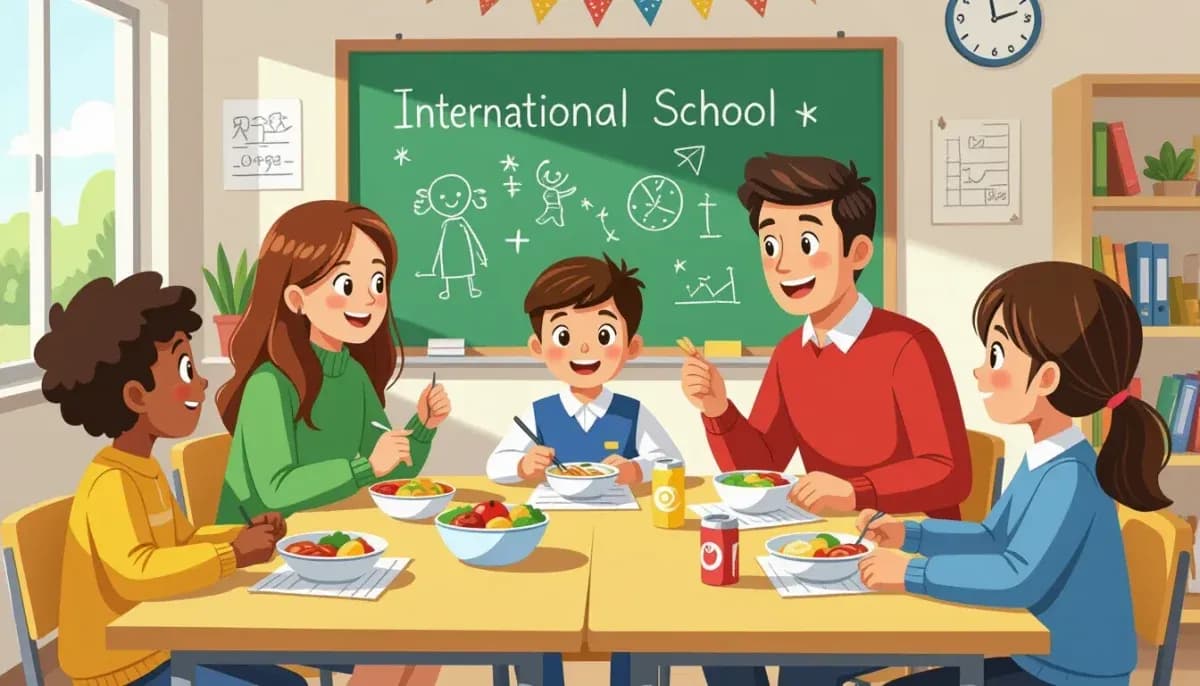
Compare international schools and Japanese public schools in Japan. Detailed cost breakdown, language considerations, and practical advice for expat families choosing the right school.
International School vs Japanese School: Pros and Cons
Choosing between an international school and a Japanese public or private school is one of the most consequential decisions expat families face when living in Japan. Both paths offer distinct advantages and trade-offs, and the right choice depends on your family's long-term plans, language goals, budget, and your child's personality. This comprehensive guide breaks down everything you need to know to make an informed decision.
Understanding Your Options: The Japanese School System
Japan's school system is well-structured and highly regarded for academic rigor. For foreign families, there are three main school types to consider:
- Public schools (公立学校): Government-run, free, and open to all residents including foreign nationals. Instruction is entirely in Japanese.
- Private Japanese schools (私立学校): Japanese curriculum, higher tuition, often more competitive, but may have slightly more flexibility.
- International schools: Private institutions offering curricula in English or other languages (IB, American, British, etc.), designed for globally mobile families.
For an overview of how the full system works, see our guide on the Japanese education system for foreign families.
Pros and Cons of Japanese Public Schools
Japanese public schools are free for all residents, making them the most accessible option. Here is a realistic picture of what to expect:
Pros:
- Cost: Public schools charge virtually nothing in tuition — annual expenses are roughly ¥35,000–¥54,000, covering meals, materials, and club fees. Over 12 years this is dramatically cheaper than any alternative.
- Language immersion: Young children (especially under age 10) pick up conversational Japanese within about six months. Academic Japanese literacy typically follows within 2–3 years.
- Cultural integration: Your child will develop genuine friendships with Japanese peers and gain cultural fluency that international school students rarely achieve.
- Local community ties: Joining the neighborhood school builds roots and connections that benefit the entire family.
- Academic standards: Japan consistently ranks among the top nations in global education assessments (PISA). Math and science instruction is particularly strong.
Cons:
- Language barrier at entry: The initial adjustment can be stressful, especially for older children or those who join mid-year.
- No English support: Most public schools have no English-language instruction or dedicated support staff for non-Japanese-speaking children.
- Pressure and conformity: The system emphasizes uniformity, group rules, and exam preparation — which can be challenging for children from more individualistic educational backgrounds.
- Parent communication in Japanese: All newsletters, meetings, and official communications are in Japanese only.
- Social adjustment: Foreign children who look or behave differently may face social challenges in Japan's relatively homogenous school environment.
If your child will be entering elementary school, our elementary school guide for foreign parents covers enrollment steps in detail.
Pros and Cons of International Schools
International schools cater to expat and globally mobile families. They offer English-medium instruction and internationally recognized curricula, but come at a significant financial cost.
Pros:
- English instruction: Classes are taught in English (or another language), removing the language barrier immediately.
- Global curriculum: IB (International Baccalaureate), American, British, and other curricula are internationally recognized, making it easy to transfer between countries.
- Diverse environment: Students come from dozens of nationalities, creating a multicultural learning environment.
- Smooth transitions: For families who may relocate again, international schools ensure academic continuity across moves.
- Familiar structure: Homework formats, classroom norms, and teacher communication styles may feel more familiar to Western parents.
Cons:
- Cost: This is the biggest obstacle. Annual tuition ranges from ¥1.2 million (budget tier) to ¥5.5 million or more (premium tier). Over 12 years, total costs can reach ¥24–36 million.
- Hidden fees: One-time registration and enrollment fees range from ¥300,000 to ¥800,000+, with additional fees for learning support, exam preparation, and extracurriculars adding ¥400,000–¥1,200,000+ annually.
- Limited locations: Most international schools are concentrated in Tokyo, Yokohama, Osaka, and Kobe. Families outside major cities have few or no options nearby.
- Social bubble: The tight-knit expat community can be insulating, limiting authentic Japanese cultural and language experiences.
- High turnover: Both students and teachers move frequently, which can disrupt long-term friendships.
- No government subsidies: Most international schools are classified as "miscellaneous schools" (各種学校, kakushu gakko) rather than Article 1 schools, making them ineligible for most government tuition support programs.
For detailed cost planning, the Living in Nihon education fund planning guide provides savings strategies including NISA accounts and grandparent gift allowances that can help offset costs.
Cost Comparison: International School vs Japanese School
Understanding the full financial picture is essential. Here is a breakdown of estimated annual costs by school type:
| School Type | Annual Tuition | One-Time Fees | Notes |
|---|---|---|---|
| Public school | ¥35,000–¥54,000 | None | Free tuition; costs are meals, materials |
| Private Japanese school | ¥300,000–¥800,000 | ¥100,000–¥300,000 | Higher prestige, Japanese curriculum |
| Budget international school | ¥1,200,000–¥2,200,000 | ¥300,000–¥500,000 | KIST, GIIS Tokyo, Laurus International |
| Mid-tier international school | ¥2,500,000–¥3,500,000 | ¥500,000–¥800,000 | British School Tokyo, Canadian IS |
| Premium international school | ¥3,800,000–¥5,500,000+ | ¥800,000–¥2,000,000 | ASIJ, Seisen, Tokyo International |
Total estimated cost over 12 years:
- Public school: ¥420,000–¥650,000
- Private Japanese school: ¥4,000,000–¥10,000,000
- International school: ¥15,000,000–¥60,000,000+
For more on managing family finances in Japan, see our financial planning guide for expat families. The E-Housing guide to education for foreign families also provides a detailed overview of school options and enrollment procedures.
Language and Cultural Identity Considerations
Language is central to this decision. Children who attend Japanese public schools gain genuine Japanese fluency — a skill that can open career and social doors for life. However, this immersion comes at a cost: children may initially fall behind academically in other subjects while learning Japanese, and heritage language maintenance requires conscious effort at home.
Children at international schools maintain their home language fluency and may study Japanese as a second language, but full Japanese proficiency is rare. If raising bilingual children is important to your family, our guide on raising bilingual children in Japan covers strategies that work regardless of which school type you choose.
For families concerned about cultural identity, especially for mixed-race (hafu) children, see our article on cultural identity for hafu and mixed-race children in Japan.
The Hybrid Approach: A Popular Middle Ground
Many long-term expat families in Japan use a staged approach:
- Preschool/Kindergarten (ages 3–6): Japanese hoikuen or yochien to build language foundation and socialization
- Elementary school (ages 6–12): Japanese public school for deep language immersion
- Middle/High school (ages 12–18): Transition to international school for globally recognized qualifications
This hybrid path gives children strong Japanese language skills and cultural grounding while ensuring internationally recognized qualifications for university admission. According to the International School Advisory Tokyo, this pattern is increasingly common among families planning to stay in Japan long-term.
For more on early education, see our guides on daycare and hoikuen and kindergarten in Japan.
Special Considerations for Older Children
The age at which your child transitions matters enormously:
- Under 7: Adaptation to Japanese school is typically smooth; language acquisition is rapid.
- Ages 7–10: More challenging but still manageable. Language support classes (取り出し授業, toridashi jugyou) may be available.
- Ages 11+: Starting Japanese school at middle or high school level is significantly harder. The academic demands are high, and social groups are already established.
For families navigating middle school entry, our junior high school guide for foreign families explains the enrollment process and what to expect.
Older students considering Japanese high school have additional options including returnee student admissions programs. The Chuukou Benkyou guide on exam systems for returnee and foreign students explains how these pathways work for students with overseas experience.
Making Your Decision: Key Questions to Ask
Before choosing, consider these five questions:
- How long will you stay in Japan? Short-term (under 3 years): international school. Long-term or permanent: Japanese school or hybrid.
- What is your language goal? Japanese fluency priority: public school. English curriculum priority: international school.
- What is your budget? If international school fees would strain your finances significantly, public school is the responsible choice.
- How old is your child? Younger children adapt more easily to Japanese school.
- Where do you live? International schools are concentrated in major cities. Rural families may have no international school option at all.
For additional context on all aspects of raising children in Japan, the For Work in Japan resource hub covers work, living, and family life for foreigners. The ELT School comprehensive cost guide provides the most current breakdown of international school tuition for 2025–2026.
Conclusion
There is no universally correct answer to the international school vs. Japanese school question. International schools offer academic continuity and a supportive English-language environment, but at enormous cost. Japanese public schools are free, academically strong, and offer genuine cultural immersion — but the language barrier and conformity pressure are real challenges, especially for older children.
For most expat families in Japan, the decision ultimately comes down to three factors: how long you plan to stay, your child's age, and your budget. Whichever path you choose, supporting your child's language development, cultural adjustment, and emotional wellbeing will make the biggest difference. See our guide on mental health and emotional wellbeing for foreign children in Japan for practical strategies.

Originally from Vietnam, living in Japan for 16+ years. Graduated from Nagoya University, with 11 years of professional experience at Japanese and international companies. Sharing practical information for foreign parents raising children in Japan.
View Profile →Related Articles
Japanese Language Classes at International Schools
Complete guide to Japanese language programs at international schools in Japan. Learn about JSL, bilingual education, top schools, JLPT prep, and how to support your child's Japanese learning.
Read more →
Extracurricular Activities at International Schools in Japan
Discover sports, arts, robotics, MUN, and community service programs at international schools in Japan. A complete guide for expat families choosing the right activities for their children.
Read more →
International School Admission Process in Japan
Step-by-step guide to international school admission in Japan for expat families. Covers requirements, costs, timelines, and how to navigate the application process successfully.
Read more →
Indian, Korean, and Other Ethnic Schools in Japan
Comprehensive guide to Indian, Korean, Chinese, Brazilian and other ethnic schools in Japan. Learn about IISJ, Chosen gakko, Brazilian schools, legal status, tuition, and how to choose the right school for your family.
Read more →
Online and Hybrid International School Options in Japan
Discover the best online and hybrid international school options in Japan for expat families. Compare costs, accreditation, and flexible programs from ¥300,000/year — a fraction of traditional international school fees.
Read more →
Transitioning from International to Japanese School
Everything foreign families need to know about switching from international to Japanese school: enrollment steps, language support, cultural differences, high school entrance exam tips, and cost comparison.
Read more →