
Japanese Language Classes at International Schools

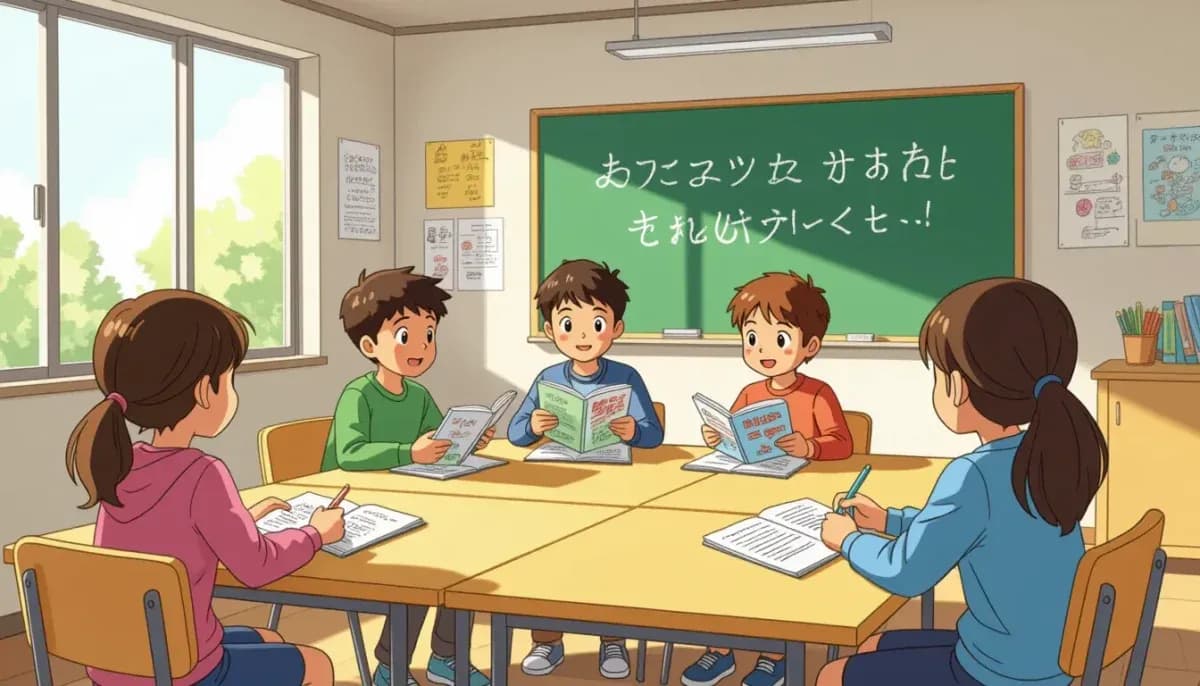
Complete guide to Japanese language programs at international schools in Japan. Learn about JSL, bilingual education, top schools, JLPT prep, and how to support your child's Japanese learning.
Japanese Language Classes at International Schools in Japan: A Complete Parent's Guide
If you're raising children at an international school in Japan, one of the most valuable opportunities available is the Japanese language program. Whether your child is a complete beginner or has some exposure to Japanese at home, understanding how Japanese language classes work at international schools will help you make the most of your family's time in Japan. This guide covers everything foreign parents need to know — from the types of programs offered to practical tips for supporting your child's language journey.
Why Japanese Language Classes Matter at International Schools
Many families choose international schools precisely because they want their children educated in English (or another home language), but living in Japan creates a unique opportunity that should not be wasted. Japanese language skills open doors — socially, professionally, and culturally — that English alone cannot.
Children who develop genuine Japanese proficiency while attending international schools enjoy several advantages:
- Social integration: Being able to speak Japanese helps children make friends in the local community, not just within the expat bubble.
- Cultural understanding: Language and culture are inseparable. Japanese language classes teach children how Japanese society thinks, communicates, and interacts.
- Academic advantage: Bilingual children consistently show stronger cognitive flexibility, problem-solving, and memory compared to monolingual peers.
- Long-term career value: Japan remains one of the world's largest economies. Japanese proficiency is a significant professional asset, especially in Asia-Pacific roles.
- Smooth transitions: Families who later consider transitioning from international to Japanese school will find the move far easier if children have built a strong Japanese foundation.
With 114 international schools across 12 cities in Japan — 62 in Tokyo alone — the quality and approach to Japanese language instruction varies widely. Knowing what to look for makes all the difference.
Types of Japanese Language Programs at International Schools
International schools in Japan typically offer Japanese language through one of several program structures. Understanding these distinctions helps you evaluate schools and set appropriate expectations.
Japanese as a Second Language (JSL)
JSL programs are designed for students who have little or no prior Japanese background. These are the most common type of Japanese language program at English-medium international schools. JSL classes typically:
- Use communicative, immersive methods focused on practical daily use
- Gradually introduce reading and writing (hiragana first, then katakana, then basic kanji)
- Are grouped by proficiency level rather than by age or grade
- Meet 3–5 times per week, often as a core subject
Schools like the American School in Japan (ASIJ) and the British School in Tokyo (BST) offer structured JSL programs that run from early childhood through high school, allowing students to build proficiency over many years.
Mother Tongue Japanese (MTJ)
Mother Tongue Japanese programs serve students whose first language is Japanese — typically hafu (half-Japanese) children or children of Japanese parents who have returned from abroad. These classes:
- Follow a curriculum closer to what Japanese public school students study
- Focus on formal written Japanese, classical literature, and kanji at grade level
- Are appropriate for children who speak Japanese at home but need academic language development
If your child is a native Japanese speaker attending an international school for the English curriculum, the MTJ track ensures they don't fall behind in their Japanese literacy while pursuing English-medium education.
Dual-Language and Bilingual Programs
Some schools have made Japanese integration central to their entire educational model. The most notable examples include:
- Nishimachi International School (Tokyo): Offers a mandatory daily Japanese language program deeply integrated with cultural learning. Students at all levels receive substantial Japanese instruction every day.
- New International School (Tokyo): A fully dual-language English/Japanese school where instruction happens in both languages across subjects.
- Aoba-Japan International School: Offers what it describes as a "strong Japanese" curriculum alongside IB programs, ensuring students graduate with meaningful Japanese literacy.
These programs are ideal for families committed to raising genuinely bilingual children and planning a long-term stay in Japan. For more strategies on this topic, see our guide on raising bilingual children in Japan.
IB Japanese Language Courses
For students following the International Baccalaureate (IB) framework — which is dominant among the 31 JCIS (Japan Council of International Schools) member schools — Japanese language is offered as part of the formal curriculum:
- IB PYP: Japanese is typically integrated as a language of inquiry alongside the transdisciplinary curriculum
- IB MYP: Students take Japanese as Language Acquisition (Groups 1 or 2) with clear proficiency benchmarks
- IB Diploma: Students can take Japanese A (native-level), Japanese B (advanced second language), or ab initio (beginner)
The IB framework is internationally recognized and ensures Japanese language learning has academic rigor and transferable credentials.
Japanese Language Curriculum: What Do Students Actually Learn?
The content of Japanese language classes at international schools is designed to be age-appropriate and practically useful. Here's a general overview by level:
| Level | Typical Students | Focus Areas |
|---|---|---|
| Beginner (JSL 1) | New arrivals, age 5–8 | Hiragana, basic greetings, colors, numbers, classroom vocabulary |
| Elementary (JSL 2) | 1–2 years in Japan | Katakana, simple sentences, daily life vocabulary, basic reading |
| Intermediate (JSL 3) | 3–4 years in Japan | Kanji (approx. 100–300), paragraph writing, conversation skills |
| Advanced (JSL 4) | 5+ years in Japan | Formal writing, complex grammar, cultural texts, JLPT preparation |
| Mother Tongue | Native speakers | Grade-level kanji, classical literature, academic writing |
| IB Japanese B | Secondary students | Nuanced conversation, essay writing, cultural analysis |
| IB Japanese A | Native/near-native | Literature, comparative analysis, advanced composition |
Most schools conduct regular assessments and move students between levels based on demonstrated proficiency, not simply by age or time spent in Japan. This means a highly motivated child can advance quickly with the right support at home.
How to Compare Japanese Language Programs Across Schools
When evaluating international schools in Japan, ask these specific questions about the Japanese program:
Instruction time: How many hours per week does Japanese language receive? A minimum of 3 hours per week is necessary for meaningful progress; 5+ hours per week (as in schools with mandatory daily Japanese) produces substantially better outcomes.
Class size: Japanese language classes benefit from small group sizes. Aim for classes of 8–15 students maximum to ensure speaking practice.
Native teacher ratio: Are Japanese language classes taught by native speakers? Accented or non-native instruction at early stages can establish poor pronunciation habits.
Leveling system: How does the school assess and place students? A robust placement system ensures your child is always appropriately challenged.
Extracurricular Japanese: Does the school organize Japanese cultural clubs, language partners with local Japanese students, or community immersion activities? These reinforcement opportunities dramatically accelerate learning.
JLPT preparation: Does the school offer preparation for the Japanese Language Proficiency Test? JLPT N3 or higher is a meaningful achievement that looks excellent on university applications and resumes. Note that reaching JLPT N1/N2 requires approximately 600–900+ hours of study.
You can find and compare member schools through the Japan Council of International Schools and get broader school data from the International Schools Database Japan.
Supporting Your Child's Japanese Learning Outside School
School instruction alone rarely produces fluent children. The families whose children achieve strong Japanese proficiency are those who actively reinforce learning at home and in the community.
Practical Daily Habits
- Label your home: Post sticky notes with Japanese words on household objects. Even 15 minutes of daily vocabulary reinforcement adds up significantly over a year.
- Japanese media: Let younger children watch Japanese-language anime, educational shows, or YouTube channels. Even passive exposure builds listening comprehension.
- Japanese playmates: Arrange playdates with Japanese neighborhood children. This is the single most powerful accelerator for conversational Japanese in young children.
- Weekend language classes: Many community centers, Japanese cultural institutions, and private tutors offer Saturday Japanese classes specifically designed for international school students.
After-School Language Schools
For families who want additional structured Japanese study, Tokyo and other major cities have excellent options:
- TCJ (Tokyo Central Japanese Language School): Serves international students, expatriates, and families; offers programs designed for those living and working in Japan; campuses in Tokyo and Osaka.
- Coto Academy: 4 Tokyo locations plus Yokohama; conversation-focused with small class sizes; has served 15,000+ international students from 50+ countries; also offers online classes.
- GaijinPot Study: An online directory where you can search Japanese language schools across Japan by location, type, and duration.
See our broader guide on teaching Japanese to foreign children for a more complete overview of supplementary learning methods and resources.
Japanese Language and the Bilingual Identity Question
For families raising children in Japan long-term, Japanese language learning is inseparable from questions of cultural identity. Children who develop genuine Japanese proficiency — especially those who are hafu or have Japanese heritage — often develop a deeper, more nuanced sense of identity that bridges cultures rather than choosing between them.
Schools like Nishimachi International actively cultivate this bicultural confidence. Their philosophy is that children should feel fully competent and comfortable in both their home culture and Japanese culture, not perpetually caught between worlds.
If your child is hafu or mixed heritage, you may also find our article on cultural identity for hafu and mixed-race children in Japan helpful for navigating the social dimensions of language and identity.
For families who may eventually consider enrolling children in a local Japanese school — either permanently or temporarily — strong Japanese language foundations built at an international school make this transition far more manageable. See our guide on transitioning from international to Japanese school for what to expect.
Common Challenges and How to Overcome Them
"My child refuses to speak Japanese at school": This is extremely common among children who feel embarrassed about making mistakes. The solution is normalization — speak positively about Japanese at home, celebrate small wins, and never mock or correct pronunciation harshly. A language-positive home environment is essential.
"Progress seems slow compared to classmates": Japanese language acquisition varies significantly based on exposure outside school. Children whose home language is related to Japanese (Korean, Chinese) typically progress faster. Set realistic expectations and focus on consistent, incremental progress rather than comparison.
"We're only in Japan for 1–2 years — is it worth investing in Japanese?": Yes, without question. Even basic Japanese proficiency gained over 1–2 years provides lifelong value — a foundation that can be rebuilt quickly if your child ever returns to Japan, and a unique cognitive and cultural experience that shapes their worldhood view.
"The school's Japanese program seems weak": If the Japanese curriculum at your child's school is inadequate, supplement with after-school classes, tutors, or community programs. Some of the most Japanese-proficient international school graduates built their skills primarily outside school hours.
For broader context on language learning support, Living in Nihon provides comprehensive resources for foreign families navigating life and education in Japan.
Practical Information for Parents
Communicating with Japanese teachers: At most international schools, Japanese language teachers communicate with parents in English. At schools with strong Japanese programs, some communication may be in Japanese — use this as an opportunity to model language learning for your children.
Report cards and assessments: Japanese language progress is typically reported on the same schedule as other subjects. Ask for specific proficiency level descriptors rather than just grades, so you understand where your child stands on an absolute scale.
Preparing before arrival: If you know you're moving to Japan, starting a family Japanese program before arrival — even at beginner level — can significantly ease the transition. Apps, online tutors, and community classes in your home country can provide a useful head start.
Resources for working parents: For Work in Japan has resources for foreign professionals in Japan that may help you understand the language environment your children are growing up in, and why Japanese proficiency matters professionally in Japan's business culture.
For additional academic context on Japanese language schooling options, the Study in Japan Official Website provides information about Japanese language institutions and programs across the country.
Conclusion
Japanese language classes at international schools represent one of the most significant educational opportunities your child will have during your time in Japan. Whether your child attends a school with a mandatory daily Japanese program or a more limited JSL offering, proactive parental involvement — in how you choose your school, how you support learning at home, and how you supplement school instruction — determines how much your child ultimately gains.
Japan is not just a place to live temporarily; it is a language and culture worth understanding deeply. The children who leave Japan with genuine Japanese proficiency carry something uniquely valuable for the rest of their lives.
For more on the full landscape of international education in Japan, start with our Complete Guide to International Schools in Japan, and explore the Japanese Education System Guide for Foreign Families for context on how international schools fit within Japan's broader educational landscape.
For insights on after-school activities and extracurriculars in Japan, including how to find Japanese language enrichment programs, see our dedicated guide.
Also check Chuukou Benkyou for perspectives on Japanese academic preparation, particularly useful if your child may eventually prepare for Japanese middle or high school entrance examinations.

Originally from Vietnam, living in Japan for 16+ years. Graduated from Nagoya University, with 11 years of professional experience at Japanese and international companies. Sharing practical information for foreign parents raising children in Japan.
View Profile →Related Articles
International School vs Japanese School: Pros and Cons
Compare international schools and Japanese public schools in Japan. Detailed cost breakdown, language considerations, and practical advice for expat families choosing the right school.
Read more →
Extracurricular Activities at International Schools in Japan
Discover sports, arts, robotics, MUN, and community service programs at international schools in Japan. A complete guide for expat families choosing the right activities for their children.
Read more →
International School Admission Process in Japan
Step-by-step guide to international school admission in Japan for expat families. Covers requirements, costs, timelines, and how to navigate the application process successfully.
Read more →
Indian, Korean, and Other Ethnic Schools in Japan
Comprehensive guide to Indian, Korean, Chinese, Brazilian and other ethnic schools in Japan. Learn about IISJ, Chosen gakko, Brazilian schools, legal status, tuition, and how to choose the right school for your family.
Read more →
Online and Hybrid International School Options in Japan
Discover the best online and hybrid international school options in Japan for expat families. Compare costs, accreditation, and flexible programs from ¥300,000/year — a fraction of traditional international school fees.
Read more →
Transitioning from International to Japanese School
Everything foreign families need to know about switching from international to Japanese school: enrollment steps, language support, cultural differences, high school entrance exam tips, and cost comparison.
Read more →