
Outdoor Playgrounds and Play Equipment in Japan

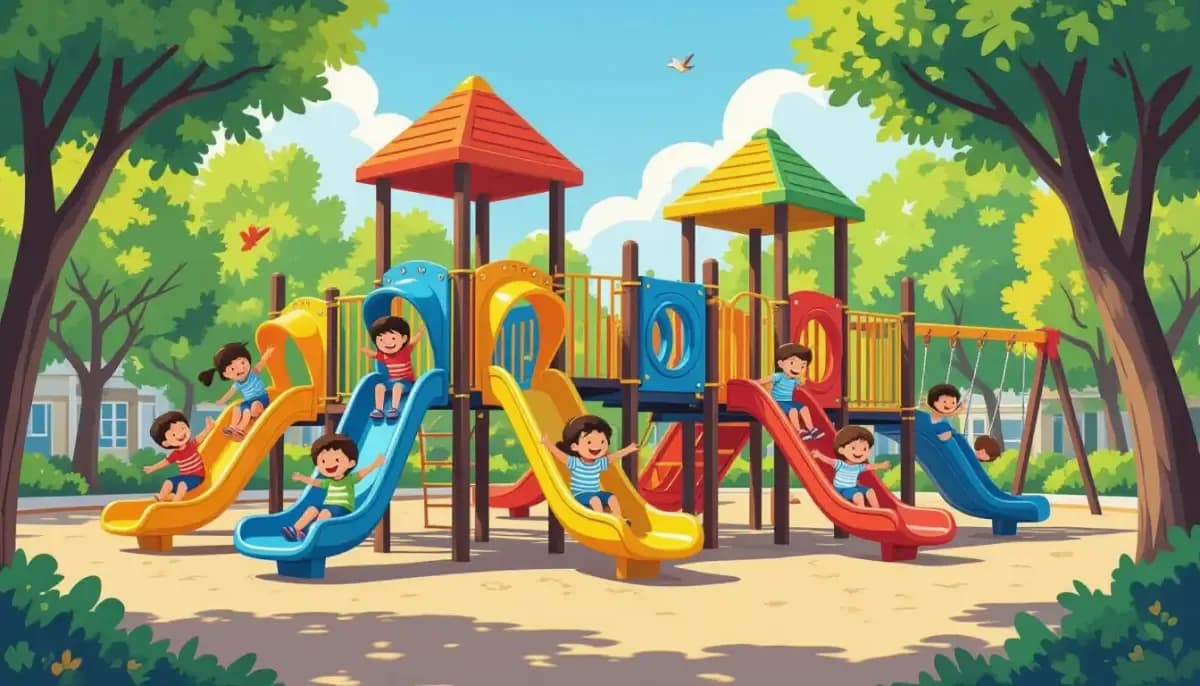
Discover Japan's best outdoor playgrounds and play equipment for children. From free adventure mud parks to retro Bubble Era slides, this guide covers everything expat families need to know about outdoor play culture in Japan.
Outdoor Playgrounds and Play Equipment in Japan: A Complete Guide for Foreign Families
If you have children and are living in Japan, you are in luck — Japan's outdoor playgrounds are some of the most creative, well-maintained, and accessible in the world. From towering multi-story slides to retro animal-shaped sculptures from the Bubble Economy era, Japanese parks offer a uniquely rich play environment that often surprises expat families. Whether you are settling in Tokyo, Osaka, or a smaller city, understanding how outdoor play culture works in Japan will help your children thrive and give you many memorable family afternoons.
What Makes Japanese Playgrounds Special?
Japanese playgrounds are a world apart from what many Western expat families expect. Rather than the standardized plastic sets common in Western countries, Japan's parks frequently feature bold, imaginative designs — multi-story steel slides with roller sections, giant zip lines, dome trampolines, and elaborate rope climbing webs. Many neighborhoods across the country have at least one extraordinary park within easy biking distance, making outdoor play a natural and frequent part of daily life.
One distinctly Japanese aspect of park culture is the level of parental involvement. It is common — and expected — for parents to climb structures alongside their children, slide down with them, and actively participate rather than watch from a bench. This creates a warm communal atmosphere, especially on weekends when families spread out tarps, share bento lunches, and spend entire afternoons together. During cherry blossom season (late March to early April), parks fill with thousands of families enjoying the sakura and the fresh spring air.
The play equipment itself tends to emphasize physical challenge and creativity. You will often find:
- Multi-story slides with steel roller sections
- Full-scale zip lines
- Rope web climbing structures
- Two-story steel cage slides
- Large domed trampolines
- Open woodcraft workshops at adventure parks
- Loaner bicycles, unicycles, and stilts
For more on raising children in Japan and how to navigate local culture, see our guide to raising bilingual children in Japan.
Types of Playgrounds in Japan
Not all Japanese playgrounds are the same. Understanding the main categories will help you find the right fit for your children.
Standard Neighborhood Parks (公園 / Koen)
These are the everyday parks found in virtually every residential neighborhood. Most have swings, slides, climbing equipment, and open space. They are free to enter, well-maintained, and often busy after school and on weekends. Quality varies significantly — some neighborhood parks are small and simple, while others are remarkable. It is worth exploring several in your area to find the best ones.
Play Parks / Adventure Mud Parks (プレーパーク / Puree Paaku)
Play parks are a unique Japanese institution. The concept originated in Denmark in 1943 and spread internationally, arriving in Japan decades later. Today, Tokyo alone has over a dozen recognized play parks, and the concept has spread across the country.
Play parks are deliberately unstructured. Children are encouraged to dig, build, climb, and get dirty — activities that might raise eyebrows at a standard park. All recognized play parks employ trained play-workers who supervise without over-directing, and entry is free. These parks tend to attract families with a strong interest in child-led, open-ended play.
Some notable Tokyo play parks include:
- Nerima Kodomo no Mori – 2-32-7 Hazawa, Nerima-ku (daily 9am–5pm)
- Shibuya Haru no Ogawa Play Park – 5-68-1 Yoyogi, Shibuya-ku (Fri–Wed 10am–5pm)
- Setagaya Play Park – 1-5-27 Ikejiri, Setagaya-ku (Wed–Sun 10am–6pm)
- Kodomo Yume Park (Kawasaki) – 5-30-1 Shimosakunobe, Takatsu-ku (daily 9am–9pm)
- Komazawa Harappa Play Park – 3-3-21 Komazawa, Setagaya-ku (Wed–Sun 10am–6pm)
Retro Playgrounds (Bubble Economy Era)
Many of Japan's most extraordinary playgrounds date from the economic boom of the 1980s and early 1990s, when local governments had generous budgets for public art and creative infrastructure. These "retro" parks feature whimsical sculptures — giant animals, robots, mythological creatures — integrated into the play equipment itself.
Popular retro playgrounds include:
- Kurihama Flower World (Kanagawa) – home of the famous giant Godzilla slide in the "Bouken Land" section, about 70 minutes from central Tokyo
- Nishi Rokugo Koen ("Tire Park") – structures built entirely from recycled tires in Ota-ku, Tokyo
- Komazawa Olympic Park ("Pig Park") – giant pig slide and pig statues throughout
- Oji Rokuchome Jidou Park – features a giant robot with a double slide
- Nishikidaini Park ("Oni Park") – devil-themed slide
- Sumida Park ("Whale Playground") – near Asakusa and Tokyo Skytree
Field Athletic Adventure Playgrounds (フィールドアスレチック)
Field athletic courses (field athletics, or フィールドアスレチック) are large outdoor obstacle course parks that challenge children's agility, strength, and balance. The concept was introduced to Japan in 1970 and quickly grew in popularity — there are now more than 1,000 such facilities across the country. Many are located in forested areas outside city centers and require a short trip, but the experience is well worth it. Equipment includes rope bridges, balance beams, water obstacles, climbing nets, and multi-stage obstacle runs.
Notable Playgrounds for Families in Tokyo
Tokyo has an especially high concentration of remarkable playgrounds. Below are some worth putting on your family's list.
| Playground | Location | Highlights | Cost |
|---|---|---|---|
| Wanpaku Tenkoku ("Naughty Heaven") | Near Tokyo Skytree, Sumida | Wooden fortress, free unicycles, bikes, stilts, woodcraft workshop | Free |
| Oyokogawa Water Park | Near Tokyo Skytree | Man-made creek, 3-story ship slide | Free |
| Pirate Ship Playground | Odaiba | Large interactive pirate ship, net climbing, Rainbow Bridge views | Free |
| Nishi Rokugo Koen (Tire Park) | Ota-ku | Structures entirely from recycled tires | Free |
| Godzilla Slide at Kurihama Flower World | Kanagawa (70 min from Tokyo) | Giant Godzilla slide, large adventure area | Admission fee |
| Komazawa Olympic Park (Pig Park) | Setagaya-ku | Spacious park, giant pig slide, wide open areas | Free |
| Setagaya Play Park | Setagaya-ku | Free play, digging, building, trained play-workers | Free |
Play Culture and What to Expect as an Expat
Understanding the unwritten rules of Japanese park culture will make your visits smoother and more enjoyable.
Bring snacks and a tarp or blanket. Japanese families typically come prepared for a long stay. Bento boxes, thermos drinks, and a sheet to sit on are standard. There is no pressure to leave after 30 minutes.
Children are expected to be relatively independent. While parents are involved, there is also a strong cultural expectation that children work things out themselves — whether that is navigating a climbing structure or resolving a minor conflict with another child.
Shoes off in sandboxes. Some parks have sandboxes where shoes are removed. Follow the lead of other families.
Quiet hours in residential parks. In densely populated neighborhoods, it is considered polite to keep noise at a moderate level, especially near apartment buildings.
Seasonal celebrations. Parks are central to seasonal events — cherry blossom picnics in spring, summer festivals (matsuri), and autumn foliage viewing. Arriving early during peak seasons secures the best spots.
One area where Japan differs noticeably from many Western countries is outdoor play frequency. Research has found that only about 21.3% of boys and 11.4% of girls aged 8 to 12 report playing outside after school — significantly lower than in countries like England, the United States, and Scandinavia. This is partly due to heavy school and extracurricular schedules, as well as the prevalence of screen-based entertainment. As an expat parent, you may find yourself actively encouraging outdoor time more than you expected.
For ideas on screen-free entertainment and indoor alternatives, see our guides on popular Japanese toys and games and board games and family activities in Japan.
Safety and Play Equipment Standards in Japan
Japanese playgrounds meet rigorous national safety standards set by the Japan Park Facilities Industry Association. Equipment is regularly inspected and maintained. That said, Japanese playgrounds often include equipment that would be considered unusually challenging by Western standards — high slides, zip lines, and tall climbing structures are common. This is a reflection of Japan's cultural preference for allowing children to take calculated risks and develop physical competence.
Risky play (play that involves an element of challenge or the possibility of minor injury) accounts for a smaller share of playground activity in Japan compared to some Western countries — around 12% of observed playground interactions according to research — but the equipment itself is often more physically demanding than what you might find in the United States or Australia. Falls are treated matter-of-factly, and children are generally expected to dust themselves off and continue.
Parents from countries with more restrictive play cultures may find this liberating. Children are given significant latitude to navigate equipment independently, which many expat families find refreshing.
Finding Playgrounds Near You
There are several ways to discover great playgrounds in your neighborhood or city:
- Ask at your local ward office (区役所 / kuyakusho) – Most ward offices can provide maps of local parks and facilities, including play parks.
- Google Maps / Apple Maps – Searching "公園" (koen, park) near your location shows most parks with photos and reviews.
- Local parent communities – Facebook groups for expat parents in Tokyo, Osaka, Kyoto, and other major cities are excellent resources. Other parents share current reviews and seasonal tips.
- Savvy Tokyo and similar expat media – Sites like Savvy Tokyo regularly feature playground guides and updates.
- Japan Experience – The Japan Experience playground guide covers major attractions for families visiting or living in Japan.
For expats navigating life with children in Japan, resources like Living in Nihon and For Work in Japan provide broader guidance on family life, schooling, and settling in. If your children are school-aged, Chuukou Benkyou focuses on educational resources that complement the physical development opportunities found at local parks.
Connecting Playgrounds to Your Child's Development in Japan
Outdoor play at Japanese parks supports a broad range of developmental skills that complement what children learn in school and at home. Physical challenges on climbing equipment and slides build gross motor skills and spatial awareness. The social environment of parks — navigating turns, negotiating play with unfamiliar children, reading social cues — supports emotional and social development.
For children navigating a new language and culture, parks offer a uniquely low-pressure environment for building friendships. Physical play transcends language barriers, and many expat children make their first Japanese friends at the local park rather than in the classroom.
Connect park time with other enrichment activities: check out children's museums and science centers in Japan for indoor learning experiences, or explore age-appropriate anime and manga for kids to help children connect with Japanese culture through media their peers enjoy.
Summary
Japan's outdoor playgrounds are a genuine highlight of raising children in the country. From the imaginative play parks of Tokyo where children dig and build freely, to the retro Bubble Era sculptures that have become beloved landmarks, to the hundreds of field athletic adventure courses scattered across the country, there is no shortage of options for families who want to get outside.
The culture around parks is welcoming, seasonal, and deeply social. Even if your Japanese is limited, afternoons at the local park can become some of your family's most treasured memories of life in Japan. Explore your neighborhood, seek out the famous parks on your travel list, and let your children experience one of Japan's quiet but remarkable strengths — extraordinary play spaces available to everyone, usually for free.

Originally from Vietnam, living in Japan for 16+ years. Graduated from Nagoya University, with 11 years of professional experience at Japanese and international companies. Sharing practical information for foreign parents raising children in Japan.
View Profile →Related Articles
Birthday Party Ideas and Venues for Kids in Japan
Plan the perfect birthday party for your child in Japan. Discover top venues, cultural etiquette, cake options, entertainment ideas, and budget tips for expat families in Japan.
Read more →
Traditional Japanese Toys and Games for Kids
Discover traditional Japanese toys and games for kids living in Japan. From kendama to karuta, this complete expat guide covers history, where to buy, and how to use traditional play for cultural integration.
Read more →
Educational Toys and Learning Materials in Japan
Discover the best educational toys and learning materials in Japan for foreign parents. From STEM kits to bilingual tools, find where to buy, what to choose by age, and how to save money.
Read more →
Subscription Boxes and Services for Children in Japan
Discover the best subscription boxes and services for children in Japan. From toy rentals like Toysub! to educational services like Kodomo Challenge, find the perfect options for your foreign family raising kids in Japan.
Read more →
Music and Podcasts for Kids in Japan
Discover the best music, podcasts, and streaming resources for kids in Japan. From warabe uta to anime songs and bilingual podcasts — a complete guide for expat families.
Read more →
Best Children's TV Programs in Japan
Discover the best children's TV programs in Japan for foreign families. From Doraemon to NHK for School, learn what to watch and how Japanese TV helps kids learn Japanese.
Read more →