
Music and Podcasts for Kids in Japan

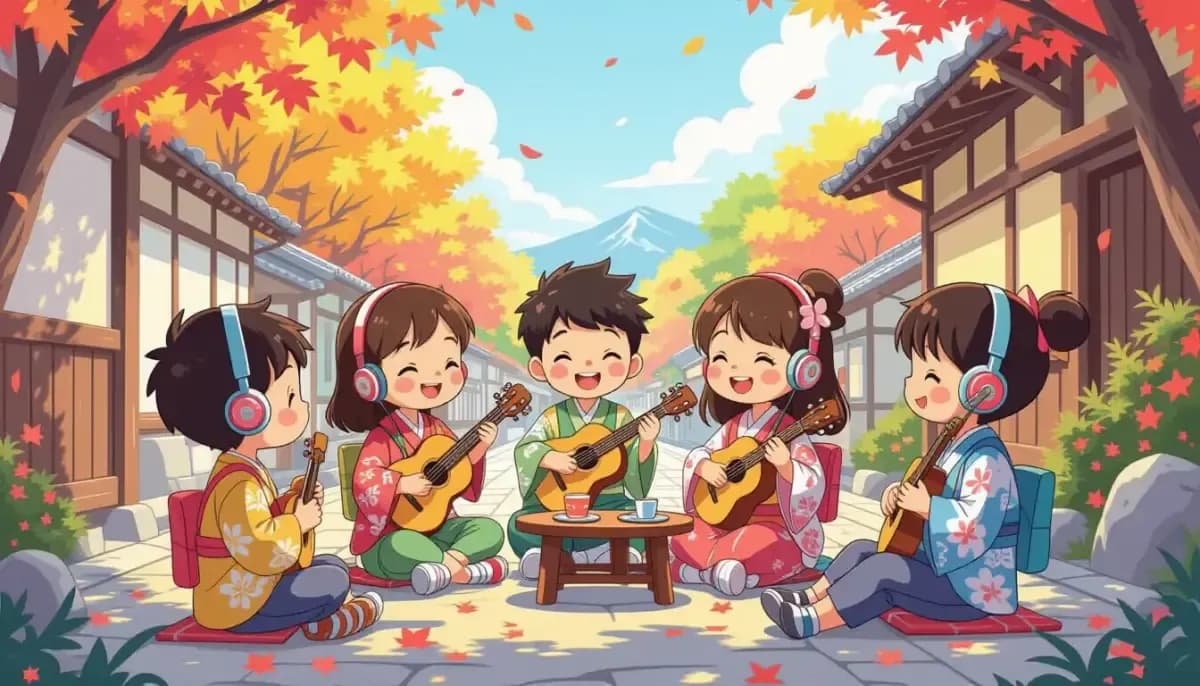
Discover the best music, podcasts, and streaming resources for kids in Japan. From warabe uta to anime songs and bilingual podcasts — a complete guide for expat families.
Music and Podcasts for Kids in Japan: The Complete Guide for Expat Families
Japan offers a rich and diverse world of music and audio content for children, blending centuries-old folk traditions with cutting-edge J-pop, anime soundtracks, and a growing podcast scene. Whether you are raising bilingual children, helping your kids connect with Japanese culture, or simply looking for quality entertainment, understanding what is available — and how to access it — makes a real difference. This guide walks you through the best music resources, streaming options, podcasts, and cultural insights for kids growing up in Japan.
Understanding Japanese Children's Music: From Warabe Uta to J-Pop
Japan's musical heritage for children stretches back hundreds of years. Warabe uta (わらべうた), the traditional folk songs for children, form the foundation of Japanese kids' musical culture. These songs are typically organized around the seasons and major festivals: Tanabata (Star Festival), Hina Matsuri (Dolls' Festival), Tango no Sekku (Children's Day), and New Year celebrations.
Nature imagery dominates these traditional songs — acorns, butterflies, frogs, fireflies, and seasonal changes all feature prominently, reflecting Japan's deep cultural connection to the natural world. Song types include lullabies (with strong regional variation), circle games, hand-clapping songs, ball-bouncing rhymes, and counting-out games.
The word for music in Japanese is ongaku (音楽), combining on (音, sound) and gaku (楽, comfort or enjoyment) — a fitting combination that captures how central music is to Japanese daily life.
Classic Japanese children's songs every expat family should know include:
- Donguri Korokoro — a beloved song about an acorn rolling downhill, one of the most recognized songs in any Japanese kindergarten
- Umi wa Hiroi na — a gentle song about the wide ocean, often sung in preschools
- Zou-san — the famous elephant song, simple and cheerful
- Oni no Pants — a lively song (using the melody of the 1800s Italian song "Funiculi, Funicula") popular at festivals
- Oyoge! Taiyaki-kun — considered Japan's best-selling children's song, originating from a classic children's TV program
For resources on classic Japanese children's songs with audio recordings and cultural context, Mama Lisa's World has an excellent catalog organized by category — lullabies, festival songs, and game songs.
Modern Japanese Kids' Music: Anime, NHK, and J-Pop for Children
Today's Japanese children grow up with a rich blend of traditional songs, anime theme songs, and NHK-produced content. NHK (Japan's public broadcaster) plays a uniquely important role in children's music education. The network produces dedicated children's programming with original songs designed to be educational and culturally enriching.
Paprika by Foorin is perhaps the most celebrated modern example. Written by acclaimed musician Kenshi Yonezu for NHK, this song became a national phenomenon — widely taught in schools, performed by children across the country, and a defining cultural moment of the late 2010s.
Anime theme songs are another massive part of children's musical lives in Japan. Songs like:
- "We Are!" from One Piece
- "Doraemon no Uta" (Doraemon's theme)
- YOASOBI's contributions to anime soundtracks
- Gen Hoshino's "Comedy" and other chart-toppers that children also love
Japanese streaming services and Apple Music offer curated playlists blending these anime themes, contemporary J-pop, and even Japanese-dubbed Disney classics (like Takako Matsu's Japanese version of "Let It Go" from Frozen).
For expat families raising bilingual children, this mix of content is invaluable — it gives children authentic cultural touchpoints while building Japanese language skills naturally. See our guide on raising bilingual children in Japan for strategies on how to use music effectively in language learning.
Music Education in Japan: Schools, Yamaha, and Formal Lessons
Japan takes music education seriously, both in public schools and through private instruction. Formal music lessons are available from a very young age, and music is a required subject throughout compulsory education.
Yamaha Music Schools are the most prominent private music education provider in Japan. According to research published in Frontiers in Psychology (2023), Yamaha enrolled approximately 311,000 students in Japan and 156,000 students overseas in 2021, supported by 18,600 registered teachers. Remarkably, 92% of music teachers reported that children acquired significant extra-musical non-cognitive abilities through lessons — including collaboration, task performance, and social engagement. These benefits go far beyond musical skill alone.
| Music Education Option | Age Range | Focus | Approximate Cost |
|---|---|---|---|
| Yamaha Music School | 0–18 years | Piano, keyboard, ensemble | ¥8,000–¥20,000/month |
| Suzuki Method schools | 2+ years | Violin, piano (ear training) | ¥10,000–¥25,000/month |
| Public school music class | 6–15 years | Singing, recorder, basic instruments | Included in tuition |
| Local community music centers | 3+ years | Various instruments | ¥3,000–¥10,000/month |
| NHK-linked programs | Various | Cultural music (taiko, koto) | Varies |
Traditional Japanese instruments — including the taiko drum, koto (stringed instrument), shamisen (three-stringed lute), and biwa (short-necked lute) — are increasingly offered in cultural programs aimed at children. Many elementary schools also incorporate recorder (recorder playing is nearly universal in Japanese primary schools) and singing into their regular curriculum.
If your child is enrolled in the Japanese school system, our elementary school guide for foreign parents covers what to expect from music classes and school events where children perform.
Best Podcasts for Kids in Japan
The podcast landscape for children in Japan is growing but still developing compared to Western markets. Here is what is currently available across Japanese and bilingual platforms:
Japanese-language podcasts for children:
- おやすみすとーりー (Oyasumi Story) — A soothing bedtime story podcast perfect for winding down. Ideal for young children learning Japanese.
- 子育てのラジオ「Teacher Teacher」 — More aimed at parents, but useful for understanding how Japanese families approach child-rearing.
- 耳で英絵本!BabyBus — An interesting bilingual option: BabyBus (a popular Chinese-origin children's brand with massive presence in Japan) offers audio versions of English picture books, making it excellent for bilingual families.
- 睡眠音 | ホワイトノイズ — White noise and sleep sounds for children; a practical resource for nap and bedtime routines.
English-language content accessible in Japan:
- Most major English podcast platforms (Spotify, Apple Podcasts) work normally in Japan, giving access to popular shows like Story Pirates, Circle Round (WBUR), and Wow in the World (NPR).
- YouTube Kids is available in Japan with both Japanese and English content.
- NHK World (NHK's international service) offers some English-language content aimed at younger learners.
For a broader overview of the Japan podcast ecosystem, Live Japan's guide to Japan podcasts covers the top Japan-focused shows that expat families have found helpful for cultural orientation.
You can browse current kids and family podcasts available in Japan on MyTuner Radio's Japan Kids directory.
Streaming Music for Kids in Japan: What Works and What to Know
Access to music streaming in Japan is generally excellent, but there are some nuances for expat families to understand:
Spotify is fully available in Japan with Japanese and international content. Its family plan (¥1,580/month for up to 6 accounts) is cost-effective. Spotify's kids' playlists mix Japanese children's songs with international content.
Apple Music is also widely used and includes curated Japanese children's playlists. A 61-song "Japanese Kids' Songs Essentials" playlist blends anime themes, NHK-produced songs, contemporary J-pop, and Japanese-dubbed Disney classics — a great starting point.
Amazon Music (via Amazon Japan Prime) includes Japanese children's content and is accessible with a standard Amazon Prime Japan subscription.
YouTube and YouTube Kids remain the dominant platforms for free Japanese children's content. NHK's official YouTube channel publishes educational videos and songs. However, finding quality Japanese children's songs on YouTube can require some curation — the results vary considerably in quality.
AWA and LINE MUSIC are Japan-specific streaming services that may have more comprehensive catalogs of Japanese-language children's content for families who want a fully Japan-focused experience.
For general cultural guidance on helping your children connect with Japan's media landscape, resources at Living in Nihon and For Work in Japan offer community perspectives on family life in Japan. If you are specifically focused on Japanese language learning through music, Chuukou Benkyou provides study resources that older children can also use.
Using Music and Podcasts for Bilingual Development
One of the most effective — and enjoyable — strategies for raising bilingual children in Japan is using music intentionally as a language learning tool. Research consistently shows that children absorb vocabulary, rhythm, and pronunciation patterns through song far more efficiently than through direct instruction.
Practical strategies for expat families:
- Play Japanese children's songs during routine activities (meals, bath time, bedtime) — repetition is key, and low-pressure contexts work best for language acquisition.
- Learn classic warabe uta together — songs like Donguri Korokoro and Zou-san give children shared cultural experiences with their Japanese peers.
- Use bedtime story podcasts in both languages — alternating between Japanese (おやすみすとーりー) and English story podcasts reinforces the idea that both languages have value.
- Attend local music events and festivals — taiko drumming workshops, school music festivals (gakugei-kai), and neighborhood events all provide immersive musical experiences.
- Explore NHK's educational content — NHK Easy News is written for elementary school children and is invaluable for children at the Japanese reading stage.
Children who engage with Japanese music from an early age tend to develop more natural pronunciation and prosody — the rhythm and melody of the language — which is notoriously difficult to acquire later. This connects directly to our broader discussion in teaching Japanese to foreign children.
For heritage language maintenance — keeping your home language strong while your child's Japanese grows — music in the home language is one of the most recommended tools. Our heritage language maintenance guide explores this in depth.
Recommended Resources at a Glance
| Resource | Type | Best For | Language |
|---|---|---|---|
| NHK Kids YouTube channel | Video/Music | Preschool–elementary | Japanese |
| おやすみすとーりー podcast | Audio | Bedtime stories | Japanese |
| BabyBus (app + podcast) | App/Audio | Toddlers–preschool | Bilingual |
| Yamaha Music Schools | In-person | Formal music lessons | Japanese |
| Spotify Kids playlist | Streaming | Background/car music | Both |
| Apple Music JP Kids Essentials | Streaming | Curated song discovery | Japanese |
| Mama Lisa's World | Website | Learning traditional songs | English/Japanese |
| Kidstravelbooks.com | Website | Expat parent curation | English |
Japan's music and podcast landscape for children is genuinely rich — it just takes some navigation. Start with NHK content and a few classic warabe uta, then expand into anime themes and streaming playlists as your family finds what resonates. The investment pays off both in language development and in cultural connection. For more on how all of this fits into the broader picture of raising children in Japan, see our complete guide to the Japanese education system.

Originally from Vietnam, living in Japan for 16+ years. Graduated from Nagoya University, with 11 years of professional experience at Japanese and international companies. Sharing practical information for foreign parents raising children in Japan.
View Profile →Related Articles
Birthday Party Ideas and Venues for Kids in Japan
Plan the perfect birthday party for your child in Japan. Discover top venues, cultural etiquette, cake options, entertainment ideas, and budget tips for expat families in Japan.
Read more →
Traditional Japanese Toys and Games for Kids
Discover traditional Japanese toys and games for kids living in Japan. From kendama to karuta, this complete expat guide covers history, where to buy, and how to use traditional play for cultural integration.
Read more →
Educational Toys and Learning Materials in Japan
Discover the best educational toys and learning materials in Japan for foreign parents. From STEM kits to bilingual tools, find where to buy, what to choose by age, and how to save money.
Read more →
Subscription Boxes and Services for Children in Japan
Discover the best subscription boxes and services for children in Japan. From toy rentals like Toysub! to educational services like Kodomo Challenge, find the perfect options for your foreign family raising kids in Japan.
Read more →
Best Children's TV Programs in Japan
Discover the best children's TV programs in Japan for foreign families. From Doraemon to NHK for School, learn what to watch and how Japanese TV helps kids learn Japanese.
Read more →
Board Games and Family Activities in Japan
Discover board games and family activities in Japan for foreign families — from traditional Shogi and Karuta to modern board game cafes, community events, and tips for expat families.
Read more →