
Board Games and Family Activities in Japan

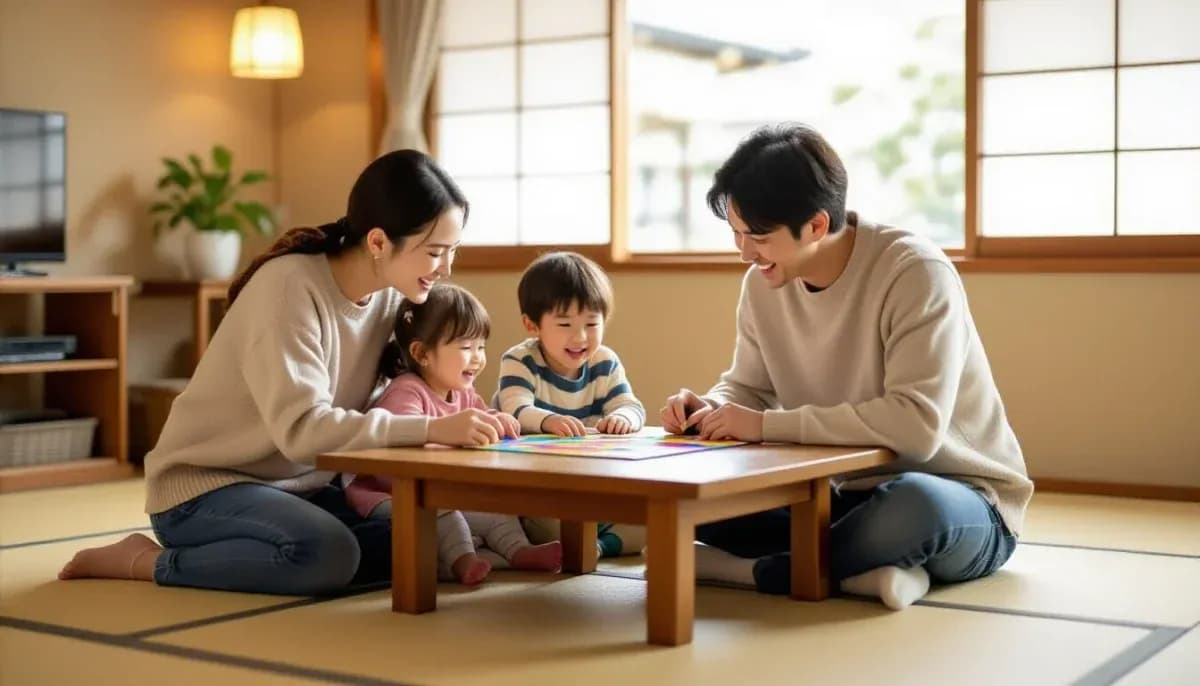
Discover board games and family activities in Japan for foreign families — from traditional Shogi and Karuta to modern board game cafes, community events, and tips for expat families.
Board Games and Family Activities in Japan: The Complete Guide for Foreign Families
Moving to Japan with children opens up a remarkable world of family entertainment — one that blends ancient traditions with a thriving modern hobby culture. Whether you're looking to bond over a weekend board game night, explore the country's rich heritage of traditional games, or find local gaming communities, Japan has more to offer than most expat families realize. This guide covers everything you need to know about board games and family activities in Japan, from traditional Japanese games to international board game cafes and community events.
Traditional Japanese Games Every Family Should Know
Japan has an extraordinarily deep tradition of games and play, with some activities dating back over a thousand years. Introducing your children to these traditional games is one of the most meaningful ways to connect with Japanese culture.
Shogi (将棋) is Japan's version of chess played on a 9×9 board. What makes Shogi unique is that captured pieces change sides and re-enter the game — adding a layer of strategic complexity that even experienced chess players find fascinating. Many schools have Shogi clubs, and online tutorials in English make it accessible to beginners. Your children will likely encounter classmates who play regularly.
Karuta (かるた) is a beloved card-matching game with roots in the Heian period (794–1185 CE). The competitive version — Kyogi Karuta — involves matching poetry cards from the Ogura Hyakunin Isshu anthology at lightning speed. There are also simpler picture-based versions perfect for young children. Karuta is especially popular during New Year holidays and is commonly played at school events.
Go (囲碁 / Igo) is perhaps the world's oldest strategy board game, with over 2,500 years of history. In Japan, it has a professional tournament circuit with the prestigious Honinbo Competition offering a prize of ¥28 million. You don't need to aim for professional status to enjoy Go — community centers (kominkan) often run beginner Go classes, and free online resources make learning the rules straightforward.
Sugoroku (双六) is Japan's answer to Snakes & Ladders — a race-style board game that appears in both traditional and modern commercial forms. The Jinsei Game (Life Game) is the Japanese equivalent of The Game of Life and is a household staple across the country.
Traditional New Year Games include Fukuwarai (a blindfolded face-assembly game similar to Pin the Tail on the Donkey), Hanetsuki (a paddle-and-shuttlecock game related to Shinto rituals), and Takoage (kite flying). These seasonal games are a fantastic way to participate in Japanese New Year culture with your family.
Modern Board Game Culture in Japan
Japan has developed one of the world's most vibrant tabletop gaming communities. The market is valued at approximately US$0.5 billion, with steady annual growth projected through 2028. Unlike the stereotype of Japan as primarily a video game culture, analog gaming has surged in popularity over the past decade.
The Game Market (ゲームマーケット) is Japan's largest tabletop game convention, held three times annually — twice in Tokyo and once in Osaka. The autumn Tokyo event alone has drawn over 22,000 attendees. This convention is a wonderful place for families to explore Japanese-designed games, many of which are never published internationally. Entrance fees are typically modest, and many booths offer free demo play.
Survey data from 2021 showed that UNO was the most popular social card game in Japan — a great sign for foreign families, since it transcends language barriers entirely. Other globally popular games like Catan, Dominion, and Terraforming Mars have strong Japanese fan communities, with active meetup groups in Tokyo, Sendai, and Kyoto. You can find English-language gaming meetups through Meetup.com by searching for "board games Tokyo" or your local city.
| Game Type | Examples | Age Range | Language Barrier |
|---|---|---|---|
| Traditional Japanese | Shogi, Go, Karuta, Sugoroku | 6+ | Low (visual/strategic) |
| International Classics | UNO, Chess, Checkers | 4+ | None |
| Euro Strategy Games | Catan, Ticket to Ride | 8+ | Low (iconography-based) |
| Card/Social Games | Hanafuda, Daifugo | 7+ | Medium |
| Modern Japanese Designs | Dominion JP, Dungeon of Mandom | 12+ | Varies |
| Traditional New Year | Karuta, Fukuwarai, Hanetsuki | 3+ | None |
Board Game Cafes and Shops in Japan
One of the best investments for expat families in Japan is discovering the country's thriving board game cafe (ボードゲームカフェ) scene. These venues let you play from their extensive library for a table fee — usually ¥500–¥1,500 per person for unlimited play time.
Dear Spiele in Tokyo maintains a library of over 1,300 games and is one of the flagship destinations for serious hobbyists. Staff can recommend games based on your group's age and language level. Similarly, Jelly Jelly Cafe — with multiple locations across Japan — stocks 500+ games and is known for being family-friendly and beginner-welcoming.
For purchasing games, chains like Yellow Submarine and Surugaya (similar to a Japanese GameStop, but for tabletop games) carry a wide selection of both Japanese and imported games. Amazon Japan (amazon.co.jp) has an excellent selection, and many popular Western titles are available in bilingual or icon-based editions that work without fluent Japanese. For a comprehensive buying guide, check out The Board Game Dialogue's guide to buying board games in Japan.
If you're in Tokyo, the Akihabara and Nakano Broadway districts have specialty game shops, and Osaka's Nipponbashi (Den Den Town) has a dense concentration of hobby retailers.
Outdoor and Physical Family Activities
Board games are just one part of Japan's rich family activity landscape. Combining indoor game time with Japan's outdoor offerings creates a well-rounded family life.
Parks and Nature: Japan's public parks (公園) are exceptionally well-maintained and safe. Larger municipal parks often have dedicated areas for traditional outdoor games. Satoyama — Japan's semi-rural countryside — is accessible even from major cities and offers hiking trails suitable for families with young children.
Onsen Towns: Many hot spring resort areas have family-friendly facilities including game rooms stocked with Shogi sets, card games, and puzzles. An onsen trip is a quintessentially Japanese family experience that combines relaxation with cultural immersion.
Culture Centers and Kominkan: Community centers run by local municipalities offer a remarkable range of family workshops — from traditional crafts (origami, pottery) to calligraphy classes and seasonal game events. Most activities are low-cost or free, and many are open to foreign residents. These are also excellent places to meet Japanese families and build local connections.
Seasonal Festivals: Japan's calendar is packed with local matsuri (festivals) where traditional games are played and demonstrated. Summer festivals typically feature goldfish scooping (kingyo-sukui), ring toss, and shooting galleries. Check our guide on Japanese Holidays, Festivals, and Seasonal Events for Families for a detailed calendar.
For more ideas on keeping children active, see our article on Sports and Physical Activities for Children in Japan.
Finding Gaming Communities as an Expat Family
One of the biggest challenges for foreign families in Japan is finding community. The board gaming hobby is particularly expat-friendly because many popular games require little to no Japanese language ability to enjoy together.
Meetup.com is the go-to platform for finding English-language board game groups in Japan's major cities. Search for "board games" combined with your city name. Tokyo has several active groups that meet weekly, including mixed Japanese-expat groups where Japanese is practiced alongside playing.
Facebook Groups such as "Tokyo Expat Board Gamers" and city-specific expat groups frequently organize game nights. These informal gatherings are welcoming to families with children, especially for afternoon sessions.
Library Game Collections: Many public libraries in Japan (図書館) now maintain small board game collections that can be borrowed free of charge, just like books. This is an underused resource worth investigating at your local library.
School Events: Elementary and junior high schools often host cultural game days (especially around New Year) where traditional Japanese games are taught. This is a great opportunity for your children to engage with classmates in a non-academic setting — read more about the social dynamics in our guide on Making Friends and Social Skills for Children in Japan.
For broader community resources, Living in Nihon's guide to hobbies and leisure for foreigners has excellent information on finding communities around shared interests, and For Work in Japan's family life guide covers practical aspects of building a social life as an expat family.
Tips for Raising Game-Loving Kids in Japan
Integrating board gaming into your family's life in Japan is easier than you might think, and the benefits extend well beyond entertainment.
Language Learning Through Games: Playing Japanese editions of familiar games is one of the most effective and enjoyable ways for children to build vocabulary. The Shinkansen version of Ticket to Ride uses Japanese city names and geography. Karuta cards are explicitly designed as language-learning tools. Even simple games like Old Maid (Oba-san) use basic vocabulary in a game context children find motivating.
Screen Time Balance: Japan has a strong cultural conversation around screen time for children. Board games are widely seen as a healthy, socially productive alternative. Many Japanese parenting resources recommend game nights as a deliberate strategy for family bonding — a perspective backed by research on screen time and online safety.
Cross-Cultural Bonding: Inviting Japanese classmates over for game night — whether playing UNO (no language barrier) or a simple Japanese card game — is one of the most natural ways for your child to build friendships. Games create shared experiences that transcend language gaps. See our resources on After-School Activities, Juku, and Extracurriculars in Japan for how to structure your child's social time.
Educational Value: Shogi and Go are formally recognized as educational tools by Japan's Ministry of Education. Several schools offer these games as elective subjects. The strategic thinking, patience, and graceful handling of loss that these games cultivate align closely with Japanese educational values.
For more information on children's development and entertainment options, see our comprehensive resource on Books, Toys, and Entertainment for Children in Japan and our guide on Arts, Music, and Creative Development for Children.
Where to Learn More and Connect
The board game and family activity scene in Japan is welcoming, diverse, and growing. Whether you're a dedicated tabletop gamer looking to connect with Japan's hobbyist community, or simply a parent searching for meaningful offline activities for your children, the resources and communities are there.
For Japanese families preparing children for middle school entrance exams, Chuukou Benkyou is a valuable resource on academic preparation that complements the social and recreational development that games provide.
Key resources:
- Savvy Tokyo's guide to traditional New Year games — excellent overview of seasonal games
- Interac Network's Japanese board games overview — written for English-speaking teachers and families in Japan
- The Board Game Dialogue's Japan buying guide — practical shopping advice
- The Gamer's best board games popular in Japan — current recommendations
- Living in Nihon's hobbies and leisure guide — broader context for expat leisure
- For Work in Japan's family life guide — family-oriented expat resources
Japan's game culture — from thousand-year-old board games played at New Year to thriving modern board game cafes with 1,300-title libraries — offers foreign families a uniquely rich landscape for play, learning, and connection. Embrace it, and you'll find that games become one of your family's most reliable bridges between your home culture and your life in Japan.

Originally from Vietnam, living in Japan for 16+ years. Graduated from Nagoya University, with 11 years of professional experience at Japanese and international companies. Sharing practical information for foreign parents raising children in Japan.
View Profile →Related Articles
Birthday Party Ideas and Venues for Kids in Japan
Plan the perfect birthday party for your child in Japan. Discover top venues, cultural etiquette, cake options, entertainment ideas, and budget tips for expat families in Japan.
Read more →
Traditional Japanese Toys and Games for Kids
Discover traditional Japanese toys and games for kids living in Japan. From kendama to karuta, this complete expat guide covers history, where to buy, and how to use traditional play for cultural integration.
Read more →
Educational Toys and Learning Materials in Japan
Discover the best educational toys and learning materials in Japan for foreign parents. From STEM kits to bilingual tools, find where to buy, what to choose by age, and how to save money.
Read more →
Subscription Boxes and Services for Children in Japan
Discover the best subscription boxes and services for children in Japan. From toy rentals like Toysub! to educational services like Kodomo Challenge, find the perfect options for your foreign family raising kids in Japan.
Read more →
Music and Podcasts for Kids in Japan
Discover the best music, podcasts, and streaming resources for kids in Japan. From warabe uta to anime songs and bilingual podcasts — a complete guide for expat families.
Read more →
Best Children's TV Programs in Japan
Discover the best children's TV programs in Japan for foreign families. From Doraemon to NHK for School, learn what to watch and how Japanese TV helps kids learn Japanese.
Read more →