
Stay-at-Home Parenting in Japan: Pros and Cons

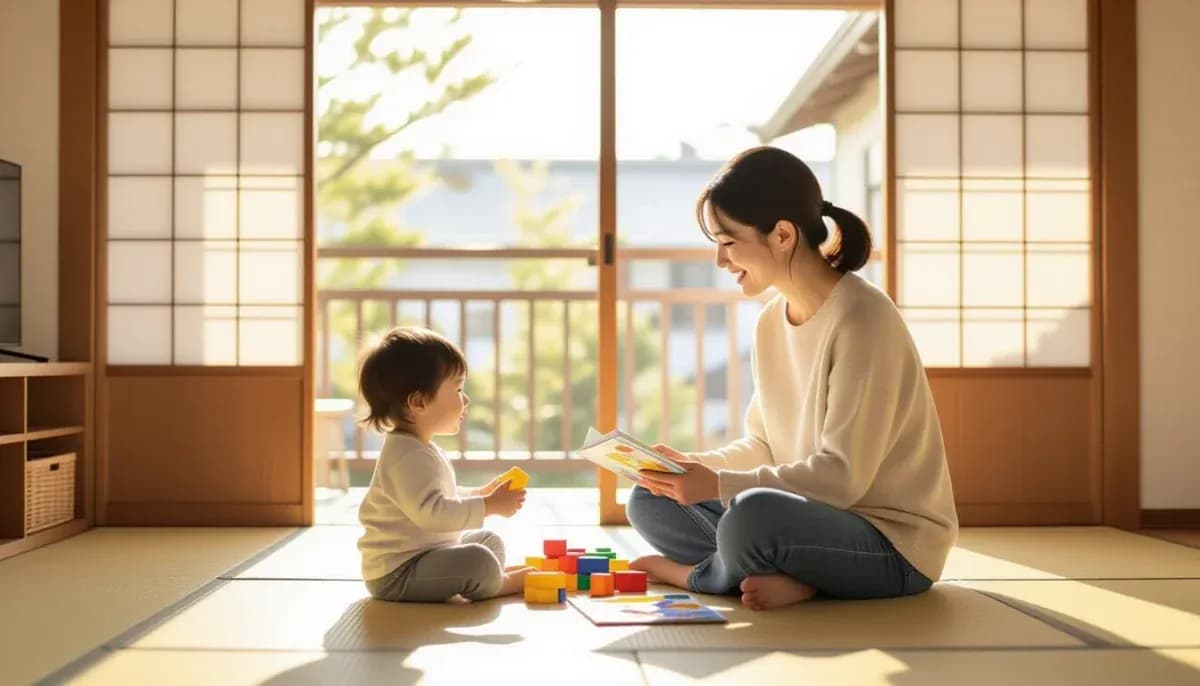
Explore the real pros and cons of stay-at-home parenting in Japan for foreign families. Covers cultural expectations, visa rules, financial costs, government benefits, and practical tips for making it work.
Stay-at-Home Parenting in Japan: Pros and Cons
Choosing to be a stay-at-home parent is one of the most significant decisions a family can make, and doing it in Japan adds a whole additional layer of cultural, financial, and social complexity. Japan has one of the highest rates of maternal workforce exit among OECD countries — somewhere between 60% and 85% of Japanese women stop working when they have their first child. But what does that mean for foreign families navigating this choice? Whether you are a foreign spouse on a dependent visa wondering about your options, or a couple weighing work-life trade-offs in a country with intense work culture and tight social expectations, this guide breaks down the real pros and cons of stay-at-home parenting in Japan.
This is not a judgment on your choice. Both staying home and returning to work have legitimate merits. What matters is understanding how Japan's unique environment shapes that decision — and how to make it work for your family.
Understanding the Japanese Context for Stay-at-Home Parents
Before diving into pros and cons, it helps to understand why stay-at-home parenting is so common in Japan — and how cultural forces shape the experience.
The concept of ryosai kenbo (良妻賢母, meaning "good wife, wise mother") remains influential even in modern Japan. This cultural ideal frames the stay-at-home mother as the manager of the household, the preparer of bento boxes, and the support system that allows a husband to focus entirely on work. It's treated both as a social expectation and, for many Japanese women, a source of genuine pride.
At the same time, structural barriers make returning to work genuinely difficult. Japan's tax system discourages dual-income households: spousal tax deductions are reduced once a partner earns more than ¥1.03 million per year, and social insurance coverage can be lost above ¥1.3 million — effectively capping part-time earnings at around ¥83,000 per month for many couples. Combine this with chronic daycare waiting list problems (as of 2017, over 55,000 children were on public daycare waiting lists), and it becomes clear that many Japanese families end up with one parent at home not purely by choice, but by default.
For foreign families, the dynamics are different but equally complex. Visa restrictions, language barriers, and cultural expectations around school involvement all factor into the decision. For Work in Japan has a comprehensive guide to family life for foreigners that covers many of these structural issues in depth.
The Pros of Stay-at-Home Parenting in Japan
Deep Involvement in Your Child's Early Development
Japan's childcare culture is intensely focused on the early years. Japanese mothers, on average, spend only about 2 hours per week away from their baby in the first two years — far less than in many Western countries — reflecting a philosophy of intensive attachment parenting tied to the concept of amae (dependent indulgence). Being a stay-at-home parent puts you at the center of this formative period.
For foreign families specifically, having a parent at home full-time creates enormous opportunities to give children a bilingual foundation. When one parent speaks a minority language (such as English, French, or Spanish) and is available all day, language exposure is natural and continuous. Learn more about these strategies in our guide to raising bilingual children in Japan.
Access to a Rich Network of Parent-Child Programs
Japan has an extensive system of chiiki no hiroba (community child development centers), kosodate shien (child-rearing support programs), and public nursery drop-in programs designed specifically for stay-at-home parents with young children. These are often free or very low cost, offered at community centers, libraries, and city halls across the country. As a stay-at-home parent, you can participate in these programs daily, which provides structured enrichment, social interaction for your child, and often a lifeline of social connection for the parent too.
Financial Benefits from Government Support
Japan provides several substantial financial benefits for families with young children, regardless of whether both parents work:
- Jidou teate (child allowance): ¥15,000 per month per child under 3 years; ¥10,000 for ages 3–15
- Childbirth lump sum: approximately ¥500,000 per birth
- Free preschool: kindergarten and daycare became free for children aged 3–5 in October 2019 under the government's education reform
These benefits support stay-at-home families substantially, especially when combined with Japan's excellent public healthcare system for children (most municipalities cover children's medical costs entirely or at very low co-pay). Our article on government benefits and subsidies for families in Japan provides a full breakdown.
Safety and Quality of Life
Japan is consistently rated among the safest countries in the world for children. As a stay-at-home parent, you benefit from being in a country where children can play outdoors with remarkable freedom, neighborhoods are walkable and clean, parks are well-maintained, and public transportation is child-friendly. For parents who value a calm, low-stress environment for raising young children, Japan's physical safety and community cleanliness are genuine advantages.
The Cons of Stay-at-Home Parenting in Japan
Social Isolation and the "Mombyo" Pressure
One of the most consistent reports from foreign stay-at-home parents in Japan — especially non-Japanese mothers — is profound social isolation. Japanese parenting groups and neighborhood support networks are tight-knit but can be difficult to enter as a foreigner. PTA activities are conducted entirely in Japanese, community center programs require fluency to participate meaningfully, and cultural norms around group conformity can make it hard to form genuine friendships as an outsider.
There is also the social pressure phenomenon known colloquially as mombyo — a cluster of stress and anxiety symptoms associated with hyper-intensive mothering culture. The pressure to be a "perfect" stay-at-home mother in Japan, preparing elaborate bento boxes, attending every school event, and managing the household with precision, can be overwhelming, especially for foreign parents unfamiliar with the expectations. Check out our guide to community and support networks for foreign families in Japan for practical ways to connect.
Visa and Work Restrictions for Foreign Spouses
For foreign nationals in Japan on a dependent or family visa, working full-time is not automatically permitted. Foreign stay-at-home spouses on a dependent visa may work part-time up to 28 hours per week with an outside activity permission (資格外活動許可), but full-time employment requires changing or adding a separate employment visa category. This structural restriction effectively makes some foreign spouses stay-at-home parents by necessity rather than choice.
This is especially relevant for families on a spouse/dependent visa tied to the working partner's employment visa. If the working partner changes jobs or the sponsoring employer changes, the whole family's visa situation can shift. For a full overview, see our guide to visa and legal issues for foreign families in Japan.
Career Re-Entry Is Genuinely Difficult
Japan ranks 104th out of 142 countries in workplace gender equality (World Economic Forum), and working mothers earn approximately 44% less than working fathers on average. The M-shaped labor force participation curve for Japanese women — dropping sharply at first childbirth and recovering partially in middle age — reflects how difficult career re-entry is after years as a stay-at-home parent.
For foreign parents, the challenges can be even greater. Japanese employment culture values uninterrupted career trajectories, and re-entering the Japanese job market after several years at home requires not just language skills and professional credentials, but often a complete rebuilding of professional networks. This is a serious long-term consideration for any family planning a stay-at-home period.
Financial Strain in a High-Cost Environment
Japan's major cities — Tokyo, Osaka, Nagoya — rank consistently among the world's most expensive cities for families. Rent for a family-sized apartment in central Tokyo can easily run ¥200,000–¥350,000 per month. Groceries, school supplies, extracurricular activities, and family entertainment add up quickly. Living on a single income in Japan requires careful planning.
| Expense Category | Approximate Monthly Cost (Tokyo) |
|---|---|
| 2–3 bedroom apartment rent | ¥150,000–¥300,000 |
| Groceries (family of 3–4) | ¥60,000–¥100,000 |
| Utilities (gas, electric, water) | ¥20,000–¥35,000 |
| Child activities and education | ¥20,000–¥80,000 |
| Transportation | ¥15,000–¥30,000 |
| Healthcare (after subsidies) | ¥5,000–¥20,000 |
| Estimated total (modest) | ¥270,000–¥565,000 |
Regional cities outside the major metro areas can significantly reduce costs. Many foreign families find that moving outside of Tokyo to cities like Fukuoka, Sendai, or Sapporo makes single-income family life considerably more sustainable.
For detailed financial planning advice, see our article on financial planning for expat families raising children in Japan.
Stay-at-Home Fathers in Japan: A Different Experience
While most social infrastructure around stay-at-home parenting in Japan is built for mothers, the picture for fathers is shifting. Surveys now show that 66% of Japanese respondents disagree that stay-at-home fathers are "less of a man" — a notable cultural shift from just a decade ago. Japan's October 2022 law introduced a specific postpartum paternity leave right (4 weeks) on top of existing parental leave, and usage of paternity leave has risen to about 40.5% among male employees as of 2024 (though actual full-time stay-at-home fatherhood remains rare).
For foreign stay-at-home fathers specifically, there can be a unique experience of being treated as an oddity in contexts like nursery drop-off, park meetups, and parent-teacher meetings — environments in Japan that are still dominated by mothers. Many report being invisible in the parenting support infrastructure, which assumes mothers are the primary caregivers. That said, a growing community of international families with stay-at-home fathers does exist, particularly in Tokyo's expat-heavy neighborhoods.
Practical Tips for Stay-at-Home Parents in Japan
If you've decided that stay-at-home parenting is the right choice for your family in Japan, here's how to set yourself up for success:
- Register at your local ward office immediately — this unlocks access to community programs, child allowance, and healthcare subsidies.
- Find your local *kosodate shien center* — these child-rearing support centers offer free drop-in programs and a social lifeline.
- Join foreign parent communities — Facebook groups like "Tokyo Mothers Group," "Expat Moms in Japan," and regional equivalents are invaluable for support and practical advice.
- Invest in Japanese language skills — even basic conversational Japanese dramatically expands your access to community programs and social connections.
- Plan your finances carefully — build a detailed household budget that accounts for Tokyo-level costs, and consider whether a regional city makes more sense for your family.
- Keep your professional skills active — even if you're not working full-time, maintaining certifications, networks, and skills online makes re-entry far easier when the time comes.
- Use the free preschool system strategically — from age 3, children are eligible for free preschool (幼稚園 or 保育園), which provides structure and social development while giving the stay-at-home parent some personal time.
For more on navigating the daycare and hoikuen system in Japan, our complete guide walks through the application process step by step. And for understanding what to expect as your child grows, read our guide to toddler parenting in Japan.
External Resources and Further Reading
Understanding stay-at-home parenting in Japan is easier with the right resources behind you:
- Living in Nihon — practical guides for foreigners living in Japan
- For Work in Japan: Family Life Guide — comprehensive resource on family life for foreign residents
- Chuukou Benkyou: Education Resources for Foreign Families — guidance on educational pathways for children with international backgrounds
- Savvy Tokyo: Working Mothers in Japan — in-depth analysis of maternal workforce participation and cultural pressures
- Japan Handbook: Parental Leave — complete breakdown of leave types and benefits
- Japan Dev: Raising an International Family — first-person accounts and practical advice from international families
Conclusion: Is Stay-at-Home Parenting in Japan Right for Your Family?
Stay-at-home parenting in Japan comes with genuine advantages — deep involvement in your child's development, a safe and supportive environment, substantial government financial support, and access to one of the world's most enriching cultural environments for raising children. But it also comes with real challenges: social isolation, career penalties, visa restrictions, high costs, and the weight of cultural expectations that don't always fit foreign families comfortably.
The key is going in with clear eyes. Understand your visa situation before making the decision. Build your financial plan around realistic Tokyo (or regional city) costs. Actively seek out community and language support. And think about your long-term career trajectory — because in Japan, once you leave the workforce, getting back in is harder than almost anywhere else in the developed world.
Whatever you decide, Japan can be a remarkable place to raise children — if you equip yourself with the right information and community support. For the bigger picture on balancing career and family life in Japan, see our pillar guide on work-life balance for parents in Japan.

Originally from Vietnam, living in Japan for 16+ years. Graduated from Nagoya University, with 11 years of professional experience at Japanese and international companies. Sharing practical information for foreign parents raising children in Japan.
View Profile →Related Articles

Self-Care and Preventing Burnout for Expat Parents
Expat parent burnout in Japan is real. Learn practical self-care strategies, warning signs to watch for, and mental health resources designed for foreign parents raising children in Japan.
Read more →
Managing Dual-Career Families in Japan
Both partners working in Japan while raising children? Navigate daycare waitlists, parental leave rights, health insurance, visa strategy, and household management as a dual-career expat family.
Read more →
Part-Time Work Options for Parents in Japan
A complete guide to part-time work options for foreign parents in Japan — covering visa rules, job types, income thresholds, Japanese job boards, and 2025 workplace rights for working parents.
Read more →
Building a Support System as a Working Expat Parent
Learn how to build a strong support system as a working expat parent in Japan. Find parent communities, government resources, professional networks, and practical tips for the first month.
Read more →
Career Impact of Becoming a Parent in Japan
Discover the real career impact of becoming a parent in Japan. From parental leave rights and financial benefits to daycare challenges and workplace culture — a complete guide for foreign workers.
Read more →
Remote Work and Parenting in Japan: Making It Work
Learn how to balance remote work and parenting in Japan. Covers legal rights, childcare integration, home office setup, financial support, and practical tips for expat parents.
Read more →