
Embassy and Consulate Family Services in Japan

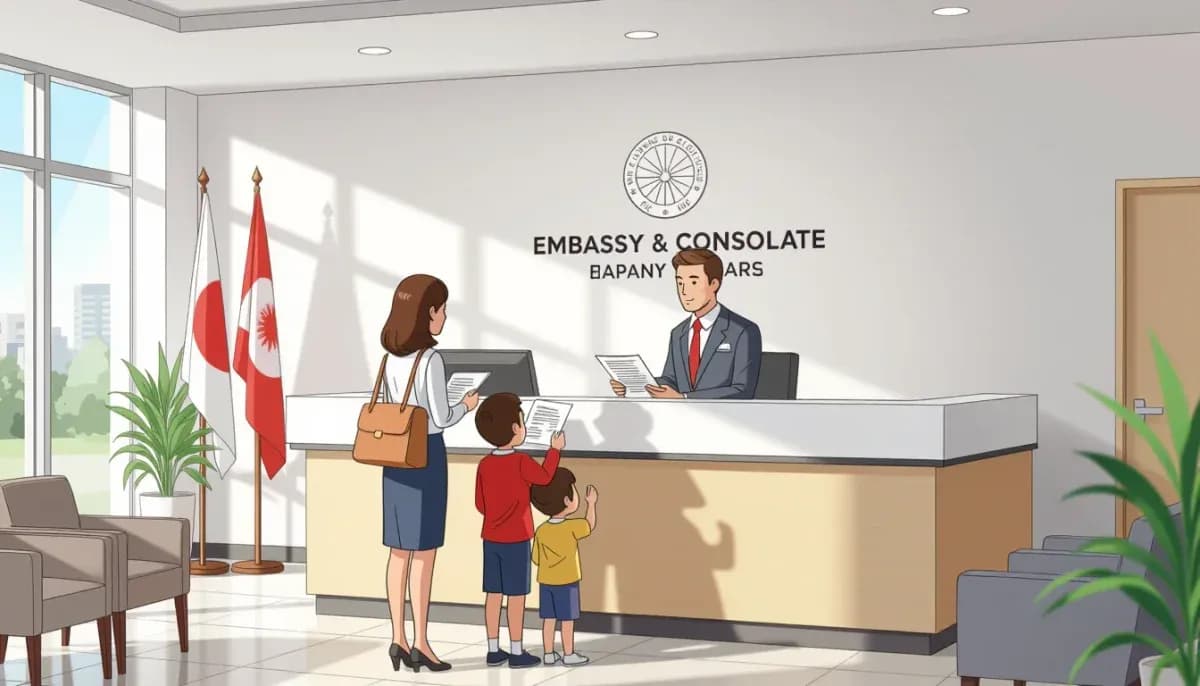
A complete guide to embassy and consulate family services in Japan — covering dependent visas, birth registration, emergency support, and practical tips for foreign families living in Japan.
Embassy and Consulate Family Services in Japan: A Complete Guide for Foreign Families
Moving to Japan with your family is an exciting adventure, but navigating the legal and administrative landscape can feel overwhelming — especially when official processes involve your home country's embassy or consulate. Whether you're renewing passports for your children, registering a birth abroad, or seeking emergency assistance, your embassy or consulate in Japan is one of your most important resources. This guide explains the key services available to foreign families, how to access them, and what to expect at every step.
What Services Do Embassies and Consulates Offer Foreign Families in Japan?
Foreign embassies and consulates across Japan provide a wide range of essential services for their citizens living abroad. These services are specifically designed to help families maintain their legal ties to their home country while navigating life in Japan.
Passport and Travel Document Services
- New passport applications and renewals (including emergency travel documents)
- Children's passports and addition of newborns to existing family passports
- Emergency travel certificates for urgent situations
Birth and Civil Registration
- Registration of children born in Japan with your home country
- Issuance of birth certificates (often required for dual citizenship claims)
- Marriage registration abroad
Notarial and Legal Services
- Certification and notarization of documents
- Power of attorney for home country matters
- Authentication of Japanese documents for use abroad
Visa and Immigration Support
- Guidance on dependent visa applications for family members
- Assistance with Certificate of Eligibility (COE) requirements
- Referrals to immigration lawyers for complex cases
Emergency Assistance
- Support for families in crisis situations
- Welfare and whereabouts inquiries
- Repatriation assistance when needed
Tokyo alone hosts the largest concentration of foreign diplomatic missions in Japan, with embassies from over 150 countries. Regional consulates are also found in Osaka, Sapporo, Nagoya, Fukuoka, and Naha — making services accessible across major expat-populated areas.
Bringing Family Members to Japan: The Dependent Visa Process
One of the most important services your embassy or Japanese consulate can help with is the dependent visa process. If you're already in Japan on a work or other long-term visa, bringing your family to join you requires careful coordination between Japanese immigration authorities and your own embassy.
Step-by-Step: Obtaining a Dependent Visa
| Step | Action | Location | Fee |
|---|---|---|---|
| 1 | Sponsor applies for Certificate of Eligibility (COE) | Japan Immigration Bureau | ¥2,000/person |
| 2 | Receive COE (takes 1–3 months) | Japan | — |
| 3 | Family member applies for Dependent Visa | Japanese embassy/consulate abroad | ¥4,000/person |
| 4 | Enter Japan and register at city hall | Japan | Free |
| 5 | Receive Residence Card | Airport or city hall | Free |
The entire process typically takes 3 to 6 months, so plan well in advance — especially if a child's school enrollment or a spouse's employment start date is time-sensitive.
Income Requirements for Sponsors To sponsor dependent family members, you will generally need to demonstrate a stable income. Most immigration officers look for:
- Monthly income: ¥250,000–¥350,000
- Annual income: approximately ¥3–5 million
- Supporting documents: tax returns, bank statements, employment contract, company letter
Your home country's embassy can provide certified translations or authentication of foreign financial documents required by Japanese immigration.
For a broader understanding of visa and legal challenges facing foreign families, see our detailed guide on visa and legal issues for foreign families in Japan.
Registering a Birth in Japan: Embassy vs. Japanese Requirements
When a child is born in Japan to foreign parents, you typically need to complete two separate registrations: one with Japanese authorities and one with your home country's embassy or consulate.
Japanese Registration (Required for All Births in Japan)
Within 14 days of birth, you must submit a birth notification (shussei todoke) to your local city hall. This applies regardless of your nationality and establishes the child's presence in Japan for health insurance, child allowance, and other local benefits.
Embassy Registration (Preserves Home Country Nationality)
Separately, register the birth with your home country's embassy or consulate within the timeframe specified by your home country's law (this varies widely — from 3 months to 1 year). Required documents typically include:
- Japanese hospital birth certificate (translated if required)
- Parents' passports
- Parents' marriage certificate (if applicable)
- Completed embassy birth registration form
Failing to register with your embassy on time can complicate your child's nationality status and future passport applications. If you need guidance on how Japanese family registration (koseki) interacts with your own country's system, the US Embassy in Tokyo provides a helpful overview of Japan's family registry system.
For more on navigating legal and administrative tasks as a foreign parent, Living in Nihon's guide to raising children in Japan covers the broader context of family life for foreigners.
Government and Non-Government Support Services for Foreign Families
Beyond your own embassy, Japan offers several official support resources for foreign families — particularly those facing language barriers or complex situations.
Foreign Residents Support Center (FRESC)
Run by the Japanese government, FRESC provides free, multilingual counseling on:
- Residence status and visa questions
- Employment issues for family members
- Family and personal difficulties
Contact: 0570-011000 (from Japan) | +81-3-5363-3013 (from abroad) Hours: Monday–Friday, 9:00–17:00
Foreign Resident's Advisory Center (FRAC) — Tokyo
Operated by the Tokyo Metropolitan Government, FRAC offers free one-on-one counseling in English (and other languages) on:
- Marital and family difficulties
- School enrollment issues for children
- Neighbor disputes and daily life problems
Phone: 03-5320-7744 Hours: Monday–Friday, 9:30–12:00 and 13:00–17:00
Your Municipality's International Affairs Division
Most city and ward offices (shiyakusho / kuyakusho) have an international affairs desk (kokusai koryu mado) with multilingual staff or translation services. These offices can help with:
- Connecting you with local support groups
- Registering children for school
- Applying for child benefits (jidou teate)
For detailed information on government benefits available to foreign families in Japan, visit our guide on government benefits and subsidies for families in Japan.
Work Rights for Dependent Visa Holders
A common question among foreign families in Japan concerns whether a spouse or other dependent family member can work. The answer is yes, with conditions.
Dependent visa holders may work up to 28 hours per week without a separate work permit, as long as their activities are within the scope allowed for dependents. However, to work full-time or take on a professional role, they must change their residence status to an appropriate work visa category.
Key Rules for Dependents Working in Japan:
| Situation | Rule |
|---|---|
| Part-time work (≤28 hrs/week) | Permitted under dependent visa |
| Full-time employment | Must change to work visa |
| Starting a business | Must change to business manager visa |
| Freelance/contract work | May require separate visa status |
This rule directly affects many foreign families who rely on two incomes to manage living costs in Japan's major cities. For comprehensive guidance on employment options for foreign families, see For Work in Japan's complete family life guide.
Emergency Services and Crisis Support Through Your Embassy
Embassies are not only for routine paperwork — they also provide critical support during emergencies. Foreign families in Japan should know what help is available in unexpected situations.
Types of Emergency Assistance
- Medical emergencies: Your embassy can provide a list of English-speaking hospitals and doctors, and in some cases assist with emergency repatriation.
- Death of a family member: Embassies assist with registration of death, repatriation of remains, and issuing official documents.
- Natural disasters: Japan experiences earthquakes, typhoons, and other natural disasters. Embassies maintain emergency contact lists and issue safety advisories.
- Child welfare concerns: If a foreign child is at risk, embassies can liaise with Japanese child protection services (jidou soudan jo) on behalf of the family.
- Family separation or abduction: Japan is a signatory to the Hague Convention on International Child Abduction. Your embassy can assist with legal proceedings in cross-border custody disputes.
For cross-border family law concerns, our detailed article on child custody and family law in Japan for international families is an essential resource.
Important: Register with your embassy's online citizen registry (e.g., STEP for US citizens) so they can contact you during emergencies and natural disasters.
Practical Tips for Working with Your Embassy or Consulate in Japan
Getting the most from your embassy requires some preparation and patience. Here are practical tips for a smoother experience.
Before Your Appointment:
- Check your embassy's official website for the most current document requirements — they change frequently
- Make photocopies of all original documents
- Prepare certified Japanese translations if required (your embassy may have approved translators)
- Book appointments well in advance, especially for passport renewals — wait times can be 4–8 weeks
At the Embassy:
- Bring your Residence Card (zairyu card) as proof of address in Japan
- Have a Japanese-language address written out clearly (for envelope addressing if documents are mailed)
- Be prepared for fees — most embassy services charge processing fees, payable in cash or sometimes by card
Language Support: Most major embassies in Japan have staff who speak English and Japanese. Some offer services in other languages too (French, German, Spanish, Chinese, Korean). If you need services in a less common language, contact your embassy in advance to arrange an interpreter.
Consulate vs. Embassy: If you live outside Tokyo, visiting a consulate may be faster than traveling to the embassy. Check whether your consulate offers the specific service you need, as some services (particularly complex immigration matters) may only be handled at the main embassy.
For general expat community advice on navigating bureaucracy, Chuukou Benkyou's resources for foreign students and families in Japan offers useful context on how the Japanese system works for international residents.
Key Embassies and Consulates in Japan: Contact Overview
| Country | Embassy Location | Consulate Locations |
|---|---|---|
| United States | Tokyo (Minato) | Osaka, Sapporo, Naha, Nagoya, Fukuoka |
| United Kingdom | Tokyo (Chiyoda) | Osaka |
| Australia | Tokyo (Minato) | Osaka |
| Canada | Tokyo (Minato) | Osaka |
| Germany | Tokyo (Minato) | Osaka |
| France | Tokyo (Minato) | Osaka |
| South Korea | Tokyo (Shinjuku) | Osaka, Fukuoka, Sapporo, Nagoya |
| China | Tokyo (Minato) | Osaka, Fukuoka, Sapporo, Nagoya |
For a complete list of foreign embassies in Japan and their contact details, the Japan Tourism Agency maintains a useful directory of foreign embassies in Japan.
Additional support and visa-related guidance can be found through resources like Terratern's family visa guide for Japan and the US Embassy Tokyo's sources of help for foreign residents.
Conclusion: Your Embassy Is a Lifeline Abroad
Living in Japan as a foreign family brings unique rewards, but it also means navigating two bureaucratic systems simultaneously — Japanese and your home country's. Your embassy or consulate in Japan plays an irreplaceable role: from registering your child's birth and renewing passports to providing emergency support during Japan's frequent natural disasters or unexpected family crises.
Take time now, before you need it urgently, to locate your nearest embassy or consulate, register as a citizen abroad, and familiarize yourself with the services available. Knowing exactly who to call and what to bring can make an enormous difference when you need help most.
For a complete picture of life as a foreign family in Japan — including healthcare, schooling, and legal rights — explore our related guides on healthcare and medical care for children in Japan, financial planning for expat families, and the complete guide to the Japanese education system for foreign families.

Originally from Vietnam, living in Japan for 16+ years. Graduated from Nagoya University, with 11 years of professional experience at Japanese and international companies. Sharing practical information for foreign parents raising children in Japan.
View Profile →Related Articles

Playgroups and Baby Groups for Foreign Parents in Japan
Find the best playgroups and baby groups for foreign parents in Japan. From Tokyo Mothers Group to Roppongi Cooperative Playgroup, discover English-speaking communities for expat families across Japan.
Read more →
How to Build Your Support Network from Scratch in Japan
Step-by-step guide to building a support network in Japan as a foreigner. From online communities to government support centers, find your tribe from day one.
Read more →
Social Services Available to Foreign Families in Japan
Discover all social services available to foreign families in Japan: health insurance, child allowances up to ¥15,000/month, free daycare, pension, welfare, and support organizations in 18 languages.
Read more →
Cultural Exchange Programs for International Families
Discover the best cultural exchange programs for international families in Japan — from JAPEC homestays to HelloWorld hosting. Build community, learn Japanese, and raise bicultural children.
Read more →
Volunteer Organizations Supporting Foreign Families
Discover the best volunteer organizations and NPOs supporting foreign families in Japan. Find multilingual help for education, legal issues, childcare, mental health, and community integration.
Read more →
Counseling and Support Hotlines for Foreign Families
Complete guide to counseling hotlines and mental health support for foreign families in Japan. Free crisis lines, multilingual services, professional counseling, and practical tips for expat families.
Read more →