
Apartment Size and Layout for Families in Japan

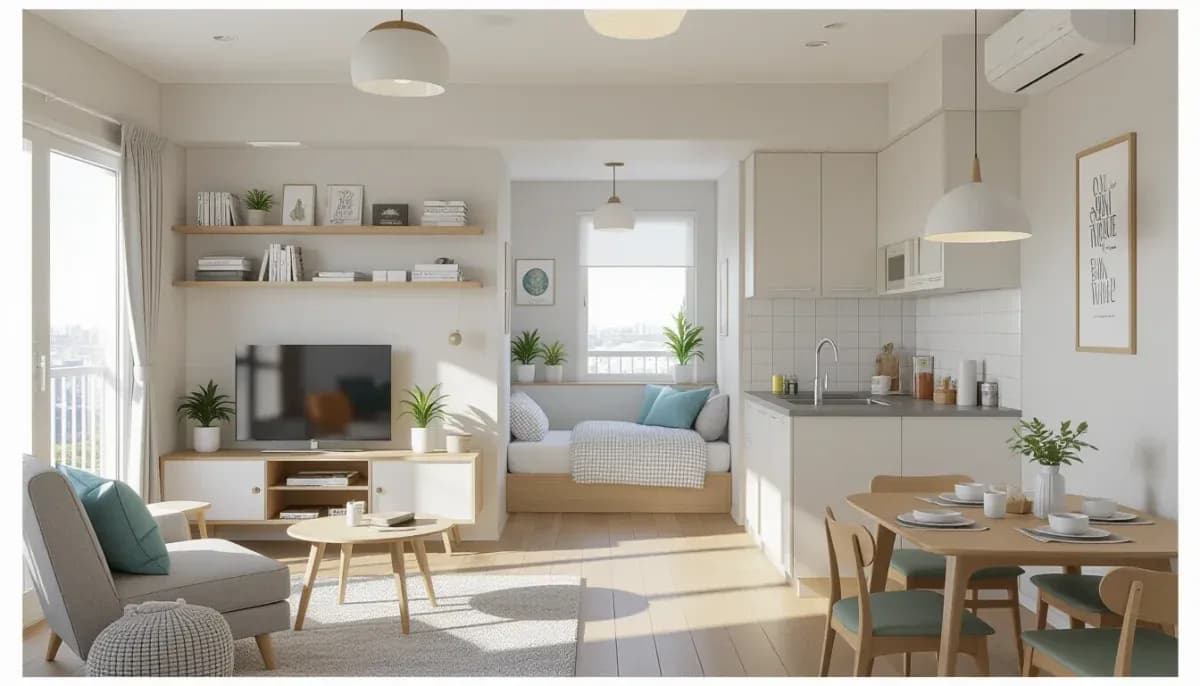
Decode Japanese apartment notation (2LDK, 3SLDK), find the right size for your family, and navigate the rental market as a foreign family in Japan. Includes cost tables, layout tips, and expat-specific advice.
Apartment Size and Layout for Families in Japan: The Complete Guide
Finding the right apartment for your family in Japan can feel overwhelming, especially when you encounter listing codes like "2LDK" or "3SLDK" without knowing what they mean. Japanese apartments have their own size standards, measurement systems, and layout conventions that differ significantly from Western norms. This guide breaks down everything foreign families need to know — from decoding room notation to finding the right size for your household and navigating the rental market as an expat.
Understanding Japanese Apartment Notation
The first thing that surprises most foreigners searching for apartments in Japan is the room notation system. Unlike Western listings that say "3-bedroom apartment," Japanese listings use a code that looks like "2LDK" or "3SLDK." Once you understand the formula, it becomes intuitive.
The code has two parts: a number and letters.
- The number = how many separate bedrooms (rooms designated primarily for sleeping/private use)
- The letters = the type and size of shared living space
Here is what the letters mean:
| Letter(s) | Full Name | Typical Size | Description |
|---|---|---|---|
| R | Room | — | Studio: one room with no separate kitchen area |
| K | Kitchen | Under 4.5 tatami | A room with just a kitchen; no separate dining space |
| DK | Dining + Kitchen | 4.5–8 tatami | Combined dining and kitchen area |
| LDK | Living + Dining + Kitchen | 8+ tatami | Open-plan living, dining, and kitchen area |
| S | Service Room | Variable | A room with no window; used as storage, study, or extra bedroom |
So a 2LDK apartment has 2 separate bedrooms plus an open living/dining/kitchen area. A 3SLDK has 3 bedrooms, a service room (often used as a home office or child's study), and an LDK.
Tatami Measurement
Room sizes in Japan are traditionally measured in tatami mats (畳/帖). One tatami mat equals approximately 1.653 m² (17.79 sq ft). A room listed as "6 tatami" is therefore about 9.9 m². The LDK area is typically measured in tatami as well — "8 LDK" means the combined living/dining/kitchen space is about 13.2 m².
Larger areas and total apartment size are often measured in tsubo (坪), where 1 tsubo = 3.3 m² (35.5 sq ft).
Recommended Apartment Sizes for Families
Japanese apartments are generally smaller than what Western expats are used to, but the layouts are often cleverly designed to maximize every square meter. Here is a practical guide to what size works for different family configurations:
| Layout | Typical Size (m²) | Best For |
|---|---|---|
| 1LDK | 35–50 m² | Couple, no children |
| 2LDK | 50–70 m² | Small family of 2–3 people |
| 2SLDK | 60–80 m² | Family of 3, extra study/storage needed |
| 3LDK | 70–90 m² | Family of 3–4 people |
| 3SLDK | 80–100 m² | Family of 4+, teenager or home office needs |
| 4LDK+ | 90 m²+ | Larger families |
According to Japan's Ministry of Land, Infrastructure, Transport and Tourism (MLIT), the minimum standard for a "healthy and civilized life" is 25 m² per person in urban areas. In reality, however, Tokyo's 23 Wards average only 19.1 m² per person — meaning only 30.4% of households in central Tokyo actually meet this minimum. Osaka averages 19.2 m² per person.
The national average dwelling size is 90.86 m² (2023 data), but this includes suburban and rural homes. Urban apartment living averages much lower.
Practical recommendation for foreign families:
- Family of 2 adults + 1 child: 2LDK minimum (50–60 m² acceptable; 65–70 m² comfortable)
- Family of 2 adults + 2 children: 3LDK strongly recommended (75–90 m²)
- Family of 2 adults + 3+ children: 4LDK or consider a house rental (mansão or ikkodate)
For more on navigating family life and housing options in Japan, see our guide on financial planning for expat families in Japan.
Room Allocation Strategies for Families in Japanese Apartments
Even a well-sized Japanese apartment requires strategic room allocation, especially as children grow. Here are practical strategies families use at different stages:
Young Children (Preschool Age)
Many Japanese families — and expat families who adapt to local norms — have young children co-sleep (ko-yasumi culture) in one bedroom with parents. This frees the second bedroom in a 2LDK to serve as a playroom, toy storage, and creative space during the day. As the child grows, this room transitions naturally into a child's bedroom.
For this stage, a 2LDK with a spacious LDK works very well. The open LDK becomes the heart of family life — play area, homework space, and family gathering point.
School-Age Children
Once children start elementary school in Japan, they often need their own study space. In a 2LDK:
- Children share one bedroom (bunk beds are very common)
- Parents use the second bedroom
- LDK table doubles as homework desk
In a 3LDK, each child can have their own room sooner, and one extra room can serve as a dedicated study or homework space.
Teenagers
By the time children reach junior high school, privacy becomes important. At this stage, a 3LDK or 3SLDK is ideal:
- Each child gets their own room
- The service room (S) can become a home office or music room
- Parents may use the LDK sofa area as their "bedroom" in smaller configurations
Key Features of Japanese Family Apartments
Japanese apartments have several distinctive design features that differ from Western homes. Understanding these helps foreign families use the space effectively:
Genkan (玄関) — The Entryway
Every Japanese apartment has a genkan — a sunken entryway where shoes are removed before stepping up into the living area. For families with children, the genkan becomes an important storage hub. Look for apartments with larger genkan spaces or built-in shoe cabinets (getabako). Some 3LDK apartments have generous genkan areas with separate storage closets nearby.
Unit Bath
Most Japanese apartments have a unit bath (ユニットバス) — a prefabricated modular bathroom unit containing the bathtub, shower, and often the toilet in one compact space. Newer or higher-end apartments may have separate toilet and bathroom areas (called toilet separate or bus/toire betsubetsu — highly valued by families). For families with young children, having the bathtub available separately from the toilet is particularly convenient.
Built-In Storage
Japanese apartments typically feature deep built-in closets (oshiire) and overhead cabinets throughout. These are essential for managing a family's belongings in smaller spaces. A 3LDK apartment might have 3–5 individual closets, a large linen cupboard, and overhead storage above entrances. When viewing apartments, always check the total storage volume — it significantly affects livability for families.
Balcony
Nearly all Japanese apartments include a balcony (ベランダ), which in Japan is primarily used for laundry drying rather than leisure. Dryers are uncommon (electricity costs are high; air-drying is culturally preferred). For a family with children, having a large balcony — or ideally two — is a significant practical advantage for keeping up with laundry.
Tatami Room
Many apartments, especially older ones, include at least one tatami room. These flexible spaces can serve as a bedroom, playroom, meditation space, or guest room. Children often love tatami rooms for playing on the floor. Note that tatami is delicate — furniture with legs can damage it, and it requires special care.
Rental Costs by Layout Type
Rental prices vary significantly by city and neighborhood. Here is a general overview of monthly rent ranges for family-appropriate layouts:
| Layout | Tokyo 23 Wards | Osaka | Nagoya | Fukuoka | Sapporo |
|---|---|---|---|---|---|
| 2LDK | ¥150,000–¥250,000 | ¥90,000–¥160,000 | ¥80,000–¥130,000 | ¥75,000–¥120,000 | ¥55,000–¥90,000 |
| 3LDK | ¥200,000–¥350,000 | ¥120,000–¥200,000 | ¥100,000–¥160,000 | ¥90,000–¥150,000 | ¥70,000–¥110,000 |
| 4LDK | ¥280,000–¥500,000+ | ¥160,000–¥280,000 | ¥130,000–¥220,000 | ¥120,000–¥200,000 | ¥90,000–¥150,000 |
Move-in costs in Japan are significant. Budget for 4–6 months of rent upfront, covering:
- Security deposit (shikikin): 1–2 months' rent
- Key money (reikin): 0–2 months' rent (less common now, but still exists)
- Agency fee: 1 month's rent + tax
- First month's rent (sometimes pro-rated)
- Lock replacement fee, fire insurance
For more detailed guidance on finding housing as a foreigner in Japan, Living in Nihon's complete housing guide covers the full rental process from search to contract.
Challenges for Foreign Families Renting in Japan
Renting a larger apartment as a foreign family comes with specific challenges beyond just cost:
Landlord Approval Process
Japanese landlords (ooya-san) can be selective. For family apartments (3LDK and above), expect scrutiny of:
- Household size and composition — who will live there
- Income verification — typically need to show income 3x the monthly rent
- Visa type and remaining validity — longer-term visas (permanent residence, spouse visa) are preferred
- Guarantor — most landlords require a Japanese guarantor or a guarantor company (保証会社) at additional cost (typically 50–100% of first month's rent)
Foreign families without permanent residence or long-term visa status can find it harder to secure larger family apartments. One practical strategy is to establish rental history with a smaller, easier-to-approve unit first, then upgrade after 1–2 years.
Furniture Compatibility
Japanese apartments use Japanese appliances (100V, specific outlet formats) and are sized for Japanese furniture. Western beds, large sofas, and oversized dining tables often do not fit well. Many expat families find it practical to buy Japanese-sized furniture or use multi-functional pieces (like Murphy beds or daybeds) to maximize space.
School Proximity
For families with children, location relative to schools matters significantly. The Japanese school system assigns children to local public schools based on address — so choosing an apartment determines which school your child attends. Before signing a lease, confirm the assigned school for your address. See our guide to elementary school in Japan for foreign parents for more on navigating the school system.
For work-focused families, For Work in Japan's family life guide provides comprehensive information on balancing housing location with school and workplace access.
New vs. Older Apartments: What Families Should Know
Japan distinguishes sharply between shinchiku (新築) — new construction — and older properties:
| Feature | New Construction | Older Apartment (築古) |
|---|---|---|
| Earthquake standards | Post-2000 new seismic standards | Pre-1981 may use old standards |
| Insulation | Good double-glazed windows | Often single-pane, poor insulation |
| Unit bath style | Separate toilet common | Combined toilet/bath common |
| Kitchen | IH or gas, modern ventilation | Older fixtures, less counter space |
| Cost | Higher rent | Lower rent, but higher utility costs |
| Storage | Ample built-ins | Variable |
| Pet/modification policies | Stricter | More flexible in some cases |
For families with young children, earthquake safety is a priority. Apartments built after 2000 meet Japan's enhanced seismic standards (新耐震基準) and offer better protection. Many newer apartment complexes (called manshon — mansion-type condos) also have elevator access, secure entry systems, and dedicated parking — all valuable for families.
Tips for Viewing Apartments with Family Needs in Mind
When you tour apartments, go beyond the surface. Here is a practical checklist for families:
- Check ceiling height: Japanese apartments often have low ceilings (~2.4m). Children's bunk beds and tall Western furniture may not fit.
- Measure doorways: Standard Japanese door widths can be narrow for large furniture.
- Test closet depth: Japanese closets are deep (useful for futon storage); check total storage volume.
- Note natural light direction: South-facing (minami muki) apartments are premium — better light and warmth for children's rooms.
- Count electrical outlets: Japanese apartments often have few outlets per room; plan for power strips.
- Ask about noise: Concrete manshon apartments are generally quieter than wood-frame apāto buildings — important for families with babies or young children.
- Check the nearest park: Most family-oriented neighborhoods have small parks (kōen) within walking distance — a major quality-of-life factor for children.
For resources on school district verification and neighborhood research, Chuukou Benkyou offers useful tools for families focused on educational environment.
Making the Most of Limited Space
Japanese families have developed sophisticated strategies for living comfortably in smaller spaces. As a foreign family, adopting some of these practices can transform your experience:
- Futon instead of beds: Frees up floor space during the day; stored in deep closets at night
- Multi-purpose furniture: Low tables (chabudai) that fold away; sofa beds; expandable dining tables
- Vertical storage: Use wall-mounted shelves and tall cabinets to maximize vertical space
- Seasonal rotation: Store seasonal items (holiday decorations, winter gear) in rotating closet storage
- Balcony organization: Use balcony storage boxes for sports equipment, strollers, and seasonal items
- Genkan hooks and shelves: Maximize the entryway for school bags, coats, and sports gear
Many expat families find that the discipline of smaller-space living has unexpected benefits — less clutter, easier cleaning, and children who naturally develop tidiness habits.
Conclusion
Finding the right apartment size and layout for your family in Japan is a balance of needs, budget, and location. A 2LDK works well for small families willing to adapt to Japanese space-efficiency culture; a 3LDK provides more comfortable separation for families with school-age children; and a 3SLDK or 4LDK suits families with teenagers or home-office needs.
Understanding the notation system, measurement conventions, and design features of Japanese apartments puts you in a much stronger position as you search. Pair this with knowledge of school districts, neighborhood amenities, and the specific approval requirements for foreign renters, and you will be well-equipped to find a home that works for your family's Japan life.
For comprehensive information on the full housing search and contract process, visit Living in Nihon's housing guide for foreigners. For guidance on family support services, benefits, and settling into life in Japan as a working family, see the For Work in Japan family life guide.
Also explore our related guides: government benefits and subsidies for families in Japan, healthcare and medical care for children in Japan, and daycare and hoikuen in Japan for foreign parents.

Originally from Vietnam, living in Japan for 16+ years. Graduated from Nagoya University, with 11 years of professional experience at Japanese and international companies. Sharing practical information for foreign parents raising children in Japan.
View Profile →Related Articles
Cost of Family Housing by Region in Japan
Compare family housing costs across Japan's major regions — Tokyo, Osaka, Fukuoka, Sapporo and more. Includes rent tables, move-in cost guide, and tips for foreign families renting in Japan.
Read more →
Safety Considerations for Family Neighborhoods in Japan
A complete guide to safety considerations for foreign families choosing neighborhoods in Japan — covering crime statistics, natural disaster risk, safest wards, and practical daily safety tips for expat families with children.
Read more →
Parks and Green Spaces Near Family Housing
Complete guide to parks and green spaces near family housing in Japan. Compare Tokyo wards, city rankings, park types, seasonal tips, and what to look for when choosing a family neighborhood with good outdoor access.
Read more →
Moving with Children Within Japan: A Practical Guide
A complete guide to moving with children within Japan for foreign families — school transfers, address change procedures, healthcare continuity, and tips for helping kids adjust emotionally to their new home.
Read more →
School Districts and How They Affect Housing Choices
Learn how Japan's school district (gakku) system works and how it affects housing choices for foreign families. Research districts, understand pricing premiums, and find the right neighborhood for your child's education.
Read more →
International Areas with Diverse Communities in Japan
Discover Japan's most international and diverse communities — from Tokyo's Shin-Okubo Korean Town to Yokohama Chinatown, Osaka's Ikuno Ward, and beyond. A complete expat guide.
Read more →