
International Areas with Diverse Communities in Japan

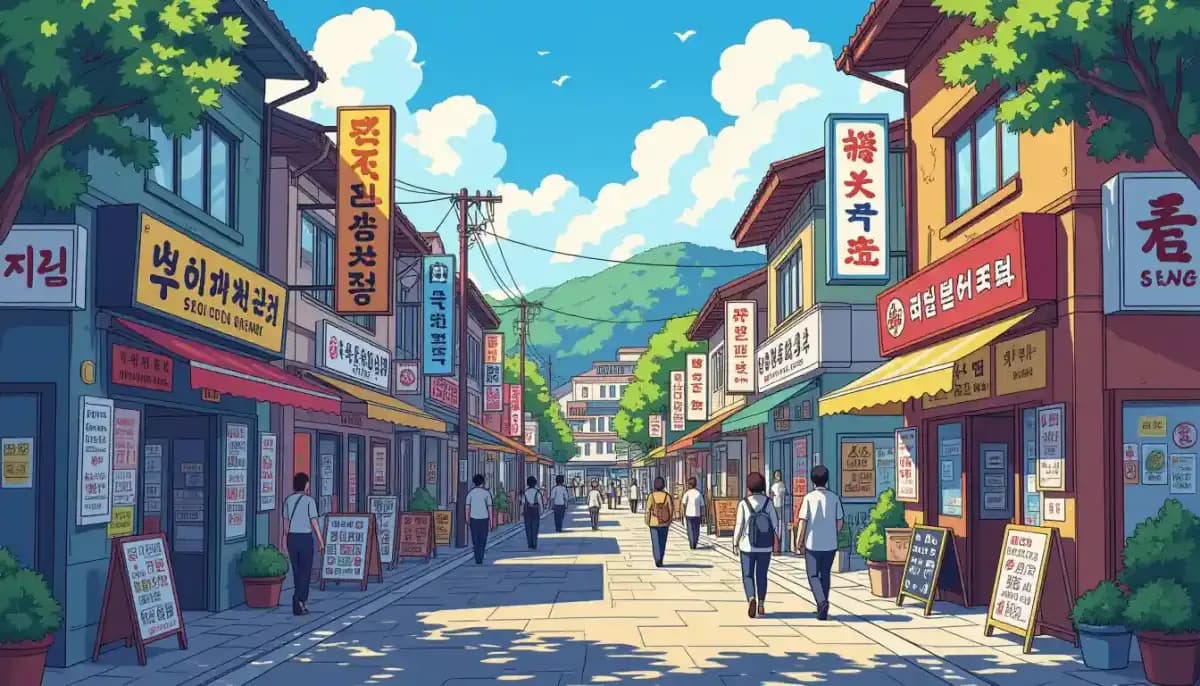
Discover Japan's most international and diverse communities — from Tokyo's Shin-Okubo Korean Town to Yokohama Chinatown, Osaka's Ikuno Ward, and beyond. A complete expat guide.
International Areas with Diverse Communities in Japan: A Complete Guide for Expats
Japan is often imagined as a culturally homogeneous country, but the reality today is far more nuanced. With nearly 3.95 million foreign residents as of mid-2025 — a 5% year-over-year increase — Japan has developed thriving international pockets in cities across the country. From Tokyo's Korean Town in Shin-Okubo to Osaka's historic Koreatown in Ikuno Ward, and from Yokohama's legendary Chinatown to Nagoya's Brazilian community hubs, Japan offers a surprisingly rich tapestry of international areas where expat families can feel at home.
This guide explores the most diverse and internationally vibrant communities in Japan, helping you find the best neighborhood for your family's needs — whether that means finding grocery stores that stock your home country's staples, connecting with other expat parents, or enrolling your children in a bilingual or international school.
Why Japan's International Communities Are Growing
Japan's foreign resident population has surged dramatically over the past decade. The foreign population grew 43.6% from 2015 to 2020, and that momentum has continued. Today, approximately 1 in every 31 residents of Japan is a foreign national — a proportion that is significantly higher in major urban areas.
Several factors are driving this growth:
- Labor shortages in manufacturing, agriculture, and services have brought large numbers of workers from Vietnam, the Philippines, and Brazil.
- International business continues to attract Western and East Asian professionals to Tokyo, Osaka, and Nagoya.
- Education and cultural exchange bring students and researchers from across Asia and the world.
- Family formation means more children are growing up in Japan as part of international families.
For expat families especially, this means that the communities supporting foreign-born children — schools, cultural groups, and multilingual services — have never been stronger.
| Prefecture | Foreign Residents (2024 est.) | Foreign % Growth | Key Nationalities |
|---|---|---|---|
| Tokyo | 580,000+ | 4.5% | Chinese, Korean, Vietnamese, Filipino |
| Aichi | 230,000+ | 5.2% | Brazilian, Vietnamese, Chinese |
| Osaka | 220,000+ | 8.0% | Korean, Chinese, Vietnamese |
| Kanagawa | 190,000+ | 4.8% | Chinese, Korean, Filipino |
| Saitama | 160,000+ | 5.1% | Vietnamese, Chinese, Korean |
| Chiba | 140,000+ | 6.9% | Chinese, Vietnamese, Filipino |
Osaka Prefecture stands out with the highest growth rate at 8.0%, while Chiba is close behind at 6.9%, making these regions increasingly attractive for expat families.
Tokyo's International Neighborhoods: From Shin-Okubo to Nishi-Kasai
Tokyo is home to the largest concentration of foreign residents in Japan, with over 580,000 foreigners living across its 23 wards. Different wards have developed distinct international characters based on the communities that have settled there.
Shinjuku Ward and Shin-Okubo (Korean Town)
Shinjuku Ward tops the rankings with approximately 44,000 foreign residents — roughly 13% of the total ward population. At the heart of this international community is Shin-Okubo, Tokyo's famous Korean Town.
Shin-Okubo is a sensory feast of Korean restaurants, K-pop merchandise stores, Korean cosmetics shops, and beauty salons. Beyond the commercial street scene, the area also hosts a genuine residential Korean community, making it a go-to for Korean expat families looking for a sense of home. The ward also has growing Chinese, Vietnamese, and Southeast Asian populations, making it one of the most genuinely multicultural areas in Japan.
If you have children, Shinjuku Ward offers several multilingual services through the Shinjuku City international support office, and there are Japanese language classes designed for foreign residents. This makes it a practical base for expat families navigating life in Japan. For more on building your community network as a foreigner in Japan, Living in Nihon has excellent resources.
Edogawa Ward and Nishi-Kasai (Little India)
Edogawa Ward has the second-highest foreign resident count in Tokyo with approximately 43,000 foreigners. Within the ward, the Nishi-Kasai neighborhood has earned the nickname "Little India" thanks to its large Indian community, which began settling here in the 1980s and 1990s as Indian tech workers arrived in Japan.
Nishi-Kasai is home to Indian restaurants, grocery stores stocking spices and imported goods, and cultural organizations. Several Indian families have established roots here over generations, making it a tight-knit community. The area is particularly popular with Indian IT professionals working at Tokyo tech companies.
Minato Ward: Roppongi, Azabu, and Hiroo (The Western Expat Hub)
If Shin-Okubo is Tokyo's Asian international hub, then Minato Ward is its Western counterpart. The cluster of neighborhoods including Roppongi, Azabu-Juban, and Hiroo is the classic base for Western diplomats, finance professionals, and executives — often described as "expat central."
This area has a high concentration of:
- Foreign embassies and consulates
- International schools (including the prestigious Tokyo American School and British School in Tokyo)
- English-speaking doctors and clinics
- Foreign-friendly real estate agents
- International restaurants and grocery stores
If your family includes school-age children and prioritizing an international school education in Japan is important to you, Minato Ward's access to top international schools makes it a premium choice — at premium rent prices.
Kagurazaka (Little Paris)
Hidden within Shinjuku Ward is Kagurazaka, a charming neighborhood that houses one of the largest French expatriate communities in Tokyo. With French restaurants, a French-language school (Lycée Franco-Japonais de Tokyo), and even French bakeries, Kagurazaka has earned the nickname "Tokyo's Little Paris." It's a wonderful example of how organic cultural communities can form in unlikely corners of Japan's cities.
Osaka's International Districts: Ikuno Ward and Tsuruhashi Koreatown
Osaka has a uniquely deep history with international communities, especially Korean residents who have been part of the city for generations. Today, Osaka's foreign resident population is growing rapidly, with an 8% growth rate — the highest of any prefecture in Japan.
Ikuno Ward: Japan's Most Internationally Diverse Ward
Ikuno Ward holds a remarkable distinction: it has the highest foreign resident concentration of any ward in Japan at 21.8% of its total population. More than one in five residents of Ikuno Ward was born outside Japan.
The ward's international character is rooted in its long history as home to the Zainichi Korean community — Koreans who settled in Japan during the colonial era and their descendants. Today, Ikuno is also home to growing Chinese, Vietnamese, and Southeast Asian communities.
The Tsuruhashi market area is Ikuno's commercial heart — a sprawling, atmospheric market famous for Korean food, Korean-style barbecue restaurants, and Korean goods. It's often called Osaka's Koreatown and is distinct from Tokyo's Shin-Okubo, with a more historic, long-established community feel.
For expat families considering Osaka, Ikuno Ward's diversity means multilingual support services are well-developed, and there's a genuine sense of multicultural community life. See the regional foreigner communities and support groups guide from For Work in Japan for detailed information on community resources.
Namba and Southern Osaka's International Zones
South of Shinsaibashi and into the Namba entertainment district, Osaka's international character blends with its role as a major tourism destination. International restaurants, multilingual signage, and cultural diversity are woven into the commercial fabric of the area. Naniwa Ward, adjacent to the Namba area, ranks 5th highest in Japan for foreign resident concentration.
Yokohama: Chinatown and Japan's International Port City
No guide to Japan's international communities is complete without Yokohama, Japan's second-largest city by population and historically one of its most internationally connected ports.
Yokohama Chinatown
Yokohama's Chinatown is described as the largest Chinatown in the world — a dense, vibrant neighborhood of Chinese restaurants, herbal medicine shops, dim sum parlors, and cultural associations. The community has roots dating back to the mid-19th century when Japan opened its ports to foreign trade, and Chinese merchants established trading businesses here.
Today, Yokohama Chinatown draws millions of visitors annually and serves as an important cultural anchor for Chinese residents throughout the Kanto region. The Lunar New Year celebrations here are spectacular and are one of the most vivid multicultural events in all of Japan.
Yokohama is an excellent base for expat families in the Kanto region who want proximity to Tokyo's job market while enjoying a slightly slower pace, lower rents, and access to a genuinely international city environment. Kanagawa Prefecture as a whole ranks 4th nationally for foreign residents.
Nagoya and Aichi: Japan's Brazilian Community Hub
Aichi Prefecture has the second-largest foreign resident population in Japan, with approximately 230,000 foreigners in 2024. The region's international character is defined primarily by its large Brazilian community — descendants of Japanese emigrants (called Nikkei) who returned to Japan to work in the manufacturing sector, particularly at Toyota and its extensive network of suppliers.
Cities like Toyota, Toyohashi, Okazaki, and Komaki have large Brazilian populations, with Brazilian Portuguese signage, Brazilian grocery stores, Catholic churches holding Portuguese-language services, and community organizations providing legal and social support.
The Nagoya International Center is a key resource in the region, providing multilingual information and services to foreign residents in Aichi, Gifu, and Mie prefectures. The manufacturing corridor of Aichi is also home to significant Vietnamese and Chinese communities, making it one of Japan's most internationally diverse regions outside of Tokyo.
Small Towns with Surprising International Diversity
Japan's international communities are not limited to major cities. Several smaller towns have become notable for their high concentrations of foreign residents:
Oizumicho, Gunma
Oizumicho has one of the highest foreign resident ratios in Japan at 18.4% of its population. Located in Gunma Prefecture north of Tokyo, this small town became a Brazilian enclave in the 1980s and 1990s when Nikkei Brazilians came to work in local factories. Today, Oizumicho has Brazilian restaurants, Portuguese-language services, and a Brazilian cultural community that has persisted across generations.
Hamamatsu, Shizuoka
Hamamatsu is often cited as a model city for multicultural coexistence in Japan. With large Brazilian and Filipino communities, as well as growing Vietnamese and Chinese populations, Hamamatsu has invested significantly in multilingual city services, foreign-language public education support, and community integration programs. Its approach is frequently studied by other Japanese municipalities.
Niseko and Kutchan, Hokkaido
In a completely different vein, the ski resort towns of Niseko and Kutchan in Hokkaido have foreign resident populations that exceed 10% of the local population — largely driven by Australian, Canadian, and New Zealand nationals who arrived as ski instructors and stayed to build lives and businesses. This has created a unique English-speaking enclave in rural Hokkaido with English-friendly restaurants, real estate services, and community networks.
Resources and Support for Expat Families in International Areas
Wherever you settle in Japan, knowing where to find community support is essential — especially if you are raising children in a bilingual or multicultural household.
National organizations:
- CLAIR (Council of Local Authorities for International Relations): Maintains a nationwide database of support organizations for foreign residents
- MINNA (Minna no Gaikokujin Network): Information access and system navigation support for foreigners
Community platforms:
- InterNations Tokyo: 4,000+ members from 50+ countries
- Tokyo American Club: 3,500+ members
- Facebook Groups: Groups like "Tokyo Expat Network" have 30,000+ members
- Meetup: Active daily events across major cities
- HelloTalk and Tandem: For language exchange and local connections
For parents specifically, connecting with the expat parent community in your area can make an enormous difference in navigating everything from finding the right daycare or hoikuen to understanding how the Japanese school system works for your child.
The website Chuukou Benkyou also provides useful information for families whose children may eventually need to navigate returnee (kikokushijo) admission pathways for Japanese middle and high schools.
Choosing the Right International Area for Your Family
When choosing where to live in Japan as an expat family, consider these factors:
| Priority | Best Area |
|---|---|
| Western expat community, international schools | Minato Ward (Azabu, Roppongi, Hiroo), Tokyo |
| Korean community, vibrant multicultural scene | Shin-Okubo (Shinjuku Ward), Tokyo |
| Indian community | Nishi-Kasai (Edogawa Ward), Tokyo |
| French community | Kagurazaka (Shinjuku Ward), Tokyo |
| Historic multicultural community, Osaka | Ikuno Ward / Tsuruhashi, Osaka |
| Chinese cultural hub | Yokohama Chinatown, Kanagawa |
| Brazilian community, manufacturing region | Toyota / Toyohashi area, Aichi |
| Resort town, English-speaking | Niseko / Kutchan, Hokkaido |
For families with children, also consider the guide to international schools in Japan and the benefits of raising bilingual children in Japan, as school access often shapes the final decision about where to live.
You can also find detailed neighborhood-by-neighborhood analysis of where expats live in Tokyo at E-Housing's guide to expat neighborhoods, and current foreign population data at RealGaijin's foreign resident statistics.
Conclusion
Japan's international communities are vibrant, growing, and more welcoming than ever. Whether you gravitate toward the lively Korean scene in Shin-Okubo, the historic Chinese community of Yokohama Chinatown, the deeply diverse streets of Osaka's Ikuno Ward, or the expat-polished neighborhoods of Tokyo's Minato Ward, there is a community in Japan that can feel like home.
As Japan's foreign resident population continues to grow toward 4 million and beyond, the infrastructure supporting expat families — from multilingual city services to international schools to community networks — continues to improve. For families raising children in Japan, finding the right international community can make all the difference in building a fulfilling, connected life in this extraordinary country.
For broader community building tips and networking resources, Living in Nihon's complete foreigner communities guide is an excellent starting point.

Originally from Vietnam, living in Japan for 16+ years. Graduated from Nagoya University, with 11 years of professional experience at Japanese and international companies. Sharing practical information for foreign parents raising children in Japan.
View Profile →Related Articles
Cost of Family Housing by Region in Japan
Compare family housing costs across Japan's major regions — Tokyo, Osaka, Fukuoka, Sapporo and more. Includes rent tables, move-in cost guide, and tips for foreign families renting in Japan.
Read more →
Safety Considerations for Family Neighborhoods in Japan
A complete guide to safety considerations for foreign families choosing neighborhoods in Japan — covering crime statistics, natural disaster risk, safest wards, and practical daily safety tips for expat families with children.
Read more →
Parks and Green Spaces Near Family Housing
Complete guide to parks and green spaces near family housing in Japan. Compare Tokyo wards, city rankings, park types, seasonal tips, and what to look for when choosing a family neighborhood with good outdoor access.
Read more →
Moving with Children Within Japan: A Practical Guide
A complete guide to moving with children within Japan for foreign families — school transfers, address change procedures, healthcare continuity, and tips for helping kids adjust emotionally to their new home.
Read more →
School Districts and How They Affect Housing Choices
Learn how Japan's school district (gakku) system works and how it affects housing choices for foreign families. Research districts, understand pricing premiums, and find the right neighborhood for your child's education.
Read more →
Family-Friendly Housing Features to Look for in Japan
Looking for family-friendly housing in Japan? Learn what features matter most—3LDK layouts, earthquake safety, school proximity, UR public housing, and practical tips for foreign families renting in Japan.
Read more →