
School Districts and How They Affect Housing Choices

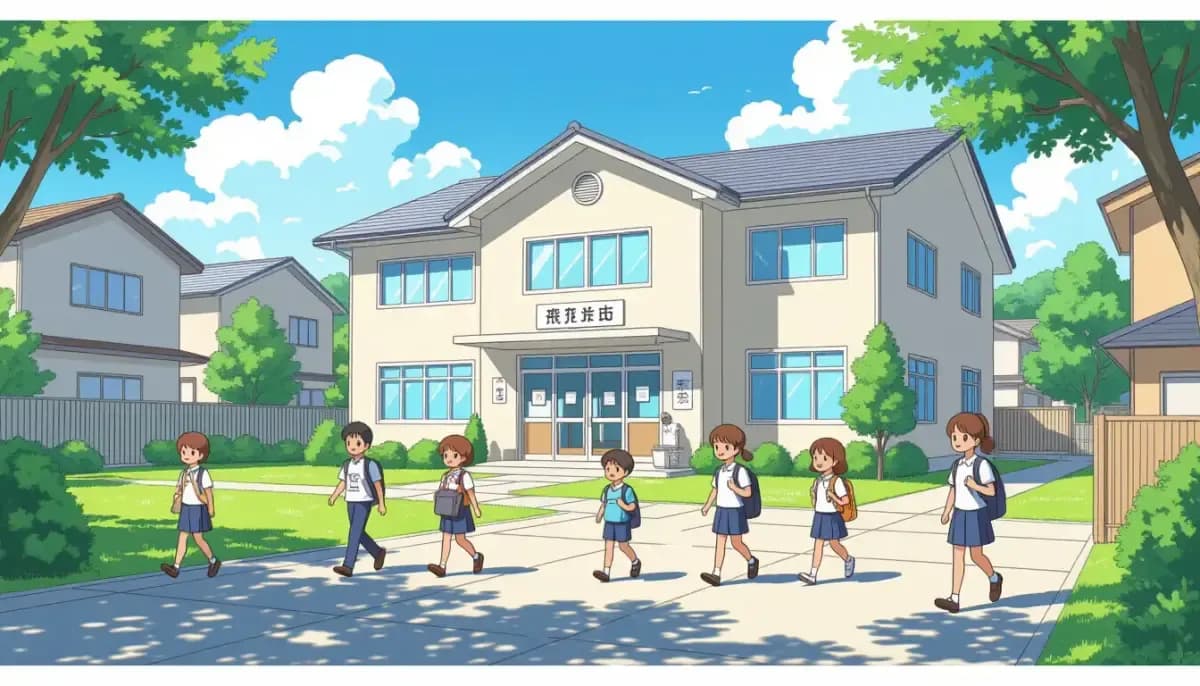
Learn how Japan's school district (gakku) system works and how it affects housing choices for foreign families. Research districts, understand pricing premiums, and find the right neighborhood for your child's education.
School Districts and How They Affect Housing Choices in Japan
Choosing where to live in Japan as a foreign family is rarely just about rent prices or commute times. For parents with school-age children, one of the most critical — and often misunderstood — factors is the school district system (学区, gakku). In Japan, your home address determines which public elementary and junior high school your child is automatically assigned to, and this single factor can shape your neighborhood options, your monthly budget, and your child's entire educational experience.
This guide explains how Japan's school district system works, how to research districts before signing a lease, and how school zones are influencing housing prices across Japanese cities — with practical tips for foreign families navigating this system for the first time.
What Is a School District (Gakku) in Japan?
A school district (gakku, 学区) is a geographic zone defined by each municipality's board of education. Every public elementary school (shōgakkō, 小学校) and public junior high school (chūgakkō, 中学校) in Japan is assigned a catchment area. If you live within that area, your child is automatically enrolled in the designated school — free of charge.
Key facts about the gakku system:
- School districts are set by local municipal boards, not the national government — meaning rules and boundaries vary significantly between cities, wards, and towns.
- Only public schools are bound by district rules. National schools, private schools, and international schools have their own admissions processes.
- Elementary schools are typically placed within walking distance (around 15–20 minutes on foot).
- Junior high schools are placed within a short cycling distance.
- District boundaries are officially published on municipal government websites, but third-party information may be outdated — always verify with the local city or ward office (shiyakusho/kuyakusho).
For foreign families considering Japanese public schools, understanding the gakku before you sign a lease is essential. Once you register your address at the local office, your child's school assignment is largely automatic.
For a broader overview of how the Japanese education system works from a foreigner's perspective, see our Complete Guide to the Japanese Education System for Foreign Families.
How School Districts Affect Housing Prices
The relationship between school district quality and housing prices in Japan is well-documented by academic research and visible in real estate listings.
Research findings on school quality and housing costs:
A study on Matsue City found that a one standard deviation improvement in school test scores corresponds to a 2.0–2.7% increase in housing sale prices and a 0.4–0.6% increase in rents for family-oriented apartments. Critically, this premium was found only for family-sized units — not single-person apartments — confirming that parents specifically seek and pay for better school districts.
In Osaka City, an experiment abolishing school district zoning actually increased the education rent premium rather than reducing it. Researchers concluded that when school choice was freed up but capacity remained limited, neighborhood prestige signals intensified rather than weakened.
Popular school districts in Tokyo:
Tokyo's most sought-after school districts command measurably higher real estate prices. The most competitive zones cluster around:
| Ward | Noted Schools/Clusters | General Cost Level |
|---|---|---|
| Bunkyo-ku | "3S1K" cluster (Seishin, Seiwa, Sendagi, Kasuga) | High |
| Minato-ku | Multiple prestigious elementary schools | Very High |
| Chuo-ku | Central location, popular with families | High |
| Chiyoda-ku | Near national institutions | Very High |
| Meguro-ku | Mix of popular public and international options | High |
| Shibuya-ku | Diverse school options, international community | High |
| Setagaya-ku | Large ward, multiple excellent public schools | Moderate–High |
These wards offer schools known for high advancement rates to competitive private or national junior high schools, specialized curricula (English immersion, programming), and strong community reputations. Demand consistently outstrips supply for both rental and purchase properties near the most popular schools.
For more on the financial side of raising children in Japan, see our guide on Financial Planning for Expat Families Raising Children in Japan.
The School Choice System: Is There Flexibility?
Some municipalities in Japan operate a school choice system (gakkou sentaku sei, 学校選択制) that allows families to request enrollment in a school outside their designated district. However, this system is not universal — availability depends entirely on your local municipality.
How school choice typically works:
- You submit a preference form during the enrollment period (usually October–December for the following April school year).
- Priority is typically given to siblings already enrolled or children with special circumstances.
- Selection is often limited to adjacent districts only, not any school citywide.
- Schools are not required to accept all applicants — if a school is oversubscribed, selection may involve a lottery.
- Approved transfers require annual renewal in some areas.
Even where school choice exists, popular schools fill up quickly and rejection is common. The system is also generally intended for domestic applicants — foreign families should confirm whether they are eligible to participate at the local board of education office.
Residency at a specific address remains the most reliable guarantee of enrollment in a particular school.
How to Research School Districts Before Renting or Buying
Before committing to a property in Japan, here is a step-by-step approach for researching school districts:
Step 1: Identify the designated school for the address
Contact the local city or ward office and ask which elementary and junior high school is assigned to the specific address you are considering. You can also check the municipal board of education's website, which typically has a searchable map or address lookup tool.
Step 2: Research the school's reputation and programs
Look up the school on:
- The municipal education board's school profile pages
- Parent community forums (Facebook groups for foreign parents in Japan are excellent for firsthand experiences)
- Information about available support for foreign students, including Japanese as a Second Language (JSL) instruction
Step 3: Visit the school if possible
Many Japanese schools welcome prospective parent visits, especially at elementary level. Contact the school office (jimu-shitsu) to request a tour or ask about open school days (koukai jugyou).
Step 4: Confirm boundary precision
District boundaries in Japan can be very precise — in dense urban areas, a single city block or even one side of a street may belong to a different district. Confirm the exact address against the official boundary map before signing.
Step 5: Ask about foreign student support
Given that 41.5% of foreign public school students in Japan require Japanese language support, it is worth asking specifically what resources the school provides for children who are not yet fluent in Japanese. Support varies enormously between schools and municipalities.
For a detailed guide on enrolling your child in Japanese elementary school, visit our Elementary School in Japan: A Complete Guide for Foreign Parents.
Foreign Families and the Gakku System: Special Considerations
Foreign families face some unique challenges when navigating school districts in Japan.
Enrollment rights:
Japan's compulsory education laws technically apply to Japanese nationals. However, foreign children residing in Japan are generally welcome and often encouraged to enroll in the local public school. Since 2019, municipalities have been required to provide information about schooling options to foreign families. According to recent data, foreign student enrollment in Japanese public schools reached 114,853 students, representing a 23.3% year-over-year increase.
Still, around 20,000 foreign children remain unenrolled or without confirmed school status — a situation often linked to language barriers in navigating the enrollment process.
Language support:
The top language groups requiring JSL support include Portuguese, Chinese, and Filipino. If your child's first language falls within a supported group, large urban schools may have dedicated staff. In rural areas, support may be limited or nonexistent — making the school district choice even more consequential for non-Japanese-speaking children.
For strategies on helping your child develop Japanese language skills, see our guide on Teaching Japanese to Foreign Children: Methods and Resources.
Alternative school options:
If the designated public school is not appropriate for your family — due to language barriers, curriculum, or religious preferences — you have several options:
| School Type | Cost | Language | Notes |
|---|---|---|---|
| Public (gakku) school | Free | Japanese | Assigned by district; support varies |
| National university-affiliated school | Free (competitive entry) | Japanese | High academic standards; lottery/exam entry |
| Private Japanese school | ~500,000–1,500,000 yen/year | Japanese | No district restrictions |
| International school | ~2,000,000–3,000,000 yen/year | English/other | No district restrictions; does not satisfy compulsory ed. |
For families considering international schools, our International Schools in Japan: The Definitive Guide covers costs, accreditation, and how to choose the right fit.
Practical Tips for Choosing a Neighborhood Based on School Districts
1. Prioritize your school research before your neighborhood search. Rather than finding a neighborhood you like and then checking its school, reverse the process: identify schools that suit your child, then search for housing within those districts.
2. Use a real estate agent who specializes in expat families. Some agencies in major cities like Tokyo, Osaka, and Yokohama have staff experienced in explaining school districts to foreign clients. Ask specifically about gakku when viewing properties.
3. Budget for the premium. If you are targeting a popular school district in Tokyo or another major city, expect to pay a meaningful premium — often 10–20% above comparable properties in less sought-after zones.
4. Consider proximity to support services. Beyond the school itself, look for neighborhoods with international community centers, multilingual government support services, and other foreign families. These resources can make the difference in your child's social integration.
5. Factor in the commute to work. Popular school districts in Tokyo tend to cluster in central wards, which often means higher costs and longer commutes for families working in outer areas. Balance school quality with overall family quality of life.
6. Plan for junior high school too. Elementary and junior high school districts are defined separately. Before choosing a neighborhood based on an elementary school, also research the designated junior high school — you may need to stay in the same area for six or more years.
For more on raising children across different life stages in Japan, our guide on Junior High School in Japan: Guide for Foreign Families covers what to expect at the next level.
Resources and Further Reading
Understanding the Japanese school district system takes time, and the rules vary by municipality. Here are reliable resources to consult:
- Living in Nihon: Raising Children and Education in Japan for Foreigners — A comprehensive guide covering education choices, bilingual strategies, and what to expect from Japanese schools as a foreign parent.
- For Work in Japan: Family Life in Japan for Foreigners — Covers the broader context of family life for expats in Japan, including school cost comparisons and practical considerations.
- Chuukou Benkyou: Middle and High School Exam Preparation — Specialized resource for families whose children are preparing for private or national junior high and high school entrance exams — relevant if you want to move beyond your public gakku assignment.
- Japan Living Guide: School Districts Explained — A practical explanation of how the gakku system works for residents.
- PLAZA HOMES: Popular Public Elementary Schools in Tokyo — Real estate perspective on which Tokyo school districts drive housing premiums.
- Japan Times: Lessons About Japan's School Catchment Areas — Insight into how Japanese families navigate and feel about the catchment system.
Conclusion
School districts are one of the most powerful and often underestimated forces shaping housing decisions for families in Japan. The gakku system ties your child's public school assignment directly to your home address — and the quality and fit of that school can make a profound difference in your child's academic experience, language development, and social integration.
For foreign families, the stakes are even higher. Finding a district where your child will receive adequate Japanese language support, where the school community is welcoming, and where the overall environment suits your family's values is worth the extra research time before you sign a lease.
Start your school research before your property search, verify boundaries precisely, visit schools in person where possible, and consult with other expat families in your target neighborhoods. The right school district is not just about test scores — it is about finding a community where your child can thrive.
See also our related guides:

Originally from Vietnam, living in Japan for 16+ years. Graduated from Nagoya University, with 11 years of professional experience at Japanese and international companies. Sharing practical information for foreign parents raising children in Japan.
View Profile →Related Articles
Cost of Family Housing by Region in Japan
Compare family housing costs across Japan's major regions — Tokyo, Osaka, Fukuoka, Sapporo and more. Includes rent tables, move-in cost guide, and tips for foreign families renting in Japan.
Read more →
Safety Considerations for Family Neighborhoods in Japan
A complete guide to safety considerations for foreign families choosing neighborhoods in Japan — covering crime statistics, natural disaster risk, safest wards, and practical daily safety tips for expat families with children.
Read more →
Parks and Green Spaces Near Family Housing
Complete guide to parks and green spaces near family housing in Japan. Compare Tokyo wards, city rankings, park types, seasonal tips, and what to look for when choosing a family neighborhood with good outdoor access.
Read more →
Moving with Children Within Japan: A Practical Guide
A complete guide to moving with children within Japan for foreign families — school transfers, address change procedures, healthcare continuity, and tips for helping kids adjust emotionally to their new home.
Read more →
International Areas with Diverse Communities in Japan
Discover Japan's most international and diverse communities — from Tokyo's Shin-Okubo Korean Town to Yokohama Chinatown, Osaka's Ikuno Ward, and beyond. A complete expat guide.
Read more →
Family-Friendly Housing Features to Look for in Japan
Looking for family-friendly housing in Japan? Learn what features matter most—3LDK layouts, earthquake safety, school proximity, UR public housing, and practical tips for foreign families renting in Japan.
Read more →