
Moving with Children Within Japan: A Practical Guide

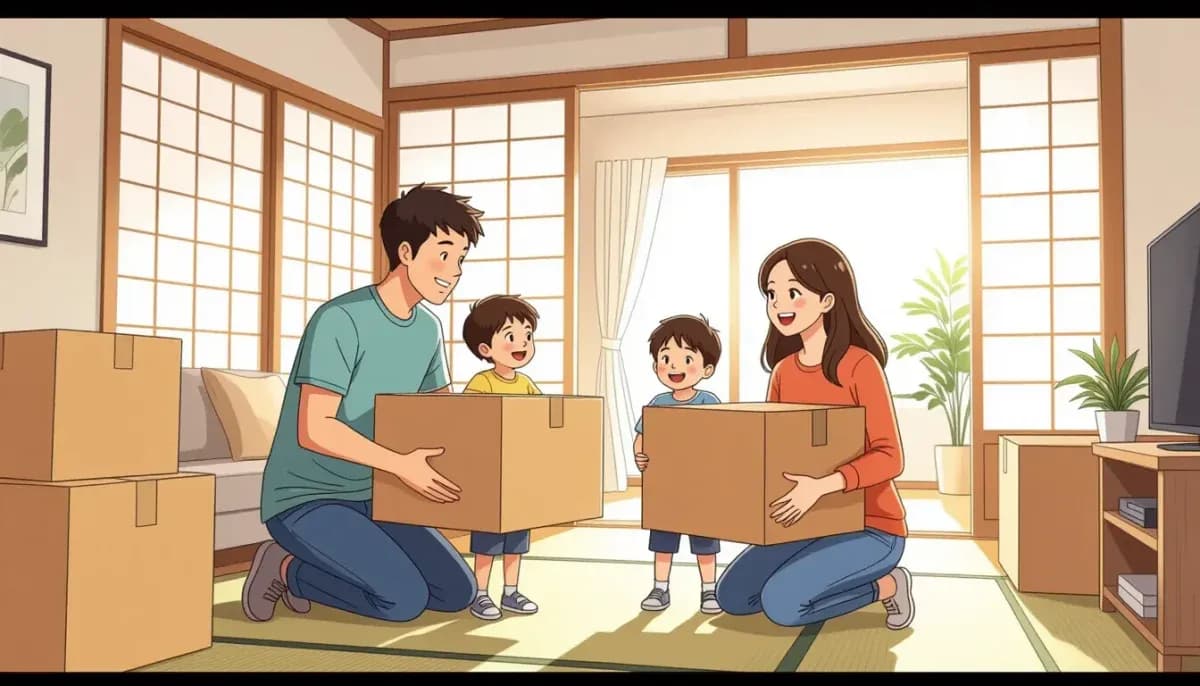
A complete guide to moving with children within Japan for foreign families — school transfers, address change procedures, healthcare continuity, and tips for helping kids adjust emotionally to their new home.
Moving with Children Within Japan: A Practical Guide
Relocating within Japan with children is a major life event that goes far beyond packing boxes and hiring a moving truck. Whether you are an expat family transferring cities for work or a foreign resident looking for a better neighborhood, moving domestically with kids involves coordinating school transfers, healthcare re-registration, address changes at the ward office, and — perhaps most importantly — helping your children emotionally adjust to a new home and new friends.
This guide walks you through every key step of moving with children within Japan, from the administrative paperwork to the practical tips that make the transition smoother for the whole family. It is written specifically for foreign residents navigating Japan's systems in a language they may not be fully fluent in.
Understanding the Timeline: When to Start Planning
The first step in a successful domestic relocation with children is giving yourself enough lead time. Japan's school year runs from April to March, with grade placements based on the child's age as of April 1. If you are moving mid-year, school transfers are still possible, but the bureaucratic steps differ slightly depending on the season.
Recommended planning timeline:
- 3–6 months before moving: Research schools in the new area, visit if possible, and notify your child's current school
- 1–2 months before: Submit transfer paperwork to your current school; contact the new school or municipal board of education
- 2–4 weeks before: Notify ward office of upcoming move; arrange mail forwarding via Japan Post
- Moving week: Complete address change registration at the new ward office; re-enroll child in school
- 1–2 weeks after: Update health insurance, pension records, bank accounts, and any government benefit registrations
Foreign residents with children should note that Japan's Ministry of Education survey (released October 2025) found that as of May 2024, 8,432 foreign children of elementary and junior high school age were not enrolled in any form of education — a number that highlights the importance of proactive school enrollment during any move.
For detailed information on Japan's education structure and how to navigate it as a foreign parent, see our guide to the Japanese education system for foreign families.
School Transfer Procedures: Elementary and Junior High
Public elementary and junior high school enrollment in Japan is managed at the municipal level. When moving within the same city or ward, the process is relatively straightforward. Moving to a different city or prefecture requires more steps.
Step-by-Step: School Transfer Process
Step 1 — Obtain a Transfer Certificate (転学通知書, tenkan tsūchisho) Request this from your child's current school before moving. This document confirms your child's grade level, curriculum standing, and records. Keep it safe — the new school will need it.
Step 2 — Deregister at the current ward office When you submit your change-of-address notification (住民票 removal) at your current ward office, you will also receive documentation about your child's school enrollment status.
Step 3 — Register at the new address Within 14 days of moving, you must register your new address at the new ward office (区役所 / 市役所). Bring your residence card, passport, and transfer certificate. Staff will issue a notice directing you to the assigned public school.
Step 4 — Contact the new school Bring the transfer certificate and enrollment notice to the new school's administrative office. Depending on the school, this may require an initial meeting with the head teacher (担任の先生) and, if your child has limited Japanese, the school may arrange for JSL (Japanese as a Second Language) support.
As of the latest government data, 114,853 foreign students are enrolled in Japanese public schools — a 23.3% year-over-year increase. Approximately 41.5% of these students require dedicated Japanese language instruction. Most schools have some experience accommodating foreign-origin students, but the level of support varies significantly by region.
For a deep dive on what to expect at Japanese public schools as a foreign family, read our elementary school guide for foreign parents.
High School and International School Options When Relocating
Moving with older children adds complexity, especially if your teenager is enrolled in a high school with specialized courses or an international school with its own admissions process.
For Japanese public high schools: Students must re-enter the admissions process in the new prefecture. Some prefectures allow mid-year transfers; others require students to wait until the new academic year. Japan's high school graduation rate is 98.7% (2022) and enrollment rate 98.8% (2020), reflecting a highly structured system where disruption to the timeline can have significant consequences.
For international schools: Contact the admissions office of prospective schools well in advance. International school availability varies dramatically by city — Tokyo and Osaka have dozens of options, while rural areas may have none.
Special admissions pathways: Students who have spent 12 or more years in overseas education may qualify for special international admissions (帰国子女枠, kikokushijo waku) at some Japanese high schools and universities, which may allow for more flexible entry requirements.
For full coverage of high school options, see our high school guide for foreign families in Japan and our international schools guide.
| School Type | Pros | Cons | Cost (Annual) |
|---|---|---|---|
| Japanese public elementary | Free, local integration, friends nearby | Language barrier, curriculum mismatch on return | Free |
| Japanese public junior high | Free, structured, high graduation rates | Limited English support, intensive homework culture | Free |
| International school (K-12) | Curriculum continuity, English instruction | Expensive, less local integration | ¥1M–¥4M+ |
| International school (IB/AP) | University prep, bilingual environment | Highly competitive, long commutes possible | ¥2M–¥5M+ |
| Japanese private school | Structured programs, often better facilities | Entrance exams, Japanese language required | ¥500K–¥2M |
Administrative Checklist: What to Update When You Move
Moving within Japan generates a significant administrative workload, and foreign residents face additional layers since many forms are only available in Japanese. Here is a consolidated checklist:
Address Change Notifications Required
- Ward/municipal office (区役所・市役所): Register new address within 14 days; update residence card; update My Number (マイナンバー) card if applicable
- Health insurance: If on national health insurance (国民健康保険), notify the new ward office and re-enroll; company health insurance holders should notify HR
- Pension: Update your pension address at the ward office pension counter (年金窓口)
- Japan Post mail forwarding: Submit a forwarding request online or at any post office — the service is free for the first year and typically activates within one week
- Bank accounts: Visit each bank branch or update online; ATM cards often need a new address registered
- Utilities: Electricity, gas, and water each require separate notification — mostly Japanese only; start requests at least 2–4 weeks ahead
- Immigration: Your residence card address must be updated within 14 days; foreign residents are legally required to report address changes
For Families with Children: Additional Steps
- School transfer documents (see above)
- Child medical subsidy re-registration (子ども医療費助成制度) — Japan's Free Medical Care Certificate covers children's 30% co-pay until age 15 (age varies by municipality); you must re-apply in the new area
- Nursery/daycare transfer: Hoikuen slots are municipality-allocated; submit a new application immediately since wait times can be long
- Vaccination records: Bring your child's vaccination booklet (母子手帳) to the new ward office to register for local immunization programs
For information on daycare and hoikuen enrollment, see our guide to daycare and hoikuen in Japan.
Helping Your Children Adjust Emotionally
The administrative side of moving is manageable — the emotional side requires more patience. Children, especially those in elementary and junior high school years, often struggle with leaving behind friends and adjusting to new classmates. Foreign-origin children face the added challenge of language and cultural adjustment simultaneously.
Practical strategies that work:
Walk the new neighborhood together before moving day. Let your child explore the local park, convenience store, and school route. Familiarity with the environment reduces anxiety on the first day.
Involve children in the move itself. Letting children pack their own belongings, decorate their moving boxes with stickers and markers, or choose which room they want (if possible) gives them a sense of control and ownership over the change.
Establish routines quickly. Children thrive on predictability. Re-establish dinner times, bedtimes, and weekend activities as soon as possible in the new home.
Connect with local communities. Foreigner-friendly parent groups, international community associations, and PTA meetings (even with limited Japanese) are excellent entry points into the new neighborhood's social fabric.
Acknowledge the grief of leaving. Children often feel genuine loss when leaving friends. Validate those feelings rather than rushing past them. Plan a farewell event with old friends before the move and set up video calls for the weeks following.
Research shows that immigrant students in Japan are 1.8 times more likely to switch schools frequently (2022 data), which means many schools have some experience supporting newly arrived children — but do not hesitate to speak directly with your child's new class teacher about support needs.
For strategies on bilingual development and identity support, see our articles on raising bilingual children in Japan and mental health for foreign children.
Finding Housing in the New Area: Tips for Foreign Families
Finding child-friendly housing in Japan as a foreigner requires navigating Japan's famously restrictive rental market alongside the practical needs of families (space, proximity to school, safe streets for cycling).
Key considerations for families:
- School catchment areas (学区, gakku): Each public school serves a defined geographic area. Confirm the catchment school before signing a lease — your child will be assigned to the local school based on your registered address.
- Foreign-friendly landlords: Ask your real estate agent specifically for listings that accept foreign tenants. Some agencies specialize in this, including online platforms serving the expat community.
- Building rules: Many Japanese apartments have noise regulations that are strictly enforced. If you have young children, confirm that the building accepts families and understand the rules around running, instrument practice, and late-night noise.
- Room layout for children: Look for apartments with separate children's rooms (子ども部屋) and easy access to nearby parks and schools.
For a broader perspective on raising children as an expat in Japan, Savvy Tokyo's guide to moving house with kids offers first-hand accounts from families who have done it, including tips on managing kitchen chaos and preparing frozen meals in advance.
Healthcare Continuity: Keeping Your Children's Medical Needs Covered
One of the most important administrative tasks when moving with children is ensuring continuous healthcare coverage. Japan's system provides generous child medical subsidies, but these are municipality-administered and do not transfer automatically.
Steps to maintain healthcare coverage:
- Deregister from current national health insurance at your old ward office on or before moving day
- Re-enroll at new ward office within 14 days of moving; bring residence cards, old insurance card, and proof of new address
- Apply for child medical subsidy (子ども医療費助成) at the new ward office; this covers the standard 30% co-pay for children's medical visits up to age 15, with most visits capped at ¥500 per visit in many municipalities
- Update vaccination schedule: Bring the maternal and child health handbook (母子手帳) to verify remaining scheduled vaccinations and register for local immunization programs
The emergency pediatric nurse/doctor consultation line #8000 is available nationwide, though it operates primarily in Japanese. For English-speaking support, TELL (Tokyo English Life Line) provides mental health services and referrals for families in Tokyo and Okinawa.
For comprehensive healthcare information, see our guide to healthcare and medical care for children in Japan.
Useful Resources and Further Reading
Moving with children within Japan is manageable when you have the right information. The following resources provide further guidance:
- Living in Nihon — practical guides for daily life in Japan as a foreigner
- For Work in Japan — resources for working expats and their families navigating Japanese systems
- Chuukou Benkyou — educational resources for students and families in Japan
- Expat.com Japan child care guide — overview of education and childcare for families moving to Japan
- E-Housing: Public School for Foreign Students — up-to-date information on foreign student enrollment in Japanese public schools
- Japan Times: Foreign children school attendance — latest statistics on foreign children in Japan's education system
- Japan Post mail forwarding — submit a forwarding request for your move
Moving is never easy, but with careful preparation, the right paperwork in hand, and emotional support for your children throughout the process, your family can settle into your new Japanese home smoothly. Japan's communities are welcoming, its schools are structured and safe, and the practical systems — once navigated — are reliable and well-organized.

Originally from Vietnam, living in Japan for 16+ years. Graduated from Nagoya University, with 11 years of professional experience at Japanese and international companies. Sharing practical information for foreign parents raising children in Japan.
View Profile →Related Articles
Cost of Family Housing by Region in Japan
Compare family housing costs across Japan's major regions — Tokyo, Osaka, Fukuoka, Sapporo and more. Includes rent tables, move-in cost guide, and tips for foreign families renting in Japan.
Read more →
Safety Considerations for Family Neighborhoods in Japan
A complete guide to safety considerations for foreign families choosing neighborhoods in Japan — covering crime statistics, natural disaster risk, safest wards, and practical daily safety tips for expat families with children.
Read more →
Parks and Green Spaces Near Family Housing
Complete guide to parks and green spaces near family housing in Japan. Compare Tokyo wards, city rankings, park types, seasonal tips, and what to look for when choosing a family neighborhood with good outdoor access.
Read more →
School Districts and How They Affect Housing Choices
Learn how Japan's school district (gakku) system works and how it affects housing choices for foreign families. Research districts, understand pricing premiums, and find the right neighborhood for your child's education.
Read more →
International Areas with Diverse Communities in Japan
Discover Japan's most international and diverse communities — from Tokyo's Shin-Okubo Korean Town to Yokohama Chinatown, Osaka's Ikuno Ward, and beyond. A complete expat guide.
Read more →
Family-Friendly Housing Features to Look for in Japan
Looking for family-friendly housing in Japan? Learn what features matter most—3LDK layouts, earthquake safety, school proximity, UR public housing, and practical tips for foreign families renting in Japan.
Read more →