
Parks and Green Spaces Near Family Housing

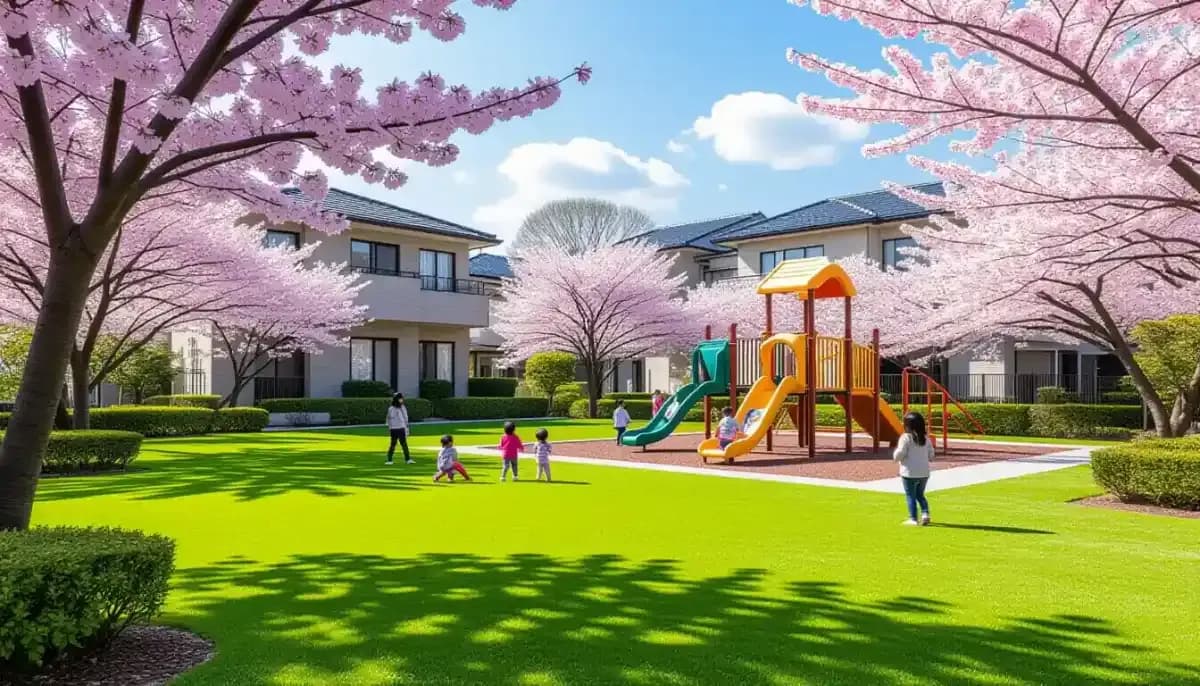
Complete guide to parks and green spaces near family housing in Japan. Compare Tokyo wards, city rankings, park types, seasonal tips, and what to look for when choosing a family neighborhood with good outdoor access.
Parks and Green Spaces Near Family Housing in Japan: A Complete Guide for Foreign Families
Moving to Japan with children raises a natural question: will my kids have room to run, play, and breathe? The answer, reassuringly, is yes — but access to parks and green spaces varies enormously depending on where you choose to live. Japan's cities are dense, but they are also deeply committed to neighborhood parks, riverside paths, and community gardens that sit right at the heart of family residential areas. This guide breaks down everything foreign families need to know about parks and green spaces near family housing in Japan.
Why Green Space Matters When Choosing Family Housing in Japan
For families with young children, proximity to parks is not a luxury — it is a daily necessity. Research published in Frontiers in Sustainable Cities (2025) found that 75.9% of community park event participants in Tokyo reported taking children to playgrounds as their primary activity, making neighborhood parks the single most important recreational venue in urban Japanese family life. Parks provide the space for after-school play, weekend picnics, seasonal events, and the informal social connections that help both children and parents build community roots.
Japan's urban parks serve a function beyond recreation. They are where children make neighborhood friends, where families gather for hanami (cherry blossom viewing), where school events spill out in good weather, and where the rhythm of daily life slows down enough to breathe. When evaluating housing and family-friendly neighborhoods in Japan, proximity to quality green space should be near the top of your checklist.
For a broader picture of raising children in Japan, see the comprehensive raising children and education guide at Living in Nihon.
How Park Access Varies Across Japan: City by City
One of the most important things foreign families discover is that park density is highly uneven across Japan. Choosing the right city — and the right neighborhood within that city — can mean the difference between a park-rich childhood and a concrete-heavy one.
Tokyo: The Ward-by-Ward Reality
Tokyo's 23 Special Wards show dramatic variation. Setagaya Ward has over 800 parks and green spaces, making it one of Tokyo's most park-dense residential areas and consistently ranked as a top choice for families with children. Nerima and Edogawa wards also score highly, offering riverside paths along the Tama River and Edogawa River, large open fields, and accessible nature within cycling distance of most homes.
By contrast, Toshima Ward — Tokyo's most densely populated ward at 23,356 residents per km² — has only 0.77 hectares of green space per capita, the lowest of all 23 wards. Families considering Toshima or similarly dense central wards should factor in the limited neighborhood park access before committing.
Beyond Tokyo: Japan's Greenest Cities
Outside of Tokyo, park access opens up considerably:
- Nara leads all Japanese cities with 19.9 square meters of park space per person — a figure that makes outdoor family life remarkably easy
- Sendai ranks highest among cities with over 1 million residents for per-capita green space
- Osaka, Kobe, and Sapporo all offer large urban parks (Osaka Castle Park, Rokko Mountain trails, Hokkaido's vast open spaces) that are easily accessible from family residential areas
- Higashiosaka sits at the opposite extreme, with only 2.8 square meters of green space per capita — a reminder that suburban locations are not automatically greener
For foreign families working in Japan who want to compare cities and neighborhoods, the For Work in Japan family life guide offers detailed regional comparisons.
| City / Ward | Green Space per Capita | Family Park Rating | Notes |
|---|---|---|---|
| Setagaya Ward (Tokyo) | High | ★★★★★ | 800+ parks, riverside paths |
| Nara | 19.9 m² | ★★★★★ | Top city in Japan |
| Sendai | High | ★★★★☆ | Best large-city option |
| Nerima Ward (Tokyo) | Moderate-High | ★★★★☆ | Community-managed parks |
| Sapporo | High | ★★★★☆ | Hokkaido open spaces |
| Edogawa Ward (Tokyo) | Moderate | ★★★☆☆ | Riverside parks |
| Toshima Ward (Tokyo) | 0.77 ha/capita | ★★☆☆☆ | Very limited |
| Higashiosaka | 2.8 m² | ★★☆☆☆ | Lowest in region |
Types of Parks and Green Spaces Near Japanese Family Housing
Japan has a well-structured system of park types, each serving different needs. Understanding these helps you know what to look for when house-hunting.
Neighborhood Street Parks (街区公園 / Gaiku Kōen)
The most common type: small parks of roughly 0.25 hectares, designed to be within 250 meters of every home. These are the everyday parks where toddlers use the slide, elementary school children play after school, and local elderly residents do morning exercises. Every residential district in Japan is supposed to have at least one. Quality varies — some are immaculately maintained, others minimally equipped — but they are the backbone of daily family park life.
District Parks (近隣公園 / Kinrin Kōen)
Larger than neighborhood parks (typically 2 hectares), these serve several residential blocks and often include sports facilities, restrooms, multiple play areas, and benches. They are the parks that host weekend events, local festivals, and seasonal gatherings. Finding family housing near a good kinrin kōen is a significant quality-of-life upgrade.
Riverside Paths and Green Corridors
Many Japanese cities have developed extensive riverside paths — the Tama River in Tokyo, the Kamogawa in Kyoto, the Shukugawa in Kobe — that run through residential neighborhoods. These paths offer off-road cycling, weekend running, summer wading spots, and year-round access to nature that no single park can match. Family housing near a major riverside path is highly desirable and worth seeking out.
Community-Managed Parks (住民管理公園)
A uniquely Japanese approach to urban green space: parks where local residents are actively involved in daily maintenance, planting, and event management alongside the local government. Tateno Park in Nerima City is a well-known example. These parks tend to be exceptionally well-maintained, lively with community events, and deeply integrated into the fabric of their neighborhoods. Research confirms that event participants visit parks far more frequently than non-participants — community management creates parks people actually use.
Integrated Housing Development Parks
More recent urban developments in Japan have integrated green spaces directly into housing projects. Tokyo's WATERRAS development in Chiyoda City — just three minutes from JR Ochanomizu Station — converted a former elementary school site into mixed-use housing with community parks embedded in the design. This trend of building parks into new residential developments is growing, especially in redeveloped suburban stations along major rail lines.
What to Look for When Evaluating Parks Near Potential Housing
When you visit a potential neighborhood in Japan, here is what to check regarding parks and green spaces:
Distance and Walkability A park that requires a 15-minute walk is different from one at the end of the street. With young children, the practical standard is parks reachable on foot in 5-10 minutes or by short bicycle ride. Japanese real estate listings often note proximity to parks (公園まで徒歩○分), so look for this metric.
Play Equipment Condition Japanese parks vary from fully modernized equipment to aging structures scheduled for replacement. Visit at a time when local children are using the park (late afternoon on a weekday or weekend morning) to see the actual condition and usage patterns.
Shade and Seating Japanese summers are intensely hot and humid. Parks with good tree cover and shaded seating areas make the difference between a usable park in August and one that is effectively off-limits. Cherry trees, ginkgo, and zelkova are common park trees in residential areas and provide excellent seasonal shade.
Toilet Facilities A park with a toilet (公衆トイレ) is vastly more practical for families with young children than one without. Most kinrin kōen have facilities; smaller gaiku kōen may not.
Water Features Many Japanese parks have seasonal water play areas (jyabu jyabu ike — shallow wading pools) open during summer. These are enormously popular with young children and a major quality-of-life differentiator for family neighborhoods.
For more on how neighborhood environment affects family life in Japan, see our guide to sports and physical activities for children in Japan and after-school activities and extracurriculars.
Best Tokyo Neighborhoods for Parks Near Family Housing
If you are targeting Tokyo specifically, these neighborhoods consistently rank highest for families prioritizing green space:
Setagaya (世田谷区) With 800+ parks, the Tama River running along its southern boundary, and large green corridors like Kinuta Park and Setagaya Park, Setagaya is the gold standard for family park access in Tokyo. Housing costs are higher than average, but so is quality of life. Many foreign families with young children cluster here.
Nerima (練馬区) Known for its community-managed parks and slightly lower costs than Setagaya, Nerima offers excellent family housing stock and strong park access. The ward actively organizes park events and has one of Tokyo's highest ratios of park space to residential area.
Edogawa (江戸川区) The Edogawa River creates a long green corridor of parks, sports fields, and cycling paths. Kasai Rinkai Park — with its famous Ferris wheel and access to Tokyo Bay — is a major family destination. Housing here is more affordable than western Tokyo and park access is excellent.
Koto (江東区) Kiba Park and Tatsumi Sports Center anchor strong green space in this increasingly family-friendly ward. Urban redevelopment has added parkland alongside new housing developments throughout the area.
For families interested in understanding how neighborhood choice intersects with schooling options, the community and support networks for foreign families guide is an essential companion resource. The Chuukou Benkyou site provides information on academic preparation for children in Japan.
Seasonal Use of Parks: What to Expect Year-Round
Japan's parks change dramatically with the seasons, and understanding the rhythm helps families get the most from green spaces:
Spring (March–May) Hanami (cherry blossom viewing) transforms parks into community gathering spaces. Most neighborhood parks have at least one cherry tree; larger parks fill with families and company groups for picnics. This is peak park season and a wonderful time to meet neighbors.
Summer (June–August) Heat and humidity make midday park visits difficult, but early morning and early evening are ideal. Water play areas open in June and are packed on weekends. Many parks host summer festivals (natsu matsuri) in late July and August.
Autumn (September–November) The second-most beautiful park season, with autumn foliage. Temperatures become ideal for outdoor play and the riverside cycling paths come alive with families.
Winter (December–February) Parks quiet down but remain used for morning exercise and weekend play. Snowfall (in Tokyo, rare but significant when it occurs) transforms parks temporarily and children invariably want to be outside. Hokkaido parks transition to winter recreation: sledding, snow sculpture, and ice skating.
Practical Tips for Foreign Families Using Japanese Parks
Learn the rules and unwritten customs. Japanese parks have posted rules (kōen no rūru) that typically prohibit ball sports in some areas, bicycle riding in pedestrian zones, and feeding pigeons. Unwritten customs include cleaning up thoroughly, not monopolizing equipment, and greeting neighbors. Following park etiquette helps with community integration.
Join local park events. Japanese local government and neighborhood associations (chonaikai) regularly organize park cleanups, seasonal planting events, and festivals. Participating as a foreign family is a powerful way to build genuine local relationships and is welcomed by most communities.
Find the nearest *jyabu jyabu ike*. Ask your local ward office or check the ward's park map (available online for most wards) for the location of summer water play areas. These are not always near the biggest parks — knowing where your local one is can make entire summer weeks.
Use the ward park map. Every Tokyo ward publishes a map of all parks within its boundaries, often with facilities listed. Searching "[ward name] 公園マップ" will typically return a downloadable PDF or interactive map that is invaluable for house-hunting.
Conclusion: Choosing Greenspace-Rich Housing in Japan
Access to parks and green spaces near family housing in Japan is not guaranteed — it is geography-dependent and requires deliberate attention when choosing where to live. The good news is that Japan's best family neighborhoods combine walkable park access, community maintenance culture, and seasonal beauty in ways that few countries can match. Setagaya, Nerima, Nara, and Sendai represent the high end of what is possible; targeted research before committing to a neighborhood will ensure your family lands somewhere with the outdoor space children need to thrive.
For a complete view of how housing fits into the broader picture of raising children in Japan as a foreign family, read our detailed guide on housing and family-friendly neighborhoods in Japan. The Living in Nihon raising children guide and For Work in Japan's family life resources provide additional perspectives from expats navigating these same decisions.
Additional data on Japan's greenest cities can be found at Unseen Japan's nature and parks ranking and Tokyo Metropolitan Government's official resource on parks, green spaces, and urban community life.

Originally from Vietnam, living in Japan for 16+ years. Graduated from Nagoya University, with 11 years of professional experience at Japanese and international companies. Sharing practical information for foreign parents raising children in Japan.
View Profile →Related Articles
Cost of Family Housing by Region in Japan
Compare family housing costs across Japan's major regions — Tokyo, Osaka, Fukuoka, Sapporo and more. Includes rent tables, move-in cost guide, and tips for foreign families renting in Japan.
Read more →
Safety Considerations for Family Neighborhoods in Japan
A complete guide to safety considerations for foreign families choosing neighborhoods in Japan — covering crime statistics, natural disaster risk, safest wards, and practical daily safety tips for expat families with children.
Read more →
Moving with Children Within Japan: A Practical Guide
A complete guide to moving with children within Japan for foreign families — school transfers, address change procedures, healthcare continuity, and tips for helping kids adjust emotionally to their new home.
Read more →
School Districts and How They Affect Housing Choices
Learn how Japan's school district (gakku) system works and how it affects housing choices for foreign families. Research districts, understand pricing premiums, and find the right neighborhood for your child's education.
Read more →
International Areas with Diverse Communities in Japan
Discover Japan's most international and diverse communities — from Tokyo's Shin-Okubo Korean Town to Yokohama Chinatown, Osaka's Ikuno Ward, and beyond. A complete expat guide.
Read more →
Family-Friendly Housing Features to Look for in Japan
Looking for family-friendly housing in Japan? Learn what features matter most—3LDK layouts, earthquake safety, school proximity, UR public housing, and practical tips for foreign families renting in Japan.
Read more →