
Bilingual Language Milestones and Development Stages


A complete guide to bilingual language development stages and milestones for expat children in Japan. Age-by-age breakdown, strategies for Japanese-English families, and when to seek support.
Bilingual Language Milestones and Development Stages for Children in Japan
Raising a bilingual child in Japan is one of the most rewarding challenges an expat parent can take on. Whether your family speaks English, French, Spanish, or any other language alongside Japanese, understanding what to expect at each stage of development helps you support your child with confidence. The good news, backed by solid research, is that bilingual children reach core language milestones at essentially the same ages as their monolingual peers — they just divide their vocabulary across two languages instead of one.
This guide walks you through the key developmental stages, what milestones to watch for, practical strategies that work in the Japanese context, and how to recognize when to seek extra support.
Understanding Bilingual Language Development: The Basics
Before diving into specific milestones, it helps to understand how bilingual acquisition actually works. Children learning two languages simultaneously are not simply learning one language twice — they are building two intertwined but distinct linguistic systems.
Total vocabulary counts. When assessing your bilingual child's vocabulary, always count words from both languages combined. A child who knows "inu" in Japanese and "dog" in English has two words for the same concept — that's completely normal and counts as productive vocabulary. What matters is the total concept count across both languages.
One language will be dominant. No matter how balanced your approach, one language will usually be stronger at any given time. This typically shifts based on the primary language of schooling, social life, and immersion. In Japan, Japanese tends to become dominant once children start hoikuen (nursery), yochien (kindergarten), or elementary school.
Code-switching is normal. Many bilingual children mix languages in a single sentence — saying "I want mizu" instead of "I want water." This is not confusion; it is a completely natural feature of bilingual speech and typically reduces as children become more proficient in each language separately.
For a broader overview of raising children bilingually in Japan, see our guide on Raising Bilingual Children in Japan: Strategies and Tips.
Age-by-Age Bilingual Language Milestones
The following milestones are based on general bilingual language research and are consistent with findings published in the Journal of Child Language showing bilingual children reach early milestones on the same timeline as monolinguals.
Birth to 6 Months: Pre-Linguistic Stage
- Responds to both languages: turns head toward familiar voices in either language
- Distinguishes phonemes (sound units) unique to each language — this happens remarkably early
- Coos and makes vowel sounds regardless of language input
- Shows preference for caregiver voices over strangers in either language
What to do: Talk, sing, and narrate your daily activities in your home language constantly. Even if your baby cannot respond, every minute of input builds neural pathways.
6 to 12 Months: Babbling Stage
- Babbling begins around 4–6 months and intensifies through 12 months
- By 10 months, babbling starts to reflect the phonetic patterns of the languages being heard most
- First real words typically emerge between 10–14 months in either or both languages
- Child recognizes their name and common words in both languages
Key point: Typically developing Japanese children acquire around 200+ expressive vocabulary words by age two — bilingual children are working toward this total across two language systems, so expect smaller counts in each language individually.
12 to 18 Months: First Words Stage
- 50 combined words (across both languages) is the milestone by 18 months
- First words in one or both languages appear
- Points to objects when named in either language
- Responds to simple instructions in both languages ("Come here," "Oide")
- May show preference for one language depending on primary caregiver
Warning sign to watch: If your child has fewer than 10 words in any language by 18 months, consult your pediatrician or a speech-language pathologist. Early intervention makes a significant difference.
18 to 24 Months: Two-Word Combinations
- Two-word phrases emerge by 24 months — words may come from different languages ("mite, doggy" = "look, doggy")
- Vocabulary expands rapidly — the "vocabulary explosion" phase
- Child begins to understand that different people use different languages
- May respond in one language when spoken to in another (receptive bilingualism)
- Names familiar people, objects, body parts in at least one language
2 to 3 Years: Sentence Building Stage
- Simple 3–4 word sentences in at least one language
- Begins separating the two language systems — uses Japanese with Japanese speakers, home language with parents
- Code-switching is common and peaks around this age
- Asks "what is that?" type questions
- Tells simple stories or describes recent events
In the Japan context: Children who start hoikuen around age 1–2 often show rapid Japanese development. This is entirely normal. Many children in international households develop strong receptive skills in the home language (understanding everything) while producing more Japanese at this stage. Maintain daily home-language input — it is not lost, it is building silently.
3 to 5 Years: Pre-School Language Expansion
- Full sentences in at least one language; catching up in the other
- By age 4, children should be understood by unfamiliar listeners approximately 80% of the time
- Engages in back-and-forth conversation
- Tells organized stories with a beginning, middle, and end
- Understands and follows multi-step instructions in both languages
- Aware of language differences and may start to comment on them
Research finding: In a real-world expat case documented by Savvy Tokyo, children who entered Japanese kindergarten while speaking primarily English were comfortably conversational in both languages within 18 months.
5 to 7 Years: The Critical Window
- Literacy development begins in the school language (Japanese)
- This is the most important window for establishing strong minority language foundations — before school demands make balancing harder
- Reading and writing in the home language should be introduced actively
- Child can translate for family members
- Metalinguistic awareness develops: understanding that languages are rule-based systems
For strategies on teaching Japanese specifically, see our article on Teaching Japanese to Foreign Children: Methods and Resources.
7 to 12 Years: School-Age Consolidation
- Japanese typically becomes dominant as schoolwork increases
- Minority language requires deliberate maintenance — it will not sustain itself passively
- Children can learn to read and write in the home language with proper instruction
- Social pressure around language identity may emerge — some children resist speaking the minority language around peers
- Heritage language Saturday schools (e.g., British School supplementary classes, American cultural schools) become valuable
Bilingual Milestone Quick Reference Table
| Age | Key Milestone | Combined Vocabulary | Warning Sign |
|---|---|---|---|
| 12 months | First words | 1–5 words | No words by 14 months |
| 18 months | 50 combined words | 50+ (both languages) | Fewer than 10 words total |
| 24 months | Two-word phrases | 100–200+ | No two-word combinations |
| 3 years | Simple sentences | 300+ | Not combining words |
| 4 years | Conversational | 500–1,000+ | Strangers can't understand child |
| 5 years | Narrative ability | 1,500+ | Limited to single sentences |
| 6–7 years | Pre-literacy stage | 2,000+ | Significant lag in both languages |
Note: Vocabulary counts are combined totals across both languages. Consult a speech-language therapist if your child consistently falls below these benchmarks.
The Two Main Strategies for Japanese-English Families
Research and practical experience point to two dominant strategies used by bilingual families in Japan:
Strategy 1: One Parent, One Language (OPOL)
Each parent consistently speaks only their native language to the child. In a Japanese-foreign parent household, the Japanese parent speaks Japanese and the foreign parent speaks their home language exclusively.
Works well when: Both parents are consistent; the child has significant daily exposure to both languages.
Challenge in Japan: Studies show OPOL alone may be insufficient when one language (Japanese) dominates all aspects of life outside the home. The minority language needs additional support.
Strategy 2: Minority Language at Home (MLaH)
Both parents speak the minority language at home — for example, both parents speak English at home even if one parent is Japanese. Japanese is acquired naturally through school, friends, and society.
Works well when: Parents are committed to consistent home-language use; child has good school-based Japanese exposure.
Challenge: The Japanese-speaking parent may feel disconnected. Children sometimes switch to Japanese at home once school starts.
For detailed guidance on which strategy suits your family, see our full guide on Raising Bilingual Children in Japan and the section on Heritage Language Maintenance.
Practical Tips for Supporting Milestones at Home in Japan
Make Daily Reading Non-Negotiable
Experts and experienced expat parents consistently cite this as the single most effective tool. Aim for 15–30 minutes of daily reading aloud in your home language. Stagger children's bedtimes if you have multiple kids to ensure one-on-one reading time.
Build a home library — use Amazon Japan to import English (or other language) children's books, or use the international section of your local library. Many Tokyo and Osaka ward libraries maintain English-language children's collections.
Use Media Mindfully
Streaming services, audiobooks, and educational apps in your home language provide valuable passive input — but they cannot replace live, interactive conversation. Use screens as a supplement, not a replacement.
Community and Playgroups
Weekly English (or your home language) playgroups provide peer interaction in the minority language — a powerful motivator for children who might otherwise resist speaking it. Many expat communities across Japan run regular playgroups. Check Meetup groups, international school notice boards, and expat Facebook groups in your city.
Monthly Immersion Trips
If geographically possible, regular visits to grandparents or family in your home country provide concentrated immersion that accelerates language development significantly. Even one or two trips per year make a measurable difference.
Keep a Language Journal
Tracking your child's new words and phrases in each language helps you spot vocabulary gaps early and celebrate progress. It also becomes a treasured family record.
For a deeper dive into supporting school-age bilingual children, see our guide on Elementary School in Japan: A Guide for Foreign Parents.
When to Seek Professional Support
Bilingual children are sometimes misidentified as having language delays when they are simply distributing vocabulary across two systems. However, genuine speech and language delays do exist and early intervention matters enormously.
Consult a speech-language pathologist (SLP) if:
- Your child has fewer than 50 words total (across both languages) by 18–24 months
- No two-word combinations by 30 months
- Significant comprehension difficulties in both languages
- Regression — loss of words or skills they previously had
- Difficulty being understood by familiar adults by age 3
In Japan, your local health center (hokenjo/保健所) provides free developmental screenings. International hospitals in Tokyo, Osaka, and other major cities have English-speaking pediatricians and SLPs who understand bilingual development. Ask specifically whether the practitioner has experience with bilingual children — assessment norms differ for bilingual populations.
Useful External Resources
For comprehensive guidance on expat life, raising children, and education in Japan:
- Living in Nihon: Raising Children and Education in Japan
- For Work in Japan: Family Life Guide for Foreigners
- Savvy Tokyo: Raising Bilingual Children in Japan
- Japan Today: 16 Tips for Raising a Bilingual Child in Japan
- Chuukou Benkyou: Study Support for Children in Japan
Conclusion
Raising a bilingual child in Japan is a long game, and the milestones outlined above give you a roadmap — not a rigid checklist. Every child's timeline is individual, and bilingualism adds natural complexity to that journey. What matters most is consistent, loving input in both languages, starting from birth and continuing through the school years.
The research is clear: bilingual children are not disadvantaged in language development. They build dual linguistic systems that serve them for a lifetime — in academic achievement, cognitive flexibility, cultural connection, and career opportunity. The effort you invest now in tracking milestones, maintaining the home language, and seeking support when needed lays a foundation your child will carry into adulthood.
For more on navigating your child's education in Japan, explore our complete guide to The Japanese Education System for Foreign Families.

Originally from Vietnam, living in Japan for 16+ years. Graduated from Nagoya University, with 11 years of professional experience at Japanese and international companies. Sharing practical information for foreign parents raising children in Japan.
View Profile →Related Articles

How to Measure Your Child's Bilingual Language Proficiency
Learn practical methods, tools, and milestones for measuring your bilingual child's language proficiency in Japan. Covers home assessment, formal tools, and when to seek help.
Read more →
Online Tutors and Language Apps for Bilingual Kids
Discover the best online tutors and language apps for bilingual kids in Japan. Expert guide covering apps like Duolingo, Lingodeer, and top tutoring platforms for expat families raising bilingual children.
Read more →
Weekend Language Schools and Saturday Schools in Japan
Complete guide to weekend language schools and Saturday schools in Japan for foreigners. Discover part-time Japanese classes, costs, visa requirements, and options for children's heritage language education.
Read more →
Supporting Bilingual Children in Japanese Public Schools
A complete guide for foreign parents on supporting bilingual children in Japanese public schools — language programs, home strategies, cognitive benefits, and tips for working with teachers.
Read more →
Bilingual Speech Delay: Facts vs Fiction
Is bilingual speech delay real? Science says no. Learn the facts vs fiction about raising bilingual children in Japan, including when to seek help and expert tips for expat families.
Read more →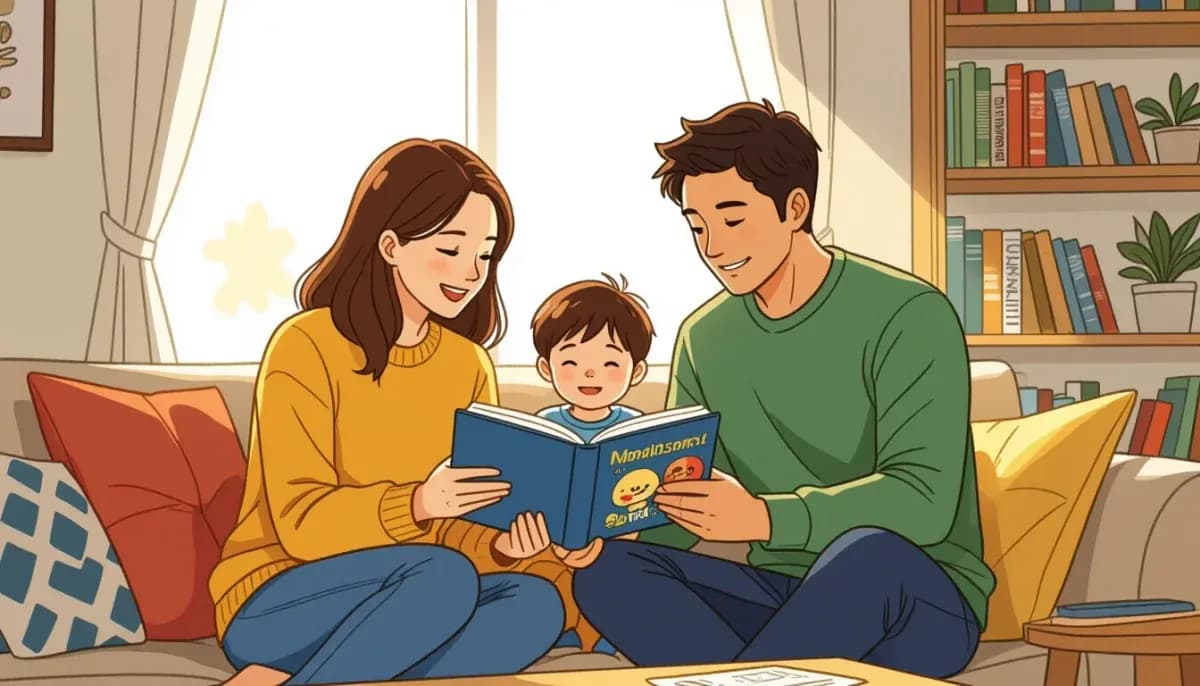
Raising Trilingual Children in Japan: Is It Possible?
Is it really possible to raise trilingual children in Japan? Discover proven strategies like OPOL, daily reading routines, heritage language schools, and real tips from expat families navigating multilingual parenting in Japan.
Read more →