
Code-Switching: When Bilingual Children Mix Languages

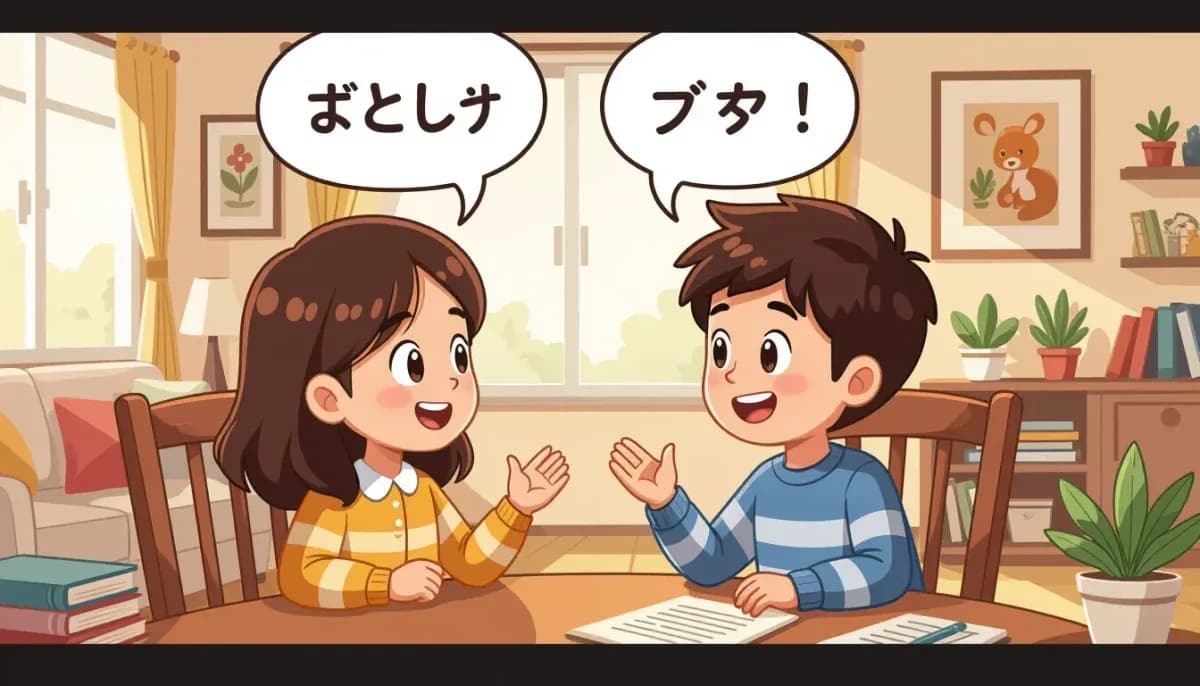
Is your bilingual child mixing Japanese and English? Learn why code-switching is normal, what research says about language development, and practical tips for parents raising bilingual children in Japan.
Code-Switching: When Bilingual Children Mix Languages
If you've ever heard your child say something like "Mama, can we go to the koen today?" — seamlessly blending English and Japanese in a single sentence — you've witnessed code-switching firsthand. For many parents raising bilingual children in Japan, this language-mixing behavior can feel surprising, even worrying. Is my child confused? Are they forgetting one of their languages? Should I correct them?
The reassuring answer: code-switching is not only normal, it is a sign of sophisticated linguistic ability. Researchers studying bilingual children have consistently found that mixing languages reflects cognitive strength, not weakness. This article explains what code-switching is, why children do it, what it means for language development, and how parents can best support their bilingual children in Japan.
What Is Code-Switching?
Code-switching is the practice of alternating between two or more languages within a single conversation, sentence, or even phrase. Linguists distinguish several types:
- Intersentential switching — switching between complete sentences ("I want to go home. もう疲れた。")
- Intrasentential switching — mixing within a single sentence ("Can we stop at the konbini?")
- Tag switching — inserting short tags or filler words from one language into another ("It was so fun, ne?")
For bilingual children growing up in Japan, Japanese-English mixing is the most common form, though families from Spanish, Korean, Chinese, or other language backgrounds see the same phenomenon in their respective language combinations.
What's important to understand is that code-switching is rule-governed, not random. Children who appear to be "mixing randomly" are actually following unconscious grammatical constraints from both languages simultaneously — evidence that their two language systems are cognitively active and separate. According to Bilingual Babies, research shows children maintain the grammatical rules of both languages when code-switching, which is a marker of true bilingual competence.
Why Do Bilingual Children Mix Languages?
There are several well-documented reasons why bilingual children code-switch:
1. Vocabulary Gaps (Lexical Borrowing)
The most common reason children switch languages is simply that they know a word in one language but not the other. A child who learned the word 電子レンジ (microwave) at home but hasn't yet learned the English equivalent will naturally slot the Japanese word into an otherwise English sentence. This is called lexical borrowing and is developmentally expected.
2. Efficiency and Communication
Sometimes one language simply offers a more precise or efficient expression. Japanese has numerous nuance-packed words and phrases (like きつい or めんどくさい) that don't have clean English equivalents. Bilingual children naturally reach for the most expressive tool available, regardless of which language it comes from.
3. Social and Contextual Triggers
Research consistently shows that bilingual children code-switch based on audience and context. They may use Japanese with classmates and teachers, English with parents, and a fluid mix with bilingual siblings. This social awareness is a sophisticated communicative skill, not a sign of confusion.
4. Language Dominance Effects
A 2024 longitudinal study published in PMC tracked 57 bilingual toddlers (Spanish-English and French-English) and found that Spanish-English children switched to English — the dominant societal language — at a rate of 30.96% at 31 months, rising to 38.22% by 39 months. This directional drift toward the dominant language is common in Japan too, where Japanese schooling, peer interaction, and media can gradually tip the balance.
5. Emphasis and Emotion
Interestingly, research from the JALT Journal on Japanese-English bilingual children found that code-switching also serves an intensification function — children switch languages for dramatic effect or emphasis, similar to how adults might swear in a second language for emotional impact.
Is Code-Switching Different for Japanese-English Bilinguals?
Yes — and this is a point that much popular parenting advice misses. Most code-switching research has focused on Spanish-English bilinguals, whose languages share similar grammatical structures (both subject-verb-object languages with related syntactic rules). The standard linguistic constraints derived from this research don't apply cleanly to Japanese-English pairs.
Japanese is a subject-object-verb language with a fundamentally different sentence structure, verb-final syntax, postpositions instead of prepositions, and topic-marking particles that have no English equivalent. This means Japanese-English bilingual children may produce switching patterns that look "unusual" compared to Spanish-English research norms — but are actually perfectly logical given the structure of Japanese itself.
A 2025 study from Frontiers in Language Sciences examining 30 simultaneous Japanese-English bilinguals (ages 2–8) found that older children showed stronger English performance due to the school/majority language advantage, and that proficiency in one language predicted proficiency in the other — supporting the idea that the two language systems share an underlying conceptual base.
The takeaway: Japanese-English bilingual children are navigating two linguistically distant languages, and their code-switching patterns reflect that complexity. This is not a problem — it is a remarkable cognitive achievement.
What the Research Says: A Summary
| Finding | Source |
|---|---|
| Code-switching follows grammatical rules from both languages simultaneously | Bilingual Babies / general linguistics research |
| Spanish-English toddlers switch to English at ~31-38% by ages 31-39 months | PMC longitudinal study (n=57) |
| Japanese-English switches don't follow Spanish-English constraint models | JALT Journal study |
| Children switch content words (nouns/verbs) more than function words | PMC longitudinal study |
| Proficiency in one language predicts proficiency in the other | Frontiers 2025 (n=30, ages 2-8) |
| Peer group influence on language dominance > home language practices | Japan Today |
| Critical bilingual acquisition window: birth to age 6-7 | General research consensus |
| Code-switching used for dramatic effect and emotional emphasis | JALT Journal study |
Should Parents Correct Code-Switching?
This is the question most parents ask — and the research gives a clear answer: no, you should not directly correct code-switching as an error.
Here's why:
- Correcting code-switching sends the message that it is wrong or shameful, which can create anxiety around language use
- It does not reflect the linguistic reality — code-switching is grammatically valid bilingual speech
- It can inhibit communication and make children reluctant to speak the minority language
What to do instead: The recommended approach is to model the target language naturally without making a big deal of the switch. If your child says "I want the akai one," you can simply respond with "Oh, you want the red one?" — gently providing the word in the target language without correction or judgment.
This technique, used in heritage language maintenance contexts around the world, maintains a warm communicative environment while consistently providing language input.
For parents focused on maintaining their home language, the key strategies remain:
- OPOL (One Parent, One Language): Each parent consistently uses one language
- ML@H (Minority Language at Home): The non-Japanese language is used consistently at home
- Immersion and community: Japanese schooling will naturally strengthen Japanese; home and community need to actively support the minority language
For more on these strategies, see our guide on raising bilingual children in Japan and heritage language maintenance.
Practical Tips for Parents in Japan
Managing bilingualism in Japan comes with unique challenges. Japanese peers, schools, and media create strong pressure toward Japanese language dominance, particularly after children start elementary school. Here are practical strategies:
Before school age (0–6):
- Maximize input in the minority language during the critical window
- Read aloud, sing, and play in both languages daily
- Don't panic when your child switches — respond naturally in your target language
- Connect with other expat or bilingual families through parent groups
School age (6+):
- Maintain minority language routines (bedtime stories, weekend activities, video calls with grandparents)
- Supplement with Saturday language schools, tutors, or heritage language classes
- Monitor for language shift — if the minority language is slipping significantly, increase structured exposure
- Normalize bilingualism with your child — help them see it as a superpower, not a complication
For children showing strong Japanese dominance:
- Don't give up — language recovery is possible
- Consider a period of immersive minority language exposure (visiting the home country, language camp)
- Connect children with peers who speak the minority language
You can find more support resources through communities like Living in Nihon, which offers guides and community support for foreigners living in Japan. For work and life transition advice, For Work in Japan and the Japanese language support platform Chuukou Benkyou also provide useful resources for expat families navigating life in Japan.
Code-Switching and Language Disorders: What to Watch For
A common parental concern is whether code-switching is a sign of a language delay or disorder. In most cases, it is not. However, there are signs that warrant professional evaluation:
- Very limited vocabulary in both languages by age 2-3 (not just in one language)
- Lack of two-word combinations by 24 months in either language
- Regression in previously acquired language skills
- Difficulty being understood by familiar caregivers
A 2021 PMC study examined code-switching in bilingual children with and without developmental language disorder (DLD), finding that while both groups code-switched, children with DLD showed different patterns related to overall language proficiency, not simply the act of switching itself.
If you have concerns about your child's language development, consult a speech-language pathologist who has experience with bilingual children. In Japan, international hospitals and some university-affiliated clinics can provide bilingual speech-language assessment. For more on healthcare resources for foreign families, see our guide on healthcare and medical care for children in Japan.
Supporting Your Bilingual Child's Identity
Beyond the practical language strategies, it's worth stepping back to celebrate what code-switching represents: your child is operating in two languages, navigating two cultural worlds, and developing a flexible, creative relationship with language itself.
Many adult bilinguals report that code-switching becomes a natural, joyful part of their identity — a private language of family, intimacy, and belonging. The Japanese-English mix your child develops may become something uniquely their own.
For children navigating mixed cultural identities in Japan, the challenges go beyond language. Our article on cultural identity for hafu and mixed-race children in Japan explores how families can support children in developing a confident, positive sense of self that embraces both cultures.
Conclusion
Code-switching is one of the most visible and often misunderstood aspects of raising bilingual children. When your child mixes Japanese and English (or any two languages), they are not confused, lazy, or failing at bilingualism — they are demonstrating sophisticated linguistic competence that most monolingual adults will never achieve.
The research is clear: children who code-switch maintain separate language systems, follow grammatical rules from both languages, and use switching strategically for communication, emotion, and social context. Your role as a parent is not to eliminate code-switching, but to provide rich, consistent input in both languages, model natural responses, and create an environment where both languages are valued.
The bilingual path in Japan is challenging, but the rewards — cognitive flexibility, cultural fluency, and connection across two worlds — are profound and lifelong.
For a deeper dive into bilingual strategies for your family, explore our full guide on raising bilingual children in Japan and teaching Japanese to foreign children.

Originally from Vietnam, living in Japan for 16+ years. Graduated from Nagoya University, with 11 years of professional experience at Japanese and international companies. Sharing practical information for foreign parents raising children in Japan.
View Profile →Related Articles

How to Measure Your Child's Bilingual Language Proficiency
Learn practical methods, tools, and milestones for measuring your bilingual child's language proficiency in Japan. Covers home assessment, formal tools, and when to seek help.
Read more →
Online Tutors and Language Apps for Bilingual Kids
Discover the best online tutors and language apps for bilingual kids in Japan. Expert guide covering apps like Duolingo, Lingodeer, and top tutoring platforms for expat families raising bilingual children.
Read more →
Weekend Language Schools and Saturday Schools in Japan
Complete guide to weekend language schools and Saturday schools in Japan for foreigners. Discover part-time Japanese classes, costs, visa requirements, and options for children's heritage language education.
Read more →
Supporting Bilingual Children in Japanese Public Schools
A complete guide for foreign parents on supporting bilingual children in Japanese public schools — language programs, home strategies, cognitive benefits, and tips for working with teachers.
Read more →
Bilingual Speech Delay: Facts vs Fiction
Is bilingual speech delay real? Science says no. Learn the facts vs fiction about raising bilingual children in Japan, including when to seek help and expert tips for expat families.
Read more →
Raising Trilingual Children in Japan: Is It Possible?
Is it really possible to raise trilingual children in Japan? Discover proven strategies like OPOL, daily reading routines, heritage language schools, and real tips from expat families navigating multilingual parenting in Japan.
Read more →