
Japanese Elementary School Daily Schedule and Routine

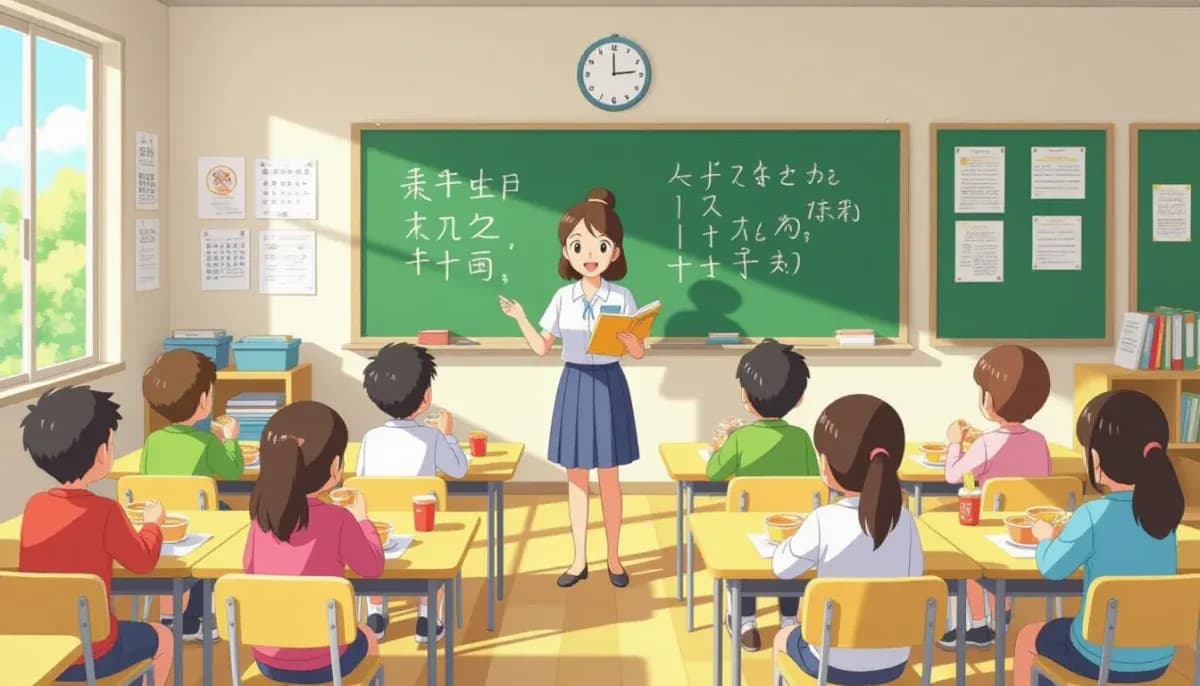
Understand the complete Japanese elementary school daily schedule — class periods, kyushoku lunch, souji cleaning time, and after-school routines. Essential guide for foreign parents in Japan.
Japanese Elementary School Daily Schedule and Routine: What Foreign Parents Need to Know
If your child is about to start elementary school in Japan, one of the first things you will want to understand is what a typical school day actually looks like. Japanese elementary school (小学校, shōgakkō) follows a structured and highly predictable daily routine that differs in many ways from schools in Western countries. From the moment children leave home in the morning to the time they return in the afternoon, every part of the day is organized — and knowing what to expect will help both you and your child feel more prepared.
This guide breaks down the complete Japanese elementary school daily schedule, explains unique Japanese school customs like kyushoku (school lunch) and souji (cleaning time), and offers practical tips for foreign families navigating the system.
Overview: How the Japanese Elementary School Day Is Structured
Japanese elementary school covers grades 1 through 6, enrolling children aged roughly 6 to 12. The school year runs from April to March, divided into three terms: spring (April–July), fall (September–December), and winter (January–March). Japan's school calendar includes approximately 210–240 school days per year — around 60 more than the typical American school year.
Each class period lasts 45 minutes, with short breaks of 5–10 minutes between periods. Lower grades (1st and 2nd) usually have four periods per day, while upper grades (5th and 6th) commonly have five or six. Dismissal time therefore varies significantly based on grade level.
For a comprehensive overview of how the Japanese education system works overall, see our guide on the Japanese education system for foreign families.
Typical Japanese Elementary School Daily Schedule
The exact schedule varies by school and day of the week, but the framework below reflects what most public elementary schools follow:
| Time | Activity |
|---|---|
| 7:30–8:20 AM | Students arrive at school |
| 8:15–8:35 AM | Morning homeroom (朝の会, asa no kai) |
| 8:35–10:20 AM | 1st and 2nd class periods (45 min each, 10-min break between) |
| 10:20–10:40 AM | Longer recess break (業間休み, gyōkan yasumi) |
| 10:40–12:15 PM | 3rd and 4th class periods |
| 12:15–1:00 PM | School lunch (給食, kyūshoku) eaten in classroom |
| 1:00–1:20 PM | Lunch recess / free play |
| 1:20–1:40 PM | Cleaning time (掃除, sōji) |
| 1:40–3:15 PM | 5th and 6th periods (upper grades only) |
| 3:15–3:55 PM | End-of-day homeroom, dismissal |
Dismissal times by number of periods:
- 4 periods → approximately 12:30 PM (common for grades 1–2)
- 5 periods → approximately 2:30 PM
- 6 periods → approximately 3:30 PM (common for grades 5–6)
Morning Routine: Getting Ready for School
Japanese elementary students typically wake up early. Survey data shows the average wake time is 6:38 AM, with most children eating breakfast before heading out. About 90% of Japanese elementary students eat breakfast daily — a rate that reflects both cultural norms and school guidance encouraging healthy morning habits.
Group Commuting (集団登校, Shūdan Tōkō)
One of the most distinctive features of Japanese school life is that students do not simply walk to school on their own. In most neighborhoods, children commute in organized groups (集団登校, shūdan tōkō) led by an older student. These groups follow fixed walking routes and are supervised by crossing guards (often retired community volunteers) and parent volunteers on a rotating schedule.
As a foreign parent, you will likely be asked to join the volunteer rotation at some point. The first few weeks of school, it is a good idea to walk with your child to learn the route and meet the other families in your group.
What children must bring to school:
- Indoor shoes (上履き, uwabaki) — students change shoes at the school entrance
- A hand towel (ハンカチ) and pocket tissues
- A lunch apron and cap if the child has lunch duty that week
- Water bottle (increasingly required at many schools)
- All supplies labeled clearly with the child's name
Morning Homeroom and Classes
The school day officially begins with morning homeroom, known as 朝の会 (asa no kai). This is a brief 15–20 minute session where the homeroom teacher takes attendance, makes announcements, and students do brief warm-up activities or share news.
A rotating student called the 日直 (nicchoku) or "duty student" leads the class. This student calls the class to attention, leads greetings, reads the schedule aloud, and helps the teacher with tasks like distributing materials. Every student takes a turn at this role over the course of the year — it is designed to build confidence and a sense of responsibility.
Classes then begin. Unlike many Western schools where students move between classrooms for different subjects, in Japanese elementary school the homeroom teacher stays with the same class for most subjects, moving through subjects like Japanese language, math, science, social studies, music, art, and physical education throughout the day. Specialist teachers may rotate in for subjects like music or English.
School Lunch: The Kyushoku System
School lunch in Japan — called 給食 (kyūshoku) — is one of the most celebrated aspects of Japanese school culture. Nearly 99.4% of Japanese elementary schools provide a nutritionist-planned hot lunch that students eat in their own classroom, not a cafeteria.
What Kyushoku Typically Includes
A typical school lunch is balanced and varied. Most meals consist of:
- Steamed rice or bread
- A protein dish (fish, chicken, tofu)
- A vegetable side dish
- Miso soup or another soup
- Milk (served at virtually every school)
The average caloric content is around 621 calories, and meals are planned by licensed nutritionists to meet children's dietary needs. Menus are sent home monthly so parents can see what is being served.
Lunch Duty Rotation
Children do not simply sit down and wait to be served. A rotating group of students — the 給食当番 (kyūshoku tōban) — puts on aprons and caps, fetches the food from the kitchen area, and serves their classmates. After eating, the duty team collects trays, returns containers, and wipes down surfaces. This system teaches children teamwork, responsibility, and respect for food.
Cost and Dietary Accommodations
School lunch costs approximately ¥230 per meal (around $1.68 USD), adding up to roughly ¥4,500–4,688 per month. Subsidies are available for low-income families.
If your child has food allergies or dietary restrictions due to religion or health, speak with the school in advance. Many schools in major cities can accommodate common allergies (eggs, dairy, wheat), but arrangements must be made well before the school year starts — ideally at enrollment.
For more details on navigating Japanese public school enrollment as a foreign family, see our complete guide to elementary school in Japan for foreign parents.
Cleaning Time: The Souji Tradition
After lunch recess ends, Japanese schools observe one of their most famous customs: 掃除 (sōji), or structured cleaning time. For approximately 15–20 minutes every day, students and teachers clean the entire school together.
There are no janitors in Japanese public schools. Instead, students are responsible for maintaining the spaces they use. Tasks are assigned by area and rotate regularly:
- Sweeping and mopping classroom floors
- Wiping down blackboards and desks
- Cleaning hallways and staircases
- Scrubbing bathroom sinks and toilets
- Emptying and wiping out garbage bins
- Cleaning windows and shoe cubbies
This practice is followed at over 90% of Japanese schools and is a deeply embedded part of Japanese educational philosophy. The underlying value is that taking care of shared spaces builds community, teaches humility, and instills a sense of shared ownership. Many foreign children initially find this surprising but typically come to accept it as a normal part of school life.
After School: Clubs, Cram Schools, and After-Care
Club Activities (部活動, Bukatsu)
At the elementary level, optional club activities (クラブ活動) typically begin around 4th grade. These clubs meet once or twice per week after school and include activities like music, art, sports, science, and student committees. Participation is voluntary, and clubs are generally less intensive than the bukatsu clubs found at the junior high level.
Cram Schools (塾, Juku)
A striking feature of Japanese childhood is the prevalence of cram schools. Approximately 36.7% of Japanese elementary students attend juku (塾) — private supplementary education centers — after regular school hours. These range from academic tutoring to preparation for junior high school entrance exams. While cram school is not mandatory and many foreign families opt out, it is something you will likely encounter in conversations with other parents.
After-School Care (放課後児童クラブ)
If both parents work, Japan's municipal 放課後児童クラブ (hōkago jidō kurabu) — after-school childcare clubs — provide supervised care until 6:00–6:30 PM. These programs offer structured activities, homework time, and free play. Monthly fees typically run ¥4,000–6,000, with waivers available for lower-income households.
Applications open in the fall for the following April, so plan well in advance. Spaces fill up, particularly in urban areas.
The School Calendar: Key Annual Events
Japan's school year is punctuated by ceremonies and events that are important for families to understand and participate in:
| Event | Typical Timing | Notes |
|---|---|---|
| 入学式 (Nyūgakushiki) — Entrance Ceremony | Early April | Formal ceremony for new students |
| 家庭訪問 (Katei Hōmon) — Home Visit | April–May | Teacher visits each student's home |
| 運動会 (Undōkai) — Sports Day | May or October | Major community event, often on a Saturday |
| 遠足 (Ensoku) — Field Trip | Spring/Fall | Class day trips to parks, museums, etc. |
| 夏休み (Natsuyasumi) — Summer Break | Late July–late August | ~6 weeks |
| 公開授業 (Kōkai Jugyō) — Open Classes | Spring/Fall | Parents observe lessons |
| 修学旅行 (Shūgaku Ryokō) — Graduation Trip | 6th grade, fall | Multi-day trip, often to Kyoto/Nara |
| 引き渡し訓練 — Emergency Pickup Drill | Varies | Earthquake safety drill; parents collect children |
| 卒業式 (Sotsugyōshiki) — Graduation Ceremony | Mid-March | Formal ceremony for 6th graders |
Sports Day (運動会) is one of the most anticipated events of the year. Schools typically hold it on a Saturday, and the entire community — grandparents, siblings, neighbors — often attends. Children rehearse for weeks beforehand.
Practical Tips for Foreign Families
Before the school year begins:
- Visit the school office early to complete enrollment paperwork. You will need your child's residence card (在留カード), health examination records, and vaccination history.
- Confirm whether the school has a Japanese-language support program (日本語指導) for children with limited Japanese proficiency. Many schools in urban areas offer pull-out instruction or bilingual support staff.
- Buy required items in advance: indoor shoes, a hand towel, and all stationery labeled with your child's name.
During the school year:
- Absence notifications must reach the school before 8:30 AM. Call the school directly; do not simply send a note the next day.
- PTA (保護者会, PTA) participation is expected. Meetings, volunteer events, and duty rotations are taken seriously by Japanese parents and schools. Even if Japanese is difficult, showing up demonstrates commitment.
- If your child is struggling socially or linguistically, request a meeting with the homeroom teacher early. Many Japanese teachers will make significant efforts to include foreign children.
For guidance on supporting your child's Japanese language development, see our article on teaching Japanese to foreign children.
Resources for Further Reading
- Elementary School Japan Education System Guide — Living in Nihon — Comprehensive overview of how to navigate the Japanese school system as a foreigner
- School Time in Japan: Daily Schedule, Lunch, and After-School Care — E-Housing — Detailed breakdown of the school day with timing
- A Day in the Life of a Japanese Elementary School Student — Nippon.com — Data-rich survey of how Japanese children spend their time
- What's a Japanese School Day Like? — Interac Network — Written by English teachers working in Japanese schools
- For Work in Japan — Resources for Foreign Workers and Families — General resources for foreign residents navigating life in Japan
- Chuukou Benkyou — Study Resources for Japan — Study support resources for the Japanese education system
Final Thoughts
Japanese elementary school follows a consistent, well-structured daily routine that, once understood, makes life considerably easier for foreign families. The 45-minute class periods, the kyushoku lunch system, the daily souji cleaning ritual, and the organized group commutes are all parts of a larger educational philosophy that emphasizes community, responsibility, and shared effort.
Your child may find some of these customs unfamiliar at first — especially cleaning bathrooms alongside their teacher. But most foreign children adapt quickly, and many come to appreciate the orderliness and sense of belonging that Japanese school culture provides.
If you are still at the stage of choosing between a Japanese public school and other options, our guide on international schools in Japan compares the full range of schooling options for foreign families. And if your child is transitioning from elementary to the next stage, our article on junior high school in Japan for foreign families covers what comes next.

Originally from Vietnam, living in Japan for 16+ years. Graduated from Nagoya University, with 11 years of professional experience at Japanese and international companies. Sharing practical information for foreign parents raising children in Japan.
View Profile →Related Articles
Elementary School Graduation Ceremony in Japan
Everything foreign parents need to know about Japan's elementary school graduation ceremony (sotsugyo-shiki): ceremony format, dress code, songs, traditions, and tips for expats.
Read more →
Swimming Lessons at Japanese Elementary Schools
Complete guide to swimming lessons at Japanese elementary schools: schedule, required gear, exemptions, grading, and tips for foreign parents navigating suiei season.
Read more →
Music and Arts Education in Japanese Elementary Schools
A complete guide for foreign families on music and arts education in Japanese elementary schools. Learn what subjects are taught, what instruments children use, school festivals, and practical tips for expat parents.
Read more →
Moral Education (Doutoku) at Japanese Elementary Schools
A complete guide to Doutoku (道徳), Japan's moral education class, for foreign parents. Learn what's taught, how classes work, and how to support your child.
Read more →
School Field Trips and Excursions in Japanese Elementary Schools
Everything foreign parents need to know about school field trips in Japanese elementary schools — ensoku day trips, shugakuryoko overnight trips, costs, packing lists, and cultural significance.
Read more →
Parent-Teacher Meetings at Japanese Elementary Schools
A complete guide for foreign parents on navigating parent-teacher meetings at Japanese elementary schools: types, what to expect, language tips, and how to prepare.
Read more →