
Japanese Parent Support Resources for Foreigners

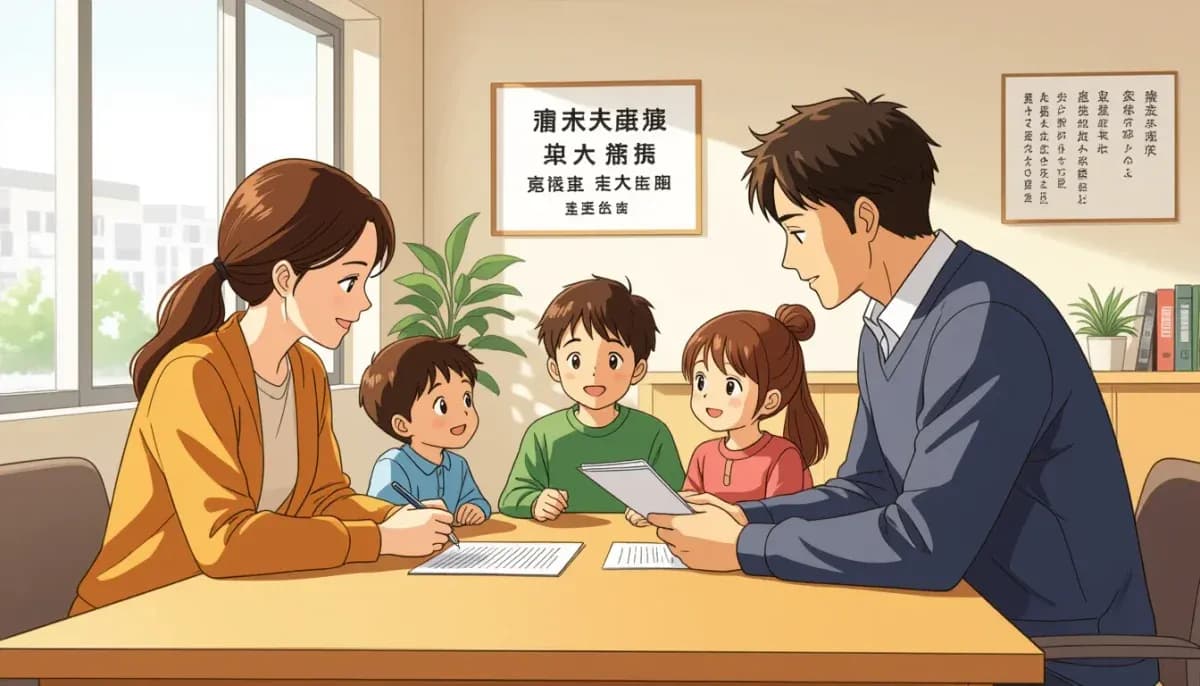
Complete guide to parent support resources for foreigners in Japan. Learn about child allowances, free healthcare, daycare subsidies, and community organizations available to foreign families.
Japanese Parent Support Resources for Foreigners: Your Complete Guide
Raising children in Japan as a foreigner can feel overwhelming at first — navigating a new language, an unfamiliar bureaucratic system, and cultural differences all at once. But here's the good news: Japan has one of the most comprehensive family support systems in the world, and as a foreign resident with valid residency status, you are entitled to most of the same benefits as Japanese citizens.
This guide covers every major support resource available to foreign parents in Japan — from financial allowances and free healthcare to childcare subsidies and community organizations that can help you thrive as a family.
Government Financial Support for Foreign Parents
Japan's financial support for families is generous, and foreign residents qualify for the same benefits as Japanese nationals, provided they are properly registered in the local municipal system.
Child Allowance (Jidou Teate / 児童手当)
The Child Allowance is one of the most important benefits for families in Japan. As of October 2024, the program was significantly reformed and expanded:
- Ages 0–2: ¥15,000 per child per month
- Ages 3–12 (elementary school): ¥10,000 per month (¥15,000 for the third child and beyond)
- Ages 12–15 (junior high): ¥10,000 per month
- Ages 15–18 (high school, new as of 2024): ¥10,000 per month
Critically, income caps were eliminated in October 2024 — all eligible families now qualify regardless of household income. Payments are made quarterly in February, June, and October.
Who qualifies: Any foreign resident with valid residence status, registered at their local city or ward office. The child's nationality is irrelevant — only the legal residency status of the parent matters.
How to apply: Visit your local city hall (shiyakusho / 市役所) or ward office (kuyakusho / 区役所) within 15 days of the child's birth or your move to the area.
Lump-Sum Birth Allowance (Shussan Ikuji Ichijikin / 出産育児一時金)
If you are enrolled in Japanese public health insurance (National Health Insurance or company-based health insurance) for at least 85 days of your pregnancy, you qualify for a lump-sum birth allowance of ¥500,000 per child. Some municipalities also provide an additional birth grant of ¥50,000–¥100,000 on top of this.
Parental Leave Benefits
Both parents can take parental leave in Japan:
- Maternity leave: 6 weeks before birth and 8 weeks after (98 days total), with 67% salary replacement via your employment insurance
- Childcare leave (Ikuji Kyugyo): Available until the child turns 1 year old (extendable to 18–24 months if daycare is unavailable); 67% salary replacement for the first 6 months, then 50%
- Papa leave (Sansei Kyugyo): Fathers can take up to 4 weeks of paid leave within 8 weeks of the birth, with the same salary compensation rate
For more on managing the financial side of raising children in Japan, see our guide to financial planning for expat families.
Healthcare and Medical Support
Japan's healthcare system provides outstanding support for children, and most services are available at very low or no cost to foreign families.
Maternal and Child Health Handbook (Boshi Kenko Techo / 母子健康手帳)
The Maternal and Child Health Handbook is your essential companion from pregnancy through your child's early years. Issued free at your local city hall when you register your pregnancy, it tracks vaccinations, developmental milestones, and medical records.
Available in 8+ languages: English, Chinese, Korean, Portuguese, Spanish, Tagalog, Thai, and Indonesian. Request the multilingual version when you register.
Bring this handbook to every medical appointment — doctors and nurses rely on it as your child's official health record.
Free Vaccinations
Japan's vaccination schedule is comprehensive and fully subsidized for residents. Free public vaccinations for children include:
- Hib (Haemophilus influenzae type b)
- Pneumococcal
- Rotavirus
- Hepatitis B
- BCG (tuberculosis)
- MMR (measles, mumps, rubella)
- Varicella (chickenpox)
- DPT-IPV (diphtheria, pertussis, tetanus, polio)
Vaccination coupons are mailed to your registered address. If you move or don't receive them, contact your ward office.
Free Developmental Checkups
Municipalities provide free developmental health checkups at key milestones: 3–4 months, 6–7 months, 9–10 months, 18 months, and 3 years. These are held at local health centers and include hearing, vision, and developmental assessments. Multilingual support is often available at larger city health centers.
Free or Low-Cost Pediatric Care
Most municipalities in Japan offer free or heavily subsidized pediatric medical care through age 15 to 18 (the exact age limit varies by municipality, but Tokyo now covers children through age 18). When your child visits a pediatric clinic or hospital, you typically pay ¥200–¥500 per visit or nothing at all.
Enroll your child in the local medical subsidy program (Kodomo Iryohi Josei / 子ども医療費助成) at your ward office when registering the birth. For a detailed overview of the healthcare system, see our guide to healthcare and medical care for children in Japan.
Childcare and Daycare Subsidies
Finding and affording childcare is a major concern for working foreign parents. Japan's subsidy system has improved significantly in recent years.
Free Pre-School Education (Ages 3–5)
Since 2019, attendance at certified kindergartens (yochien / 幼稚園) and licensed daycare centers (hoikuen / 保育園) is free for all children aged 3 to 5, regardless of household income or nationality.
Subsidized or Free Infant Daycare (Ages 0–2)
Daycare for children under age 3 at licensed facilities is subsidized on a sliding scale based on household income. In Tokyo, as of 2025, this care is effectively free for most families. Unlicensed and international daycare centers are also subsidized in many wards:
- Some Tokyo wards (e.g., Minato Ward) offer up to ¥100,000/month toward unlicensed or international daycare costs
- Most Tokyo wards offer ¥40,000–¥57,000/month in unlicensed daycare subsidies
For families with two young children enrolled in daycare, combined benefits in Tokyo can total ¥950,000–¥2,600,000 in annual savings.
See our complete guide to daycare and hoikuen in Japan for foreign parents for application instructions.
Key Financial Support Summary
| Benefit | Amount | Who Qualifies |
|---|---|---|
| Child Allowance (ages 0–18) | ¥10,000–¥15,000/month | All registered foreign residents |
| Lump-Sum Birth Allowance | ¥500,000 per birth | Those enrolled in health insurance for 85+ days |
| Licensed Daycare (ages 3–5) | Free | All registered families |
| Licensed Daycare (ages 0–2) | Free or sliding scale | Based on income |
| Unlicensed Daycare Subsidy (Tokyo) | Up to ¥100,000/month | Tokyo residents |
| Pediatric Medical Care | Free–¥500/visit | Children up to age 15–18 (varies by area) |
| Tokyo 0–18 Support Program | ¥5,000/month/child | Tokyo residents under age 18 |
| Maternity Leave Replacement | 67% of salary | Employed and enrolled in employment insurance |
Community and Language Support Organizations
One of the biggest challenges for foreign parents in Japan is the language barrier. The good news is that a growing number of organizations provide support in English and other languages.
FRESC (Foreign Residents Support Center)
FRESC is a one-stop support center operated in partnership with the Ministry of Justice. It offers free consultations (in multiple languages) on visas, legal status, employment, children's schooling, housing, and daily life. This is often the best starting point for newly arrived foreign families who aren't sure where to begin.
CLAIR (Council of Local Authorities for International Relations)
CLAIR provides child allowance guides, living manuals, and other official information in 12 languages: English, Chinese, Korean, Portuguese, Spanish, Tagalog, Vietnamese, Thai, Indonesian, Russian, French, and German. Their resources are available on their website and through your local international exchange association (kokusai koryu kyokai).
TELL Japan (Lifeline)
TELL provides English-language mental health and crisis support in Japan. Their lifeline is available at 03-5774-0992 and is staffed by trained counselors. Parenting abroad is stressful, and it's important to know that support is available in English when you need it.
Japan Helpline
For general non-emergency assistance in English, the Japan Helpline is available 24 hours a day at 0570-000-911. They can help with medical emergencies, accidents, and general guidance.
Education Support for Foreign-Root Children
Several organizations specifically support children who are learning Japanese as a second language or struggling to integrate into the school system:
- YSC Global School — Japanese as a Second Language (JSL) tutoring and subject support
- Plus Educate — education support for foreign-root children
- Kids Door — free learning support for children of low-income families
- Metanoia NPO — immigrant family integration support
For guidance on helping your child navigate the Japanese school system, see our guide on teaching Japanese to foreign children and our overview of the Japanese education system for foreign families.
Practical Tips for Navigating the System
Register Immediately
The Japanese support system is registration-based: you only receive benefits from the date you apply, not retroactively in most cases. When your child is born or when you arrive in Japan with children:
- Register the birth at city hall within 14 days
- Apply for the Child Allowance within 15 days
- Register the baby's visa status at the Regional Immigration Bureau within 30 days
- Register your child with your home country's embassy (processing: 1–4 weeks)
- Enroll in the pediatric medical subsidy program on the same day you register the birth
Use Multilingual Resources
- Request the multilingual Maternal and Child Health Handbook in your language
- The CLAIR child allowance guide is available in 12 languages
- Many ward offices in major cities have multilingual support staff or interpretation services — call ahead to confirm
Join Expat Parent Communities
Foreign parent communities on social media (Facebook groups, Meetup groups, Line groups) are invaluable for practical, real-time advice. Other expat parents can tell you which local facilities have English-speaking staff, which daycare centers welcome non-Japanese-speaking families, and which doctors and hospitals are foreigner-friendly.
Know Your Rights in Schools
Foreign children are not legally required to attend Japanese school, but they have the right to attend public school free of charge. Applications are made through your local city or ward office. If your child has special educational needs or is an advanced learner, communicate directly with the school principal — Japanese schools have more flexibility than many foreign parents assume.
For more on school options, see our guide to international schools in Japan and elementary school in Japan for foreign parents.
External Resources for Foreign Parents in Japan
For detailed guides and up-to-date information, the following resources are recommended:
- Living in Nihon — Expat life guides for Japan — comprehensive guides for foreigners navigating life in Japan
- For Work in Japan — Employment and family resources — information on working and living in Japan as a foreigner
- Chuukou Benkyou — Study and life guidance in Japan — practical resources for foreign residents
- Japan Visa Guide: Childcare Support for Foreign Families — comprehensive guide to child allowances and support
- Tokyo Childcare Subsidies 2025 — How Expats Can Save ¥1-2M Yearly — detailed breakdown of Tokyo-specific benefits
- Japan Child Allowance 2025: City-by-City Guide for Foreign Residents — regional comparison of child allowance programs
Conclusion
Japan's parent support system for foreigners is far more accessible and generous than many people realize. From monthly child allowances that now cover children through age 18, to free kindergarten, subsidized daycare, free vaccinations, and low-cost pediatric care — the financial and practical support available to registered foreign families is substantial.
The key is knowing where to start, registering promptly, and connecting with the community organizations that can help bridge the language gap. With the resources in this guide, you're well-equipped to access everything Japan's support system has to offer.
For more guides on raising children in Japan as a foreigner, explore our full resource library covering pregnancy and birth, baby and infant care, toddler parenting in Japan, and mental health support for foreign families.

Originally from Vietnam, living in Japan for 16+ years. Graduated from Nagoya University, with 11 years of professional experience at Japanese and international companies. Sharing practical information for foreign parents raising children in Japan.
View Profile →Related Articles
Playgroups and Baby Groups for Foreign Parents in Japan
Find the best playgroups and baby groups for foreign parents in Japan. From Tokyo Mothers Group to Roppongi Cooperative Playgroup, discover English-speaking communities for expat families across Japan.
Read more →
How to Build Your Support Network from Scratch in Japan
Step-by-step guide to building a support network in Japan as a foreigner. From online communities to government support centers, find your tribe from day one.
Read more →
Social Services Available to Foreign Families in Japan
Discover all social services available to foreign families in Japan: health insurance, child allowances up to ¥15,000/month, free daycare, pension, welfare, and support organizations in 18 languages.
Read more →
Embassy and Consulate Family Services in Japan
A complete guide to embassy and consulate family services in Japan — covering dependent visas, birth registration, emergency support, and practical tips for foreign families living in Japan.
Read more →
Cultural Exchange Programs for International Families
Discover the best cultural exchange programs for international families in Japan — from JAPEC homestays to HelloWorld hosting. Build community, learn Japanese, and raise bicultural children.
Read more →
Volunteer Organizations Supporting Foreign Families
Discover the best volunteer organizations and NPOs supporting foreign families in Japan. Find multilingual help for education, legal issues, childcare, mental health, and community integration.
Read more →