
Teaching Your Child to Read and Write in Two Languages


A complete guide for expat parents in Japan on raising biliterate children — practical strategies for building English and Japanese reading and writing skills from early childhood through the teen years.
Teaching Your Child to Read and Write in Two Languages
Raising a child who can read and write fluently in both English and Japanese is one of the greatest gifts you can give as an expat parent in Japan. Biliteracy — the ability to read and write in two languages — opens doors academically, professionally, and culturally. But it takes real effort, consistency, and a clear strategy. This guide walks you through everything you need to know: from the science behind bilingual literacy, to practical daily habits, the unique challenges of Japanese script, and the best resources available to families in Japan.
If you are already working on raising a bilingual child in Japan, adding reading and writing to the mix is the natural next step — and it is entirely achievable with the right approach.
Why Biliteracy Matters: The Research Case
Learning to read and write in two languages is not just a bonus skill — research shows it delivers cognitive, academic, and social advantages that monolingual children do not get.
Studies show that bilingual children who achieve full biliteracy often outperform their monolingual peers in reading comprehension, problem-solving, and metalinguistic awareness (the ability to think about language as a system). When children learn two writing systems — such as the Roman alphabet and Japanese kana and kanji — they develop more flexible cognitive processing skills.
Research from MDPI on home language literacy in Japanese-English bicultural children found that parental attitude and "impact beliefs" — the conviction that parents can shape their child's language development — are among the strongest predictors of literacy success. In other words, if you believe it can be done, you dramatically increase the chances that it will be.
Interestingly, bicultural children in Japan can be reading English chapter books fluently by grades 5 and 6, while their Japanese monolingual classmates at those grade levels are only beginning to identify English letters and understand simple words. The advantage is real and measurable.
| Biliteracy Benefit | Description |
|---|---|
| Cognitive flexibility | Better problem-solving and attention switching |
| Advanced reading comprehension | Outperforms monolingual peers on standardized tests |
| Metalinguistic awareness | Understands grammar and language structure more deeply |
| Career advantage | Japanese-English biliteracy is highly valued in international business |
| Cultural connection | Can engage fully with both Japanese and English-language culture and media |
Understanding the Challenge: Two Very Different Writing Systems
One of the most unique aspects of Japanese-English biliteracy is that your child must master two completely different writing systems. English uses the Roman alphabet — 26 letters representing phonemes. Japanese uses three interlocking scripts:
- Hiragana — 46 syllabic characters used for Japanese grammar and words
- Katakana — 46 characters used mainly for foreign-origin words and emphasis
- Kanji — thousands of Chinese-origin ideographic characters; elementary school students learn 1,006 "educational kanji" (教育漢字); by high school graduation, the goal is 2,136
For expat families, the typical challenge is the reverse: children often master English reading quickly but struggle to keep pace with Japanese kanji demands from their Japanese school. Alternatively, children in international schools may become excellent English readers but remain at a low level of Japanese literacy.
Neither gap is permanent — but closing it requires awareness and deliberate practice. Check out teaching Japanese to foreign children for specific techniques focused on Japanese literacy acquisition.
Starting Early: The Critical Window (Ages 0–7)
Language acquisition research consistently shows that the earlier children are exposed to print in both languages, the easier it becomes to develop literacy in both. The window from birth to age 7 is especially powerful.
What to do in the early years:
- Label objects around the house in both languages. Put sticky notes on the refrigerator, the door, toys — in both English and Japanese. Environmental print is a proven literacy-builder.
- Read aloud every day in your home language. Japan Today's guide to raising bilingual children in Japan recommends reading aloud for at least 15 minutes per day as "the single most important practice" for language development. If you can, split reading time equally between English and Japanese books.
- Build a home library in both languages. Invest in picture books, early readers, and series books. Having physical books in English at home counteracts the Japanese-dominant environment your child lives in every day.
- Introduce writing early with simple activities: dot-to-dot alphabet books, tracing hiragana sheets, writing their name in both scripts. Make it feel like play, not homework.
The One Parent, One Language (OPOL) Method and Beyond
The One Parent, One Language (OPOL) method is the most widely recommended strategy for bilingual families. In this model, each parent consistently speaks — and reads — in their own native language. The child associates each language with a specific person, which provides clear, predictable input.
However, OPOL is not the only path. Many successful bilingual families in Japan use a context-based approach:
- Time-based: English in the mornings, Japanese in the evenings
- Location-based: English at home, Japanese outside
- Activity-based: English for reading, Japanese for TV and play
Savvy Tokyo's article on raising bilingual children in Japan highlights that whatever strategy you choose, consistency is key. Japanese naturally dominates in Japan because children spend hours in Japanese-medium school, daycare, and social environments. Without deliberate English literacy time at home, English reading and writing will fall behind.
For heritage language families — those maintaining a language other than both English and Japanese — the principles are the same. See our guide on heritage language maintenance for children in Japan for more on this topic.
Practical Daily Habits That Build Biliteracy
Biliteracy is built through small, consistent daily practices, not weekend marathons. Here are the habits that research and experienced expat parents consistently recommend:
English literacy habits:
- 15–20 minutes of daily read-aloud (parent reads to child)
- 10–15 minutes of independent reading once the child is able
- A weekly "writing task": a short diary entry, a letter to grandparents, a story
- Lunchbox notes, bathroom whiteboards with riddles, labeled items — make written English visible every day
Japanese literacy habits:
- Daily kanji practice using school-issued drills (漢字ドリル, kanji doriru)
- Read hiragana books together before bed
- Watch Japanese TV shows with Japanese subtitles (helps connect spoken and written Japanese)
- Use furigana (hiragana readings above kanji) in books to support independent reading
Both languages together:
- Keep bilingual books (dual-language editions) that children can compare side by side
- Play word games in both languages
- Use translation as a family activity: "How do you say that in English? How do you say it in Japanese?"
For comprehensive guidance on navigating Japanese schooling alongside your literacy goals, see elementary school in Japan: a guide for foreign parents.
Getting Outside Help: Schools, Tutors, and Saturday Programs
One of the most honest pieces of advice in biliteracy literature is this: it can be very hard to be your child's only teacher in a language they hear you speaking every day. The dynamic shifts when a professional or peer group takes on instruction.
Options for English literacy support in Japan:
- Saturday English schools: Many cities have weekend schools run by parent groups or professional educators specifically for maintaining English literacy. These provide structured reading and writing instruction beyond what parents can offer at home.
- English playgroups: Weekly sessions for younger children that incorporate songs, storytelling, and crafts — building early literacy foundations in a social setting.
- Private English tutors: A tutor who focuses specifically on reading and writing (rather than conversation) can accelerate progress dramatically, particularly for children in Japanese public schools.
- International school supplemental programs: Some international schools offer part-time or after-school programs for children primarily enrolled in Japanese schools.
Options for Japanese literacy support:
- Juku (学習塾): After-school cram schools are standard for Japanese children and often include kanji and reading practice. Even foreign children attending Japanese public schools can benefit from juku support.
- Japanese public school support teachers: Most schools have teachers designated to support foreign children; they can also help identify gaps in Japanese literacy.
For a full overview of Japan's education system and the options available to foreign families, visit Living in Nihon's guide to raising children and education in Japan.
Technology as a Supplement, Not a Replacement
Apps, e-readers, and online programs can be powerful supplements for biliteracy — but they work best alongside, not instead of, human interaction.
Recommended tools:
- Duolingo and Lingodeer for Japanese script recognition (hiragana, katakana)
- Epic! Books for a vast library of English-language children's books
- NHK for School (NHKフォースクール) for Japanese-language educational video content
- Anki flashcards for kanji practice (effective for older children)
- Reading Eggs for early English phonics and reading
Technology expert Adam Beck, as cited in Savvy Tokyo, advises using these tools "mindfully, as supplemental exposure" — not as the primary literacy vehicle. Screen time for language learning is most effective when a parent is involved: watching together, pausing to discuss vocabulary, and making connections between the digital content and real life.
For resources on broader support for your child's development in Japan, see For Work in Japan's resources for families and Chuukou Benkyou's study resources.
Common Pitfalls and How to Avoid Them
Even committed bilingual families can hit roadblocks. Here are the most common mistakes — and how to sidestep them:
1. Waiting until school age to start literacy Many parents assume formal reading instruction begins at school. But pre-literacy skills (recognizing letters, enjoying books, associating print with meaning) develop from infancy. Start early.
2. Inconsistency Biliteracy requires daily input. A week without English reading followed by an intensive weekend session is far less effective than 15 minutes every single day.
3. Making it feel like punishment If reading and writing homework become a battleground, children associate literacy with stress. Keep activities short, positive, and connected to things the child enjoys — their favorite characters, topics, and games.
4. Comparing to Japanese peers Your child is doing something Japanese monolingual children are not — managing two complete writing systems. Progress will look different. Celebrate milestones in both languages independently.
5. Abandoning Japanese literacy in favor of English In Japan, Japanese literacy is essential for daily life, social connection, and future career options. Do not let English instruction crowd out the time needed to keep pace with Japanese kanji demands.
Building Long-Term Biliteracy: A Realistic Roadmap
| Age | English Milestones | Japanese Milestones |
|---|---|---|
| 0–3 | Enjoys being read to; recognizes books | Hears and responds to Japanese naturally |
| 3–5 | Recognizes alphabet letters; "reads" familiar books | Begins recognizing hiragana characters |
| 5–7 | Reads simple books independently; writes name and basic words | Reads hiragana fluently; begins katakana |
| 7–10 | Reads chapter books; writes paragraphs | Learns ~600–800 kanji; reads and writes sentences |
| 10–13 | Reads novels; writes essays; understands complex texts | Learns 1,006 educational kanji; reads grade-level texts |
| 13+ | Approaching native-level reading and writing | Continues kanji accumulation; reads newspapers with support |
This roadmap is a guide, not a strict standard. Every child develops at their own pace — and bilingual children often appear to "lag" briefly before catching up, especially after major transitions like starting elementary school.
Conclusion: The Long Game
Teaching your child to read and write in two languages is one of the most rewarding — and demanding — parenting commitments you can make in Japan. The payoff is immense: a child who can navigate both Japanese and English-language worlds with confidence, access twice the literature and culture, and carry a skill that will serve them for life.
The key is to start early, stay consistent, and build literacy into the fabric of everyday family life rather than treating it as a separate subject. Read together every day. Write together regularly. Celebrate both languages equally.
For more guidance on supporting your child's overall development in Japan, explore our pillar on raising bilingual children in Japan and understanding cultural identity for mixed-heritage children in Japan.
Further reading:

Originally from Vietnam, living in Japan for 16+ years. Graduated from Nagoya University, with 11 years of professional experience at Japanese and international companies. Sharing practical information for foreign parents raising children in Japan.
View Profile →Related Articles

How to Measure Your Child's Bilingual Language Proficiency
Learn practical methods, tools, and milestones for measuring your bilingual child's language proficiency in Japan. Covers home assessment, formal tools, and when to seek help.
Read more →
Online Tutors and Language Apps for Bilingual Kids
Discover the best online tutors and language apps for bilingual kids in Japan. Expert guide covering apps like Duolingo, Lingodeer, and top tutoring platforms for expat families raising bilingual children.
Read more →
Weekend Language Schools and Saturday Schools in Japan
Complete guide to weekend language schools and Saturday schools in Japan for foreigners. Discover part-time Japanese classes, costs, visa requirements, and options for children's heritage language education.
Read more →
Supporting Bilingual Children in Japanese Public Schools
A complete guide for foreign parents on supporting bilingual children in Japanese public schools — language programs, home strategies, cognitive benefits, and tips for working with teachers.
Read more →
Bilingual Speech Delay: Facts vs Fiction
Is bilingual speech delay real? Science says no. Learn the facts vs fiction about raising bilingual children in Japan, including when to seek help and expert tips for expat families.
Read more →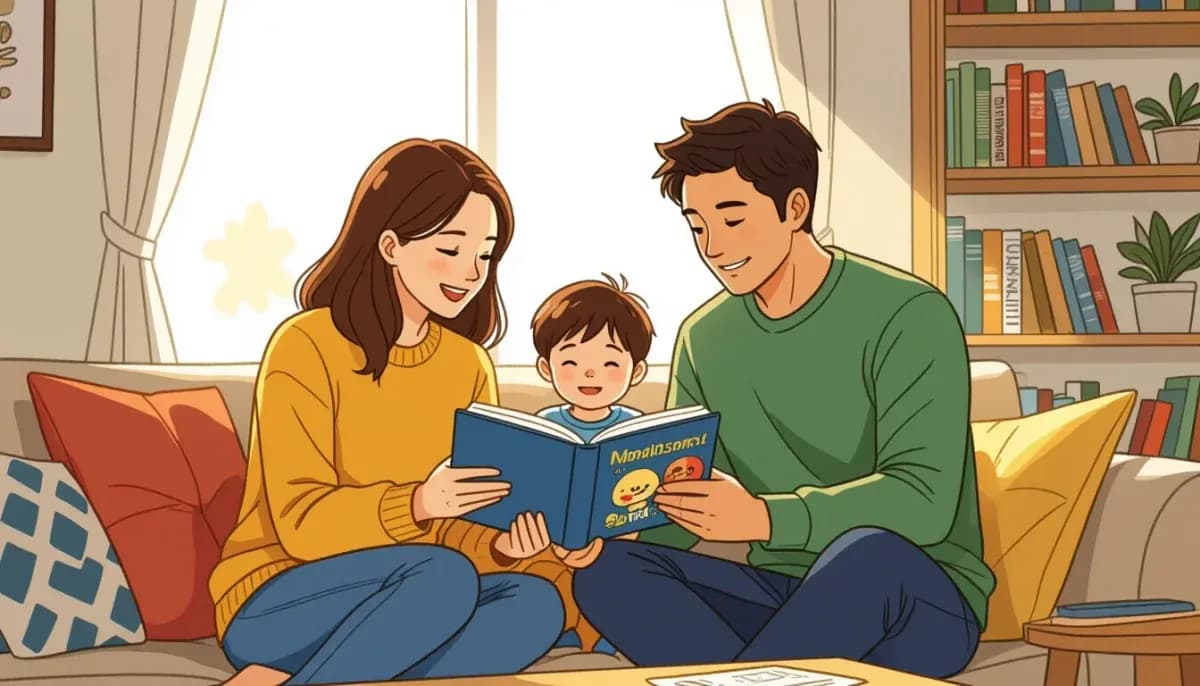
Raising Trilingual Children in Japan: Is It Possible?
Is it really possible to raise trilingual children in Japan? Discover proven strategies like OPOL, daily reading routines, heritage language schools, and real tips from expat families navigating multilingual parenting in Japan.
Read more →