
Water Safety and Drowning Prevention for Kids in Japan

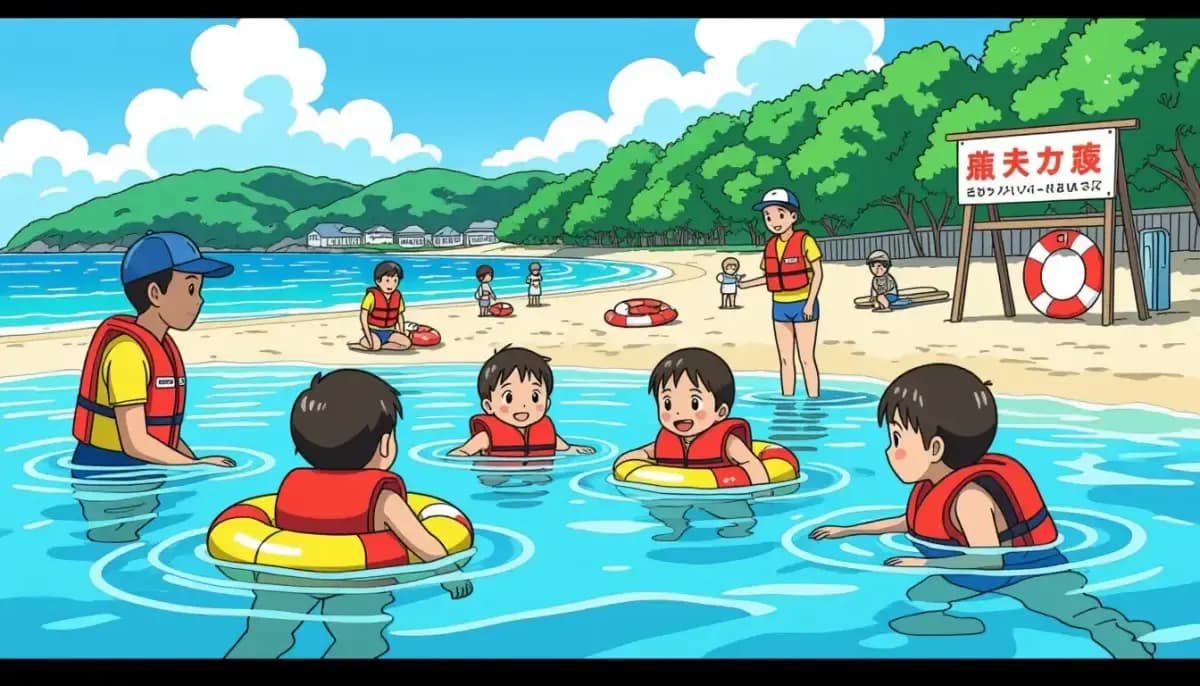
Essential water safety guide for parents raising kids in Japan. Learn about beach rip currents, river dangers, bathtub risks, emergency contacts, and Japan's drowning prevention resources for expat families.
Water Safety and Drowning Prevention for Kids in Japan
Japan's stunning coastlines, winding rivers, mountain streams, and neighborhood pools make summer an exciting time for families. But for parents raising children in Japan — whether newly arrived expats or long-term residents — the water brings serious risks that can't be overlooked. In 2024, Japan recorded 1,535 water accidents, the highest tally in nearly a decade, with 28 children losing their lives. Understanding where the dangers lie, how Japan manages water safety, and what you as a parent can do is essential for keeping your kids safe.
This guide covers everything foreign families need to know about water safety and drowning prevention for kids in Japan — from beaches and rivers to bathtubs and pools.
Japan's Drowning Statistics: What Parents Need to Know
The numbers are sobering but important. Japan's 2024 water accident data reveals:
- 1,535 water accidents total — the highest in almost 10 years
- 191 children (junior high school age and below) were involved in water accidents (10.9% of all victims)
- 28 child fatalities or disappearances were recorded
- 64.3% of child water deaths occurred in rivers — not at beaches or pools
What makes rivers so dangerous for children is a combination of deceptive currents, slippery moss-covered rocks, and rapid depth changes. A section of a river that looks ankle-deep can drop off suddenly, and water moving at just a few kilometers per hour can knock a small child off their feet instantly.
Age and gender matter too. Boys over age 2 face three times the drowning risk of girls the same age. Children aged 5 to 15 are statistically the most at-risk group overall, accounting for 30% of coastal drowning incidents. For toddlers under 4, the most common danger location is the bathtub — not the ocean.
For more on keeping children safe in Japan's various environments, see our guide to Emergency Preparedness and Child Safety in Japan.
Beach Safety in Japan: Rules, Rip Currents, and Lifeguard Zones
Japan has approximately 35,000 kilometers of coastline and over 1,250 designated swimming beaches. The Japan Coast Guard and local municipal authorities operate many of these official beaches with lifeguards, marked swimming zones, safety nets, and emergency equipment. Always swim at officially designated beaches — unofficial shorelines have none of these protections.
Rip Currents: Japan's #1 Coastal Killer
Rip currents are responsible for roughly 50% of all coastal drowning cases in Japan. Between 2003 and 2016, they caused an average of 582 fatal and non-fatal drownings per year. Children are especially vulnerable because they tire quickly and may panic when pulled out from shore.
How to spot a rip current:
- Choppy, discolored water cutting through breaking waves
- A channel of foam or debris moving steadily seaward
- An area where waves don't seem to be breaking
What to do if caught in a rip current:
- Do NOT swim against it — you will exhaust yourself
- Float or tread water calmly
- Swim parallel to shore until out of the current
- Then swim back to the beach at an angle
- Signal for help immediately
Teach older children these rules before visiting any Japanese beach. Even confident child swimmers can be overwhelmed by a rip current.
Other Coastal Hazards
Beyond rip currents, offshore winds account for 27% of coastal drowning cases. Inflatable toys and floats — extremely popular with young children in Japan — are dangerously susceptible to wind. A child on an inflatable ring can be carried offshore within minutes. Never rely on inflatable toys as a safety device, and always keep children within arm's reach in the water.
Japan's seas can also be surprisingly cold. Water temperatures between 12–17°C (common in spring and early summer) can cause cold water shock — an involuntary gasp response, panic, and rapid loss of muscle coordination. Even strong adult swimmers have drowned from cold water shock. If your child enters cold water:
- Stay calm and don't panic
- Float on your back and breathe slowly
- Call for help and wait for rescue
Jellyfish are another hazard, particularly in Okinawa. In 2023–2024, there were 66 marine creature incidents in Okinawa waters, with box jellyfish (habu kurage) involved in 17% of cases. Wear rash guards or wetsuits when swimming in Okinawan waters from summer through autumn.
For tips on traveling to coastal areas with children, see Family Travel in Japan: Destinations and Tips for Kids.
River Safety: Japan's Hidden Danger for Children
Rivers are where most child drowning deaths happen in Japan. The statistics are stark: 61% of water accidents for children aged 3–14 occur in rivers, lakes, and ponds. Fatal rates for young people are 2.7 times higher in rivers than at sea.
Why Japanese Rivers Are So Dangerous
Japan's rivers flow rapidly from steep mountainous terrain, and their character can change dramatically:
| River Hazard | Explanation |
|---|---|
| Deceptive depth | Water appears shallow but drops suddenly |
| Strong currents | Move faster than they appear from shore |
| Slippery surfaces | Moss and algae on rocks cause falls |
| Bank erosion | River edges can collapse without warning |
| Flash floods | Upstream rain causes rapid water level rises |
| Poor visibility | Murky water hides depth and hazards |
The Japan Coast Guard recommends:
- Stay at least 3–5 meters from the water's edge where footing is unstable
- Wear a life jacket near river banks
- Wade only in water below your knee
- Check weather forecasts before going — rain upstream can cause flash flooding even on sunny days
- Never enter rivers after rain, even if skies are clear locally
If your child is caught in a river current, teach them: do not try to stand up — the force of water will knock them down. Instead, try to find a calmer section of water and exit there, moving toward the bank at an angle rather than fighting the current directly.
Pool and Bathtub Safety: Dangers Closer to Home
Don't overlook dangers that are right in your home. For children under 4 in Japan, bathtubs are the most common location for drowning incidents. Japanese bathtubs are typically deep and filled with water that is kept warm for the entire family — a child left alone even briefly faces serious risk.
Home water safety rules:
- Never leave a young child unattended in the bath, even for a moment
- Drain the bathtub immediately after use
- Keep toilet lids closed and secured with a safety latch
- Empty paddling pools immediately after use
- Secure access to any water features in your garden
At public pools (including neighborhood pools operated by municipalities), Japan generally requires children under a certain age to be accompanied by an adult in the water. Follow posted rules carefully.
Learn more about childproofing your home and neighborhood environment in our guide to Healthcare and Medical Care for Children in Japan.
Water Safety Education in Japan: What Schools Teach (and What They Don't)
Many foreign parents assume Japan's school system covers water safety comprehensively. In fact, water safety education is considered primarily a parental responsibility in Japan. Schools do teach swimming as part of physical education (PE) from elementary school, but the focus is on swimming technique and fitness — not on broader water survival skills or hazard awareness.
Research has confirmed this gap. Studies on water safety programs for junior high students in Japan found:
- Water safety education increased awareness by 29.5%
- CPR training improved survival skills by 53.35%
- Swimming skills training improved self-rescue ability by 254.1%
The gap between swimming ability and water survival knowledge is significant. A child who can swim lengths in a pool may still panic and drown in a river with currents and unexpected depth changes.
What You Can Teach at Home
Supplement school PE with specific water survival skills:
- How to float on their back and conserve energy
- What to do if they fall into cold water
- How to recognize dangerous conditions before entering water
- How to identify and exit rip currents
- When and how to call for help (including Japan emergency numbers: 119 for ambulance, 118 for coast guard)
- Never to try to rescue a drowning person by jumping in — use a rope, pole, or float instead
For context on what physical education looks like in Japanese schools and how children develop physical competency, see our guide to Sports and Physical Activities for Children in Japan.
Japan's Water Safety Resources for Expat Families
Several English-language resources are specifically available for families in Japan:
Japan Coast Guard (English Water Safety Guide)
The Japan Coast Guard publishes an official English-language water safety guide covering beach and coastal safety rules. It covers designated swimming areas, rip currents, inflatable toy dangers, and guidelines for helping someone who is drowning. Available at: Japan Coast Guard Water Safety Guide (English)
Atlantic Pacific "4 Rules of Sea Safety"
The Atlantic Pacific Foundation — active in Japan's expat community — promotes four simple water safety rules available in both English and Japanese:
- Stop and think before entering the water
- Stay together — never swim alone
- Float — if in trouble, float to survive
- Call for help — signal rescuers and wait
The BCCJ (British Chamber of Commerce Japan) and other expat organizations have promoted these rules as part of World Drowning Prevention Day activities in Japan. Read more about their water safety campaigns.
Japan Lifesaving Association (JLA)
The JLA offers in-person water safety courses for children covering:
- Comfort and confidence in water
- Human chain rescue techniques
- Communication in water emergencies
They also offer an e-Lifesaving program using manga characters that teaches children to call for help, self-rescue, and identify unsafe areas.
AI Early Warning System
Since 2018, an AI-powered alert system monitors rip currents and offshore wind conditions at select Japanese beaches, sending real-time warnings to smartphones and digital displays. In its first two years, the system helped prevent over 3,300 incidents. Check if your local beach is covered by this system before swimming.
For further general information about living and raising children in Japan, Living in Nihon provides practical guides for foreign residents. For Work in Japan covers broader life as a foreigner in Japan, and Chuukou Benkyou offers educational resources for families.
Seasonal Water Safety Calendar for Japan
Japan's seasons determine water risks. Here's what to watch for throughout the year:
| Season | Primary Risks | Key Precautions |
|---|---|---|
| Spring (March–May) | Cold water shock, swollen rivers from snowmelt | Avoid rivers; water is deceptively cold |
| Summer (June–September) | Beaches, rip currents, jellyfish, rivers | Only use designated beaches; supervise constantly |
| Typhoon Season (July–October) | Flash flooding, dangerous sea conditions | Avoid all outdoor water until conditions clear |
| Autumn (October–November) | Cold water, reduced visibility | Shorter swim windows; watch for cold shock |
| Winter (December–February) | Cold water immersion risk | Avoid open water swimming entirely |
Summer is peak risk season. Japanese summer (July–August) sees the most family water activity, the most accidents, and the highest fatality rates. July and August account for the majority of child water accidents each year.
What to Do in a Water Emergency
Despite all precautions, accidents can happen. Every parent should know what to do:
If your child is in distress in water:
- Do NOT jump in unless you are a trained rescuer — most bystander drowning attempts result in two victims
- Throw something that floats (ball, cooler lid, inflatable toy)
- Extend a rope, towel, belt, or pole for them to grab
- Call 119 (ambulance/fire) immediately
- Call 118 for Japan Coast Guard (marine emergencies)
If your child is unconscious after a water incident:
- Call 119 immediately
- Begin CPR if trained — the dispatcher can guide you
- Keep the child warm and still while awaiting emergency services
- Do not leave the child alone
Consider enrolling yourself — and older children — in a first aid and CPR course. These are offered by the Japanese Red Cross (Nihon Sekijuji-sha) in English at select locations in major cities.
For a comprehensive overview of emergency preparation for your family, see our guide to Emergency Preparedness and Child Safety in Japan.
Summary: Key Water Safety Rules for Families in Japan
Water safety requires active, ongoing effort from parents. Japan's water environments are beautiful but can be unforgiving. The single most effective safety measure is constant, close adult supervision — not relying on floats, swimming ability, or lifeguards alone.
The essential rules:
- Only swim at officially designated beaches and pools
- Never let children swim unsupervised, even for a moment
- Treat rivers with extreme caution — they are responsible for most child deaths
- Learn to recognize rip currents and teach children what to do
- Keep young children away from home water hazards (bathtubs, buckets, pools)
- Supplement school PE with real water survival skills
- Know Japan's emergency numbers: 119 (ambulance) and 118 (coast guard)
For further reading on water safety data and research, the WHO Western Pacific provides detailed analysis of drowning prevention programs in Japan. Statistical data on Japan's water accident trends is available through Merxwire's coverage of Japan's 2024 drowning report. The End Drowning initiative also provides detailed risk factor analysis specific to Japan's coastlines.
Stay safe, stay informed, and enjoy Japan's amazing waters responsibly.

Originally from Vietnam, living in Japan for 16+ years. Graduated from Nagoya University, with 11 years of professional experience at Japanese and international companies. Sharing practical information for foreign parents raising children in Japan.
View Profile →Related Articles
Helping Children Recover After a Natural Disaster
A practical guide for foreign parents on helping children recover emotionally and mentally after a natural disaster in Japan, with evidence-based strategies and available support resources.
Read more →
Creating a Family Disaster Communication Plan
Learn how to create a family disaster communication plan in Japan as a foreign resident. Covers 171 dial, Safety Tips app, school protocols, and multilingual strategies for expat families.
Read more →
Emergency Contacts and Helplines for Families in Japan
Complete guide to emergency contacts and helplines for families in Japan. Police 110, ambulance 119, English hotlines, disaster messaging, and mental health support for expat families.
Read more →
Fire Safety at Home with Children in Japan
Essential fire safety guide for foreign families in Japan. Learn about smoke detectors, evacuation hatches, emergency procedures, teaching children fire safety, and protecting your home.
Read more →
Teaching Children About Stranger Danger in Japan
A complete guide for foreign parents on teaching children about stranger danger in Japan, covering the Kodomo 110-ban safety house system, evening chimes, age-appropriate safety conversations, and how Japan's approach differs from Western stranger-danger messaging.
Read more →
Basic First Aid for Children in Japan
Essential guide to basic first aid for children in Japan. Learn emergency numbers, common injury response, first aid kit essentials, CPR training options in English, and how Japan's pediatric healthcare system works for foreign parents.
Read more →