
Fire Safety at Home with Children in Japan

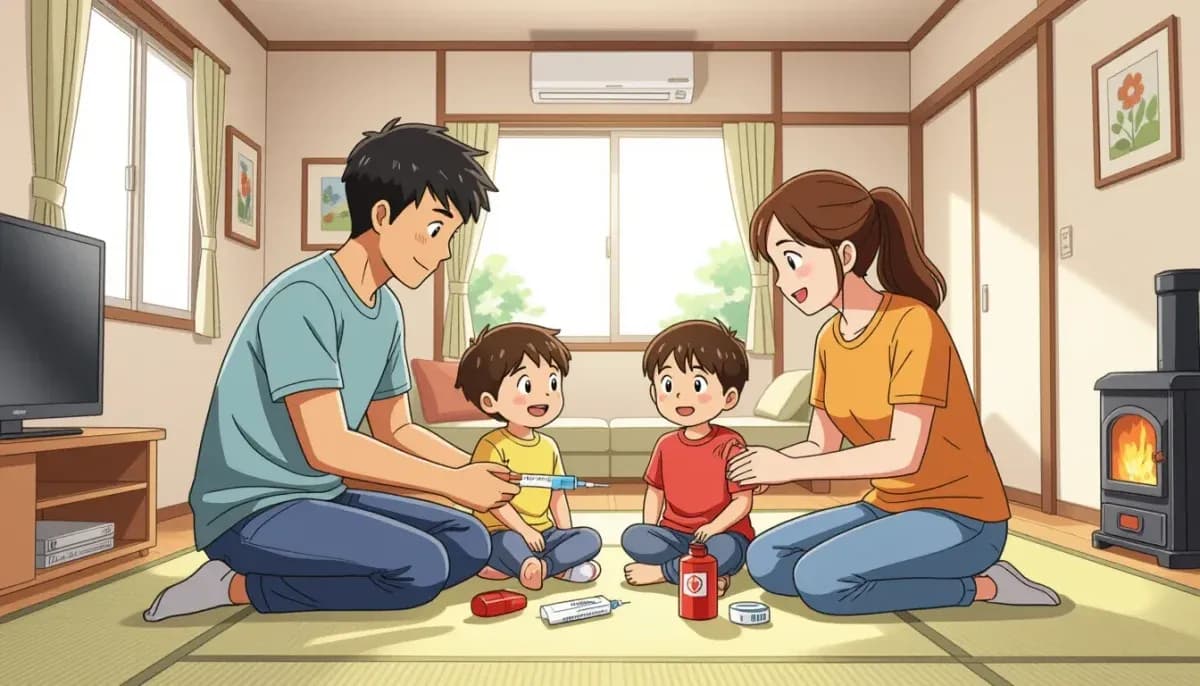
Essential fire safety guide for foreign families in Japan. Learn about smoke detectors, evacuation hatches, emergency procedures, teaching children fire safety, and protecting your home.
Fire Safety at Home with Children in Japan: A Complete Guide for Foreign Families
Living in Japan with children brings many joys, but it also comes with unique safety responsibilities. House fires are a serious concern in any country, and Japan is no exception — with approximately 36,300 fire incidents and over 1,400 fire-related fatalities recorded in 2022 alone. For foreign families, navigating Japan's fire safety systems, regulations, and emergency procedures requires extra preparation, especially when language barriers add complexity to an already stressful situation.
This guide covers everything expat and foreign parents need to know about fire safety at home in Japan, from understanding local fire risks and legal requirements to teaching children what to do in an emergency.
Understanding Fire Risks in Japanese Homes
Japanese homes, particularly apartments in dense urban areas, have specific structural and lifestyle factors that influence fire risk. Understanding these risks is the first step toward protecting your family.
Electrical appliances are the leading cause of fatal house fires in Japan, according to the Fire and Disaster Management Agency (FDMA). Overloaded power strips — known as "octopus wiring" or タコ足配線 (tako-ashi haisen) — are a common hazard in smaller apartments where outlets may be limited.
Kerosene heaters (石油ストーブ, sekiyu stove) are widely used in Japan during winter months. While effective, they require proper ventilation and must never be left unattended or used while sleeping. Keep at least one meter of clearance from all flammable materials such as curtains, bedding, and clothing.
Unattended cooking is another top cause. Japanese kitchens, often compact, mean that hot oil or unattended pots can quickly become a fire hazard. IH (induction) cooktops are becoming more common in modern apartments and significantly reduce this risk.
Cigarettes remain a leading cause in homes where smoking occurs indoors. Even in a non-smoking household, visiting guests can be a source of risk.
For families with young children, be especially mindful of small appliances left plugged in, candles used during power outages, and curious hands reaching near stovetops or outlets.
Japan's Fire Safety Laws and Building Requirements
Japan has a strong legal framework around fire prevention. Here are the most important rules foreign residents need to know:
Smoke detectors (住宅用火災警報器, jūtaku-yō kasai keihōki) have been legally required in all residential buildings since 2006. This applies to both houses and apartments. Detectors must be installed in bedrooms and hallways. Your landlord or building manager is generally responsible for ensuring these are present, but you should verify they work by pressing the test button monthly.
Evacuation hatches (避難ハッチ, hinan hatchi) are a uniquely Japanese feature found in the balconies of most mid-rise apartment buildings. These floor hatches allow residents to climb down to lower floors during a fire. They must never be blocked by storage, furniture, potted plants, or bicycles. Blocking an evacuation hatch is a violation of fire safety regulations and could endanger your neighbors.
Building fire drills (防火訓練, bōka kunren) are held semi-annually in most residential buildings, typically in spring and autumn. Participation is strongly encouraged by building management and local fire departments. These drills cover how to use fire extinguishers and evacuation procedures. Even if your Japanese is limited, attending these drills is valuable — the procedures are mostly visual and practical.
Fire extinguishers (消火器, shōkaki) are available at DIY stores like Cainz and Komeri. Some municipalities offer subsidized units. Having one in your kitchen is strongly recommended, especially if you cook with gas.
| Safety Item | Requirement | Where to Get |
|---|---|---|
| Smoke detectors | Legally required since 2006 | Provided by landlord; check monthly |
| Fire extinguisher | Recommended for all homes | DIY stores (Cainz, Komeri) |
| Evacuation hatches | Required in apartments | Built-in; never block with items |
| Fire blanket | Recommended | Home goods stores |
| Renters insurance | Strongly recommended | Insurance companies, bank counters |
Comprehensive fire safety guidance for expats living in Japan provides a detailed overview of the legal requirements and practical setup for foreign residents. More daily life tips and safety practices for foreigners in Japan can also be found at Living in Nihon and For Work in Japan.
Teaching Children Fire Safety in Japan
Children require age-appropriate fire safety education. In Japan, this education starts at school and daycare, but parents play the most critical role — especially for children who may not yet understand Japanese.
Children under age 5 cannot escape independently and are particularly vulnerable during nighttime fires. Studies show that children often hide from fire — in closets, under beds — rather than escaping. Teach your young children from an early age that fire means "get out and go to your meeting point."
Teach essential fire commands in both English and Japanese:
- "Fire! Get out!" / 「火事だ!逃げろ!」(Kaji da! Nigero!)
- "Stay low" / 「低くして」(Hikuku shite)
- "Don't hide" / 「隠れないで」(Kakurenai de)
- "Go to [your meeting spot]" / 「[待ち合わせ場所]に行って」
Practice fire escape plans at least twice a year, including at night when children are sleepy and disoriented. Assign clear roles: who carries the baby, who helps younger siblings, who grabs the go-bag.
Familiarize children with smoke alarm sounds through monthly testing. Many children sleep through alarm sounds they haven't heard before. Regular testing helps ensure they will wake up and react appropriately.
Teach STOP, DROP, and ROLL for if clothing catches fire. Make it a game for younger children so it becomes second nature.
Tokyo's Honjo Life Safety Learning Center (本所生活安全学習館), operated by the Tokyo Fire Department, offers free family tours featuring hands-on fire and disaster simulations. It's an excellent educational experience for children aged 6 and up. Similar facilities exist in other major cities.
See also our guide on healthcare and medical care for children in Japan for related safety information, and baby and infant care in Japan for tips on keeping the youngest family members safe.
Emergency Procedures: What to Do If a Fire Starts
Knowing exactly what to do before a fire happens means you won't freeze in the moment. Here's a step-by-step plan for your household.
If the fire is small (waist-height or lower):
- Alert everyone in the apartment
- Close the door to the room to contain the fire
- Use a fire extinguisher or wet towel to smother it
- Call 119 even if you put it out
If the fire grows or smoke fills the room:
- Shout "Kaji desu!" (火事です — There is a fire!) to alert neighbors
- Evacuate immediately — take only your emergency bag if it's immediately at hand
- Stay as low as possible — smoke rises and is the main killer
- Feel doors before opening — if hot, use another exit
- Close doors behind you to slow the fire's spread
- Use stairs only — never elevators
- Do not re-enter the building for any reason
Call 119 for fire and ambulance services. This number is free, available 24/7, and reachable from any phone including public phones. If you don't speak Japanese, say:
- "Kaji desu" (火事です) = "There is a fire"
- "English, please" — multilingual interpreter service is available in most areas
- Give your full address in Japanese: city (市), ward (区), district (丁目), block (番地). Write your address in Japanese on a card and keep it near your phone.
After a fire or during a disaster: use NTT 171 (Disaster Emergency Message Dial) to leave or listen to recorded safety messages for your family when phone networks are congested.
The Japan Handbook emergency numbers guide provides a useful reference for multilingual emergency support in Japan. For general expat family safety practices, The Tokyo Chapter's family safety rules is also an excellent resource written from an expat parent's perspective.
Creating a Family Fire Safety Plan
A written fire safety plan gives every family member — including children — a clear set of instructions to follow. Here's how to create one for your household in Japan.
Step 1: Walk your home and identify exits. In a Japanese apartment, this typically means the front door and the balcony evacuation hatch. For houses, identify all windows and doors that can be used as exits.
Step 2: Designate a meeting point. Choose a specific spot outside your building that everyone in the family knows — a specific tree, mailbox, or park bench. Make sure children can navigate there on their own if separated.
Step 3: Assign roles. Who carries the youngest child? Who carries the go-bag? Who checks each room? Write these roles down and review them with the family.
Step 4: Prepare a go-bag. A fire go-bag should be stored near your front door and contain:
- Passports and residence cards (在留カード)
- Emergency cash
- Phone chargers
- Medications
- A printed list of emergency contacts
- Copies of insurance documents
Step 5: Practice. Run through the evacuation plan at least twice a year, including once at night. Time it. Children should be able to get out of the building within 2-3 minutes.
Step 6: Review with neighbors. Introduce yourself to neighboring households and let them know you may need language assistance in an emergency. Many Japanese neighbors are very willing to help once you've established a relationship.
For more on disaster preparedness as a whole, particularly the earthquake preparedness planning that is equally essential in Japan, see our article on visa and legal issues for foreign families with children in Japan for the documentation side of emergency readiness.
Insurance and Financial Preparedness for Fire
Fire damage can be financially devastating. Japan's renters insurance system is affordable and provides important coverage for foreign residents.
Renters insurance (火災保険, kasai hoken) in Japan typically costs between ¥10,000 and ¥20,000 per year and covers:
- Your belongings in case of fire, water damage, or theft
- Liability if your fire damages a neighbor's apartment
- Temporary housing costs while repairs are made
Note that earthquake insurance (地震保険, jishin hoken) is a separate policy and must be purchased in addition to standard fire insurance. Given Japan's seismic activity, earthquake insurance is strongly recommended for all families.
Most landlords require renters insurance as part of the lease agreement. You can purchase it through your real estate agent when signing the contract, through your bank, or through major insurance providers directly. Revisit your coverage annually to ensure it reflects the current value of your belongings.
For broader financial planning advice for your family in Japan, see our guide on financial planning for expat families with children in Japan. You may also be eligible for government support programs — learn more in our article on government benefits and subsidies for families in Japan.
Also visit Chuukou Benkyou for education resources helpful to families raising children in Japan.
Summary: Fire Safety Checklist for Foreign Families in Japan
Use this checklist to ensure your family is prepared:
- [ ] Smoke detectors installed in all bedrooms and hallways — test monthly
- [ ] Balcony evacuation hatches clear of all obstructions
- [ ] Fire extinguisher in the kitchen
- [ ] 119 saved in all family members' phones
- [ ] Japanese address written in Japanese and stored near every phone
- [ ] Family fire escape plan written and practiced
- [ ] Go-bag prepared and stored near the front door
- [ ] Renters (fire) insurance policy active
- [ ] Earthquake insurance policy active
- [ ] Attended or scheduled building fire drill attendance
- [ ] Children taught "Kaji desu!" and meeting point location
Being prepared doesn't mean living in fear — it means living confidently, knowing your family is ready for whatever comes. Take an afternoon this week to walk through your home, test your smoke alarms, and talk to your children about what to do in a fire. It may be the most important conversation you have this year.

Originally from Vietnam, living in Japan for 16+ years. Graduated from Nagoya University, with 11 years of professional experience at Japanese and international companies. Sharing practical information for foreign parents raising children in Japan.
View Profile →Related Articles
Helping Children Recover After a Natural Disaster
A practical guide for foreign parents on helping children recover emotionally and mentally after a natural disaster in Japan, with evidence-based strategies and available support resources.
Read more →
Creating a Family Disaster Communication Plan
Learn how to create a family disaster communication plan in Japan as a foreign resident. Covers 171 dial, Safety Tips app, school protocols, and multilingual strategies for expat families.
Read more →
Emergency Contacts and Helplines for Families in Japan
Complete guide to emergency contacts and helplines for families in Japan. Police 110, ambulance 119, English hotlines, disaster messaging, and mental health support for expat families.
Read more →
Water Safety and Drowning Prevention for Kids in Japan
Essential water safety guide for parents raising kids in Japan. Learn about beach rip currents, river dangers, bathtub risks, emergency contacts, and Japan's drowning prevention resources for expat families.
Read more →
Teaching Children About Stranger Danger in Japan
A complete guide for foreign parents on teaching children about stranger danger in Japan, covering the Kodomo 110-ban safety house system, evening chimes, age-appropriate safety conversations, and how Japan's approach differs from Western stranger-danger messaging.
Read more →
Basic First Aid for Children in Japan
Essential guide to basic first aid for children in Japan. Learn emergency numbers, common injury response, first aid kit essentials, CPR training options in English, and how Japan's pediatric healthcare system works for foreign parents.
Read more →