
Basic First Aid for Children in Japan

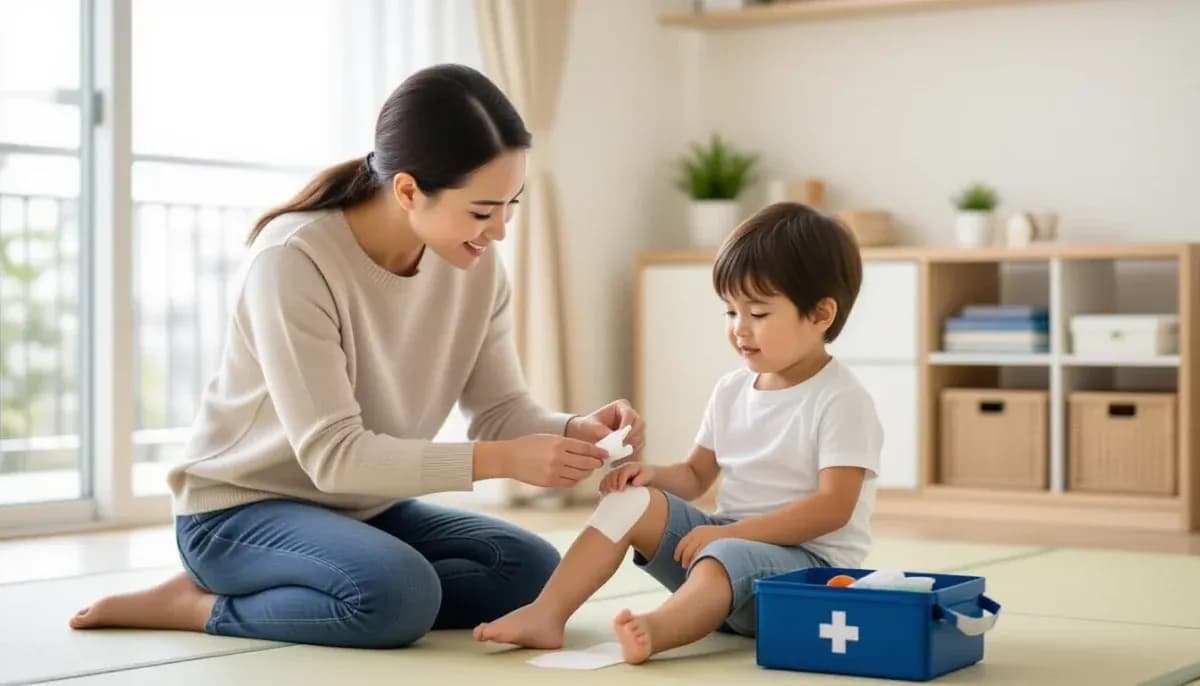
Essential guide to basic first aid for children in Japan. Learn emergency numbers, common injury response, first aid kit essentials, CPR training options in English, and how Japan's pediatric healthcare system works for foreign parents.
Basic First Aid for Children in Japan: A Complete Guide for Foreign Parents
As a foreign parent raising children in Japan, knowing the basics of pediatric first aid is one of the most important preparations you can make. From minor scrapes at the local park to more serious emergencies, understanding how Japan's emergency response system works — and having the skills to act before help arrives — can make all the difference. This guide covers everything expat parents need to know about basic first aid for children in Japan, including emergency numbers, common injuries, first aid kit essentials, and where to find training in English.
Understanding Japan's Emergency System for Children
When a child has a medical emergency in Japan, the first thing to know is that the system works differently from many Western countries. Call 119 (the equivalent of 911 or 999) to request an ambulance (救急車, kyūkyūsha). The dispatcher will ask for your location, the child's age, and the nature of the emergency. In major cities, English-speaking operators or transfer services are often available.
One critical difference: do not drive your child directly to a hospital emergency room without calling first. In Japan, arriving at an ER unannounced can actually delay care, as hospitals need to confirm they have the appropriate specialist and resources before accepting a patient. The 119 dispatcher will coordinate with the best-suited facility and send paramedics who are equipped to begin treatment en route.
For non-life-threatening concerns — a fever that won't break, a rash you're unsure about, or a minor injury — parents in Tokyo can call the Tokyo Metropolitan Health and Medical Information Center at 03-5285-8181, available daily from 9am to 8pm. Guidance is offered in English, Chinese, Korean, Thai, and Spanish. Emergency translation assistance is available at 03-5285-8185 if you reach a Japanese-speaking operator during an urgent call.
Essential First Aid for Common Childhood Injuries
Research suggests that over 80% of children in Japan experience some kind of injury before 18 months of age. Knowing how to handle the most common situations calmly and effectively is a core parenting skill.
Cuts and Scrapes
- Rinse the wound thoroughly under running water for at least 1–2 minutes to remove dirt and debris.
- Apply gentle pressure with a clean cloth to stop bleeding.
- Cover with an adhesive bandage (絆創膏, bansōkō) — available at any pharmacy.
- Watch for signs of infection over the following days: redness spreading from the wound, warmth, swelling, or pus.
Burns
- Cool the burn immediately under cool (not cold or iced) running water for at least 10–20 minutes.
- Do not apply butter, toothpaste, or any home remedy — these can worsen injury and risk infection.
- Cover loosely with a clean non-stick dressing.
- For burns larger than a child's palm, burns on the face/hands/feet/genitals, or any deep burn, seek medical care.
Choking
For children over 1 year old: use abdominal thrusts (the Heimlich maneuver). Kneel or crouch behind the child, make a fist above the navel and below the ribcage, and deliver firm inward-upward thrusts until the object is expelled or the child becomes unconscious. For infants under 1 year: alternate 5 back blows (firm strikes between the shoulder blades) with 5 chest thrusts. Never perform blind finger sweeps in an infant's mouth.
Fever
High fevers in young children are common in Japan, particularly during seasonal illness peaks. A fever above 38°C (100.4°F) in infants under 3 months warrants immediate medical evaluation. For older children, fever reducers in pediatric doses (acetaminophen or ibuprofen) are available at Japanese pharmacies — ask for 子ども用 (kodomo-yō, "for children") products. Keep children hydrated with oral electrolyte solutions (経口補水液, keikō hōsuieki) like OS-1 or Pocari Sweat Ion Supply.
Head Injuries
Children fall — from bicycles, playground equipment, and simply learning to walk. After a head impact:
- Monitor closely for 24 hours
- Seek immediate medical care if the child loses consciousness, vomits more than once, has a seizure, develops unequal pupils, or is inconsolable
Building a Child-Friendly First Aid Kit in Japan
Assembling a well-stocked first aid kit before you need it is far easier than scrambling for supplies in a crisis. Japan's pharmacy chains — Matsumoto Kiyoshi (マツモトキヨシ), Welcia (ウエルシア), and Tsuruha Drug (ツルハドラッグ) — carry a full range of first aid supplies. Look for the 救急用品 (kyūkyū yōhin) aisle.
| Item | Japanese Name | Notes |
|---|---|---|
| Adhesive bandages (various sizes) | 絆創膏 (bansōkō) | Get child-friendly patterned ones |
| Sterile gauze pads | ガーゼ (gāze) | For larger wounds |
| Medical tape | 医療用テープ (iryōyō tēpu) | Hypoallergenic if possible |
| Antiseptic solution | 消毒液 (shōdoku-eki) | Povidone-iodine or chlorhexidine |
| Child thermometer | 体温計 (taionkei) | Ear or underarm digital |
| Pediatric fever reducer | 子ども用解熱剤 | Acetaminophen (アセトアミノフェン) |
| Oral electrolyte solution | 経口補水液 | OS-1 brand widely available |
| Tweezers | ピンセット | For splinters |
| Cold pack (instant) | 冷却パック | For bumps and sprains |
| Oral syringe | 経口シリンジ | For liquid medicines |
Important note on medications: Some medications that parents might consider standard — including epinephrine auto-injectors (EpiPens), opioid-based cough medicines, ADHD medications like Adderall, and certain decongestants — are either tightly restricted or outright prohibited in Japan. If your child requires any prescription medication that you bring from abroad, obtain advance approval from Japan's Ministry of Health, Labour and Welfare (厚生労働省) before arriving. This applies even to short visits. See our guide on Healthcare and Medical Care for Children in Japan for more detail on navigating Japan's medical system.
CPR and First Aid Training in Japan (Including English Options)
Every parent should know how to perform CPR and respond to choking emergencies. The good news is that training opportunities are plentiful in Japan — though most are conducted in Japanese.
The Japanese Red Cross Society (日本赤十字社, JRCS) offers a highly recommended Child Safety course that covers infant and child CPR, AED use, and responding to choking emergencies. The course is designed for parents and caregivers of infants through preschool-age children, and English-language sessions with volunteer interpreters are periodically organized in Tokyo. Learn more at the JRCS safety and first aid programs page.
For English-language certification courses, several private providers operate in major urban areas:
| Provider | Course Type | Cost (Approx.) |
|---|---|---|
| InterAssist (Tokyo) | CPR/AED + First Aid | ¥21,500–¥26,500 |
| Save a Life Tokyo | Infant & Child CPR | ¥12,000–¥22,000 |
| Tokyo CPR & First Aid | BLS / Family CPR | ¥14,700 |
| Local Fire Department | CPR (Japanese only) | Free |
| Ward/Municipal Office | Basic First Aid | Free (Japanese) |
Local fire stations (shōbōsho, 消防署) and ward offices (kuyakusho, 区役所) offer free first aid courses in Japanese, typically on evenings or weekends. These are excellent community resources even if your Japanese is limited — hands-on practice with CPR mannequins needs no translation. For English-language community programs, check with your nearest international school, expat community group, or hospitals with international patient centers.
For comprehensive guidance on building your expat parenting network in Japan, visit Living in Nihon and For Work in Japan — both offer valuable resources for foreign residents navigating life in Japan.
AEDs in Japan: A Lifesaving Advantage
Japan has one of the highest densities of publicly accessible AEDs (Automated External Defibrillators) in the world. You will find them in train stations, convenience stores (7-Eleven, FamilyMart, Lawson), shopping malls, schools, and community centers. They are typically housed in bright green or red wall-mounted boxes labeled AED (自動体外式除細動器).
Modern AEDs provide clear audio and visual instructions — including many with multilingual options — and are designed to be used by untrained bystanders. In a situation where a child becomes unresponsive and is not breathing normally:
- Call 119 immediately
- Send someone to retrieve the nearest AED
- Begin CPR (30 chest compressions to 2 rescue breaths for children; compression-only CPR is acceptable if you are not trained)
- Apply the AED as soon as it arrives and follow its instructions
Pediatric pads (smaller pads with reduced energy) are included in many AEDs. If pediatric pads are not available, adult pads may be used on children over 8 years old by placing one on the chest and one on the back.
Hospital Visits and Child Medical Costs in Japan
If first aid is not sufficient and your child needs professional medical evaluation, Japan's healthcare system is well-equipped and generally affordable for children. Most municipal governments in Japan participate in the Child Medical Assistance Program (子ども医療費助成制度), which subsidizes or fully covers the cost of medical care for children. In many areas, children pay zero out-of-pocket for hospital visits when enrolled in the national health insurance system.
To use this benefit, you typically need to:
- Enroll your child in national health insurance (国民健康保険) or obtain coverage through your employer
- Register with your local ward or city office to receive the children's medical assistance certificate (医療証)
- Present both the health insurance card and the 医療証 at the hospital
For more information on navigating government benefits available to foreign families, see our articles on Government Benefits and Subsidies for Families in Japan and Baby and Infant Care in Japan.
When choosing a clinic or hospital for non-emergency situations, the Tokyo Chapter's guide to child healthcare offers practical advice on finding English-speaking pediatricians and navigating clinic visits. The Japan Handbook's first aid supplies guide provides an even deeper breakdown of what's available in Japanese pharmacies.
Practical Emergency Preparation: A Checklist for Foreign Parents
Preparation before an emergency is as important as knowing what to do when one happens. Use this checklist to make sure your family is ready:
- [ ] Save 119 in your phone as "Japan Emergency"
- [ ] Save 03-5285-8181 (Tokyo health info line) in your phone
- [ ] Assemble and maintain a pediatric first aid kit at home
- [ ] Know the location of the nearest hospital with a pediatric department
- [ ] Identify the nearest AED to your home and your child's school/daycare
- [ ] Complete a CPR and first aid course (English options available)
- [ ] Keep a written list of your child's medical history, allergies, and medications for emergencies
- [ ] Register for the children's medical assistance program at your ward office
- [ ] Check that any prescription medications you import comply with Japanese regulations
For parents navigating the broader challenges of raising children abroad, Chuukou Benkyou offers additional resources for foreign families in Japan, including guidance on education and child development. You may also find our guide on Mental Health and Emotional Wellbeing for Foreign Children in Japan helpful as you build your family's resilience and preparedness.
Being prepared is the most powerful thing you can do as a parent. Japan is a safe, well-equipped country with excellent emergency services — but those services work best when parents are informed, stocked, and trained to respond confidently in the critical first minutes before help arrives.

Originally from Vietnam, living in Japan for 16+ years. Graduated from Nagoya University, with 11 years of professional experience at Japanese and international companies. Sharing practical information for foreign parents raising children in Japan.
View Profile →Related Articles
Helping Children Recover After a Natural Disaster
A practical guide for foreign parents on helping children recover emotionally and mentally after a natural disaster in Japan, with evidence-based strategies and available support resources.
Read more →
Creating a Family Disaster Communication Plan
Learn how to create a family disaster communication plan in Japan as a foreign resident. Covers 171 dial, Safety Tips app, school protocols, and multilingual strategies for expat families.
Read more →
Emergency Contacts and Helplines for Families in Japan
Complete guide to emergency contacts and helplines for families in Japan. Police 110, ambulance 119, English hotlines, disaster messaging, and mental health support for expat families.
Read more →
Fire Safety at Home with Children in Japan
Essential fire safety guide for foreign families in Japan. Learn about smoke detectors, evacuation hatches, emergency procedures, teaching children fire safety, and protecting your home.
Read more →
Water Safety and Drowning Prevention for Kids in Japan
Essential water safety guide for parents raising kids in Japan. Learn about beach rip currents, river dangers, bathtub risks, emergency contacts, and Japan's drowning prevention resources for expat families.
Read more →
Teaching Children About Stranger Danger in Japan
A complete guide for foreign parents on teaching children about stranger danger in Japan, covering the Kodomo 110-ban safety house system, evening chimes, age-appropriate safety conversations, and how Japan's approach differs from Western stranger-danger messaging.
Read more →