
One Parent One Language (OPOL) Method in Japan

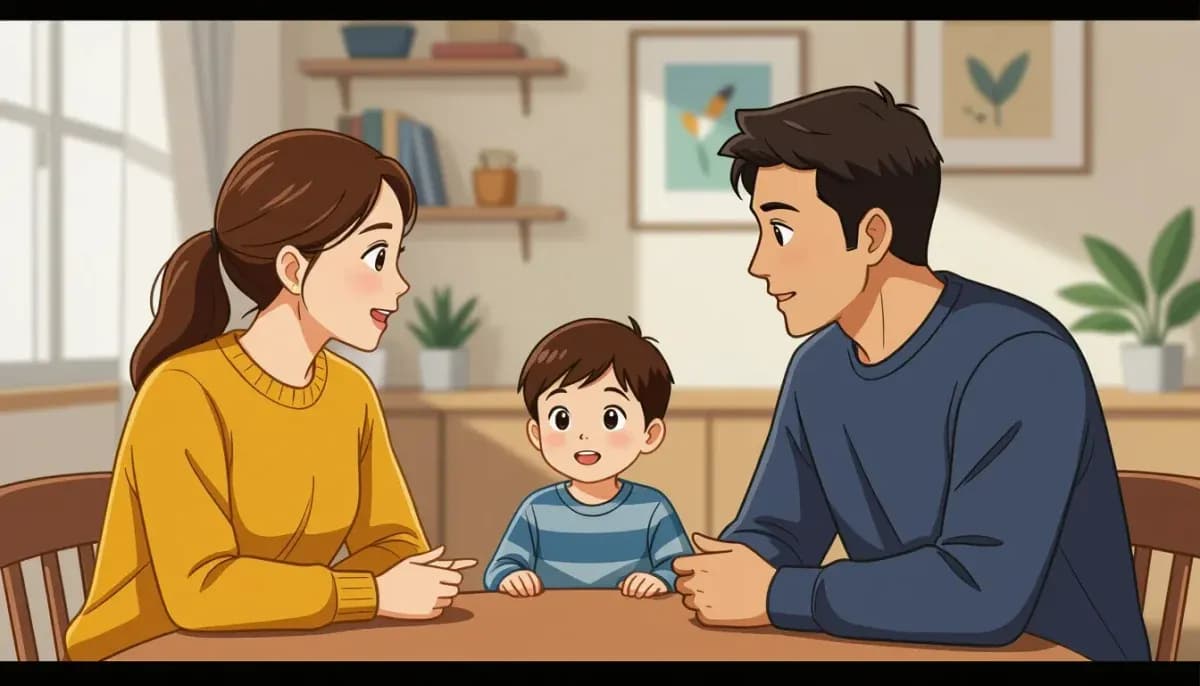
Discover how to use the OPOL (One Parent One Language) method to raise bilingual children in Japan. Practical tips, research data, and strategies for expat families in Japan.
One Parent One Language (OPOL) Method in Japan: A Complete Guide for Expat Families
Raising bilingual children is one of the most rewarding challenges an expat family can take on. In Japan, where the dominant language is deeply embedded in daily life, culture, and schooling, the task becomes even more complex — but also more exciting. The One Parent One Language (OPOL) method is one of the most widely recommended strategies for families navigating multilingual life in Japan. This guide explains what OPOL is, how it works in a Japanese context, its strengths and limitations, and practical tips to make it work for your family.
What Is the OPOL Method?
OPOL stands for "One Parent One Language" (sometimes called "One Person One Language"). The principle is simple: each parent consistently speaks a different language to the child. For example, in a Japanese-English family, the Japanese-speaking parent always speaks Japanese, while the English-speaking parent always speaks English — regardless of the setting.
This approach creates natural, immersive language exposure from birth. Rather than formal lessons, the child absorbs both languages through daily conversation, play, and emotional bonding with each parent. The OPOL method is widely regarded as one of the most effective bilingual strategies because it provides a clear, consistent source for each language.
The approach was formally described by linguist Maurice Grammont in 1902 and has since been studied extensively. Research shows that OPOL succeeds in transmitting a minority language approximately 74% of the time when applied consistently. By contrast, families where both parents speak the majority language achieve only a 36% minority language transmission rate.
Why OPOL is Popular Among Expat Families in Japan
Japan is a highly monolingual country by global standards. Japanese dominates in schools, media, workplaces, and social settings. For expat parents who want their children to maintain proficiency in their home language — be it English, Spanish, French, Korean, or another language — OPOL provides a structured framework.
Here's why OPOL particularly appeals to families in Japan:
- Japanese is the majority language everywhere outside the home, so children will develop Japanese skills naturally through school and social life.
- The minority (home) language needs intentional support since it won't be reinforced by society.
- OPOL creates a clear division: the non-Japanese parent becomes the "custodian" of the family's heritage or home language.
- Children benefit from deep emotional bonds in both languages since each language is linked to a specific caregiver.
According to MEXT (Japan's Ministry of Education) 2024 data, approximately 115,000 public-school students in Japan are raised in multilingual environments, with nearly 60% requiring additional Japanese language support. This growing population shows how common — and necessary — multilingual parenting has become.
How to Implement OPOL in Japan: A Step-by-Step Approach
Successfully using OPOL in Japan requires more than just agreeing to speak different languages. It demands a consistent, long-term strategy.
Step 1: Assign Languages Clearly
Decide from the beginning (ideally before birth) which parent speaks which language. Common combinations in Japan include:
- One parent in Japanese + one parent in English
- One parent in Japanese + one parent in another Asian language (Korean, Chinese, etc.)
- Both parents are non-Japanese + they want the child to learn Japanese naturally through school and outside exposure
Be explicit about the assignment and stick to it. Even when relatives, friends, or teachers are present, maintain your designated language.
Step 2: Stay Consistent — Even in Public
The biggest challenge OPOL parents face is consistency in social settings. In Japan, social norms can make speaking a foreign language in public feel awkward. Some parents switch to Japanese to avoid standing out. However, consistency is the single most important factor in OPOL success.
Research on Japanese mothers abroad found that only those who consistently insisted on speaking Japanese with their children saw their children use the language actively as adults. The social discomfort is temporary; your child's language loss can be permanent.
Step 3: Reinforce the Minority Language Outside the Home
OPOL alone, while powerful, has limitations. Japanese becomes increasingly dominant as your child enters school, makes friends, and consumes media. To counteract this:
- Enroll your child in weekend language schools (e.g., British schools, American schools Saturday programs)
- Find community groups of families sharing your heritage language
- Hire babysitters or tutors who speak the minority language
- Visit the home country regularly to immerse your child in the broader language community
- Use books, films, and music in the minority language at home
Step 4: Prepare for the "Japanese-Only" Phase
Almost all OPOL families in Japan encounter a phase — usually around age 5-7 when children start elementary school — where the child refuses to speak the minority language. This is normal and not a sign of failure. The child is not losing the language; they are asserting social belonging.
The key is to not give up. Respond in your language, create low-pressure opportunities for the minority language, and connect the language to positive experiences: video calls with grandparents, favorite books, or trips to the home country.
Pros and Cons of OPOL in Japan
| Feature | Advantage | Challenge |
|---|---|---|
| Language clarity | Clear link between person and language | Requires rigid consistency from both parents |
| Natural acquisition | Child learns through daily interaction | Minority language needs external reinforcement |
| Heritage connection | Preserves family culture and identity | Social pressure in Japan to use Japanese |
| Flexibility | Works for bilingual and trilingual families | One parent carries most of the minority language burden |
| Research-backed | 74% minority language transmission rate | Lower success if consistency breaks down |
OPOL vs. Other Bilingual Strategies in Japan
OPOL is not the only approach. Understanding the alternatives helps you make the right choice for your family.
Minority Language at Home (MLAH): Both parents speak the minority language at home, and children learn Japanese through school and social activities. This achieves the highest success rate — around 97% minority language transmission — but requires both parents to share the minority language.
Time and Place (T&P): Specific times or locations are designated for each language. For example, English at home, Japanese outside. This works for some families but can feel artificial.
Mixed Language Policy: Parents use both languages freely, and children hear code-switching naturally. Research suggests this is the least effective method for producing balanced bilinguals.
For most expat families in Japan — especially those with one Japanese parent and one non-Japanese parent — OPOL is the most natural and realistic choice. For families where neither parent is Japanese, MLAH (speaking the home language exclusively at home) combined with school-based Japanese acquisition is often even more effective.
For more on raising bilingual children strategies, read our guide on Raising Bilingual Children in Japan: Strategies and Best Practices.
Common Challenges and How to Overcome Them
Challenge 1: "My child only responds in Japanese" This is the most common struggle. Your child understands the minority language but uses Japanese because it's easier. Solution: Create contexts where Japanese is unavailable or less useful. Video calls with monolingual grandparents, playdates with non-Japanese-speaking children, or trips to your home country all create genuine motivation to use the minority language.
Challenge 2: "My partner is not consistent" OPOL only works if both parents commit. Have an honest conversation about long-term goals. If your partner struggles, focus on increasing your own input quality rather than criticizing their consistency.
Challenge 3: "I don't have enough vocabulary in my language" This is rare but affects some heritage language speakers. Solution: Grow alongside your child. Read books together, watch films, and use this as a chance to deepen your own language skills.
Challenge 4: "School and friends create overwhelming Japanese dominance" Japanese immersion through school is intense and effective. This is actually GOOD — it means Japanese will be strong. Your job is to protect the minority language. The school does the Japanese work for you.
For teaching Japanese specifically to your foreign-born child, see our article on Teaching Japanese to Foreign Children: Methods and Resources.
Supporting Your Child's Bilingual Identity
Language is not just communication — it is identity. In Japan, bilingual children — often called "hafu" if they are mixed heritage — navigate complex questions of belonging and self-expression. OPOL supports identity formation by giving children genuine fluency in both their parent cultures.
Celebrate bilingualism openly. Let your child know that speaking multiple languages is a superpower, not a burden. Share stories, food, traditions, and media from both cultures. Connect with the bilingual parent community in Japan — many cities have international parenting groups and bilingual family networks.
For deeper insight into identity challenges, see our guide on Cultural Identity for Hafu and Mixed-Race Children in Japan.
Additional Resources for OPOL Families in Japan
- Bilingual Education Tips for Children in Japan — Living in Nihon: A practical resource for expat families navigating the Japanese education system while maintaining heritage languages.
- Family Life and Work-Life Balance in Japan — For Work in Japan: Practical guidance for working parents in Japan, including resources for managing bilingual family life.
- Study Support for Children in Japan — Chuukou Benkyou: Study guidance for middle and high school students in Japan, useful for bilingual families navigating the Japanese exam system.
- How the Popular OPOL Method Works (and How It Doesn't) — Chalk Academy: A thorough breakdown of OPOL principles with practical advice for mixed-language families.
- Raising Bilingual Children with OPOL — Tiny Whale Tales: Real-world experience from a bilingual family using OPOL, with research statistics and tips.
- Bilingual Education is on the Rise in Japan — The Japan Times: Recent coverage of the growing bilingual education movement in Japan's schools.
Conclusion
The OPOL method is a proven, effective strategy for raising bilingual children in Japan. It works best when both parents are committed to consistency, when the minority language is actively reinforced outside the home, and when children are encouraged to see bilingualism as a strength. Japan's monolingual environment creates challenges, but it also creates a clear structure: Japanese is handled by school and society; your job is to build and protect the heritage language.
Every family is different. Adjust OPOL to fit your situation — some parents are strict one-language purists, while others allow natural code-switching while still maintaining their primary language as the default. The goal is not perfection; it is consistent, loving engagement in your language, year after year.
If you are just beginning your bilingual parenting journey in Japan, also explore our complete guide to Heritage Language Maintenance for Children in Japan for long-term strategies.

Originally from Vietnam, living in Japan for 16+ years. Graduated from Nagoya University, with 11 years of professional experience at Japanese and international companies. Sharing practical information for foreign parents raising children in Japan.
View Profile →Related Articles

How to Measure Your Child's Bilingual Language Proficiency
Learn practical methods, tools, and milestones for measuring your bilingual child's language proficiency in Japan. Covers home assessment, formal tools, and when to seek help.
Read more →
Online Tutors and Language Apps for Bilingual Kids
Discover the best online tutors and language apps for bilingual kids in Japan. Expert guide covering apps like Duolingo, Lingodeer, and top tutoring platforms for expat families raising bilingual children.
Read more →
Weekend Language Schools and Saturday Schools in Japan
Complete guide to weekend language schools and Saturday schools in Japan for foreigners. Discover part-time Japanese classes, costs, visa requirements, and options for children's heritage language education.
Read more →
Supporting Bilingual Children in Japanese Public Schools
A complete guide for foreign parents on supporting bilingual children in Japanese public schools — language programs, home strategies, cognitive benefits, and tips for working with teachers.
Read more →
Bilingual Speech Delay: Facts vs Fiction
Is bilingual speech delay real? Science says no. Learn the facts vs fiction about raising bilingual children in Japan, including when to seek help and expert tips for expat families.
Read more →
Raising Trilingual Children in Japan: Is It Possible?
Is it really possible to raise trilingual children in Japan? Discover proven strategies like OPOL, daily reading routines, heritage language schools, and real tips from expat families navigating multilingual parenting in Japan.
Read more →