
Traveling by Train with Children in Japan: Tips and Tricks

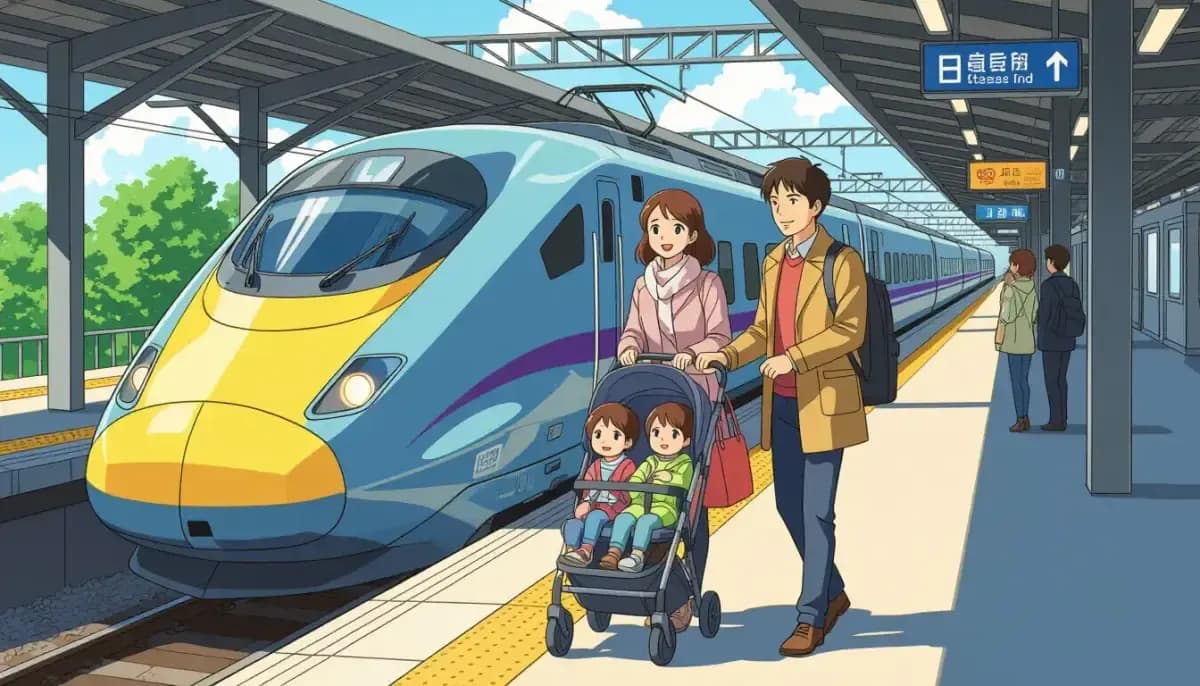
Complete guide to traveling by train with children in Japan. Covers fares, IC cards, strollers, rush hour tips, etiquette, Shinkansen facilities, and safety advice for foreign families.
Traveling by Train with Children in Japan: Tips and Tricks
Japan's rail network is one of the finest in the world — punctual, clean, safe, and remarkably child-friendly when you know what to expect. Spanning over 30,000 kilometers with hundreds of interconnected lines, the system connects every major city, suburb, and tourist destination. For foreign families living in or visiting Japan, mastering train travel with children unlocks an entirely new level of freedom and adventure. Whether you're navigating the busy Yamanote Line in Tokyo with a toddler in tow, riding the Shinkansen bullet train to Kyoto, or hopping on a rural local train, this guide gives you everything you need to travel confidently with kids in Japan.
Understanding Train Fares for Children
One of the first things foreign parents need to understand is how Japan's train fare system works for children. The rules are generous and consistent across most operators.
- Children under 6 years old ride free of charge — up to 2 children per paying adult. If you have more than 2 young children, additional children pay half-fare. If a child under 6 wants their own reserved seat on a Shinkansen or limited express, you'll need to purchase a child's ticket for that seat.
- Children aged 6 to 11 (elementary school age) pay 50% of the adult fare for base fares, surcharges, and seat reservations. Child Japan Rail Passes are also available at 50% of the adult price — excellent value for family sightseeing trips.
- Children aged 12 and over pay the full adult fare.
| Age Group | Fare Rule | IC Card |
|---|---|---|
| Under 1 year | Free (no seat) | Not needed |
| 1–5 years | Free (up to 2 per adult) | Not needed |
| 6–11 years | 50% of adult fare | Child IC card required |
| 12+ years | Full adult fare | Standard adult IC card |
For families planning extensive train travel, purchasing a child's IC card (Suica, Pasmo, or ICOCA) is highly recommended. Note that child IC cards for ages 6–11 cannot be issued from machines — you must visit a staffed ticket window at a major station, bring your child's passport as ID, and register in person. Once the card is set up, automatic half-fare charging applies every time your child taps through the gates.
Getting a Child IC Card (Suica/Pasmo/ICOCA)
Setting up IC cards for your children is one of the best investments you can make for stress-free train travel. Here's how to do it:
For Suica (JR East, Tokyo area):
- Visit any JR East staffed ticket office (midori-no-madoguchi)
- Bring your child's passport or residence card
- Fill out a simple registration form
- Deposit ¥500 for the card + minimum ¥1,000 top-up is recommended
For Pasmo (Tokyo Metro, private railways):
- Visit a Pasmo operator's staffed window (Tokyo Metro stations, Tokyu, Keio, etc.)
- Same process as Suica — bring ID and register in person
For ICOCA (Osaka/Kyoto/Kobe area, JR West):
- Available at JR West staffed ticket counters in the Kansai region
Child IC cards automatically switch to adult fare on March 31st of the year the child turns 12, so there's no need to replace it manually.
For more details on navigating Japan's transportation system as a foreigner, Living in Nihon's transportation guide provides excellent overviews of the entire system. For those who are also working in Japan, For Work in Japan has resources on commuting and getting around. Students and young learners can find study-related tips at Chuukou Benkyou.
Strollers on Japanese Trains: What You Need to Know
Strollers are fully allowed on Japanese trains, and you will see them regularly — Japan's baby-friendly culture extends to public transportation. That said, knowing the etiquette and logistics will make your experience smoother.
Practical tips for strollers:
- Fold when crowded. On busy commuter trains (especially during rush hours), fold the stroller and hold your child. On quieter times or Shinkansen, an open stroller in the doorway area is generally acceptable.
- Use the space near the doors. Most train cars have open floor space by the doors — perfect for strollers when not too busy.
- Shinkansen and newer trains have expanded luggage/stroller areas at the back of certain cars. Car 11 on many Shinkansen trains has a multi-purpose room that includes a baby changing area.
- Check for elevators. Approximately 90% of train stations have elevators, but rural and older stations may only have stairs. Always check Google Maps or the station's accessibility map before visiting an unfamiliar station.
- Escalators and strollers. While convenient, etiquette says to use elevators with strollers rather than escalators unless the stroller is folded.
Consider luggage delivery. Services like Yamato Transport (Kuroneko) and Sagawa Express allow you to send bags directly to your hotel ahead of your arrival, typically for ¥1,500–2,500 per bag. This frees your hands completely for managing a stroller on the train — a game-changer for families with multiple young children.
A detailed parent's perspective on using public transport with kids — including buses and taxis — can be found at Little Nomads Japan.
Timing Your Train Journeys: Avoiding Rush Hour
The single most important tactical decision for families is when to ride the train.
Rush hours to avoid:
- Morning rush: 7:00 AM – 9:30 AM on weekdays
- Evening rush: 5:00 PM – 7:00 PM on weekdays
During these windows, major urban lines like the Yamanote Line, Chuo Line (Tokyo), and Midosuji Line (Osaka) reach near-capacity levels. Trains can be uncomfortably crowded even for adults traveling alone — with a stroller or small children, it becomes genuinely difficult and stressful.
Best times to travel with children:
- Mid-morning: 9:30 AM – 11:30 AM (after rush, before lunch)
- Early afternoon: 1:00 PM – 3:00 PM (quietest window on most lines)
- Early evening: 3:30 PM – 4:30 PM (before the evening rush builds)
Weekend travel is generally much more pleasant with children, as commuter crowds are absent. Shinkansen and express trains on weekends can still be busy with leisure travelers — book reserved seats in advance, especially for Golden Week, Obon, and New Year's periods.
For comprehensive tips on family train travel in Japan, Luni Travels' Japan train tips for families and Japan Guide's children's travel page are excellent resources.
Train Etiquette to Teach Your Children
Japan's train culture has specific social norms, and foreigners — especially those with children — are expected to observe them. Teaching your kids these basics before boarding will prevent awkward situations.
Key etiquette rules:
- Let passengers exit first. Platform edges are marked with lines showing where to queue. Passengers board in an orderly single file only after the exiting passengers have cleared the doors. Make this a game for young children — "we wait for everyone to come out first!"
- No running, jumping, or swinging on handrails. Japanese parents frequently cite children swinging on handrails as a major source of discomfort for other passengers. Keep kids still and seated or standing quietly.
- No shoes on seats. Never let children put their feet on seats — this is considered very rude on trains, taxis, and buses alike.
- Quiet voices and devices. If your child wants to watch videos or play games, use headphones. Occasional fussiness from very young babies is understood, but older children should be kept reasonably quiet.
- No eating on commuter trains. Eating is acceptable on Shinkansen and long-distance trains, but generally not on local and urban commuter trains.
- Priority seating. Blue or silver seats near the doors are priority seats for elderly passengers, pregnant women, people with disabilities, and parents with young children. You are welcome to use them as a parent — just offer them up if someone who needs them more boards the train.
The Tokyo Chapter has a helpful guide on train and travel etiquette for families with small children in Japan.
Facilities and Amenities on Japan's Trains
Japan's train system is remarkably well-equipped for families with young children, especially on longer routes.
Shinkansen (bullet trains):
- Restrooms with baby changing tables in both men's and women's facilities
- Dedicated multi-purpose rooms (typically in car 11 on many Nozomi/Hikari/Kodama trains) with fold-down nursing/changing space — reserve the seat adjacent to this room for easy access
- Food carts with snacks and drinks passing through the cars
- Plenty of storage space above seats
Major stations (Tokyo, Shinjuku, Shibuya, Kyoto, Osaka, etc.):
- Dedicated baby rooms (赤ちゃんルーム) with nursing chairs, bottle warmers, and changing tables — accessible via station information maps
- Family bathrooms (多目的トイレ) with extra space for strollers and changing tables
- Station cafes and convenience stores for snacks and supplies
Useful facilities overview:
| Facility | Shinkansen | Express Train | Local Train |
|---|---|---|---|
| Baby changing table | ✅ Yes | Sometimes | ❌ Rarely |
| Nursing room | ✅ Yes (major stations) | ❌ No | ❌ No |
| Wheelchair/stroller space | ✅ Yes | Sometimes | ✅ Door area |
| Luggage racks | ✅ Yes | ✅ Yes | ❌ Limited |
| Food service | ✅ Cart + vending | Some | ❌ No |
Fun Train Experiences for Children in Japan
Japan isn't just practical with its trains — it's genuinely magical for kids. Some routes and destinations turn train travel itself into the attraction.
Themed trains:
- Hello Kitty Shinkansen (San'yo Shinkansen, Osaka–Hakata route): Decorated cars with Hello Kitty motifs, themed bento boxes, and merchandise. A huge hit with young children.
- Thomas the Tank Engine tourist train (Ooigawa Railway, Shizuoka Prefecture): A working steam locomotive dressed as Thomas — seasonal operation, book well in advance.
- Various character-themed local trains across Japan — regional railways often partner with anime or mascot characters for special decorated trains.
Railway museums:
- Kyoto Railway Museum (Kyoto): Japan's largest railway museum with over 50 actual trains, including steam locomotives and a full-size Shinkansen. Highly interactive with simulators and an outdoor steam train ride.
- Omiya Railway Museum (Saitama, near Tokyo): Extensive collection with ride-on miniature trains and hands-on exhibits perfect for younger children.
- SCMaglev and Railway Park (Nagoya): Features the world's fastest maglev train technology and superconducting linear motor exhibits.
Safety Tips for Traveling with Children on Japanese Trains
Japan is extraordinarily safe by global standards, but train platforms and busy stations do present specific hazards for young children.
Before you go:
- Photograph your child's outfit each morning. If separated, showing a photo to station staff or police is invaluable.
- Teach your child: "If I get lost, find a station staff member in a dark blue uniform."
- Write your phone number on a small card and tuck it in your child's pocket or clip it to a bag inside their clothing.
On the platform:
- Always hold young children's hands near the platform edge — the gap between the train and platform varies by station.
- Stand behind the yellow tactile warning strip until the train arrives and stops.
- On some older Shinkansen platforms, the express trains pass through at high speed — the wind blast is startling for children who aren't expecting it.
On the train:
- Secure strollers against rolling — trains can brake suddenly.
- Keep bags and belongings visible and close in crowded trains.
- If your child is sitting in a window seat, remind them not to lean against the window.
For families navigating healthcare and child safety needs in Japan more broadly, see our guide on healthcare and medical care for children in Japan.
Navigation Apps and Tools for Families
Getting around Japan's complex train system is made much easier with the right apps.
| App | Best For | Available In |
|---|---|---|
| Google Maps | General navigation, walking + trains | English, Japanese |
| Hyperdia | Detailed train schedules, fare calculations | English, Japanese |
| Jorudan | Route planning with accessibility options | English, Japanese |
| Navitime | Japan-specific routing + bus/train | English, Japanese |
| JR East App | Shinkansen bookings, IC balance | Japanese (some English) |
Tips for using navigation apps with children:
- Always check the "avoid stairs" or "elevator route" option — most apps have this — when traveling with a stroller.
- Google Maps shows elevator locations at major stations.
- Download offline maps before long trips in case of poor signal in rural areas.
Related reading: for families managing visa status while living in Japan, see our guide on visa and legal issues for foreign families with children in Japan.
Key Japanese Phrases for Train Travel with Children
Even a few basic phrases go a long way in Japanese stations and on trains.
| Situation | Japanese | Romaji |
|---|---|---|
| Where is the elevator? | エレベーターはどこですか? | Erebētā wa doko desu ka? |
| Can I bring a stroller? | ベビーカーを乗せてもいいですか? | Bēbiikā o nosete mo ii desu ka? |
| Where is the baby room? | 赤ちゃんルームはどこですか? | Akachan rūmu wa doko desu ka? |
| One adult, two children please. | 大人1枚、子ども2枚ください。 | Otona ichimai, kodomo nimai kudasai. |
| My child is lost. | 子どもが迷子です。 | Kodomo ga maigo desu. |
| Where is the nearest exit? | 一番近い出口はどこですか? | Ichiban chikai deguchi wa doko desu ka? |
Conclusion
Traveling by train with children in Japan is one of the most rewarding experiences the country has to offer. The combination of a world-class rail network, child-friendly fare rules, excellent facilities, and the sheer novelty of trains like the Shinkansen creates memories that last a lifetime. With a little preparation — timing your journeys outside rush hour, setting up child IC cards, folding the stroller when the car fills up, and teaching your children basic etiquette — you'll find that train travel in Japan is not just manageable but genuinely enjoyable.
Japan's trains connect you to everything: bustling cities, ancient temples, seaside towns, and mountain villages. Embrace the system, lean into the adventure, and let the rails take your family somewhere wonderful.
For more guidance on raising children in Japan as a foreign family, explore our articles on elementary school in Japan for foreign parents and baby and infant care in Japan.
For additional tips from experienced parents, Japan Experience's train travel with children guide is a helpful companion resource.

Originally from Vietnam, living in Japan for 16+ years. Graduated from Nagoya University, with 11 years of professional experience at Japanese and international companies. Sharing practical information for foreign parents raising children in Japan.
View Profile →Related Articles
Best Seasonal Travel Destinations for Families in Japan
Discover the best seasonal travel destinations for families in Japan. From spring cherry blossoms to winter snow festivals, explore Japan's top family-friendly spots season by season.
Read more →
Traveling with Babies and Toddlers in Japan
Everything you need to know about traveling with babies and toddlers in Japan — transport, accommodation, feeding, changing facilities, best destinations, and practical tips for foreign families.
Read more →
Best Day Trips from Osaka with Kids
Discover the best day trips from Osaka with kids — Nara's deer park, Kobe's Anpanman Museum, Kyoto temples, Himeji Castle, and Iga ninja village. Train times, tips, and family advice.
Read more →
Best Day Trips from Tokyo with Kids
Discover the best day trips from Tokyo with kids — Hakone, Kamakura, Kawagoe, Nikko, and more. Complete family guide with age recommendations, train tips, and seasonal advice for foreign parents in Japan.
Read more →
Camping with Children in Japan: Best Sites and Tips
Complete guide to camping with children in Japan for foreign families. Discover the best family-friendly campsites, booking tips, gear advice, campsite rules, and what to expect as an expat camping with kids in Japan.
Read more →
Planning a Road Trip with Kids in Japan
Everything foreign families need to know about planning a road trip in Japan with kids — IDP requirements, car rentals, child seat laws, best routes, and family-friendly tips.
Read more →