
After-School Programs for Elementary Students in Japan

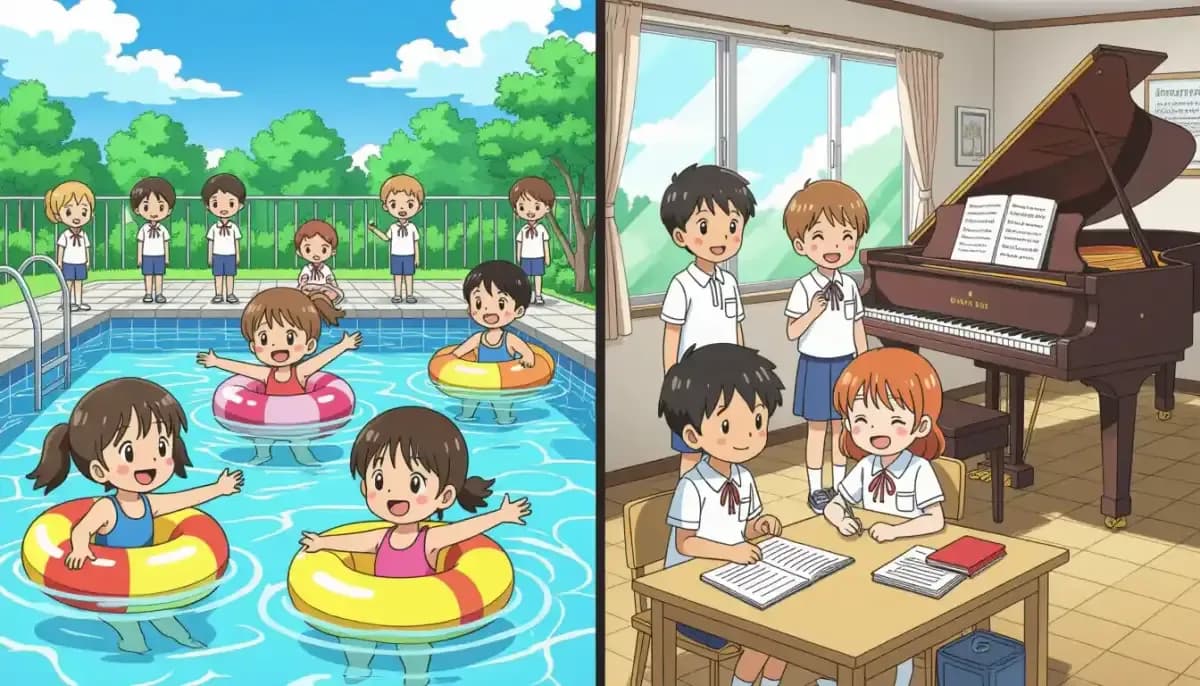
Complete guide to after-school programs for elementary students in Japan: gakudo childcare, juku cram schools, swimming, English, and more. Costs, enrollment tips, and advice for foreign families.
After-School Programs for Elementary Students in Japan: A Complete Guide for Foreign Families
When your child comes home from elementary school in Japan, their day is often far from over. Japan has a rich and layered ecosystem of after-school programs ranging from supervised childcare centers to music lessons, swimming classes, cram schools, and coding clubs. For foreign families navigating this world for the first time, the options can feel both exciting and overwhelming.
This guide breaks down everything you need to know about after-school programs for elementary students in Japan — what's available, how much it costs, how to enroll, and how to find the right fit for your child.
Understanding the After-School Landscape in Japan
Japan's approach to after-school time reflects deeply held cultural values around education, discipline, and social development. There are two main categories of after-school activities:
1. Gakudo (学童保育) — After-School Childcare Gakudo, officially called 放課後児童クラブ (hōkago jidō kurabu), is structured childcare for elementary school children whose parents are working. It operates like a supervised care center where children do homework, play, and participate in light activities until parents pick them up.
2. Naraigoto (習い事) — Private Enrichment Activities Naraigoto refers to private lessons or extracurricular activities that children attend for skill development — swimming, piano, calligraphy, English conversation, soccer, and more. These are separate from school club activities (bukatsu) and are chosen and paid for by families.
By the time Japanese children reach elementary school age, participation in after-school activities is essentially the norm. Research shows that by age 6, over 80% of children in Japan are enrolled in at least one extracurricular activity, and the national average is 1.92 activities per student — rising to 2.14 for upper elementary students.
For foreign families, understanding how to access both gakudo and naraigoto is essential to helping your child thrive socially, academically, and emotionally in Japan. See also our guide to Elementary School in Japan for Foreign Parents for broader context on the school system.
Gakudo (学童保育): After-School Childcare Centers
What Is Gakudo?
Gakudo is a government-supported after-school childcare program primarily designed for children in grades 1 through 3, though many centers now accept children up to grade 6. It provides a safe, supervised environment for children of working parents after the school day ends.
Typical hours:
- School days: 1:00 PM – 7:00 PM
- Saturdays: 8:30 AM – 5:00 PM
- School holidays (summer, winter, spring): 8:00 AM – 7:00 PM
How Much Does Gakudo Cost?
| Type | Monthly Cost | Notes |
|---|---|---|
| Public Gakudo (公立) | ¥5,000–¥20,000 | Income-based sliding scale |
| Private Gakudo (民間) | ¥30,000+ | Often more English-friendly |
| Some municipal programs | Free | Varies by city/ward |
Public gakudo fees are subsidized by the government and scaled to household income, making them far more affordable than private alternatives. However, waitlists can be long in urban areas — especially in Tokyo and Osaka — and spots are often prioritized for single-parent families, low-income households, and children with both parents employed full-time.
How to Enroll in Gakudo
- Check with your ward/city office (市区町村) — Gakudo is managed locally, so application rules vary by municipality.
- Application period: typically January–February for the upcoming school year starting in April.
- Required documents: Application form, proof of employment for both parents, proof of residence.
- Waitlist warning: Enrollment at elementary school does NOT automatically guarantee gakudo placement. Apply early.
Foreign families are generally eligible to apply for public gakudo with standard residency documentation. Language support varies, but staff in urban international areas often have some English proficiency.
For a broader overview of childcare options in Japan, see our guide on Daycare and Hoikuen in Japan.
Top After-School Activities for Elementary Students
The Most Popular Naraigoto
Japan's private extracurricular market is enormous — tutorial and enrichment schools generated over ¥1.1 trillion in revenue in 2023. Here are the most popular activities for elementary-age children:
| Activity | Monthly Cost | Frequency | Why Kids Love It |
|---|---|---|---|
| Swimming (水泳) | ¥7,000–¥10,000 | 1–2x/week | Fun, builds fitness, life skill |
| Piano/Music | ¥7,000–¥12,000 | 1x/week | Creative expression, discipline |
| English (英会話) | ¥6,000–¥60,000+ | 1–2x/week | Communication, global skills |
| Calligraphy (習字) | ¥3,000–¥5,000 | 1x/week | Cultural, meditative |
| Soccer/Sports | ¥2,000–¥8,000 | 1–2x/week | Teamwork, physical health |
| Dance (ダンス) | ¥3,000–¥6,000 | 1–2x/week | Creativity, coordination |
| Kumon/Juku | ¥7,000–¥60,000 | 2–5x/week | Academic enrichment |
| Robotics/Coding | ¥10,000–¥20,000 | 1x/week | Growing rapidly since 2020 |
Swimming consistently ranks as the most popular activity, followed by piano and English conversation. Many children begin swimming lessons as early as ages 3–4 and continue through elementary school.
Juku (塾): Cram Schools and Academic Support
What Is Juku?
Juku (塾) are private tutoring/cram schools that provide academic support and enrichment beyond what school offers. They range from relaxed homework-help centers to intensive exam preparation academies.
There are several types of juku relevant to elementary students:
Kumon (公文) — Self-paced, worksheet-based learning in math and Japanese/English. Accepts children from age 4-5. Cost: ¥7,000–¥10,000/month per subject. One of the most accessible entry points for foreign families as material is structured and language barriers are manageable.
General Tutoring Juku — Small-group lessons following the school curriculum. Good for children needing academic catch-up. Starts around Grade 3. Cost: ¥10,000–¥20,000/month.
Exam Prep Juku (進学塾) — Intensive preparation for middle school entrance exams. Typically starts Grade 4-5. Cost: ¥20,000–¥60,000/month, with elite schools exceeding ¥1,000,000/year in total costs.
As of 2018, approximately 37% of Japanese students were enrolled in some form of juku — a figure that rises sharply in urban areas where private middle school entrance exam competition is fierce.
For foreign children who are still developing Japanese language skills, starting with Kumon or a supportive general tutoring juku can provide structure and confidence. Read more in our guide on Teaching Japanese to Foreign Children.
English Eikaiwa: Language Learning After School
English Conversation Schools (英会話スクール)
For foreign families, English eikaiwa schools serve a dual purpose: they reinforce your child's English fluency while also being a social environment where foreign and bilingual children often feel at home.
Major providers include:
- AEON Kids — Chain schools nationwide, structured curriculum
- Berlitz — Higher-end, intensive programs
- ECC Junior — Widely available in suburban areas
- Local independent schools — Often more flexible and family-oriented
Costs range from ¥3,000/month for basic group lessons to ¥60,000+/month for intensive immersive programs. Most elementary-age programs meet once or twice a week for 40–60 minutes.
For bilingual families, eikaiwa can complement home language strategies. See our guide on Raising Bilingual Children in Japan for a comprehensive approach.
New and Rising Programs: Coding, Robotics, and STEM
Since the Japanese government introduced compulsory coding education in schools in 2020, programming and robotics have become a rapidly growing category of after-school activities for elementary students.
Popular options include:
- Scratch programming classes — Beginner-friendly visual coding
- LEGO Robotics (Mindstorms) — Hands-on building and programming
- Tech academies (e.g., Tech Kids School, D-SCHOOl) — Structured curriculum covering coding, digital design, and app development
Costs typically range from ¥10,000–¥20,000/month. Many providers offer trial lessons, which is a great way to gauge your child's interest before committing.
These programs are particularly appealing for internationally-minded families who want to combine STEM skills with English-language instruction.
Tips for Foreign Families Choosing After-School Activities
1. Let Your Child Lead
Japanese parenting culture tends to favor child-led activity selection. Children ages 3–7 frequently change interests — and that's okay. Early flexibility prevents burnout and helps children discover genuine passions.
2. Watch for Over-Scheduling
Warning signs include: fatigue, irritability, declining school performance, and loss of interest in previously enjoyed activities. The goal of naraigoto is enrichment, not exhaustion. Most experts recommend no more than 2–3 structured activities per week for elementary-age children.
3. Consider Social Integration
For foreign children still developing Japanese language skills, activities like swimming, soccer, or dance offer natural social integration with minimal language barriers. Physical and creative activities often bridge cultural and language gaps more effectively than purely academic settings.
4. Trial Lessons Are Standard
Most naraigoto providers offer 体験レッスン (taiken ressun) — free or low-cost trial lessons. Always take advantage of these before committing to monthly fees.
5. Budget Realistically
The average Japanese family spends ¥50,000–¥100,000/month on children's extracurricular activities at peak enrollment age. For foreign families, building in English-language activity costs can push this higher. Government benefits and subsidies may help — see our guide to Government Benefits and Subsidies for Families in Japan.
Helpful External Resources
For more information on raising children and navigating the education system in Japan as a foreigner, these resources are invaluable:
- Living in Nihon: Raising Children and Education in Japan Guide — Comprehensive resource covering Japan's education system, language support for foreign children, and costs.
- For Work in Japan: Family Life in Japan Complete Guide — Practical guidance on childcare, schooling, and family life for expats.
- Chuukoubenkyou: Exam System for Returnee and Foreign Students — If you're thinking ahead to middle school entrance exams, this guide on returnee and foreign student pathways is essential.
- The Wagamama Diaries: All About Gakudo — An expat parent's detailed guide to navigating gakudo enrollment.
- Real Life Japan: Popular Extracurricular Activities for Kids — Practical overview of activity options with cost breakdowns.
Final Thoughts
After-school programs are a central part of childhood in Japan, and finding the right mix of activities for your elementary-age child can make a meaningful difference in their happiness, development, and social integration. Whether you start with gakudo for supervised childcare, swimming lessons for physical development, or a friendly English school for bilingual enrichment — the Japanese after-school ecosystem has something for every child and every family budget.
Take it one step at a time, follow your child's interests, and don't be afraid to try and switch activities until you find the right fit. Japan's after-school culture is ultimately about helping children grow — and that goal transcends language and nationality.
For more guidance on navigating life with children in Japan, explore our related guides on Junior High School in Japan and Healthcare for Children in Japan.

Originally from Vietnam, living in Japan for 16+ years. Graduated from Nagoya University, with 11 years of professional experience at Japanese and international companies. Sharing practical information for foreign parents raising children in Japan.
View Profile →Related Articles

Online Learning and Tutoring Options for Kids in Japan
Discover the best online learning and tutoring options for children in Japan — from affordable NPO programs to international test prep services. Compare costs, platforms, and tips for expat families.
Read more →
Balancing Juku, Homework, and Free Time for Children
Learn how to balance juku cram school, homework, and free time for your child in Japan. Practical tips for foreign parents on schedules, costs, burnout signs, and alternatives to juku.
Read more →
How Much After-School Activities Cost in Japan
Complete cost breakdown of after-school activities in Japan: swimming, piano, English, juku cram schools, and bukatsu clubs. Real prices, hidden fees, and tips for expat families.
Read more →
Robotics, STEM, and Programming Classes for Kids in Japan
Find the best English-friendly robotics, STEM, and programming classes for kids in Japan. Compare Tokyo Coding Club, Coding Lab Japan, YouCode, CodeTots, and more — with pricing, ages, and locations.
Read more →
Art and Creative Classes for Kids in Japan
Discover the best art and creative classes for foreign children in Japan. From English art schools in Tokyo to traditional Japanese crafts—costs, tips, and top schools covered.
Read more →
Martial Arts Classes for Children in Japan
Complete guide to martial arts classes for children in Japan. Compare karate, judo, kendo, and aikido, find English-friendly dojos, and navigate the language barrier as an expat family.
Read more →