
Robotics, STEM, and Programming Classes for Kids in Japan

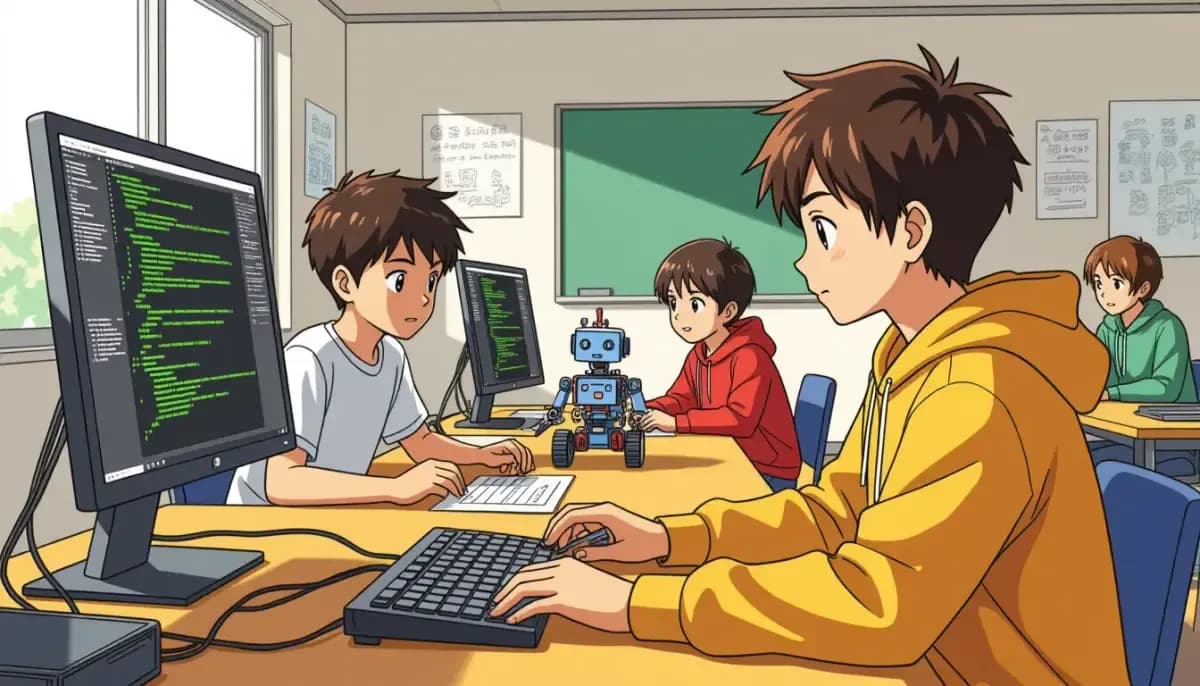
Find the best English-friendly robotics, STEM, and programming classes for kids in Japan. Compare Tokyo Coding Club, Coding Lab Japan, YouCode, CodeTots, and more — with pricing, ages, and locations.
Robotics, STEM, and Programming Classes for Kids in Japan
Japan is one of the world's leaders in robotics and technology, making it an ideal place for children to get a head start in STEM education. Whether you're a foreign parent raising kids in Tokyo, Osaka, or Yokohama, you'll find a growing number of English-friendly robotics, coding, and STEM classes designed specifically for expat families. This guide covers everything you need to know about finding the right program for your child, from beginner-level Scratch coding to advanced robotics workshops.
As Japan pushes forward with mandatory programming education in public schools since 2020, the private after-school market has exploded with high-quality options. The global educational robotics market is projected to grow from USD 1.38 billion in 2024 to USD 5.84 billion by 2030 — with Asia Pacific as the fastest-growing region — and Japan is at the center of that growth.
Why STEM Education Matters for Kids in Japan
Japan has been proactive in integrating technology into education. Starting in 2020, coding education became mandatory in Japanese elementary schools. Junior high schools followed in 2021, and by 2022, programming became a required subject in high schools. Japan's ambitious GIGA School Initiative also provided every public school student with a personal device and high-speed internet, ensuring no child is left behind in the digital revolution.
For foreign children in Japan, this creates a unique opportunity. Even if your child attends an international school, supplementing their education with robotics or coding classes gives them:
- Early exposure to computational thinking and problem-solving
- Bilingual or English-language instruction that fits expat family needs
- Social integration through collaborative STEM projects
- Career readiness in a tech-forward society
- Fun, hands-on learning through building and programming robots
Research consistently confirms the benefits: meta-analyses published in academic journals show that robotics-based STEM education improves problem-solving skills, spatial visualization, critical thinking, and student motivation — even in children as young as kindergarten age. Japan's classrooms are also adopting humanoid robots like NAO and Pepper, giving children early exposure to real-world robotics applications.
If you want to understand how these skills fit into the broader Japanese education landscape, check out The Complete Guide to the Japanese Education System for Foreign Families for context on both public and private schooling options.
Top English-Friendly Coding Schools in Tokyo
Tokyo has the richest selection of English-language coding and robotics programs in Japan. Here are the top choices for expat families:
Tokyo Coding Club
Tokyo Coding Club is one of the most established English-language coding schools in Tokyo, serving children ages 7 to 18. With campuses in Nishiazabu (Minato-ku) and Futako Tamagawa (Setagaya-ku), TCC offers a remarkably wide curriculum:
- Block coding: Scratch, MIT App Inventor
- Text coding: Python, JavaScript, HTML/CSS
- Creative tools: Unreal Engine, Roblox, Minecraft Education Edition
- Hardware/Robotics: Arduino, Raspberry Pi, Micro:bit, TinkerCAD, circuits
- Digital media: Adobe Photoshop, Figma, YouTube content creation
- Advanced: Machine Learning and AI fundamentals
TCC offers group classes, private lessons, and seasonal Code Quest Camps during summer and holidays. Free trial lessons are available, making it easy to try before committing. Contact: 050-6868-2120, daily 11am–7pm.
Featured by Savvy Tokyo, TCC is a go-to recommendation from the expat community for its English-first environment and structured curriculum progression.
Coding Lab Japan
Coding Lab Japan was founded by an MIT graduate and runs a curriculum directly inspired by MIT's approach to computer science education. It has won the Best Coding Curriculum award from Parents' World Magazine four times. Key features:
- Ages: 5 to 18
- Teacher-to-student ratio: Maximum 1:6 or 1:8 (small groups)
- Session length: 2 hours weekly
- Location: Shirokanedai Campus, Minato-ku (1 minute from Shirokanedai Station)
- After-school programs at ASIJ, Yoyogi International, Victory International, and Tokyo American Club
The age-based curriculum progresses naturally:
- Ages 5–6: Scratch Jr + LEGO Robots
- Ages 7–9: Scratch programming
- Ages 10–12: MIT App Inventor (mobile apps)
- Ages 13–18: Python, Unity, game development
Free trial classes are available. An English-language phone line makes registration easy for non-Japanese speakers.
Little Hackers
Little Hackers has served expat families in the Ebisu area and transitioned to a fully online model as of April 2025. This makes their program accessible to children anywhere in Japan. The school specializes in:
- Grades 1–6: Scratch programming (visual block coding)
- Grades 4 and up / Junior High: Roblox (Lua programming)
Classes are conducted in English with bilingual teacher support, creating a welcoming environment for both Japanese-English children and fully English-speaking kids. Little Hackers has a strong reputation in the expat community for its international classroom environment and nurturing approach.
STEM Options Outside Tokyo: Yokohama and Online Programs
You don't have to be in central Tokyo to access quality STEM education for your kids. Several excellent options serve the greater Kanto region and beyond through bilingual or online instruction.
CodeTots — Yokohama
CodeTots operates a physical campus in Nihonodori, Naka-ku, Yokohama, making it the best choice for families based in Kanagawa. The school teaches children ages 6 to 13 in a bilingual English/Japanese environment, with a curriculum that integrates UN Sustainable Development Goals (SDGs) into STEM learning.
Programs include game design, app development, web design, AI chatbot creation, and data science fundamentals — a surprisingly sophisticated range for elementary-age students. CodeTots also offers online instruction for families who cannot attend in person.
YouCode — Fully Online
YouCode is a 100% online coding school with English-speaking foreign instructors, making it perfect for families in any city in Japan. The program runs live online classes in small groups (maximum 3 students per group lesson).
Pricing (tax included):
| Lesson Type | Per Lesson Cost | Notes |
|---|---|---|
| Private (3-pack) | ¥6,500 | Most flexible |
| Private (6-pack) | ¥5,500 | Mid-range savings |
| Private (9-pack) | ¥5,000 | Best value for committed learners |
| Group (4/month) | Fixed monthly | Max 3 students/class |
- Ages 7–11: Scratch and game development (block coding)
- Ages 10–16: Python programming
- 60-minute sessions; instructors provide written feedback after each class
- 24-hour cancellation policy
YouCode is ideal for families in rural areas, those with irregular schedules, or parents who prefer supervised online learning environments.
Comparing the Major Kids' Coding Programs in Japan
Choosing the right program depends on your child's age, your location, your budget, and whether you prefer in-person or online classes. Use this comparison to narrow down your options:
| School | Ages | Language | Location | Format | Highlights |
|---|---|---|---|---|---|
| Tokyo Coding Club | 7–18 | English | Tokyo (2 campuses) | In-person + camps | Broadest curriculum; hardware & AI |
| Coding Lab Japan | 5–18 | English | Shirokanedai, Tokyo | In-person | MIT-inspired; small groups; after-school at int'l schools |
| Little Hackers | Grades 1–JHS | English + Bilingual | Online (was Ebisu) | Online | Expat-friendly; Scratch & Roblox/Lua |
| YouCode | 7–16 | English | Online | Online | Foreign instructors; private & group |
| CodeTots | 6–13 | Bilingual | Yokohama | In-person + Online | SDG integration; Kanto option outside Tokyo |
For more context on how to enroll children in different types of schools in Japan, the article on Elementary School in Japan: A Complete Guide for Foreign Parents covers the enrollment process and what to expect in public schools.
What Kids Learn in Robotics and Coding Classes
Modern STEM programs for children in Japan go far beyond "learning to code." A well-structured program will develop a broad set of skills across multiple domains:
Computational Thinking
Children learn to break complex problems into smaller steps (decomposition), identify patterns, and create algorithms — the same thought processes that professional engineers use. Studies show that children who learn computational thinking early outperform peers in mathematics and science reasoning.
Hardware and Physical Computing
Many programs introduce children to physical computing boards like Arduino, Raspberry Pi, and Micro:bit. Children wire sensors, program motors, and build functional robots or devices — creating a tangible connection between code and the physical world.
Design Thinking and Creativity
Programs like those at Tokyo Coding Club and Coding Lab Japan integrate game design, app development, and digital art tools. Children learn to think like designers — defining problems, prototyping solutions, testing, and iterating.
Teamwork and Communication
Group projects in robotics classes teach children to collaborate, divide tasks, present their work, and give and receive feedback — essential skills in any workplace. For foreign children adjusting to life in Japan, these social learning environments also provide valuable peer connections.
Japanese Language Exposure
Even at English-medium schools, some incidental Japanese exposure occurs through materials, interactions with Japanese classmates, or bilingual teachers. For children also studying Japanese, the technical vocabulary gained in STEM classes can reinforce language learning. See Teaching Japanese to Foreign Children: Methods and Resources for strategies on building your child's Japanese language skills alongside their STEM education.
How to Choose the Right Program for Your Child
Finding the right coding or robotics class takes more than picking the one closest to your home. Here's a practical framework:
Step 1: Assess your child's age and level. Most programs have distinct tracks for beginners versus experienced coders. A child who has never coded should start with Scratch or block coding. A teenager with prior experience might jump directly into Python, Unity, or hardware projects.
Step 2: Consider language needs. If your child is not yet comfortable in Japanese, prioritize English-instruction programs like Tokyo Coding Club, Coding Lab Japan, or YouCode. Bilingual options like CodeTots work well for children who are beginning to acquire Japanese.
Step 3: Evaluate logistics. Can you reliably get your child to class? Online options like YouCode and Little Hackers eliminate commute concerns. If in-person is preferred, Coding Lab Japan's proximity to major expat neighborhoods (Minato-ku) and its programs at international schools make it especially convenient.
Step 4: Check class size. Smaller groups mean more personalized attention. Coding Lab Japan's 1:6 maximum ratio and YouCode's 3-student maximum for group lessons are notable advantages over larger, less personalized programs.
Step 5: Try before committing. Most reputable schools offer free trial classes. Take advantage of these to gauge your child's interest and the school's teaching style before paying for a full term.
Step 6: Consider the total cost. Private lessons provide the most customized learning but cost more. Group lessons balance cost and interaction. Some schools (like Coding Lab Japan) are embedded in international school after-school programs, which may simplify logistics for families already enrolled there.
For families navigating financial decisions around raising children in Japan, Financial Planning for Expat Families Raising Children in Japan provides broader guidance on budgeting for education and extracurricular activities.
Resources for Expat Families in Japan
If you're navigating life in Japan as a foreign parent, you'll find a wealth of resources to guide your decisions — not just for STEM education, but for all aspects of raising children in Japan.
Living in Nihon is a comprehensive English-language guide for expats covering everything from visas and housing to technology and daily life in Japan.
For foreign workers and professionals considering job opportunities in Japan, For Work in Japan offers guidance on employment, visas, and building a career in Japan — including IT engineering roles where your child's early STEM education could one day lead them.
If your child is heading toward the Japanese middle or high school entrance exam system, Chuukou Benkyou provides expert guidance on exam preparation, understanding the school system, and how Japan's education policy (including the GIGA School Initiative and ICT education reforms) intersects with academic achievement.
For deeper research on STEM education effectiveness, Tokyo Academics' complete guide to robotics and coding for kids is an excellent English-language resource for Tokyo-based families.
Conclusion
Japan's strong robotics culture and government-mandated coding education have created a fertile environment for children's STEM learning. Whether your child is a complete beginner or an aspiring young engineer, there's a high-quality, English-friendly program available — from the MIT-inspired curriculum at Coding Lab Japan to the hardware-heavy courses at Tokyo Coding Club, the online flexibility of YouCode, and the bilingual community of CodeTots in Yokohama.
Starting STEM education early gives children in Japan — especially those who may one day navigate both Japanese and international professional environments — a significant head start. With the global educational robotics market growing at nearly 29% annually and Asia Pacific leading that growth, there's never been a better time to enroll your child in robotics, coding, or STEM classes in Japan.
Take the free trial classes offered by most schools, involve your child in the decision, and let their curiosity guide the way.

Originally from Vietnam, living in Japan for 16+ years. Graduated from Nagoya University, with 11 years of professional experience at Japanese and international companies. Sharing practical information for foreign parents raising children in Japan.
View Profile →Related Articles
Online Learning and Tutoring Options for Kids in Japan
Discover the best online learning and tutoring options for children in Japan — from affordable NPO programs to international test prep services. Compare costs, platforms, and tips for expat families.
Read more →
After-School Programs for Elementary Students in Japan
Complete guide to after-school programs for elementary students in Japan: gakudo childcare, juku cram schools, swimming, English, and more. Costs, enrollment tips, and advice for foreign families.
Read more →
Balancing Juku, Homework, and Free Time for Children
Learn how to balance juku cram school, homework, and free time for your child in Japan. Practical tips for foreign parents on schedules, costs, burnout signs, and alternatives to juku.
Read more →
How Much After-School Activities Cost in Japan
Complete cost breakdown of after-school activities in Japan: swimming, piano, English, juku cram schools, and bukatsu clubs. Real prices, hidden fees, and tips for expat families.
Read more →
Art and Creative Classes for Kids in Japan
Discover the best art and creative classes for foreign children in Japan. From English art schools in Tokyo to traditional Japanese crafts—costs, tips, and top schools covered.
Read more →
Martial Arts Classes for Children in Japan
Complete guide to martial arts classes for children in Japan. Compare karate, judo, kendo, and aikido, find English-friendly dojos, and navigate the language barrier as an expat family.
Read more →