
Baby Health Checkups Schedule in Japan

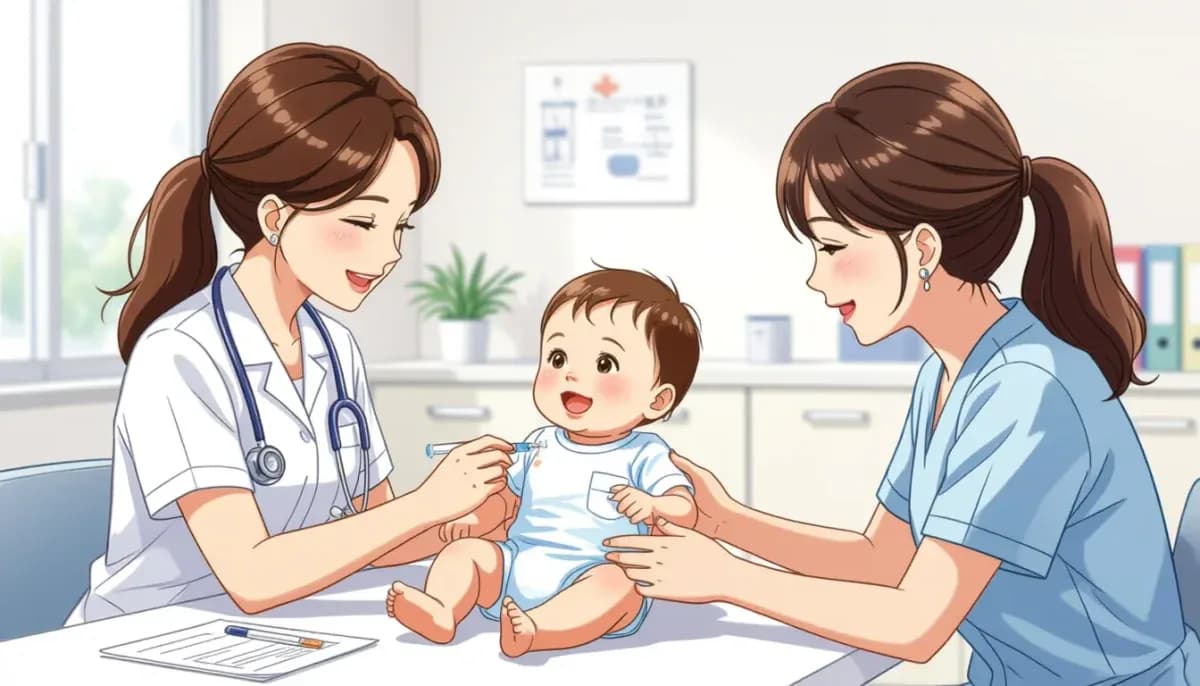
Complete guide to Japan's baby health checkup schedule for foreign parents — from 1-month to 3-year checkups. Learn what's free, what's required by law, and how to navigate the system as an expat.
Baby Health Checkups Schedule in Japan: A Complete Guide for Foreign Parents
Japan is internationally recognized for having one of the best infant healthcare systems in the world, with an infant mortality rate of just 1.8 per 1,000 live births — among the lowest globally. A cornerstone of this achievement is the country's structured, government-mandated baby health checkup program (乳幼児健康診査, nyūyōji kenkō shinsa). For foreign parents raising children in Japan, understanding this system is essential. This guide walks you through every checkup from birth to age three, what to expect, how to register, and how to navigate the system as a non-Japanese speaker.
The Maternal and Child Health Handbook (母子手帳)
Before diving into the checkup schedule, it's important to understand the Maternal and Child Health Handbook (母子手帳, boshi techo). This booklet is given to you at your local municipal office when you register your pregnancy. It serves as your baby's complete health record from pregnancy through early childhood, tracking:
- Prenatal appointments and lab results
- Birth details and measurements
- All routine health checkups
- Vaccination records
- Growth charts (weight, height, head circumference)
- Developmental milestones
You should bring this handbook to every health checkup and medical visit. If you lose it, contact your ward or city office to request a replacement. Most municipalities offer the handbook in multiple languages, including English, Chinese, Korean, and Portuguese — ask your local office when you register.
For a broader overview of raising children in Japan as a foreigner, Living in Nihon's Complete Guide to Raising Children and Education in Japan is an excellent starting resource covering everything from daycare to university.
Overview: Japan's Baby Health Checkup Schedule
Japan's routine baby checkup program is organized around key developmental milestones. Some checkups are mandated by law; others are strongly encouraged. Most are free of charge when you use the municipal coupons provided to you after registering your baby's birth.
| Checkup Age | Location | Cost | Legally Required |
|---|---|---|---|
| 1 month | Hospital or pediatric clinic | ¥3,000–¥5,000 | No |
| 3–4 months | Local health center | Free (coupon) | No |
| 6–7 months | Pediatric clinic | Free (coupon) | No |
| 9–10 months | Clinic or health center | Free (coupon) | No |
| 18 months | Local health center | Free | Yes |
| 3 years | Local health center | Free | Yes |
Important: Coupons (受診票, jushin-hyo) are mailed to you by your municipality after you register your baby's birth and obtain the boshi techo. Keep these coupons safe — they are your ticket to free checkups.
The 1-Month Checkup
The 1-month checkup typically takes place at the hospital or clinic where your baby was born, or at a nearby pediatric clinic. This is usually not covered by the government coupon, so expect to pay between ¥3,000 and ¥5,000 out of pocket.
What's checked:
- Overall weight gain and growth since birth
- Jaundice assessment
- Umbilical cord healing
- Screening for congenital conditions (heart problems, hip dysplasia, hydrocephalus)
- Feeding assessment (breastfeeding/formula adequacy)
Tips for foreign parents:
- Ask your delivering hospital if they handle the 1-month checkup or if you need to find a separate pediatrician
- Bring your boshi techo and any discharge paperwork from birth
- If you're unsure about feeding, this is a great time to ask questions — many hospitals have lactation consultants
Shortly after you return home from the hospital, many municipalities will also arrange a free home visit from a public health nurse or midwife (hokenshi). This nurse will check on your baby's weight, feeding, and your own postpartum recovery. This service is standard and free.
The 3–4 Month Checkup
The 3–4 month checkup is held at your local public health center (保健センター, hoken senta). You will receive a notification in the mail with a specific date and time — attendance is not legally required but strongly encouraged. The checkup is completely free with your coupon.
What's checked:
- Neck strength and head control (can the baby hold their head up?)
- Weight, length, and head circumference measurements
- Hip joint check for dysplasia
- Early hearing and vision screening
- Assessment of social responsiveness (smiling, eye contact)
- First BCG (tuberculosis) vaccination is often given at this visit
What to bring:
- Boshi techo
- Checkup coupon (受診票)
- Vaccination coupon booklet
- Completed questionnaire (sent with the notification letter)
For non-Japanese speakers: The notification letter and questionnaire will typically be in Japanese. Japan Healthcare Info's baby checkup page offers translation assistance and detailed guidance. You can also contact your ward or city office to request translation support.
The 6–7 Month Checkup
At 6–7 months, your baby's checkup is conducted at a local pediatric clinic (小児科, shōnika), and you will need to make an appointment. Your municipality will send an invitation coupon with instructions on how to book.
What's checked:
- Motor development: rolling, sitting, bearing weight on legs
- Social development: stranger anxiety, response to name
- Mental development: object permanence, imitation
- Continued growth measurements
- Assessment of solid food introduction readiness
Vaccination timing: Many important vaccinations are scheduled during this window, including:
- Rotavirus vaccine (oral)
- Pneumococcal (PCV) vaccine
- DPT-IPV-Hib (5-in-1) combination vaccine (introduced as a routine vaccine from April 2024)
- Hepatitis B vaccine
Your vaccination coupon booklet will indicate which vaccines are due. Use municipal coupons whenever possible, as they cover most routine vaccines at no cost.
The 9–10 Month Checkup
The 9–10 month checkup may be held at either a local health center or a pediatric clinic, depending on your municipality. You'll receive guidance in your notification letter.
What's checked:
- Crawling, pulling to stand, cruising along furniture
- Pincer grasp development (picking up small objects with finger and thumb)
- Imitation skills and response to simple instructions
- First tooth check and early dental hygiene guidance
- Growth and nutritional assessment (solid food progress)
This checkup is also a good opportunity to ask your pediatrician about introducing new foods, managing common infant illnesses, and sleep habits.
The 18-Month Checkup (Legally Required)
The 18-month checkup is one of two checkups mandated by Japanese law (母子保健法, Boshi Hoken-ho). It is held at your local health center and is completely free. Your municipality will contact you with the scheduled date and time.
What's checked:
- Walking ability and gait
- Speech development (does the baby say at least a few words?)
- Hand and finger coordination (stacking blocks, using a spoon)
- Dental examination (checking for early cavities)
- Social development and temperament assessment
- Screening for developmental delays
What to bring:
- Boshi techo
- Completed questionnaire (provided with the notification)
- Your child — they will be observed playing and interacting
If a concern is identified at this checkup (for example, limited speech or developmental delay), your health center will connect you with specialists or follow-up services. Early intervention programs in Japan are well-developed and often free.
For more information about children's healthcare coverage in Japan, including how medical subsidies work, visit Chuukou Benkyou for additional resources for foreign families in Japan.
The 3-Year Checkup (Legally Required)
The 3-year checkup is the second legally required checkup and is typically the last routine checkup before your child enters preschool or kindergarten. It is held at your local health center and is completely free.
What's checked:
- Height, weight, and overall physical development
- Vision and hearing screening (often done with simple tests the child participates in)
- Dental examination
- Speech and language assessment
- Urinary test — a urine sample is provided at home before the checkup, screening for kidney disease, diabetes, and urinary tract conditions
- Developmental screening for autism spectrum indicators
- Behavioral assessment
How to prepare:
- Collect a morning urine sample from your child using the provided container (sent in advance)
- Complete the detailed questionnaire about your child's development, speech, and behavior
- Bring the urine sample, boshi techo, and completed questionnaire to the health center
This checkup also typically includes a discussion with a public health nurse and possibly a dentist, psychologist, or speech therapist depending on your child's needs.
Japan's Vaccination Schedule for Babies
Japan's national immunization program provides most vaccines free of charge through municipal vaccination coupons. After registering your baby's birth, you'll receive a vaccination coupon booklet (予防接種手帳/予診票綴り) that lists all the vaccines your child should receive and when.
| Vaccine | Recommended Age | Cost |
|---|---|---|
| BCG (tuberculosis) | Around 5 months (often at 3-4 month checkup) | Free (coupon) |
| Hepatitis B | 2, 3, 7–8 months | Free (coupon) |
| DPT-IPV-Hib (5-in-1)* | 2, 3, 4 months, 12–18 months | Free (coupon) |
| Rotavirus | 2, 3 months (or 2, 3, 4 months) | Free (coupon) |
| Pneumococcal (PCV13) | 2, 3, 4 months, 12–15 months | Free (coupon) |
| Varicella (chickenpox) | 12 and 18 months | Free (coupon) |
| MR (measles/rubella) | 12–24 months | Free (coupon) |
| Japanese Encephalitis | 3 years (2 doses) | Free (coupon) |
*The DPT-IPV-Hib combination (5-in-1) vaccine became a standard routine vaccine in Japan from April 1, 2024, simplifying the vaccination schedule for families.
Keep all vaccination records in your boshi techo. If you plan to return to your home country or travel internationally, having complete records will be important for school enrollment and travel health requirements.
For more detailed information on expat healthcare, the Japan Handbook's guide to vaccinations and health check-ups is a thorough resource.
Navigating the System as a Foreign Parent
Language Barriers
One of the biggest challenges for foreign parents is that most notifications, questionnaires, and health center communications arrive in Japanese. Here are practical strategies:
- Request multilingual services: Many municipalities offer boshi techo and checkup forms in English, Chinese, Korean, and Portuguese. Always ask your ward office.
- Use Japan Healthcare Info: Japan Healthcare Info can help coordinate English-speaking appointments and translation assistance.
- Bring a Japanese-speaking friend or your company's HR department if you're uncomfortable attending alone.
- Medical interpreter apps: Apps like "VoiceTra" (free from NICT) can assist with real-time translation during appointments.
Finding an English-Speaking Pediatrician
In major cities like Tokyo, Osaka, and Nagoya, English-speaking pediatricians (小児科医) are available. Ask at your ward office's international desk, search through expat community groups on Facebook, or consult resources for working in Japan at For Work in Japan.
Health Insurance and Costs
All children enrolled in Japan's national health insurance (国民健康保険, kokumin kenko hoken) are covered for medical visits at a reduced copayment. Additionally, most municipalities operate a Child Medical Expense Subsidy Program (子ども医療費助成制度) that covers copayments for children, making most medical care effectively free up to age 15 or 18 depending on the municipality.
To enroll your child:
- Register your baby's birth at the ward office within 14 days
- Add your child to your health insurance
- Apply for the Child Medical Expense Certificate (子ども医療証) at the ward office
What Happens If You Miss a Checkup?
Missing a legally required checkup (18-month or 3-year) does not result in penalties for parents, but your municipality may contact you with a reminder or follow-up. It is strongly in your child's interest to attend all scheduled checkups, as they provide early detection of developmental issues and are connected to the free vaccination program.
If you miss a checkup, contact your local health center (保健センター) to reschedule. They are generally very accommodating and often have staff who can assist in English.
Summary: Key Tips for Foreign Parents
- Register your baby's birth and obtain the boshi techo immediately — this unlocks your access to free checkups and vaccines
- Keep all vaccination coupons and use them — most vaccines are free
- 18-month and 3-year checkups are legally required and completely free
- Contact your ward office to request multilingual materials
- If developmental concerns arise, Japan's early intervention programs are excellent and often free
- Your child's health insurance copayments may be fully subsidized — apply for the Child Medical Expense Certificate
Japan's baby health system is comprehensive, well-organized, and largely free for enrolled families. By staying informed and attending all scheduled checkups, you give your child the best possible start in life.
For more on parenting in Japan, explore our related guides on pregnancy and giving birth in Japan, baby and infant care in Japan, and healthcare and medical care for children in Japan.

Originally from Vietnam, living in Japan for 16+ years. Graduated from Nagoya University, with 11 years of professional experience at Japanese and international companies. Sharing practical information for foreign parents raising children in Japan.
View Profile →Related Articles
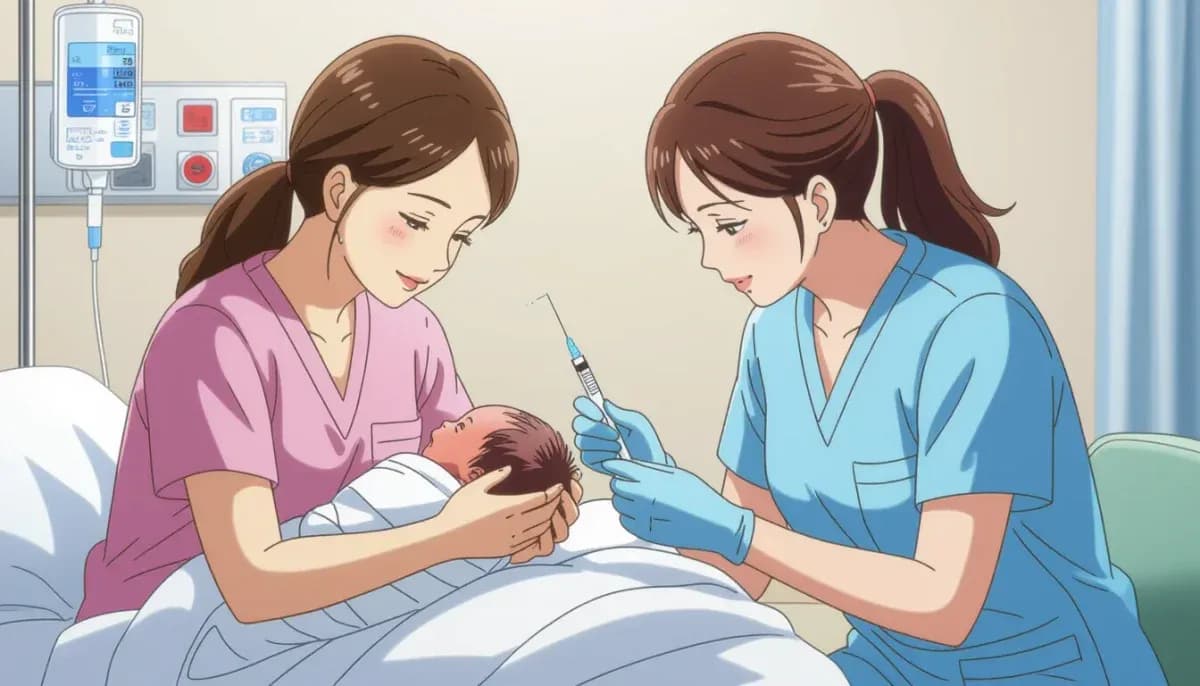
Newborn Care Tips for First-Time Parents in Japan
Complete guide to newborn care in Japan for foreign parents: hospital stays, Boshi Techo handbook, free vaccinations, health checkups, breastfeeding tips, and postpartum support programs.
Read more →
Baby Swimming and Early Activities in Japan
Complete guide to baby swimming lessons and early activities in Japan for foreign parents. Enrollment tips, costs, English options, and top swim schools explained.
Read more →
Popular Baby Brands and Stores in Japan
Discover the most popular baby brands and stores in Japan, from Akachan Honpo and Nishimatsuya to Japanese brands like Pigeon, Combi, and Miki House. Complete guide for expat parents shopping for baby products in Japan.
Read more →
Baby Clothing: Seasons, Sizing, and Shopping in Japan
Complete guide to baby clothing in Japan for foreign parents. Learn how Japanese sizing works (cm-based), what to buy each season, and where to shop from budget to premium stores like Nishimatsuya and Miki House.
Read more →
Registering Your Newborn at City Hall in Japan
A complete guide for foreign parents on registering a newborn at city hall in Japan. Learn about the 14-day deadline, required documents, child allowance, and immigration procedures.
Read more →
Baby-Friendly Facilities and Nursing Rooms in Japan
Complete guide to nursing rooms and baby-friendly facilities in Japan for foreign parents. Where to find them, what to expect, useful apps like Mama Papa Map, and practical tips for getting around with a baby.
Read more →