
Baby-Friendly Facilities and Nursing Rooms in Japan

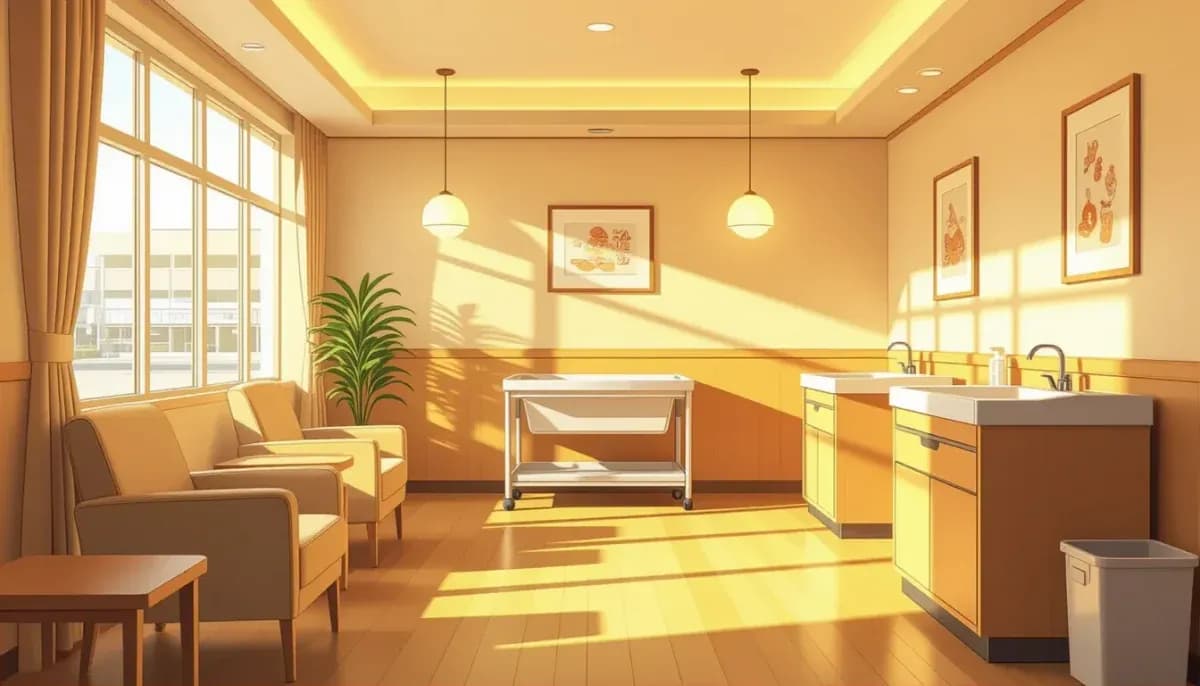
Complete guide to nursing rooms and baby-friendly facilities in Japan for foreign parents. Where to find them, what to expect, useful apps like Mama Papa Map, and practical tips for getting around with a baby.
Baby-Friendly Facilities and Nursing Rooms in Japan: A Complete Guide for Foreign Parents
Japan is remarkably well-equipped for parents with babies and young children. From high-end department stores to neighborhood shopping centers, nursing rooms (授乳室, jyunyū-shitsu) are widespread, well-maintained, and thoughtfully designed. If you're a foreign parent living in or visiting Japan with a baby, understanding how to find and use these facilities will make your daily life significantly easier.
This guide covers everything you need to know: where to find nursing rooms, what amenities to expect, useful apps for locating them, cultural norms around breastfeeding in public, and practical tips for getting around Japan with a baby.
What Are Japanese Nursing Rooms?
Japan's nursing rooms go far beyond a simple chair in a corner. These are dedicated, purpose-built spaces designed to give parents a private, comfortable environment for breastfeeding, formula feeding, and diaper changes.
Common Japanese terms for nursing rooms:
- 授乳室 (jyunyū-shitsu) — "nursing room" — the most common term
- ベビールーム (bebī rūmu) — "baby room"
- 赤ちゃん休憩室 (akachan kyūkei-shitsu) — "baby rest area"
- ベビー休憩室 (bebī kyūkei-shitsu) — "baby rest room"
Look for signage with a bottle icon, baby icon, or the Japanese text above. Most shopping malls post floor maps near elevators — nursing rooms are usually marked clearly.
Standard Amenities in Japanese Nursing Rooms
One of the most impressive things about Japanese nursing rooms is the level of amenities provided. You'll rarely feel like you're "making do." Here's what you can typically expect:
| Amenity | Common? | Notes |
|---|---|---|
| Private breastfeeding cubicles | ✅ Yes | Curtained or fully enclosed booths |
| Diaper changing tables | ✅ Yes | Usually multiple, often heated |
| Hot water dispenser | ✅ Yes | For formula preparation |
| Baby bottle warmer / sterilizer | ✅ Yes | Keeps bottles at safe temperature |
| Sink and washbasin | ✅ Yes | For handwashing |
| Diaper disposal unit | ✅ Yes | Sealed, odor-controlled |
| Baby crib / resting area | ✅ Common | For laying baby down safely |
| Infant scale | ✅ Common | Weigh your baby on the go |
| Microwave | ⚠️ Some | For warming food/purees |
| Emergency call button | ⚠️ Some | For safety |
| Vending machine (diapers/formula) | ⚠️ Some | Found in larger facilities |
Higher-end department stores (Isetan, Daimaru, Mitsukoshi) tend to have the most well-equipped nursing rooms, sometimes including complimentary baby wipes and loaner nursing covers.
Where to Find Baby-Friendly Facilities in Japan
Nursing rooms and baby facilities are distributed widely across Japan, but not uniformly. Here's where to look:
Shopping Malls and Department Stores
The most reliable places for nursing rooms. Major chains like AEON, LaLaport, Sunshine City, Isetan, and Daimaru have dedicated baby rooms on dedicated floors — often near children's clothing or toy sections. Some have multiple nursing rooms spread across different floors.
Baby specialty stores are also excellent options:
- Akachan Honpo (赤ちゃん本舗) — Japan's largest baby goods retailer; nursing rooms on-site
- Nishimatsuya (西松屋) — budget-friendly baby store with changing facilities
Train Stations
Major Shinkansen-connected stations typically have nursing rooms. Tokyo's Shinkansen terminals (Tokyo Station, Shin-Osaka) have well-equipped facilities. JR East's website lists nursing room availability at major stations.
Smaller regional and local train stations often do not have dedicated nursing rooms. On Shinkansen trains themselves, the multi-purpose restrooms can be used for diaper changes and discreet nursing.
Theme Parks and Tourist Attractions
Tokyo Disneyland and Tokyo DisneySea have some of Japan's best baby care centers with full amenities. Universal Studios Japan (Osaka) is similarly equipped. Most major tourist attractions and children's museums have at least basic facilities.
Government Offices and Community Centers
Ward offices (kuyakusho), city halls, and children's centers (kodomo center) often have nursing rooms. These are especially useful when you're completing paperwork or running errands.
Parks
Larger urban parks, especially those in Tokyo (Ueno Park, Shinjuku Gyoen) and family-focused parks, may have facility buildings with nursing rooms. Smaller neighborhood parks generally do not.
Mamaro Booths: Private Nursing Pods
Mamaro (ママロ) booths are a relatively recent innovation in Japan — compact, lockable private nursing pods installed in shopping malls, stations, and public spaces.
Key features:
- Fully enclosed and lockable from the inside
- Free to use (no fee, no registration)
- Gender-neutral — accessible to both mothers and fathers
- Fits one adult and a baby/toddler
- Equipped with a chair, small table, and sometimes a mirror
- Climate-controlled in some models
Mamaro booths are ideal when you need privacy but can't find a full nursing room. They're increasingly common in newer shopping facilities across Tokyo and other major cities. Look for the Mamaro logo (a stylized booth icon) on floor maps.
Apps to Find Nursing Rooms in Japan
Finding nursing rooms in an unfamiliar area is much easier with the right apps. All of the following are free:
Mama Papa Map (ママパパマップ)
The most popular and comprehensive option. Available in Japanese, English, and Chinese.
- Volunteer-submitted data with photos, ratings, and user comments
- Map-based interface with bottle/diaper icons
- Filters for: hot water, stroller rentals, high chairs, play areas, microwaves, sinks, diaper disposal
- iOS and Android
- Covers facilities throughout Japan
Mamamap (マママップ)
Another well-established app:
- Turquoise markers for nursing rooms
- Blue markers for diaper-changing stations
- Covers Tokyo and major cities across Japan
- User reviews and photos
Additional Resources
- nursing-room.com — a web database of nursing room locations submitted by users across Japan
- Walker+ — has a municipal facilities filter useful for government-run baby facilities
- JR East website — lists nursing rooms at Shinkansen stations
- Tokyo Kosodate Switch — Tokyo municipal website listing family-friendly facilities by ward
For more on navigating daily life in Japan as a foreign parent, Living in Nihon is a valuable English-language resource covering a wide range of expat lifestyle topics.
Cultural Norms Around Breastfeeding in Public
Japan has a nuanced relationship with public breastfeeding. Understanding this will help you navigate public spaces with confidence:
The cultural context:
- Breastfeeding in public is not illegal, but it's generally not done openly
- Japanese culture values quiet discretion in shared public spaces
- The widespread availability of nursing rooms reflects this preference — privacy is provided so parents don't feel they must choose between feeding their baby or feeling conspicuous
- Most Japanese people are understanding and patient with babies in public
Practical guidance for foreign parents:
- If you need to breastfeed and can't find a nursing room, using a nursing cover or scarf is widely accepted and appreciated
- Nobody is likely to confront you if you breastfeed quietly — but you may feel more comfortable using provided facilities
- Formula feeding is completely normal and widely accepted; no stigma attaches to either choice
Gender-neutral access: Since approximately May 2020, major facilities have been updating nursing rooms to be accessible to both mothers and fathers. This is part of a broader Japanese effort to support ikumen (育メン) — fathers who take an active role in childcare. If you see a nursing room marked "男女共用" (mixed gender), either parent is welcome.
For expat parents looking to connect with other foreign families in Japan, For Work in Japan has community resources and practical guides for navigating life in Japan.
Getting Around Japan with a Baby
Beyond nursing rooms, Japan has several features that make traveling with a baby more manageable:
Transportation
- Babies ride free on all trains, subways, buses, and Shinkansen in Japan (no ticket required for children under 6)
- Strollers are welcome on trains and buses — fold if crowded, but no requirement to fold during off-peak hours
- Most major stations have elevators — look for signs to the "バリアフリールート" (barrier-free route) to navigate with a stroller
- Baby carrier / baby sling users have an even easier time navigating crowded stations
Shopping for Baby Supplies
Japan has excellent availability of baby supplies at competitive prices:
| Item | Where to Buy | Approximate Cost |
|---|---|---|
| Diapers (large pack) | Akachan Honpo, Nishimatsuya, supermarkets | ¥800–¥1,200 |
| Baby wipes | Convenience stores, drug stores | ¥200–¥400 |
| Powdered formula | Supermarkets, Akachan Honpo | ¥1,000–¥2,500 |
| Ready-to-use liquid formula | Convenience stores (limited) | ¥200–¥400 per carton |
| Baby food pouches | Supermarkets, drug stores | ¥100–¥200 |
Convenience stores (FamilyMart, Lawson, 7-Eleven) are surprisingly well-stocked for emergencies — you can find diapers, wipes, and basic formula at any hour. Japanese convenience store brand diapers are actually quite well-regarded.
Hohoemi Raku Raku Milk (ほほえみ らくらくミルク) — Japan's most popular ready-to-use liquid formula. No preparation needed, which is invaluable when you're out. Available in 200ml cartons at many supermarkets and some convenience stores.
Stroller Rentals
Free stroller rentals are available at many large shopping centers — ask at the information desk (インフォメーション). Rental service Babycal offers stroller rentals at approximately ¥1,500 for 12 hours in some locations.
Practical Japanese Phrases for Baby Facilities
Being able to ask for help in Japanese goes a long way:
| English | Japanese | Romanization |
|---|---|---|
| Where is the nursing room? | 授乳室はどこですか? | Jyunyū-shitsu wa doko desu ka? |
| Where is the diaper changing room? | おむつ替えの場所はどこですか? | Omutsugae no basho wa doko desu ka? |
| Do you have hot water for formula? | ミルク用のお湯はありますか? | Miruku-yō no oyu wa arimasu ka? |
| Where is the elevator? | エレベーターはどこですか? | Erebētā wa doko desu ka? |
| Diaper | おむつ | Omutsу |
| Baby room | ベビールーム | Bebī rūmu |
| Powdered milk / formula | 粉ミルク | Kona miruku |
Japanese people are generally helpful when they see a parent struggling — even a simple gesture and pointing to your baby while saying "授乳室" (jyunyū-shitsu) will usually get you pointed in the right direction.
Key Takeaways for Foreign Parents
Japan is genuinely one of the best countries in the world for parents navigating public spaces with babies. The infrastructure is thoughtful, widespread, and maintained to high standards.
What to remember:
- Use Mama Papa Map — download it before you leave home; it works in English and will save you time
- Shopping malls are your friend — even unfamiliar malls almost certainly have a well-equipped nursing room
- Mamaro booths provide privacy when nursing rooms are full or unavailable
- Babies ride free on all public transport — no ticket needed
- Convenience stores are reliable emergency baby supply stops
- Gender-neutral nursing rooms are increasingly common — both parents are welcome
- Cultural discretion is appreciated but enforced — use nursing covers in public or find a nursing room
If you're preparing for life with a newborn in Japan, our guide to baby and infant care in Japan covers everything from hospital discharge to the first year of development. For healthcare and pediatric check-ups, see our children's healthcare in Japan guide.
For an excellent parent-focused breakdown of Japan's nursing and changing facilities written by expats, Little Nomads Japan offers a comprehensive parent's guide with photos and tips. For finding facilities near you using the Mama Papa Map app, Timeout Tokyo's feature on the app is a helpful starting point.
For broader guidance on raising children in Japan as a foreign family, explore our complete guide to education in Japan for foreign families and toddler parenting in Japan.
For academic study prep for your older children, Chuukou Benkyou provides resources on Japanese school entrance exam preparation.
Japan's baby-friendly infrastructure is a reflection of a society that values careful preparation and consideration for others. As a foreign parent, you'll find that — once you know what to look for — the country makes caring for your baby in public far less stressful than in many other places.

Originally from Vietnam, living in Japan for 16+ years. Graduated from Nagoya University, with 11 years of professional experience at Japanese and international companies. Sharing practical information for foreign parents raising children in Japan.
View Profile →Related Articles
Newborn Care Tips for First-Time Parents in Japan
Complete guide to newborn care in Japan for foreign parents: hospital stays, Boshi Techo handbook, free vaccinations, health checkups, breastfeeding tips, and postpartum support programs.
Read more →
Baby Swimming and Early Activities in Japan
Complete guide to baby swimming lessons and early activities in Japan for foreign parents. Enrollment tips, costs, English options, and top swim schools explained.
Read more →
Popular Baby Brands and Stores in Japan
Discover the most popular baby brands and stores in Japan, from Akachan Honpo and Nishimatsuya to Japanese brands like Pigeon, Combi, and Miki House. Complete guide for expat parents shopping for baby products in Japan.
Read more →
Baby Clothing: Seasons, Sizing, and Shopping in Japan
Complete guide to baby clothing in Japan for foreign parents. Learn how Japanese sizing works (cm-based), what to buy each season, and where to shop from budget to premium stores like Nishimatsuya and Miki House.
Read more →
Registering Your Newborn at City Hall in Japan
A complete guide for foreign parents on registering a newborn at city hall in Japan. Learn about the 14-day deadline, required documents, child allowance, and immigration procedures.
Read more →
Baby-Proofing Your Japanese Apartment
Learn how to baby-proof your Japanese apartment without damaging the property. Renter-friendly tips for foreign parents including products, room-by-room checklist, and earthquake safety.
Read more →