
Registering Your Newborn at City Hall in Japan

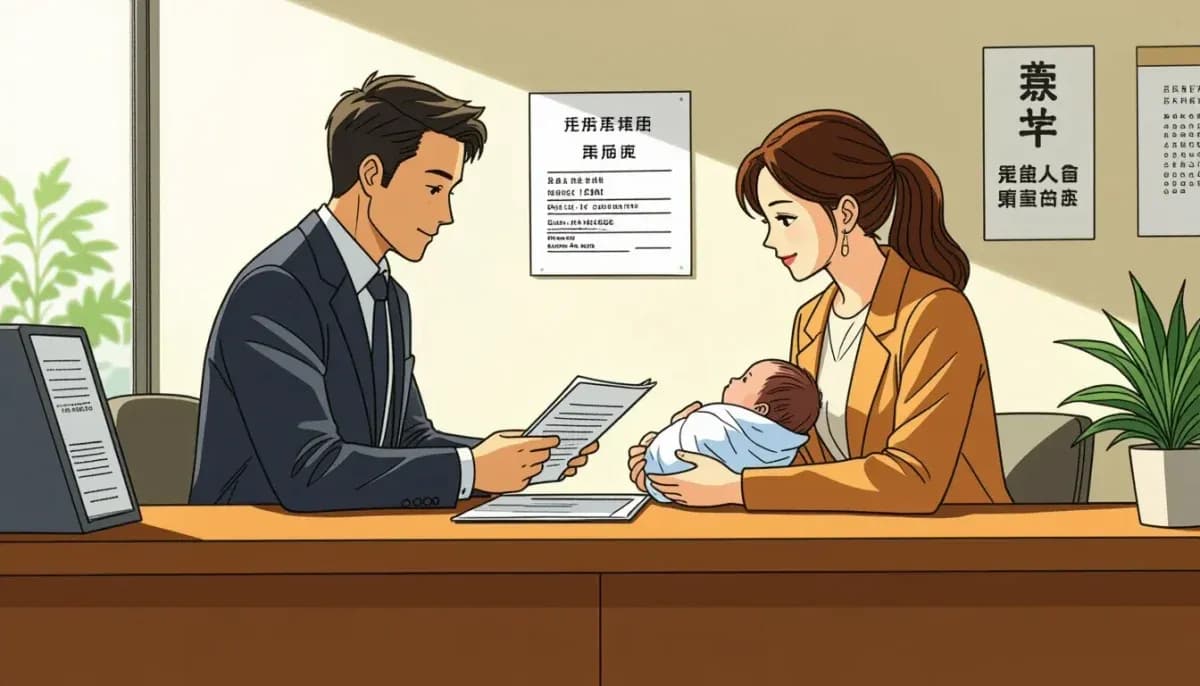
A complete guide for foreign parents on registering a newborn at city hall in Japan. Learn about the 14-day deadline, required documents, child allowance, and immigration procedures.
Registering Your Newborn at City Hall in Japan: A Complete Guide for Foreign Parents
Congratulations on your new baby! Having a child in Japan is a joyful experience, but it also comes with a set of mandatory administrative tasks that can feel daunting — especially in a language that isn't your own. One of the most critical steps after birth is registering your newborn at your local city hall (市役所, shiyakusho) or ward office (区役所, kuyakusho). This guide walks you through every step of the process, the documents you'll need, important deadlines, and the additional procedures specific to foreign parents.
Whether you're a long-term expat, on a work visa, or a permanent resident, understanding how birth registration in Japan works will help you ensure your child's legal status is secured from day one.
Why Newborn Registration in Japan Matters
Japan requires all births to be officially registered with the local municipal government. This is not optional — failure to register within the legally required timeframe can result in a fine. Beyond the legal obligation, registration is what triggers a cascade of important benefits and rights for your child, including healthcare coverage, child allowance payments, and in some cases, visa status.
Japan's traditional family record system is called the koseki (戸籍), a family register that serves as a combined birth certificate, marriage record, and death record all in one document. However, it is important to note that the koseki system applies to Japanese citizens only. If both parents are foreign nationals, your child will not receive a koseki entry. Instead, your family will rely on your home country's civil registration system, and your baby's legal status in Japan will be handled through the immigration bureau separately.
Over 3.7 million foreign residents live in Japan as of 2024, and thousands of babies are born to foreign parents each year. Understanding the right procedures from the start can save you significant time, stress, and potentially missed benefit payments.
The 14-Day Deadline: Shussho Todoke (出生届)
The most time-sensitive step is submitting the Shussho Todoke (出生届), the official Notification of Birth form. You must submit this at your local city hall or ward office within 14 days of birth, counting the birth date as day one.
If the 14-day window falls on a weekend or public holiday, you can still submit the form at the after-hours window of your municipal office. Most city halls have a 24/7 drop box specifically for birth notifications.
Failing to register within 14 days can result in a penalty under the Family Register Law (戸籍法). More practically, the delay will hold up all subsequent procedures — including your baby's health insurance enrollment and child allowance registration.
Where to Register
You can submit the birth notification at either:
- The municipal office where the baby was born
- The municipal office where the parents live (registered address)
For most families, registering at your local ward or city office where you're already registered as a resident is the most convenient option.
Documents Required for Birth Registration
Before heading to city hall, make sure you have all the necessary documents. The hospital will prepare some of these for you; others are your responsibility.
| Document | Who Provides It | Notes |
|---|---|---|
| Shussho Todoke form (出生届) | Hospital provides; parents fill out left side | Doctor/midwife signs the right side |
| Mother and Child Health Handbook (母子健康手帳) | You received this at city hall during pregnancy | Bring the original |
| Parent's residence card (在留カード) | You | Valid ID required |
| Personal seal (印鑑) | You (if you use one) | Signature acceptable for foreigners |
| Your My Number card or notification | You | Useful for linking benefits |
After submission, the city office will issue a Birth Notification Acceptance Certificate (出生届受理証明書, shussho todoke juri shomeisho). Keep this document — you will need it for subsequent procedures such as the immigration application.
Naming Your Child: Special Rules for Foreign Babies
When registering a baby who is a foreign national (both parents are foreign citizens), the name entry rules differ slightly:
- Write the child's name in Katakana in the designated name field
- Also write the name in your home country's alphabet (e.g., English letters for English-speaking families)
- The reading (furigana) should reflect the Katakana pronunciation
In May 2025, Japan updated the koseki system to formally include furigana (phonetic readings) as a standardized field. While this primarily affects Japanese citizens' records, it reflects the country's broader push toward clearer, more consistent civil documentation.
For dual-nationality children (one Japanese parent, one foreign parent), the child is entitled to Japanese citizenship and will receive a koseki entry. The name must be written in kanji, hiragana, or katakana for the Japanese record.
Additional Mandatory Procedures at City Hall
While you're at the city hall for birth registration, you can — and should — apply for several other benefits and registrations at the same visit. Many of these have their own deadlines.
1. Health Insurance Enrollment
Your newborn must be enrolled in health insurance as soon as possible after birth. In Japan, children are covered under their parents' health insurance plan:
- Company health insurance (社会保険): Add the baby as a dependent through your employer's HR department
- National Health Insurance (国民健康保険): Register the baby at city hall
Health coverage is backdated to the date of birth, so even if you register a few days late, your baby will be covered for any medical costs from birth.
2. Child Allowance (児童手当, Jidou Teate)
Japan provides a monthly child allowance to families with children. As of the updated 2024 reforms, the benefit has been expanded and is now available for children up to age 18 (previously 15). The allowance amounts are:
- Children aged 0–2: ¥15,000/month per child
- Children aged 3 to elementary school: ¥10,000–¥15,000 depending on birth order
- Children in junior high and high school (up to 18): ¥10,000/month
Important: Apply for the child allowance within 15 days of birth to receive the payment the following month. If you miss this window, payments will only begin the month after your application is processed.
Foreign parents living in Japan are fully eligible for this allowance as long as they hold valid residency status and the child lives in Japan.
3. Child Medical Expense Subsidy (子ども医療費助成)
Most municipalities in Japan offer a medical expense subsidy for children (乳幼児医療費助成, nyuuyouji iryouhi jossei). This program significantly reduces or eliminates out-of-pocket medical costs for young children. The exact coverage varies by municipality but can cover hospital visits, dental care, and prescriptions for children up to age 15 or older.
Register for this program at the same city hall visit.
Status of Residence for Your Newborn: The 30-Day Immigration Deadline
This step is separate from city hall registration and is specific to foreign national babies. If your child is not a Japanese citizen and will remain in Japan for more than 60 days after birth, you must apply for a Status of Residence (在留資格) at the Regional Immigration Services Bureau within 30 days of birth.
This is a strict legal deadline. Without it, your child has no legal basis to remain in Japan.
Most babies born to foreign parents will receive Dependent status (家族滞在). To apply, you will need:
- The Birth Notification Acceptance Certificate from city hall
- Parents' valid passports and residence cards
- Proof of parent's current residence status (status of residence certificate or copies of residence card)
- Completed application form for status of residence
For detailed guidance on visa applications for children, refer to our guide on Visa and Legal Issues for Foreign Families with Children in Japan.
Don't Forget: Registering with Your Home Country's Embassy
In addition to Japan's local procedures, you should register your baby's birth with your home country's embassy or consulate in Japan. This step establishes your child's citizenship in your home country and allows you to apply for their passport.
Deadlines and required documents vary significantly by nationality. For example:
- US citizens should report the birth to the US Embassy within 5 years to obtain a Consular Report of Birth Abroad (CRBA)
- UK citizens can register through the UK government's birth registration service
- Other nationalities should contact their nearest consulate as soon as possible
The U.S. Embassy in Tokyo has a detailed checklist for US citizen parents that outlines all required documents.
Summary Timeline: First 30 Days After Birth
| Day | Action | Location |
|---|---|---|
| Birth day (Day 0) | Receive completed Shussho Todoke from hospital | Hospital |
| Within 14 days | Submit birth registration | City hall / ward office |
| Same day as registration | Apply for health insurance, child allowance, medical subsidy | City hall |
| Within 15 days | Child allowance application (for next-month payment) | City hall |
| Within 30 days | Apply for baby's Status of Residence (if both parents are foreign) | Immigration bureau |
| ASAP | Register baby's birth with home country embassy | Embassy / consulate |
Tips for a Smooth City Hall Visit
Visiting a Japanese city hall can be overwhelming, especially with a newborn in tow. Here are a few practical tips:
- Bring a Japanese-speaking friend or interpreter if you're not confident in Japanese. Some larger city halls in urban areas have multilingual staff, but this is not guaranteed.
- Arrive early — city hall counters can get busy, especially in the morning. Allow 1–2 hours for the full visit.
- Bring more documents than you think you need — photocopies of your passport, residence card, and My Number card are always useful.
- Ask specifically for foreign resident procedures — some city halls have a dedicated counter for foreign nationals.
- Check city hall hours — most are open Monday to Friday, 8:30 AM to 5 PM. Some offer extended hours on weekday evenings.
For more information about navigating healthcare and medical care for your new baby in Japan, see our guide to Healthcare and Medical Care for Children in Japan. You may also want to review our article on Pregnancy and Giving Birth in Japan as a Foreign Parent for context on what comes before and after the birth itself.
Additional Resources for Foreign Parents
Navigating Japanese bureaucracy with a new baby can feel isolating, but there are excellent resources available:
- The KIFJP support site for foreign families provides a clear English-language overview of the three key procedures for foreign families after a baby is born in Japan.
- Amie International Administrative Scrivener Office offers a comprehensive guide specifically for foreign nationals navigating post-birth procedures.
- Living in Nihon provides practical guides for everyday life in Japan, including parenting and administrative procedures.
- For Work in Japan covers family life and living in Japan for working expats.
- Chuukou Benkyou is a helpful resource for understanding the Japanese education system as your child grows.
For broader parenting support, explore our full Baby and Infant Care in Japan guide and the Government Benefits and Subsidies for Families in Japan page for information about all the financial support available to your family.
Registering your newborn at city hall in Japan is one of the most important steps you'll take as a new parent in this country. While the process involves multiple steps and offices, the Japanese system is generally well-organized once you understand what's needed and when. With this guide in hand, you're well-equipped to navigate the paperwork and ensure your baby's legal status and benefits are secured from day one.

Originally from Vietnam, living in Japan for 16+ years. Graduated from Nagoya University, with 11 years of professional experience at Japanese and international companies. Sharing practical information for foreign parents raising children in Japan.
View Profile →Related Articles

Newborn Care Tips for First-Time Parents in Japan
Complete guide to newborn care in Japan for foreign parents: hospital stays, Boshi Techo handbook, free vaccinations, health checkups, breastfeeding tips, and postpartum support programs.
Read more →
Baby Swimming and Early Activities in Japan
Complete guide to baby swimming lessons and early activities in Japan for foreign parents. Enrollment tips, costs, English options, and top swim schools explained.
Read more →
Popular Baby Brands and Stores in Japan
Discover the most popular baby brands and stores in Japan, from Akachan Honpo and Nishimatsuya to Japanese brands like Pigeon, Combi, and Miki House. Complete guide for expat parents shopping for baby products in Japan.
Read more →
Baby Clothing: Seasons, Sizing, and Shopping in Japan
Complete guide to baby clothing in Japan for foreign parents. Learn how Japanese sizing works (cm-based), what to buy each season, and where to shop from budget to premium stores like Nishimatsuya and Miki House.
Read more →
Baby-Friendly Facilities and Nursing Rooms in Japan
Complete guide to nursing rooms and baby-friendly facilities in Japan for foreign parents. Where to find them, what to expect, useful apps like Mama Papa Map, and practical tips for getting around with a baby.
Read more →
Baby-Proofing Your Japanese Apartment
Learn how to baby-proof your Japanese apartment without damaging the property. Renter-friendly tips for foreign parents including products, room-by-room checklist, and earthquake safety.
Read more →