
Breastfeeding Support and Culture in Japan

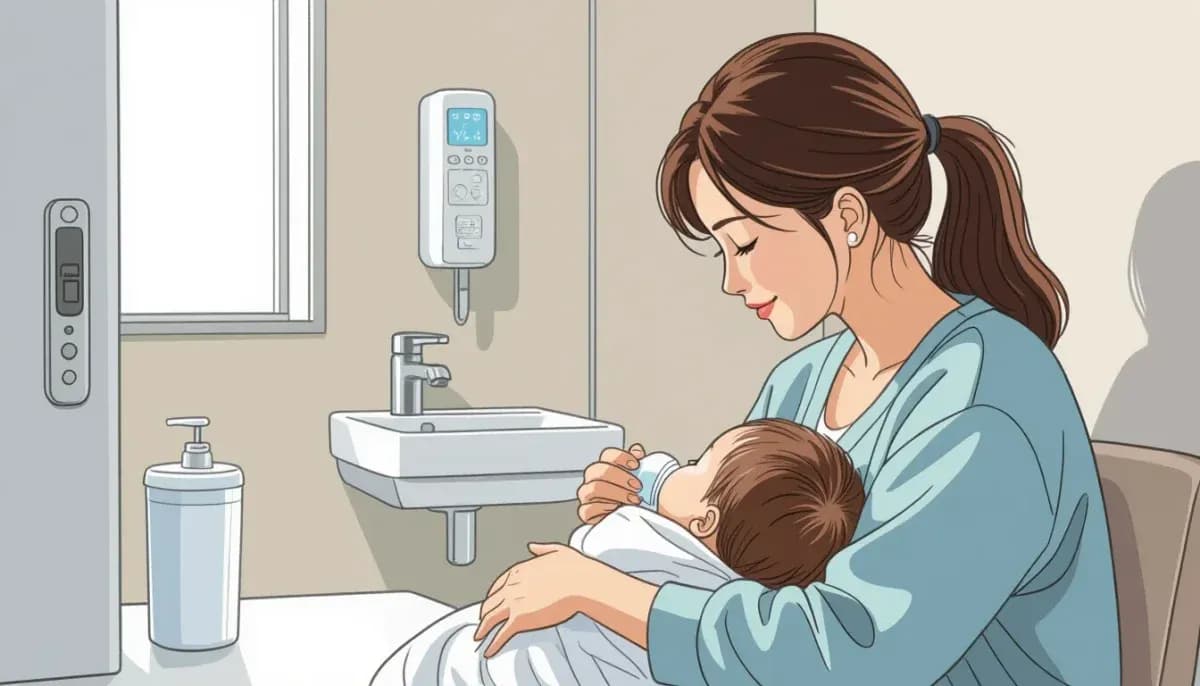
Complete guide to breastfeeding in Japan for foreign parents: nursing rooms, support groups, La Leche League, returning to work, and practical tips for expat mothers.
Breastfeeding Support and Culture in Japan: A Complete Guide for Foreign Parents
Moving to Japan with a newborn or planning to breastfeed in Japan can feel daunting — especially when you're navigating a new culture, language barriers, and unfamiliar healthcare systems. The good news is that Japan offers a wealth of breastfeeding infrastructure, from well-equipped nursing rooms in nearly every shopping mall to dedicated postpartum support programs. This guide covers everything foreign parents need to know about breastfeeding support and culture in Japan.
Understanding Breastfeeding Culture in Japan
Japan has a complex relationship with breastfeeding. On one hand, the country has strong cultural values around motherhood and child health that encourage breastfeeding. On the other hand, systemic factors — including hospital practices and social norms around public nursing — create real barriers.
According to research published in Scientific Reports, Japan's exclusive breastfeeding rate stands at approximately 54.6% at 3 months postpartum and drops to 37.4% at 6 months. This is despite the fact that more than 90% of pregnant women in Japan express a desire to breastfeed. The gap between intention and practice is largely explained by two factors: hospital supplementation practices and return-to-work pressures.
A significant barrier is what happens immediately after birth. Roughly 90% of newborns in Japan are supplemented with formula during their postpartum hospital stay, often without strong clinical justification. This early introduction of formula can disrupt milk supply and breastfeeding establishment during the critical first days. Advocacy from groups like Baby-Friendly Hospital Initiative (BFHI) has led to gradual improvements, but the practice remains widespread.
Culturally, breastfeeding in public spaces is not widely normalized in Japan. While it is legal and not explicitly discouraged, Japanese social norms around modesty mean that nursing uncovered in public — on trains, in parks, at restaurants — tends to draw attention or quiet disapproval. This is why Japan has invested so heavily in private nursing room infrastructure, as described in detail below.
Nursing Rooms (授乳室): Japan's Breastfeeding Infrastructure
One of Japan's genuine strengths for breastfeeding parents is its extensive network of nursing rooms (授乳室, junyuushitsu). These private spaces are found in nearly all large commercial complexes, department stores, major train stations, Shinkansen terminals, airports, and government buildings.
A well-equipped Japanese nursing room typically includes:
| Feature | Details |
|---|---|
| Breastfeeding chairs | Comfortable chairs, often with individual curtained nooks for privacy |
| Baby changing area | Changing tables accessible to all caregivers |
| Hot water dispenser | For preparing formula or warming bottles |
| Microwave oven | For heating baby food or sterilizing |
| Bottle sterilizer/warmer | Dedicated appliance for bottle care |
| Sink & washing area | Separate area for bottle washing and hand-washing |
| Diaper disposal unit | With free plastic bags provided |
| Baby scale | Some rooms include infant weight stations |
| Emergency button | For calling assistance if needed |
Smaller stations and rural areas may have fewer facilities, so it's wise to plan ahead when traveling with an infant outside urban centers. Tokyo, Osaka, and Fukuoka all have nursing rooms mandated by local regulations in major public facilities.
For more comprehensive guidance on raising children in Japan as a foreigner, see the Complete Guide to Raising Children and Education in Japan on Living in Nihon.
Apps and Tools for Finding Nursing Rooms
Locating nursing rooms in an unfamiliar city is much easier with the right tools. Several apps and websites are specifically designed to help parents find breastfeeding facilities in Japan:
- Milpas — Available on iPhone with an English interface, this app lets you search for nursing room locations by area. Names are in Japanese but the search function works in English.
- Mama Papa Map (ママパパマップ) — Comprehensive map of nursing and changing facilities searchable by train station or area name.
- Baby Map — Similar functionality with user-submitted reviews of facility quality.
- comolib — Lists commercial facility amenities including nursing rooms, with ratings.
- Walker+ — A general Japan outing app that includes baby facility information for major venues.
- Municipality homepages — Tokyo's "Kosodate Switch (子育てスイッチ)" and similar city-run resources list official nursing room locations.
When in doubt, ask at any department store's information counter (案内所, annaisho) — staff can direct you to the nearest nursing room, even if your Japanese is limited. The phrase 「授乳室はどこですか?」(Junyuushitsu wa doko desu ka?) means "Where is the nursing room?"
Postpartum Support and Breastfeeding Assistance
Japan has recognized gaps in postpartum breastfeeding support and has been expanding programs to address them. The Postpartum Care Services (PCS) program, now offered through most municipalities, provides:
- Physical recovery support for new mothers
- Breastfeeding guidance and breast care (乳房ケア)
- Psychological and emotional support
- Childcare guidance and practical skills
- Coordination with family support networks
- Introduction to community resources and support groups
As of 2024, Comprehensive Support Centres for Child Rearing have been established in approximately half of Japan's municipalities. These centers serve as centralized contact points from pregnancy notification through the early childcare years, and many offer breastfeeding consultation services.
Your local Health Center (保健センター, hoken senta) is often the first point of contact for postpartum support. After giving birth, you will receive a postpartum home visit from a public health nurse (保健師, hokenshi), who can assess your breastfeeding situation and refer you to lactation consultants or support groups as needed.
For guidance on navigating the Japanese healthcare system with children, see our guide on Healthcare and Medical Care for Children in Japan.
The La Leche League and Community Support Groups
For foreign parents especially, community support groups are invaluable. La Leche League (LLL) Japan maintains active groups across the country offering mother-to-mother breastfeeding support in a non-clinical setting.
LLL groups are particularly valuable for:
- Getting support in your own language (English-language groups exist in major cities)
- Connecting with other international mothers facing similar challenges
- Accessing evidence-based information without a hospital appointment
- Emotional support and reducing isolation during the postpartum period
One Japanese mother in the United States who participated in an LLL group described the experience: "I joined LLL because I was worried about giving birth and raising a baby in a foreign country" — a sentiment that resonates deeply for foreign mothers in Japan facing the same experience in reverse.
Beyond LLL, expat parenting communities on Facebook groups and platforms like Meetup host regular gatherings for international families in Tokyo, Osaka, Nagoya, and other major cities. These informal networks can be invaluable for finding English-speaking lactation consultants, sharing nursing room recommendations, and simply feeling less alone.
For support with the broader challenges of raising children in Japan as a foreigner, the resources at Family Life in Japan on For Work in Japan cover practical topics for expat families.
Breastfeeding and Returning to Work in Japan
Japan's work culture creates real challenges for breastfeeding mothers returning to employment. Many mothers report stopping breastfeeding earlier than they intended because they do not know how to continue while working.
Research findings highlight an interesting policy lever: when fathers work under a flextime system after childbirth, mothers' breastfeeding initiation increases and average duration extends by approximately 4.4 months. This suggests that family-supportive workplace policies — not just maternity-focused ones — have a direct impact on breastfeeding outcomes.
Under Japanese labor law, employers are required to provide nursing breaks (育児時間, ikuji jikan) of at least 30 minutes twice per day to breastfeeding employees with infants under one year of age. These breaks are in addition to regular rest periods. Additionally, employers cannot assign overtime or late-night work to breastfeeding employees without consent.
In practice, many mothers pump breast milk at work. Resources for working and breastfeeding in Japan include:
- Asking HR about dedicated pumping spaces (quiet rooms, first aid rooms)
- Using insulated bags and ice packs to transport pumped milk safely
- Connecting with other working mothers through expat networks to share strategies
For additional guidance on parenting logistics in Japan, see our Baby and Infant Care in Japan guide and the Pregnancy and Giving Birth in Japan guide.
Practical Tips for Breastfeeding as a Foreign Parent in Japan
Navigating breastfeeding in Japan as a foreigner comes with unique challenges. Here are practical strategies to make the experience smoother:
Before Baby Arrives:
- Research nursing room locations near your home, pediatrician's office, and frequently visited areas
- Download nursing room locator apps before you need them
- Connect with local La Leche League or expat parenting groups during pregnancy
- Ask your obstetrician or midwife about breastfeeding support resources in your municipality
In Hospitals:
- Inform your care team clearly if you want to exclusively breastfeed and do not want formula supplementation
- Ask to have your baby room-in (同室, dosshitsu) with you to facilitate nursing on demand
- Request to see a lactation consultant (母乳相談, bonyuu sodan) if available
Out and About:
- Always carry a nursing cover (授乳ケープ, junyuu kepu) — available at maternity shops like Akachan Honpo, Nishimatsuya, and BabiesRUs Japan
- Plan outings around nursing room locations using apps
- Department stores and shopping malls are reliably well-equipped
- Don't hesitate to ask information counters for directions to the nursing room
For Formula Supplementation (if needed):
- Japanese formula brands (Meiji, Morinaga, Wakodo) are high quality and widely available
- Nursing rooms have hot water dispensers for formula preparation
- Convenience stores (コンビニ) sell ready-to-feed formula in small cartons for emergencies
Financial Considerations:
- Annual formula costs exceed $1,500 USD, making successful breastfeeding a meaningful financial benefit
- Breast pumps can be rented through some municipal programs or purchased at major baby stores
- Some health insurance plans (including national health insurance) may cover lactation consultations
For broader financial planning as a foreign family in Japan, see our guide on Financial Planning for Expat Families Raising Children in Japan.
Additional Resources
Japan's breastfeeding support landscape is richer than many foreign parents expect, but accessing it requires knowing where to look. Key resources include:
- Going Out With Baby in Japan — Nursing Rooms and Facilities (MATCHA) — An excellent English-language overview of nursing room culture and what to expect
- Baby Stations and Breastfeeding in Japan — The Haruna Home — A first-hand expat account of Japan's baby station infrastructure
- Postpartum Care and Breastfeeding Support in Japan — PMC Research — Academic overview of Japan's postpartum care systems
- Child Rearing Resources — Chuukou Benkyou — Japanese-language educational resource with parenting support information
Breastfeeding as a foreign parent in Japan is absolutely achievable. The infrastructure is there — well-designed nursing rooms, supportive community groups, and legal protections for nursing employees. The key is knowing how to access these resources, and building your support network early. You are far from alone in this journey.

Originally from Vietnam, living in Japan for 16+ years. Graduated from Nagoya University, with 11 years of professional experience at Japanese and international companies. Sharing practical information for foreign parents raising children in Japan.
View Profile →Related Articles
Newborn Care Tips for First-Time Parents in Japan
Complete guide to newborn care in Japan for foreign parents: hospital stays, Boshi Techo handbook, free vaccinations, health checkups, breastfeeding tips, and postpartum support programs.
Read more →
Baby Swimming and Early Activities in Japan
Complete guide to baby swimming lessons and early activities in Japan for foreign parents. Enrollment tips, costs, English options, and top swim schools explained.
Read more →
Popular Baby Brands and Stores in Japan
Discover the most popular baby brands and stores in Japan, from Akachan Honpo and Nishimatsuya to Japanese brands like Pigeon, Combi, and Miki House. Complete guide for expat parents shopping for baby products in Japan.
Read more →
Baby Clothing: Seasons, Sizing, and Shopping in Japan
Complete guide to baby clothing in Japan for foreign parents. Learn how Japanese sizing works (cm-based), what to buy each season, and where to shop from budget to premium stores like Nishimatsuya and Miki House.
Read more →
Registering Your Newborn at City Hall in Japan
A complete guide for foreign parents on registering a newborn at city hall in Japan. Learn about the 14-day deadline, required documents, child allowance, and immigration procedures.
Read more →
Baby-Friendly Facilities and Nursing Rooms in Japan
Complete guide to nursing rooms and baby-friendly facilities in Japan for foreign parents. Where to find them, what to expect, useful apps like Mama Papa Map, and practical tips for getting around with a baby.
Read more →