
Community Art Programs and Workshops for Kids

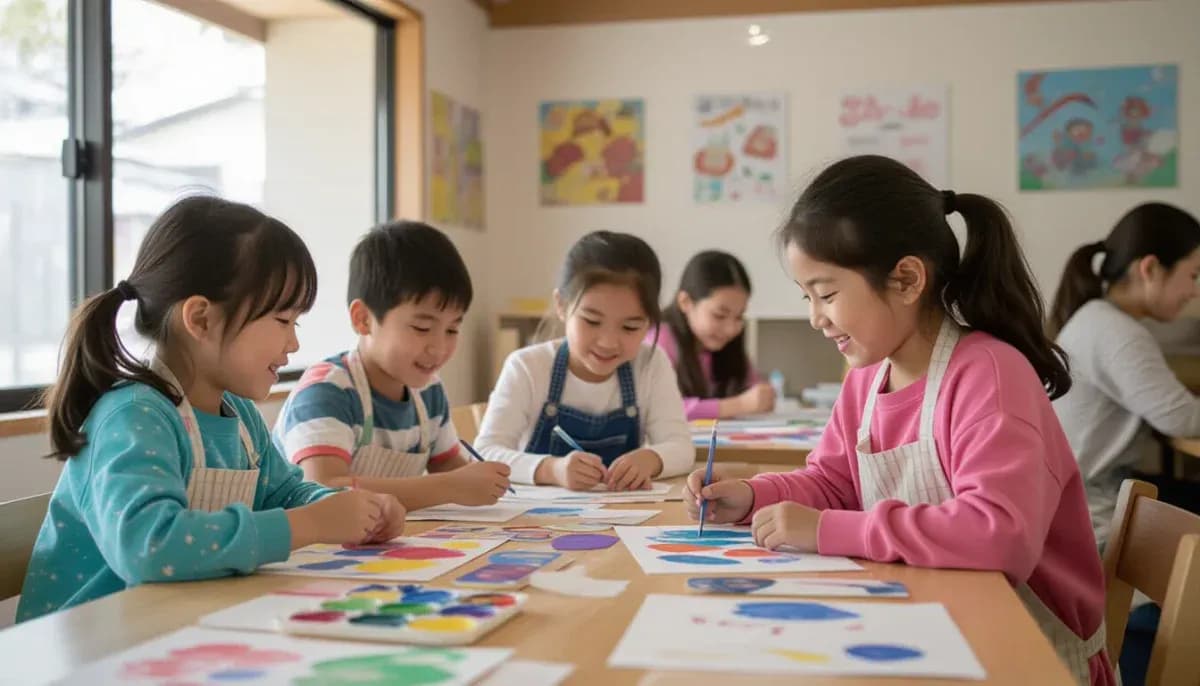
Discover community art programs and workshops for kids in Japan. Find English-friendly studios, costs, and tips for expat families to enroll children in art classes.
Community Art Programs and Workshops for Kids in Japan
Japan offers a rich and diverse landscape of community art programs and workshops for children. From centuries-old calligraphy traditions to modern mixed-media studios, kids growing up in Japan—including those from foreign families—have access to creative outlets that nurture self-expression, fine motor skills, and cultural appreciation. Whether you are an expat parent looking to enrich your child's after-school routine or a long-term resident wanting to connect your family with local culture, understanding what is available can open doors to some truly rewarding experiences.
This guide covers the types of community art programs and workshops available across Japan, what to expect in terms of cost and structure, how to find English-friendly options, and practical tips for signing your child up.
Types of Community Art Programs for Kids in Japan
Japan's art education scene for children is remarkably varied. Here is an overview of the most common types of programs:
Traditional Arts (Dentō Geinō) These programs focus on Japanese heritage crafts and art forms. Calligraphy (shodo) is by far the most popular traditional art for children—surveys consistently rank it among the top five extracurricular activities for kids in Japan. Children learn brush technique, ink preparation, and the aesthetics of Japanese writing. Other traditional options include origami, ikebana (flower arranging), pottery (tōgei), and woodblock printing (mokuhanga).
Free Expression and Mixed Media Studios A growing number of studios in Japan take an unstructured, child-led approach to art. Programs like Miro Art Labo encourage children to choose their own media—canvas, clay, fabric, or paper—without an assigned curriculum. The philosophy centers on nurturing intrinsic creativity rather than producing polished results. These studios tend to attract international families who prefer less rigid instruction.
Skill-Based Art Classes These programs teach specific techniques such as drawing, watercolor painting, oil painting, sculpture, or digital illustration. Children progress through levels and may prepare works for exhibitions or competitions. Many community centers (kominkan) offer these classes at subsidized rates for local residents.
Workshop Events (Taiken Kōza) Single-session hands-on workshops are extremely popular in Japan and a great entry point for children new to art. Museums, community art spaces, and specialty shops regularly host taiken kōza covering topics like making traditional paper (washi), printmaking, ceramics, and even creating traditional Japanese pigments.
Where to Find Art Programs for Kids Across Japan
Art classes and workshops for children can be found through a variety of venues:
Community Centers (Kominkan) Every neighborhood in Japan has a kominkan—a publicly funded community center that often runs low-cost or free art programs for children. These are typically conducted in Japanese but are a fantastic way for children to integrate locally. Check the bulletin boards or the local ward office website for current schedules.
Art-Focused Studios and Schools Private art studios operate in every major city. In Tokyo, Artbar operates at multiple bilingual locations including Daikanyama, Harajuku, Ueno, and Yokohama. Sessions start from approximately ¥5,500 and instruction is available in both Japanese and English, making it one of the most accessible options for expat families. Kyoto Handicraft Center offers some of the most budget-friendly taiken experiences in the Kansai region, with workshops starting from ¥2,200.
Museums and Cultural Institutions Japan's major museums frequently host children's art workshops, especially during school holidays and weekends. The National Art Center, the Mori Art Museum, and the Tokyo Metropolitan Art Museum all offer family programs throughout the year. Many are free or heavily discounted for children.
Community Art Spaces Spaces like 7artscafe in Yokohama's Naka-ku combine children's art workshops with neighborhood initiatives, including environmental projects and public murals. These spaces blur the line between art education and community involvement, giving children a sense of contributing to something larger than themselves.
For additional resources about family life and activities in Japan, Living in Nihon is a useful reference for expats navigating everyday life, and For Work in Japan covers broader topics for foreign residents.
English-Friendly Art Options for Foreign Families
Finding English-language instruction is one of the main concerns for expat parents. Fortunately, the landscape has improved significantly in recent years:
- Artbar Tokyo — Multiple locations across the Tokyo metropolitan area with bilingual staff. Kids' workshops from ¥5,500 per session.
- Art.Wine Tokyo — Adult-focused but offers some family sessions; English-speaking instructors available. From ¥6,600 per session.
- Pigment Tokyo — A premium art supply store that also runs family workshops focused on traditional Japanese pigments and materials. Ideal for curious older children.
- International school art programs — Many international schools open their extracurricular art programs to non-enrolled children in the local community. Worth enquiring directly.
- Gaijinpot and community boards — The GaijinPot blog maintains an updated list of English-friendly art workshops around Japan.
For additional study and learning resources for children, Chuukou Benkyou covers educational topics relevant to families with school-age children in Japan.
Cost Comparison: Community Art Programs and Workshops
Understanding the typical cost of different programs helps families budget appropriately. Prices below reflect general market rates as of 2025.
| Program Type | Typical Cost | Frequency | English Available? |
|---|---|---|---|
| Calligraphy (shodo) class | ¥3,000–¥5,000/month | Weekly | Rarely |
| Community center art class | ¥500–¥2,000/session | Weekly | Rarely |
| Private art studio (e.g., Artbar) | ¥5,500–¥8,000/session | One-time or monthly | Yes |
| Museum workshop (taiken kōza) | Free–¥2,000/session | Seasonal | Sometimes |
| Kyoto Handicraft Center workshop | From ¥2,200/session | One-time | Yes |
| Mixed media / free expression studio | ¥5,000–¥10,000/month | Weekly | Sometimes |
| Online art class (bilingual) | ¥2,000–¥5,000/month | Weekly | Yes |
Government support for arts education is substantial. Japan's Agency for Cultural Affairs allocated over 100 billion yen in fiscal year 2024, which funds arts programming at community centers, schools, and public art institutions across the country. This means that publicly organized programs are often subsidized and significantly cheaper than private alternatives.
How to Sign Up: A Practical Guide for Foreign Parents
Enrolling your child in a community art program in Japan involves a few steps that may be unfamiliar to new arrivals:
1. Research your local options first Start with your ward office (shiyakusho or kuyakusho) website. Most have a list of kominkan programs with schedules and contact details. Search for terms like 子ども 絵画教室 (kodomo kaiga kyōshitsu — children's painting class) or 工作 ワークショップ (kōsaku wākushoppu — craft workshop).
2. Check for trial lessons (taiken jugyō) Many studios offer a free or discounted trial lesson. This is standard practice in Japan and a great way to see if the environment suits your child before committing to monthly fees.
3. Prepare your child for a Japanese-language environment Even in mixed studios, instructions may primarily be given in Japanese. Simple phrases like 描いてみて (kaite mite — try drawing this) or 色を選んで (iro wo erande — choose a color) can help your child feel more comfortable. Bilingual programs exist but are concentrated in larger cities.
4. Understand the registration process Many popular programs require prior registration and may have waiting lists (taiki). Some kominkan classes run on a lottery (chūsen) system for oversubscribed sessions. Register early, especially for spring and autumn intake.
5. Gather necessary documents For publicly funded programs, you may need to show proof of local residency (jūminhyō), your child's health insurance card, and occasionally a photograph. Private studios typically require only basic registration details and payment.
For broader guidance on navigating life with children in Japan, see our complete guide to the Japanese education system and our overview of extracurricular and enrichment activities for kids.
Benefits of Community Art Programs for Children in Japan
Participating in community art programs offers benefits that go beyond technical skill development. Research consistently shows that children engaged in regular creative activities develop stronger problem-solving abilities, greater emotional resilience, and higher levels of empathy.
In the Japanese context, art programs also serve as a bridge for children navigating cultural differences. For children of foreign families, joining a local shodo class or community workshop can be one of the most effective ways to make Japanese friends, practice the language in a low-pressure setting, and build a sense of belonging in the neighborhood.
Statistics from 2024–2025 surveys show that over 82% of Japanese children participate in at least one extracurricular activity by age six, with an average of 1.92 activities per child. Art, music, and calligraphy consistently rank among the most chosen options. This widespread participation means art programs are culturally embedded and well-supported by local communities.
For parents considering a broader range of enrichment options, Fun Japan's 2025 guide to children's extracurricular activities provides an overview of rankings and how to choose the right activity for your child's age and interests.
Children enrolled in community art programs in Japan also often develop bilingual or multilingual creativity—the ability to express ideas through visual language that transcends linguistic barriers. This is particularly valuable for children who are still developing their Japanese language skills and may struggle to articulate themselves verbally in class.
Seasonal Workshops and Special Events
One of the most accessible ways to introduce your child to art programs in Japan is through seasonal workshops. These are typically:
- Spring (March–May): Watercolor and botanical illustration tied to cherry blossom season
- Summer (July–August): Intensive holiday workshops at museums and cultural centers, often running daily for a week
- Autumn (September–November): Pottery and craft workshops aligned with cultural festivals (matsuri)
- Winter (December–February): New Year calligraphy (kakizome) events, very popular and widely available for children
Summer workshops in particular are a major fixture of Japanese childhood. Museums and art spaces compete to offer creative, hands-on experiences during the long school holidays. Pigment Tokyo's kids' workshop series is one example, where children create their own crayons and explore traditional Japanese pigment materials in a premium studio environment.
Keeping an eye on local ward newsletters, community center bulletin boards, and platforms like Peatix (a popular Japanese event ticketing site) will ensure you do not miss seasonal programming.
Summary and Next Steps
Japan's community art landscape for children is rich, accessible, and deeply embedded in local culture. Whether your child gravitates toward the discipline of calligraphy, the freedom of a mixed-media studio, or the excitement of a one-off workshop, there are options to suit every temperament and budget.
Key takeaways:
- Over 82% of children in Japan participate in extracurricular activities, with art and calligraphy among the most popular choices
- English-friendly options exist in major cities, with Artbar Tokyo being the most prominent bilingual provider
- Community centers offer subsidized programs that are ideal for integration into local neighborhood life
- Seasonal workshops are abundant and offer a low-commitment entry point for newcomers
- Japan's Agency for Cultural Affairs provides robust government backing for arts education nationwide
To learn more about raising children in Japan as a foreign family, explore our related guides on raising bilingual children in Japan and healthcare and wellbeing for children in Japan.

Originally from Vietnam, living in Japan for 16+ years. Graduated from Nagoya University, with 11 years of professional experience at Japanese and international companies. Sharing practical information for foreign parents raising children in Japan.
View Profile →Related Articles
Cultural Arts Festivals and Children's Participation
Complete guide to cultural arts festivals and children participation in Japan for expat families. Covers bunkasai, Shichi-Go-San, Kodomo no Hi, matsuri traditions, and how foreign children can participate fully.
Read more →
How to Support Your Creative Child in Japan
Discover how to nurture your creative child in Japan through traditional crafts, naraigoto lessons, bilingual expression, and smart use of Japan's generous family support programs. A complete guide for foreign parents.
Read more →
Art Competitions and Exhibitions for Children in Japan
Complete guide to art competitions and exhibitions for children in Japan. Discover Pentel ICAE, JQA Environmental Drawing Contest, top museums, and tips for expat families supporting young artists.
Read more →
Digital Art and Animation Classes for Kids in Japan
A complete guide for expat families: find English-friendly digital art and animation classes for kids in Japan, from iPad studios to bilingual workshops in Tokyo and beyond.
Read more →
Best Museums and Art Galleries for Children in Japan
Discover the best museums and art galleries for children in Japan — from Tokyo's Ghibli Museum and teamLab to Railway Museum and Kids Plaza Osaka. Practical tips, admission prices, and age-by-age recommendations for foreign families.
Read more →
Creative Writing and Poetry for Kids in Japan
Discover haiku, tanka, zuihitsu, and English-language writing programs for children in Japan. A complete guide for expat families supporting young writers.
Read more →