
Discipline Methods in Japanese Parenting Culture

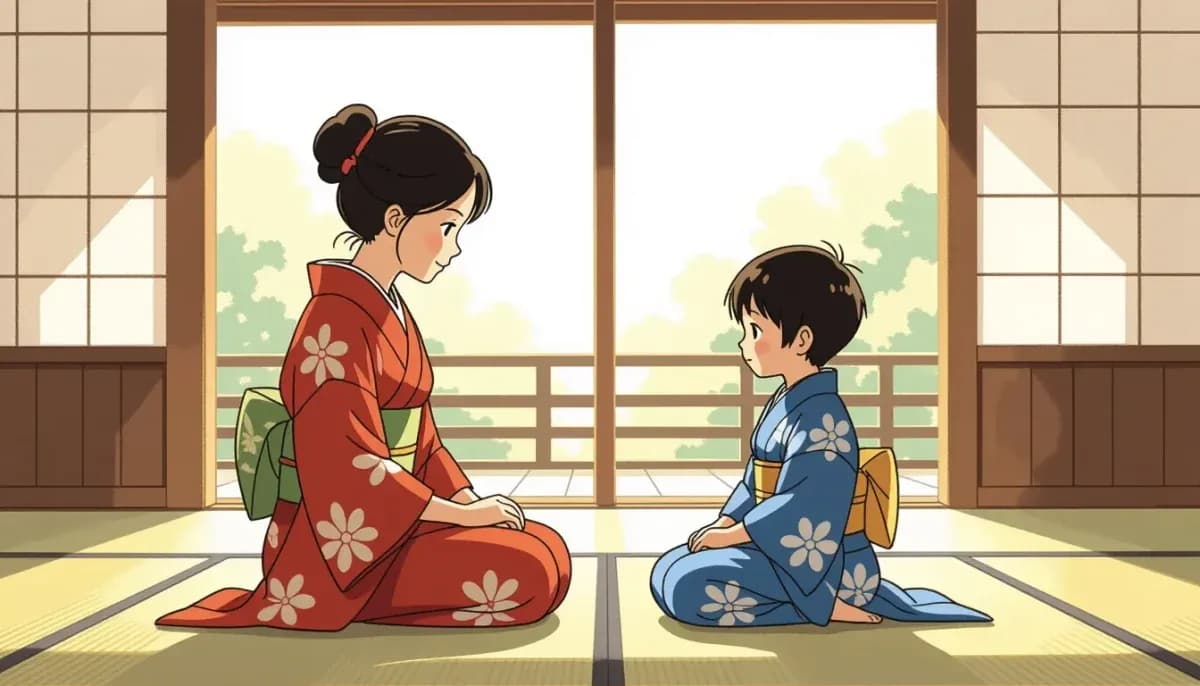
Discover how Japanese parents use shitsuke, empathy-based discipline, and group harmony to raise well-behaved children. A practical guide for foreign families in Japan.
Discipline Methods in Japanese Parenting Culture: What Foreign Parents Need to Know
If you've spent any time in Japan with children, you've likely noticed something striking: Japanese kids on trains sit quietly, children at restaurants use indoor voices, and school hallways are orderly in ways that seem almost impossible in other countries. This isn't magic — it's the result of a deeply intentional approach to discipline rooted in centuries of cultural practice. As a foreign parent raising children in Japan, understanding these discipline methods can help you navigate cultural differences, set expectations at school, and find common ground with Japanese parents in your community.
This guide breaks down the core philosophy, specific techniques, and practical implications of Japanese discipline culture — and what it means for your family.
The Foundation: Shitsuke (しつけ)
At the heart of Japanese parenting discipline is a concept called shitsuke (しつけ), which translates roughly as "upbringing," "training," or "formation." Unlike the Western idea of discipline as a reaction to bad behavior — a punishment after the fact — shitsuke is fundamentally preventive. It's about shaping a child's character and habits through consistent modeling and repetition before problems arise.
The word itself comes from a sewing term meaning to baste fabric — temporary stitches that hold pieces in place while the permanent seams are sewn. The metaphor is intentional: shitsuke is the early guidance that holds a child together until their own values and habits become permanent.
Key principles of shitsuke include:
- Modeling over punishment: Japanese caregivers believe that if you want a calm child, you must be calm yourself. The parent's own behavior is the primary disciplinary tool.
- Repetition until automatic: Children in Japanese kindergartens practice the same routines — lining up shoes, greeting teachers, cleaning classrooms — until these become unconscious habits, not rules to remember.
- Targeting actions, not character: When correction is needed, it focuses on the specific behavior ("that was unkind to Kenji") rather than the child's identity ("you are a bad child"). This approach is endorsed by developmental psychologists worldwide.
For expat parents, understanding shitsuke explains why Japanese teachers rarely raise their voices and why Japanese parents seem remarkably patient. They're not permissive — they're playing a long game.
Private vs. Public Discipline: The Rule of Face
One of the most visible differences between Japanese and Western discipline practices is where and how correction happens. In Japan, public correction is strongly avoided.
Japanese parents who need to address misbehavior will typically:
- Move to the edge of a train platform before speaking to the child
- Step away from a restaurant table to a quieter corner
- Wait until arriving home before having any serious disciplinary conversation
- Use a quiet, low-voiced tone rather than raised voices in any setting
This isn't avoidance — it's a deeply intentional choice rooted in the cultural value of maintaining face (mentsu/面子) for both parent and child. Publicly correcting a child embarrasses the child in front of others, which is considered a far greater harm than the original misbehavior. It also reflects poorly on the parent's control and judgment.
For foreign parents, this cultural norm has real practical implications. If your child has a meltdown in a supermarket and you firmly address it in the aisle, Japanese bystanders may not react with visible sympathy the way you might expect at home. Understanding this norm can reduce friction and help you interpret Japanese parents' behavior (or apparent non-reaction to their own children's behavior) more accurately.
Living in Nihon offers excellent guides on navigating cultural differences as a foreign resident in Japan.
Empathy-Based Discipline: Teaching Group Harmony
Japanese discipline is heavily oriented toward group harmony — the concept of wa (和). Rather than focusing on individual rules and punishments, Japanese parents and teachers consistently return to one central question: How does your behavior affect the people around you?
From infancy, Japanese mothers narrate the emotional impact of their child's actions on others. "When you threw that toy, it scared your little sister." "Sensei was worried when you didn't line up." This technique, sometimes called empathy-based discipline, builds a child's capacity for perspective-taking long before abstract rule-following is possible.
This approach is reinforced at the institutional level:
- Japanese schools use group responsibility — an entire class may practice a routine again if one student doesn't follow it, creating peer accountability
- Club activities (bukatsu) and classroom committees give children social roles that reinforce prosocial behavior
- Public shaming is rare; social exclusion as a consequence (being quietly left out of group activities) is more common
Research supports this approach. A peer-reviewed study published in Scientific Reports validating the Japanese Parenting Style Scale (JPSS) on 1,236 parents of preschool children found that warmth-based parenting correlates significantly with better child prosocial behavior (r=0.331, p<0.001), while hostile or harsh parenting correlates with increased behavioral difficulties.
For more on how children adapt socially in Japanese schools, see our guide on elementary school in Japan for foreign families.
Physical Discipline: A Changing Legal Landscape
Historically, some degree of physical discipline (including spanking) was culturally accepted in Japan. Research has documented that over 60% of 3-year-olds born in 2010 had experienced spanking "sometimes or always" — a figure that prompted significant policy attention.
In April 2020, Japan enacted a legal ban on parental corporal punishment, following a 2019 amendment to the Child Abuse Prevention Law. This made Japan one of over 60 countries worldwide with a comprehensive prohibition.
The shift reflects both changing cultural attitudes and a concerning rise in reported child abuse cases: from 34,472 reported cases in 2005 to 103,286 in 2015 — a threefold increase that child welfare researchers attribute partly to better reporting systems, but also to genuine rises in abuse risk under economic stress.
| Year | Reported Child Abuse Cases | Legal Status of Physical Discipline |
|---|---|---|
| 2005 | 34,472 | Permitted |
| 2010 | ~55,000 | Permitted |
| 2015 | 103,286 | Under debate |
| 2019 | ~193,000 | Amendment passed |
| 2020 (April) | — | Corporal punishment banned |
For foreign parents: physical discipline is now legally prohibited in Japan, regardless of your home country's norms. Being aware of this is important both for legal compliance and for interactions with your child's school or daycare.
For information on childcare regulations and expectations, see our daycare and hoikuen guide for foreign parents.
The Proximal Parenting Model: Independence Through Closeness
Japanese parenting discipline also differs from Western norms in how it balances closeness and independence — and this affects discipline in surprising ways.
Research comparing Japanese and American parenting found that Japanese mothers spend approximately 2 hours per week away from their infants, compared to 24 hours per week for American mothers. This intensely proximal style — including co-sleeping (the traditional "river" formation: mother, child, father), co-bathing, and physical-contact-focused play — is not considered overprotective in Japan. It's considered foundational.
The paradox is that this closeness produces highly self-sufficient children in specific domains:
- Japanese toddlers are taught to put on their own shoes before age 2
- Preschoolers pack their own school bags (randoseru)
- Elementary students walk to school independently, clean their classrooms, and serve lunch to their peers
The discipline philosophy behind this is that responsibility and self-sufficiency are taught through specific, concrete tasks — not through emotional independence or early separation. Children are given real responsibilities early, building genuine competence and confidence.
This is quite different from Western approaches that emphasize individual autonomy and self-expression from infancy. Understanding this framework helps foreign parents make sense of why their child's Japanese teacher expects 6-year-olds to sweep floors — and why that's actually a compliment to the child's capability.
See our guide on toddler parenting in Japan for more on age-appropriate expectations in the Japanese context.
What This Means for Expat Families: Practical Takeaways
Understanding Japanese discipline culture isn't just intellectually interesting — it has practical implications for daily life:
At school: Japanese teachers use group dynamics, routine repetition, and quiet correction. If your child is accustomed to more verbal, individualized feedback, help them understand the different communication style they'll encounter.
In public: Letting children run freely in restaurants, trains, or public spaces will draw negative attention. This isn't about being perfect — it's about shared public space. For Work in Japan provides helpful context on Japanese social norms for residents.
With Japanese parents: If you don't immediately react to your child's misbehavior in public, Japanese parents may assume you're attentive but waiting for a private moment. If you do correct publicly and firmly, some may interpret this as harsh. Being aware of the norm helps you navigate misreads in both directions.
With your child: Children navigating two cultural systems benefit from explicit explanation. You can tell your child: "In Japan, we use quieter voices in public — that's how people show respect for others here." Frame it as a cultural practice, not a contradiction of your home values.
At home: You don't need to adopt Japanese discipline wholesale. Many expat families find that incorporating elements of shitsuke — modeling, routine-building, empathy narration — complements their existing approach while helping children succeed in Japanese settings.
For broader cultural guidance on raising children across cultures in Japan, see our article on cultural identity for hafu and mixed-race children in Japan.
Additional Resources for Foreign Parents
Navigating Japanese parenting culture is an ongoing learning process. Here are some resources that can help:
- The Japanese Way of Disciplining Children — Savvy Tokyo — First-person accounts from expat parents and cultural analysis
- Japanese Parenting Style and Differences from the West — O'Sullivan Counseling — Psychological breakdown of proximal vs. distal parenting
- Challenges to Changing Parenting Culture in Japan — PubMed/PMC — Peer-reviewed research on child abuse trends and legal reform
- Chuukou Benkyou — Resources for children's education in Japan, useful for foreign families navigating the school system
- Raising Bilingual Children in Japan — How language intersects with cultural discipline expectations
Japanese discipline culture is not about strict obedience for its own sake — it's about building children who can function harmoniously in a complex, interconnected society. For foreign families, understanding this philosophy doesn't mean abandoning your own values; it means finding the points of connection that help your child thrive in two worlds at once.

Originally from Vietnam, living in Japan for 16+ years. Graduated from Nagoya University, with 11 years of professional experience at Japanese and international companies. Sharing practical information for foreign parents raising children in Japan.
View Profile →Related Articles

Modern Parenting Trends and Changes in Japan
Explore how parenting in Japan is changing in 2025 — from landmark government reforms and childcare expansion to shifting discipline norms and the rise of involved fathers. A practical guide for foreign families.
Read more →
Mama-Tomo Culture: Navigating Mother Friendships in Japan
Understand mama-tomo (ママ友) culture in Japan and learn practical strategies for foreign mothers to build genuine friendships through hoikuen, kodomokan, and school communities.
Read more →
The Ikumen Movement: Japan's Push for Involved Fathers
Discover Japan's ikumen movement — the cultural push for involved fatherhood. Learn about paternity leave rights, government initiatives, and what it means for foreign fathers living in Japan.
Read more →
Japanese vs Western Parenting Styles Compared
Discover the key differences between Japanese and Western parenting styles — from amae and shitsuke to co-sleeping, discipline, and public behavior. A practical guide for foreign parents in Japan.
Read more →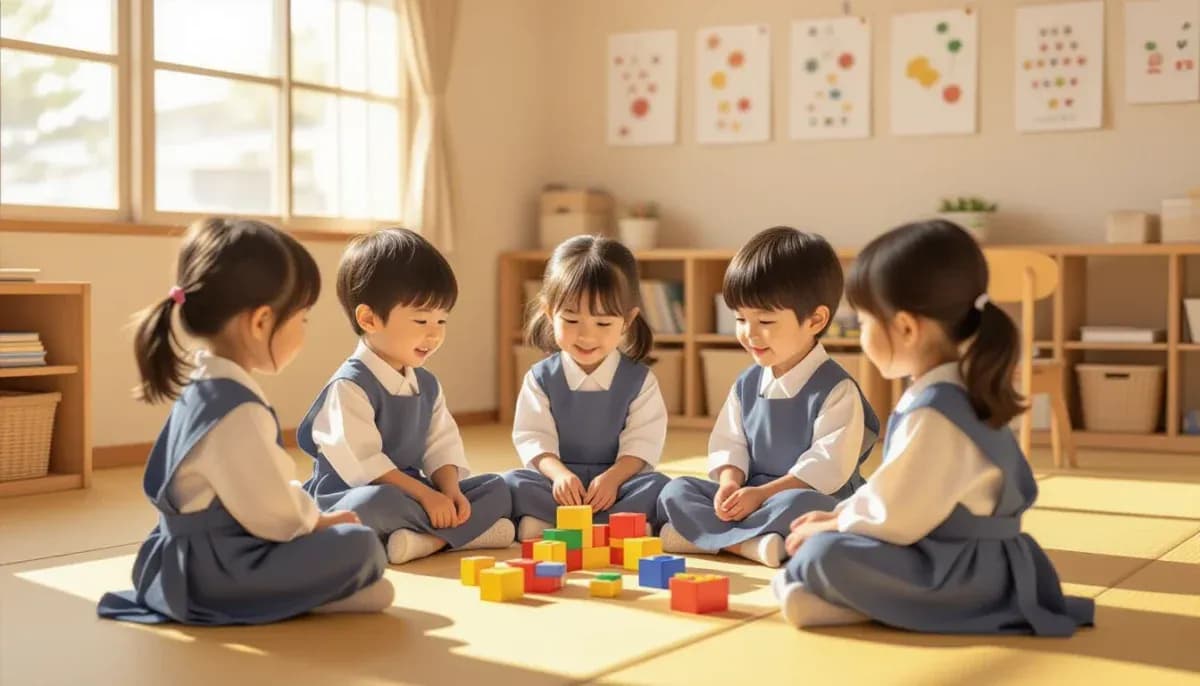
Group Harmony and Socialization in Japanese Child-Rearing
Understand wa (group harmony) and how Japanese schools, proximal parenting, and mimamoru shape your child's socialization. Essential guide for expat families in Japan.
Read more →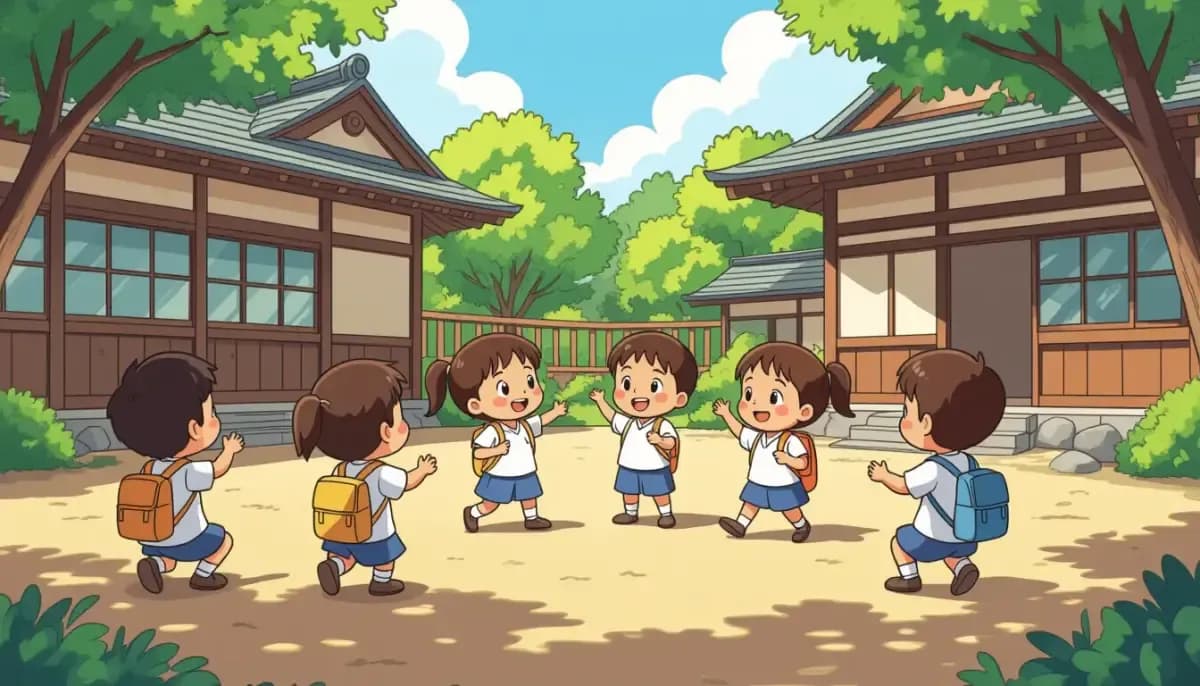
Japanese Approach to Early Childhood Development
Understand Japan's early childhood development philosophy: hoikuen, yochien, kodomoen, mimamoru, and Chi-Toku-Tai. A complete guide for foreign parents raising children in Japan.
Read more →