
Japanese vs Western Parenting Styles Compared

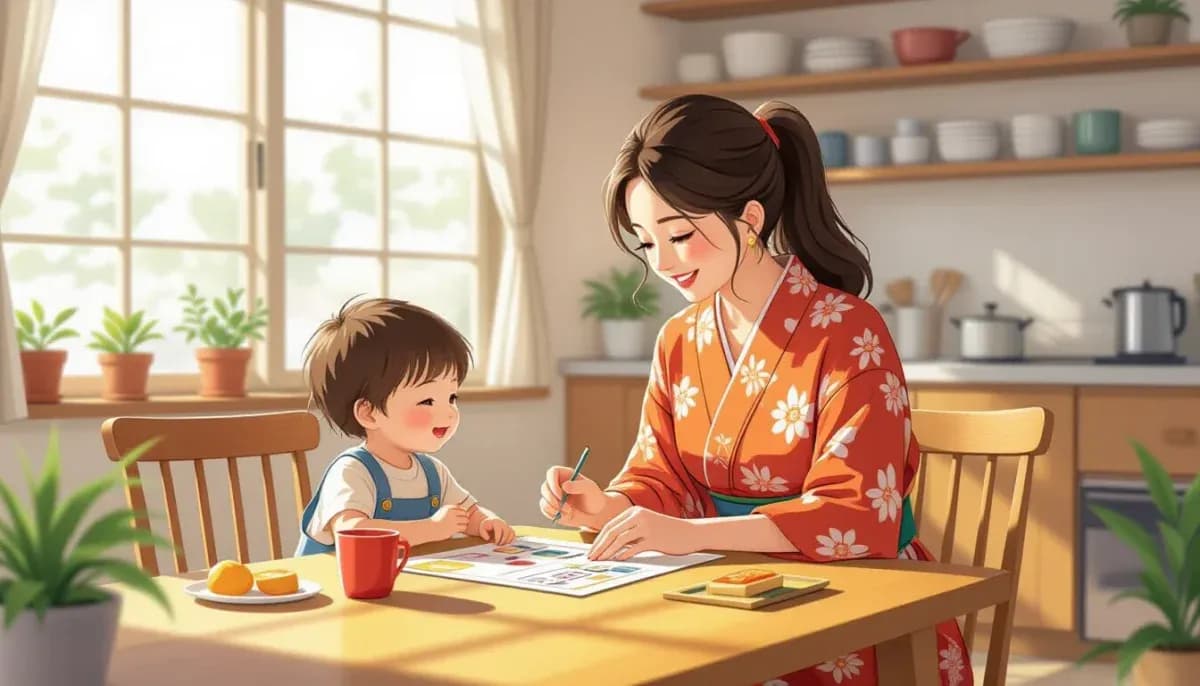
Discover the key differences between Japanese and Western parenting styles — from amae and shitsuke to co-sleeping, discipline, and public behavior. A practical guide for foreign parents in Japan.
Japanese vs Western Parenting Styles Compared: What Every Foreign Parent in Japan Should Know
Moving to Japan with children — or raising a family here — means navigating a parenting culture that is fundamentally different from what most Westerners grew up with. Japanese parenting is not simply a set of different rules; it reflects a deeply held philosophy about childhood, dependency, discipline, and social belonging. Understanding these differences can reduce culture shock, improve your interactions with local parents, and even help you draw on the best of both worlds.
This guide breaks down the key distinctions between Japanese and Western parenting, explores the cultural reasoning behind each approach, and offers practical insights for foreign parents raising children in Japan.
Physical Closeness and Attachment: Proximity as Love
One of the most striking differences between Japanese and Western parenting is how physical closeness is used to express love and build attachment.
In Japan, the dominant approach is what researchers call "proximal parenting": constant body contact, co-sleeping, co-bathing, and anticipatory need-fulfillment. A Japanese mother typically meets her infant's needs before the child even cries — feeding, soothing, and carrying are done preemptively. This creates deep, early bonds centered on physical proximity.
Western parenting, by contrast, favors "distal parenting": building attachment through eye contact, facial expressions, verbal communication, and emotionally rich (but physically separated) interactions. Western babies are often encouraged to sleep independently from early infancy, and alone time is seen as a healthy part of development.
The numbers tell a stark story:
- 59% of Japanese children co-sleep with parents three or more times per week, compared to only 15% of American children
- Japanese mothers spend approximately 2 hours per week away from infants; American mothers average around 24 hours per week
This is not a judgment — both approaches produce healthy, well-adjusted children through different developmental pathways. Research consistently shows that proximal parenting correlates with earlier development of self-regulation, while distal parenting correlates with earlier development of self-recognition. Different outcomes, not better or worse ones.
For foreign parents in Japan, this shows up in practical ways: co-sleeping is completely normalized, parents carrying babies in arms rather than strollers is common, and nursing babies are rarely left to self-soothe in a separate room.
Dependency vs. Independence: The Paradox of Amae
Japanese parenting contains what seems, to Western eyes, like a paradox: children are kept deliberately dependent in early childhood — and then expected to demonstrate remarkable independence in later childhood.
The concept at the heart of this is amae (甘え), loosely translated as "indulgent dependency" or "presuming on another's benevolence." Japanese parents actively cultivate amae — they want their young child to feel safe, enveloped, and cared for without needing to ask. This dependency is not seen as coddling; it is seen as providing a secure emotional base from which confidence will eventually grow.
Yet by the time children are 4 to 6 years old, Japanese parents expect them to commute to school alone on public transit — something virtually unheard of in most Western countries. This dramatic shift is possible because Japan's culture of collective responsibility means that the community (neighbors, station staff, other commuters) extends its protection to unaccompanied children. The child is never truly alone; they are embedded in a web of community care.
Western parenting tends to scaffold independence gradually from infancy — encouraging babies to self-soothe, toddlers to make choices, and school-age children to manage their own schedules. The independence comes earlier but is more individual in nature.
For foreign parents, understanding amae helps decode why Japanese parents may seem "overprotective" in some ways (constant supervision, co-sleeping, anticipating every need) while expecting competence in others (solo commutes, school lunch setup, classroom cleaning duties).
Discipline: Shitsuke and the Role of Shame
The Japanese word for discipline is shitsuke (躾), and it means something closer to "upbringing" or "training" than to "punishment." Shitsuke is about instilling correct behavior so deeply that it becomes automatic — not about correcting a child after the fact.
| Western Discipline | Japanese Shitsuke |
|---|---|
| Verbal reprimands and commands | Modeling correct behavior repeatedly |
| Time-outs and consequences | Routine and repetition until behavior is natural |
| Public correction is acceptable | Discipline happens privately to preserve dignity |
| Praise for correct behavior | Minimal verbal praise; behavior is expected |
| Shame is avoided or minimized | Disappointment to family used as primary deterrent |
| Individual conscience focus | Social awareness and group impact emphasized |
Key elements of shitsuke observed by researchers and expats:
Privacy: Japanese parents do not discipline children in front of others. A common scene on Japanese trains: a father quietly removes his family from the car, addresses the issue on the platform, and re-boards calmly. This protects both the child's dignity and the parent's face.
Repetition and Routine: Japanese kindergartens reinforce behavior through the same songs, the same shoe-removal rituals, the same post-lunch cleanup process — every single day. Not because children are slow to learn, but because repetition is how correct behavior becomes internalized.
Emotional Framing: Japanese parents consistently point out how a child's behavior affects others' feelings. "Look how sad that made your friend feel." This builds empathy and social awareness from a very young age, and it means shame is a significant motivator — not shame as humiliation, but shame as awareness of disappointing those you love.
Toddler Tantrums: The Japanese term ma no nisai (魔の2歳児) — "the devilish two-year-old" — acknowledges that tantrums are universal. But Japanese parents are notably non-reactive. They tend to let emotional storms pass without strong intervention, trusting the child to self-regulate.
For Western parents, adapting to this model means softening public reactions, relying less on verbal commands, and building more consistency into daily routines. Many expat parents find that adopting elements of shitsuke improves their children's transition into Japanese school life significantly.
Group Harmony vs. Individual Expression
Perhaps the deepest cultural divide between Japanese and Western parenting lies in the question: What are we raising children to become?
Western parenting — particularly in the U.S., U.K., and Australia — is fundamentally oriented toward developing individual identity: self-advocacy, unique expression, personal achievement, and confidence in standing out. Children are encouraged to have opinions, make choices, assert boundaries, and distinguish themselves.
Japanese parenting is oriented toward developing social belonging: harmony with the group, empathy toward others, restraint of individual impulse in service of collective wellbeing. Children learn that their behavior is inseparable from the reputation of their family, class, and school.
This shows up everywhere:
- Japanese schools assign classroom cleaning duties rather than hiring janitors — teaching children that maintaining shared spaces is everyone's responsibility
- School lunch (給食, kyushoku) is served by rotating student teams who wear white coats and serve peers — developing service and community
- Club activities (部活, bukatsu) involve senior-junior hierarchies that teach deference, dedication, and loyalty
- Children are discouraged from boasting about personal achievements, even when praised by teachers
The transition is significant for children raised with Western values. A child accustomed to expressing opinions freely may find Japanese classroom culture quiet and conformist. A child raised in Japanese norms may struggle in Western schools that reward individual performance and verbal assertion.
For mixed families, or Western parents raising children in Japan, navigating this tension is one of the central parenting challenges — and one worth addressing directly with your children as they grow.
The Role of Fathers: The Salaryman Legacy
Japanese father involvement in childcare has historically been far lower than in most developed countries. The concept of the salaryman — a white-collar employee expected to work long hours, socialize with colleagues after work, and prioritize corporate loyalty above family — shaped an entire generation of absent-yet-provider fathers.
Research consistently shows that Japanese fathers rank lowest internationally for time spent on household and childcare tasks. This is not uniform across all families — especially among younger generations and in urban areas — but it remains a significant structural reality.
In Western countries, co-parenting has become the expected norm in most middle-class households. Both parents share bedtime routines, school drop-offs, homework help, and emotional labor. The "involved dad" is a cultural standard, if not always a lived reality.
For foreign families in Japan, this cultural gap can create friction in several directions:
- Foreign fathers may feel pressure to conform to salaryman expectations at work, even if their home culture values co-parenting
- Foreign mothers may feel isolated, taking on child-rearing responsibilities with less community infrastructure than in their home country
- Japanese partners of foreign spouses may navigate competing expectations from two different cultural norms
This is changing. Government policies (ikumen campaigns encouraging paternal leave, legal changes to paternity leave entitlements) are actively pushing toward greater father involvement. But change is slow, and understanding the historical baseline helps set realistic expectations.
Public Behavior and the 10 Unwritten Rules
If there is one area where Japanese parenting norms are starkly different from most Western countries, it is public behavior. Japanese society has extremely high expectations for child behavior in shared spaces — and the standards are largely unwritten and enforced through social pressure rather than explicit rules.
Key rules every foreign parent in Japan should know:
- Speak softly — Children creating noise in public (except in designated "family" spaces like family restaurants or parks) is seen as irresponsible parenting
- Stroller etiquette — Fold strollers on rush-hour trains; use elevators rather than escalators with strollers; never block train doors
- Restaurant cleanup — Clean the area under and around your children's seats after eating; notify staff if the mess is significant
- Shoes on seats — Children's shoes must never touch train seats; this is considered deeply rude
- Diaper changes — Only in designated diaper-changing stations; changing in open public spaces is unacceptable
- Breastfeeding — Done in designated nursing rooms in stores and public facilities; public breastfeeding, even with covers, is not widely accepted
- Toy responsibility — Children are expected to return borrowed toys to their original location after play
- Sick children — Bringing visibly sick children to public spaces (especially with enclosed, shared air) is strongly discouraged
- Supervision — Constant parental monitoring is expected in public play areas; unattended children draw immediate concern
- Toy hygiene — Disinfecting wipes for toys that infants have mouthed are a standard item in Japanese diaper bags
Western parents — especially those from more relaxed northern European or North American backgrounds — often describe a period of adjustment to these norms. Children who are allowed to run freely in Western contexts may need explicit coaching on Japanese public behavior expectations.
What Foreign Parents Can Take From Japanese Parenting
Rather than viewing Japanese and Western parenting as competing models, many experienced expat parents find value in drawing from both. Here are elements of Japanese parenting that resonate particularly strongly with foreign parents:
The commitment to routine: Japanese children thrive on predictability. Structured daily rhythms (same wake time, same meal patterns, same bedtime rituals) reduce anxiety and behavioral problems in ways that research consistently supports.
Building community awareness: Japanese parents' constant practice of helping children understand how their actions affect others creates genuinely empathetic children. This framing ("How do you think that made your friend feel?") can be integrated into any parenting style.
Shitsuke without shame: The modeling-over-punishment approach — being patient, consistent, and matter-of-fact about expectations — is widely endorsed by child development researchers and can replace reactive or punitive discipline.
Acceptance of dependency in early childhood: Western parenting often pushes independence too fast. Japanese amae's recognition that secure attachment requires met needs before asking for them aligns with attachment parenting research.
Community trust: Japan's culture of collective child protection — where community members feel responsibility for all children — is something foreign parents can both benefit from and participate in, by modeling the same watchfulness for neighbors' children.
For more on navigating childhood in Japan as a foreign parent, see our guide to raising bilingual children in Japan, as well as our coverage of daycare and hoikuen options for foreign parents.
Further Reading and Resources
For a broader academic and cultural perspective on Japanese parenting:
- Japanese Parenting Style – O'Sullivan Counseling — comprehensive cultural comparison of proximal vs. distal parenting
- The Japanese Way of Disciplining Children – Savvy Tokyo — practical look at shitsuke in action
- 10 Unwritten Rules of Japanese Parenting – Tsunagu Japan — public behavior norms in detail
- Challenges to Changing Parenting Culture in Japan – PMC/NCBI — academic research with statistics
- How to Parent Like the Japanese – TIME Magazine — accessible overview for international readers
For expat family life and resources in Japan:
- Living in Nihon — practical guides for foreigners living in Japan
- For Work in Japan — resources for working expats and their families
- Chuukou Benkyou — educational resources for children in Japan
Conclusion
Japanese and Western parenting represent genuinely different philosophies — not just different techniques. Japanese parenting prioritizes proximity, harmony, social awareness, and communal belonging. Western parenting prioritizes early independence, individual expression, and verbal communication. Neither is universally superior; both produce healthy, capable children through different pathways.
For foreign parents in Japan, understanding these differences transforms confusing or frustrating experiences into legible cultural encounters. When a Japanese parent seems to hover, or a Japanese teacher expects quiet compliance, or your child's school sends home elaborate routines — these are not arbitrary rules but expressions of a coherent parenting philosophy with deep roots.
The most successful expat parents in Japan are those who stay curious, adapt thoughtfully, and help their children navigate between two worlds — taking the strengths of both and building something richer than either alone.
For more on raising children in Japan, explore our guides on the Japanese education system, mental health support for foreign children in Japan, and navigating Japanese kindergarten (yochien).

Originally from Vietnam, living in Japan for 16+ years. Graduated from Nagoya University, with 11 years of professional experience at Japanese and international companies. Sharing practical information for foreign parents raising children in Japan.
View Profile →Related Articles

Modern Parenting Trends and Changes in Japan
Explore how parenting in Japan is changing in 2025 — from landmark government reforms and childcare expansion to shifting discipline norms and the rise of involved fathers. A practical guide for foreign families.
Read more →
Mama-Tomo Culture: Navigating Mother Friendships in Japan
Understand mama-tomo (ママ友) culture in Japan and learn practical strategies for foreign mothers to build genuine friendships through hoikuen, kodomokan, and school communities.
Read more →
The Ikumen Movement: Japan's Push for Involved Fathers
Discover Japan's ikumen movement — the cultural push for involved fatherhood. Learn about paternity leave rights, government initiatives, and what it means for foreign fathers living in Japan.
Read more →
Group Harmony and Socialization in Japanese Child-Rearing
Understand wa (group harmony) and how Japanese schools, proximal parenting, and mimamoru shape your child's socialization. Essential guide for expat families in Japan.
Read more →
Japanese Approach to Early Childhood Development
Understand Japan's early childhood development philosophy: hoikuen, yochien, kodomoen, mimamoru, and Chi-Toku-Tai. A complete guide for foreign parents raising children in Japan.
Read more →
Discipline Methods in Japanese Parenting Culture
Discover how Japanese parents use shitsuke, empathy-based discipline, and group harmony to raise well-behaved children. A practical guide for foreign families in Japan.
Read more →