
Japanese Approach to Early Childhood Development

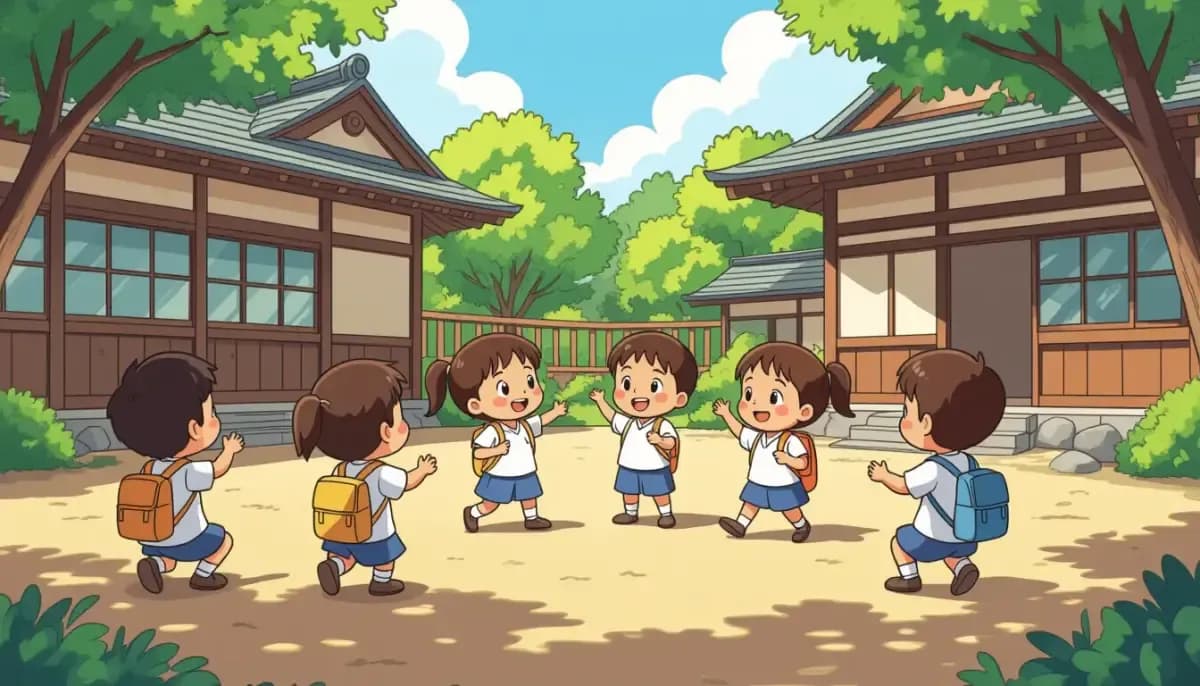
Understand Japan's early childhood development philosophy: hoikuen, yochien, kodomoen, mimamoru, and Chi-Toku-Tai. A complete guide for foreign parents raising children in Japan.
Japanese Approach to Early Childhood Development: A Guide for Foreign Parents
Japan's approach to early childhood development is unlike anything most foreign parents have experienced in their home countries. Rather than rushing children into academic learning, Japanese early childhood education prioritizes social harmony, emotional resilience, and independence — all within a deeply communal framework. If you're a foreign parent raising children in Japan, understanding this philosophy will help you navigate the preschool and kindergarten years with much greater confidence.
This guide explains how Japan thinks about the earliest years of a child's life, what the major educational institutions look like, the cultural values embedded in daily routines, and what you as a foreign parent should know about enrolling your child and fitting into this system.
The Core Philosophy: Social First, Academics Later
One of the biggest surprises for foreign parents is that Japanese early childhood education deliberately avoids early academic instruction. You won't find phonics drills or structured math lessons at a typical hoikuen or yochien. Instead, educators focus on building the whole child — their emotional regulation, their ability to work within a group, their physical coordination, and their sense of responsibility toward others.
This philosophy is rooted in a concept called Chi-Toku-Tai (知徳体), a framework that has guided Japanese education since the Meiji period in the 19th century. It consists of three pillars:
- Chi (知) — Intellectual development (knowledge, curiosity, thinking skills)
- Toku (徳) — Moral and character development (empathy, respect, responsibility)
- Tai (体) — Physical development (health, coordination, outdoor activity)
All three are considered essential and roughly equal in importance. Most Western educational systems emphasize Chi above the others, especially in early childhood. Japan, by contrast, places heavy emphasis on Toku from infancy onwards. Children are taught to consider how their actions affect others — not through lectures, but through carefully structured social experiences.
Another foundational concept is Mimamoru (見守る), which translates loosely as "watchful waiting" or "watching over without intervening." Japanese early childhood educators intentionally allow children to struggle, negotiate, and resolve conflicts on their own. An adult who immediately steps in to solve problems is seen as undermining the child's development. This is often shocking for Western parents who see conflict and expect immediate adult resolution.
For more on Japanese parenting philosophy, see our guide to Understanding Japanese Parenting Culture as a Foreign Parent.
The Three Main Types of Early Childhood Institutions
Japan has three main types of licensed early childhood institutions, each with a different focus and eligibility criteria.
| Institution | Japanese | Ages Served | Primary Purpose | Typical Hours |
|---|---|---|---|---|
| Hoikuen | 保育園 | 57 days – 5 years | Childcare for working parents | ~8am–6pm+ |
| Yochien | 幼稚園 | 3–5 years | Early education/kindergarten | ~9am–2pm |
| Kodomoen | 認定こども園 | 57 days – 5 years | Combined care + education | Flexible |
Hoikuen (保育園 — Nursery School) Hoikuen is primarily a childcare facility for children whose parents are working or otherwise unable to provide daytime care. Children can be enrolled from as young as 57 days old. Enrollment is managed by the municipal government through a point-based priority system — families where both parents work full-time, or single-parent households, receive higher priority. Public hoikuen are highly sought-after; in competitive areas like Tokyo and Osaka, securing a spot often requires applying immediately after birth.
Yochien (幼稚園 — Kindergarten) Yochien is an education-focused institution serving children from age 3 to 5. Unlike hoikuen, it doesn't require parents to be working. The curriculum is designed around play, group activities, and social learning — not academics. Hours are shorter (typically finishing by 2pm), and yochien often operate only during the academic year, with extended summer, winter, and spring holidays.
Certified Kodomoen (認定こども園) Introduced in 2006 and greatly expanded since 2015, kodomoen combines elements of both hoikuen and yochien under one roof. There are now over 7,000 certified kodomoen across Japan. Families who need full-time childcare can access the hoikuen component, while families seeking education-focused half-day programs can use the yochien component. This flexibility makes kodomoen the fastest-growing option.
For a detailed breakdown of hoikuen enrollment and the point system, see our complete guide to Daycare and Hoikuen in Japan for Foreign Parents. For yochien specifics, see our Kindergarten (Yochien) Guide.
You can also find additional institution comparisons at Living in Nihon's guide to raising children in Japan and an expat-focused breakdown at Japan Living Guide's daycare section.
Daily Life in Japanese Early Childhood Settings
What actually happens each day in a Japanese nursery or kindergarten? The routines may look simple, but each element is intentional.
Morning arrival and self-care tasks. From very young ages, children are expected to handle their own belongings. Even two-year-olds at hoikuen are taught to remove and store their shoes, hang up their bag, and change into indoor clothes. Adults help, but the goal is progressive independence. This is consistent with how Japanese parents approach toddler development at home.
Outdoor free play. A significant portion of each day — often two or more hours — is unstructured outdoor play. Japanese educators believe that physical activity and self-directed exploration are essential for cognitive and emotional development. Sandboxes, climbing structures, open fields, and communal gardens are typical. Children are expected to play in most weather conditions; the phrase "there's no bad weather, only bad clothing" is taken seriously.
Group activities and circle time. Songs, stories, and movement activities done as a group reinforce the value of participating together. Children learn to wait their turn, listen when others speak, and contribute to the group. Birthday celebrations, seasonal festivals (Tanabata, Setsubun, Hinamatsuri), and school events all reinforce shared culture.
Lunchtime and cleaning. Whether it's a packed bento from home or a school-prepared meal, lunchtime is a social and educational event. Children learn table manners, how to express gratitude before eating (itadakimasu / gochisosama), and how to clean up after themselves. At many institutions, older children help serve food and assist younger children — a practice that builds both leadership and empathy.
Nap time (hoikuen). Full-day hoikuen children take naps in the afternoon. Bedding is carefully laid out and tidied, and children learn to manage their own rest.
Conflict resolution. When arguments arise — over toys, space, or attention — Japanese educators tend to observe before intervening. If intervention is needed, it often involves guiding both children to express their feelings and find a solution together, rather than assigning blame or imposing a resolution.
Enrollment Rates and the Scale of Japanese Early Childhood Education
Japan's investment in early childhood education is substantial, and the numbers reflect a culture that takes these years seriously.
- 98.9% of five-year-olds are enrolled in licensed ECEC institutions — one of the highest rates among all OECD countries (6th out of 42 nations)
- 95.9% of three-to-five-year-olds are enrolled (7th in the OECD)
- 90% of three-to-four-year-olds are in nurseries or kindergartens even before compulsory schooling age
- 81% of ECEC students attend private institutions — the 3rd-highest private enrollment share among 38 OECD nations
- 7,000+ certified kodomoen nationwide as of 2023
This near-universal enrollment is not coincidental. It reflects both cultural values (collective socialization is seen as necessary for development) and government policy (free ECEC for ages 3-5 since 2019 has made enrollment accessible regardless of income).
For a broader look at the educational journey ahead, see our guide to the Japanese Education System for Foreign Families.
What Foreign Parents Should Know About Eligibility and Costs
Good news for foreign residents: you are eligible for the same early childhood education subsidies as Japanese families, provided you have valid residence status and are registered in your municipality's household registry (住民票, jyuminhyo).
Free tuition for ages 3-5: Since October 2019, licensed ECEC (hoikuen, yochien, and kodomoen) is fully free for children aged 3-5, regardless of parental income. This applies to foreign residents too.
Subsidized care for ages 0-2: Free care for children under three is available for families with low to moderate income. Families above the income threshold pay a sliding-scale fee based on household taxable income, typically ranging from ¥5,000 to ¥40,000+ per month depending on the municipality and income level.
Unlicensed facilities: If you are unable to secure a spot at a licensed facility, unlicensed options (認可外保育施設, ninka-gai hoikuen) may be your only choice. These can cost ¥50,000–¥100,000+ per month and are not covered by the standard subsidy, though some municipalities provide partial reimbursement.
Child Allowance (児童手当): Following major reforms effective October 2024, the child allowance now has no income limits and covers children through high school. Monthly amounts: ¥15,000 per child under 3; ¥10,000 per child from age 3 through elementary school. A third-child bonus of ¥30,000/month was also introduced. Foreign residents with valid status are fully eligible.
For a comprehensive guide to government benefits, see our article on Government Benefits and Subsidies for Families in Japan.
You can find detailed information about types of early childhood institutions from an international school perspective at Four Leaves International School Tokyo's blog and a broader expat guide at Expat.jp's preschool resource.
Navigating the Cultural Differences as a Foreign Parent
Many foreign parents experience culture shock during the early childhood years — not from the content of education, but from the expectations placed on families.
Bento culture: Yochien in particular often require daily packed lunches (bento). These are not just about nutrition — they're about care, effort, and cultural participation. Bento-making is treated as a significant parental responsibility. As a foreign parent, you are not expected to make elaborate character bento (kyaraben), but a thoughtfully packed, well-balanced bento is appreciated.
Parent participation: Japanese early childhood institutions expect significant parental involvement. This includes attending seasonal events, contributing to parent association (保護者会, hogoshakai) activities, and maintaining daily communication logs (連絡帳, renrakucho) with teachers. For foreign parents who may not read Japanese fluently, this can be challenging. Ask for help from the institution — many are experienced with foreign families and can provide translated materials or verbal briefings.
Communication in Japanese: Most hoikuen and yochien operate entirely in Japanese. Staff may have little to no English proficiency. If your child doesn't yet speak Japanese, see our guide to Teaching Japanese to Foreign Children and our comprehensive resource on Raising Bilingual Children in Japan.
Mixed-age group activities: Some institutions, particularly those following progressive models, organize children in mixed-age groups intentionally. Older children (4-5 years old) are expected to help, teach, and care for younger ones. This is a deliberate pedagogical choice — it builds responsibility, patience, and leadership in older children while providing nurturing social models for younger ones.
Conflict and independence: The mimamoru approach can be hard to accept for parents from cultures where adults intervene in every dispute. If you observe a conflict and no adult steps in, this is usually intentional. Trust the process, and discuss any concerns directly with teachers.
For more on navigating the challenges of parenting in multiple cultures, see our guide to Cross-Cultural Parenting: Managing Multiple Cultures in the Family.
If you are working in Japan and navigating childcare logistics around your job, For Work in Japan provides resources for foreign workers navigating professional life in Japan. For parents whose children are approaching secondary education, Chuukou Benkyou covers middle and high school exam preparation in Japan.
Long-Term Outcomes and Why This Approach Works
Japan's early childhood approach may seem relaxed compared to the academic-focused early education systems of some other countries — but research suggests it produces strong long-term outcomes.
A landmark study exploiting Japan's ECEC expansion in the 1960s–1980s found significant positive income effects for adults who attended early childhood programs, with particularly strong effects for women who were socioeconomically disadvantaged in childhood. The effects were still measurable at age 50.
Longitudinal studies have also found that children who experienced high-quality Japanese ECEC showed better social adjustment in elementary school, stronger emotional regulation, and higher academic motivation — even though the programs themselves did not explicitly teach academic content.
The emphasis on peer learning and group responsibility creates children who are unusually self-sufficient in social environments. By the time Japanese children reach elementary school, they are expected to clean their classrooms, manage their own lunch service, and resolve peer disputes with minimal adult involvement — skills that were built in the hoikuen and yochien years.
For foreign parents who may be concerned that their child is "falling behind" academically compared to peers in other countries, the research evidence supports patience. The foundation being built in these early years — social competence, emotional regulation, physical resilience, and group orientation — is the foundation upon which academic success is built in Japan.
Getting Started: Practical First Steps
If your child is approaching hoikuen or yochien age, here's where to begin:
- Register at your local ward or city office (役所, yakusho) — Confirm your household registration (jyuminhyo) is current and ask about early childhood services in your area.
- Request a list of licensed facilities — Your local ward office can provide a list of hoikuen, yochien, and kodomoen in your catchment area, along with vacancy information.
- Attend open houses — Yochien open houses typically begin in April/May; applications open in October for an April start. Hoikuen applications for April enrollment typically close in November/December.
- Apply early for hoikuen — Competition is fierce in urban areas. Understand the point system your municipality uses.
- Ask about support for foreign families — Many institutions now have experience with non-Japanese families and can offer additional support.
For more on the infant years before hoikuen, see our guide to Baby and Infant Care in Japan for Foreign Parents.
Japan's early childhood development philosophy is rooted in centuries of cultural values about community, resilience, and the holistic development of the person. For foreign parents, understanding this philosophy — rather than trying to import a different one — is the key to giving your child the best possible start to their educational journey in Japan.

Originally from Vietnam, living in Japan for 16+ years. Graduated from Nagoya University, with 11 years of professional experience at Japanese and international companies. Sharing practical information for foreign parents raising children in Japan.
View Profile →Related Articles

Modern Parenting Trends and Changes in Japan
Explore how parenting in Japan is changing in 2025 — from landmark government reforms and childcare expansion to shifting discipline norms and the rise of involved fathers. A practical guide for foreign families.
Read more →
Mama-Tomo Culture: Navigating Mother Friendships in Japan
Understand mama-tomo (ママ友) culture in Japan and learn practical strategies for foreign mothers to build genuine friendships through hoikuen, kodomokan, and school communities.
Read more →
The Ikumen Movement: Japan's Push for Involved Fathers
Discover Japan's ikumen movement — the cultural push for involved fatherhood. Learn about paternity leave rights, government initiatives, and what it means for foreign fathers living in Japan.
Read more →
Japanese vs Western Parenting Styles Compared
Discover the key differences between Japanese and Western parenting styles — from amae and shitsuke to co-sleeping, discipline, and public behavior. A practical guide for foreign parents in Japan.
Read more →
Group Harmony and Socialization in Japanese Child-Rearing
Understand wa (group harmony) and how Japanese schools, proximal parenting, and mimamoru shape your child's socialization. Essential guide for expat families in Japan.
Read more →
Discipline Methods in Japanese Parenting Culture
Discover how Japanese parents use shitsuke, empathy-based discipline, and group harmony to raise well-behaved children. A practical guide for foreign families in Japan.
Read more →